ALS Breakthrough Study
"This is the first study to clearly demonstrate that in people with ALS, there is an autoimmune reaction that targets specific proteins associated with the disease.""[The results suggest that the balance between pro- and anti-inflammatory activity] may be a component in the disease progression.""It really signals an important change potentially in the way we see ALS, because our data clearly shows that there is an immune response directed against particular proteins."Professor Alessandro Sette, La Jolla Institute for Immunology, study co-lead author
Amyotrophic lateral sclerosis (ALS) is a neurodegenerative disease characterized by a progressive loss of motor neurons. Neuroinflammation is apparent in affected tissues, including increased T cell infiltration and activation of microglia, particularly in the spinal cord1,2. Autoimmune responses are thought to have a key role in ALS pathology, and it is hypothesized that T cells contribute to the rapid loss of neurons during disease progression3,4. However, until now there has been no reported target for such an autoimmune response. Here we show that ALS is associated with recognition of the C9orf72 antigen, and we map the specific epitopes that are recognized. We show that these responses are mediated by CD4+ T cells that preferentially release IL-5 and IL-10, and that IL-10-mediated T cell responses are significantly greater in donors who have a longer predicted survival time. Our results reinforce the previous hypothesis that neuroinflammation has an important role in ALS disease progression, possibly because of a disrupted balance of inflammatory and counter-inflammatory T cell responses4. These findings highlight the potential of therapeutic strategies aimed at enhancing regulatory T cells5, and identify a key target for antigen-specific T cell responses that could enable precision therapeutics in ALS.Study Abstract, Nature
 |
| Researchers found that certain white blood cells, called CD4+ T cells, mistakenly target certain proteins that are part of the nervous system in people with ALS. |
There has been a longstanding belief among researchers that there is an autoimmune element responsible for the onset of amyotrophic lateral sclerosis that drives its progression. Now a research breakthrough through a study whose results recently appeared in the journal Nature, appears to have developed an understanding that such an immune response does really exist, leading to hope that further research may lead to important new treatment of the fatal disease.
Scientists at the La Jolla Institute for Immunology and Columbia University jointly engaged in the study demonstrated that ALS patients' immune cells attack a protein located in neurons, triggering inflammation to accelerate nerve cell loss. Known as C9orf72, the protein is the first target identified involved in an auto-immune response in ALS.
Two distinct patient groups were also identified through the research; those whose immune systems mount a robust inflammatory attack, tending to quick deterioration, and others whose more protective immune responses allow them to live for a significantly longer period of time. There is hope that these finds could lead the way to therapies to depress harmful activity and raise protective cells, similar to immunotherapies used in cancer treatment.
 |
| ALS can lead to paralysis and eventually death. The acclaimed scientist Stephen Hawking famously suffered from it. |
In the United States alone, an average of 15 people are daily diagnosed with ALS, known as well as Lou Gehrig's disease after the New York Yankees sport figure who was diagnosed with the deadly disease and died two years later, in 1941. Most patients diagnosed with ALS tend to see their condition swiftly deteriorate, while others, like Stephen Hawking, the British cosmologist and theoretical physicist, are able to live for decades through a more time-extended process of deterioration.
Until the affirmation of autoimmune action involvement in this most cruel of neurological conditions, the exact triggers behind ALS were hypothesized but the real state of the situation was unproven and therefore unknown until the present. Patients, including those with no family history of the disease, mount immune reactions against the protein C9orf72, explained Avindra Nath, clinical director at the National Institute of Neurological Disorders and Stroke in Bethesda, Maryland.
Patients with C9orf72 mutations were shown to have more pronounced immune activity, tending to live longer with the disease, showing that the reactions appeared more emphatic than responses to other ALS-related problems. Even so, said Dr. Nath, caution is urged with the understanding that the findings are as yet correlative.
 |
| Immune cells found to attack neurons in ALS leading hope for a breakthrough in treatment. Bloomberg |
 |
Amyotrophic lateral sclerosis (a-my-o-TROE-fik LAT-ur-ul skluh-ROE-sis),
known as ALS, is a nervous system disease that affects nerve cells in
the brain and spinal cord. ALS causes loss of muscle control. The disease gets worse over time.
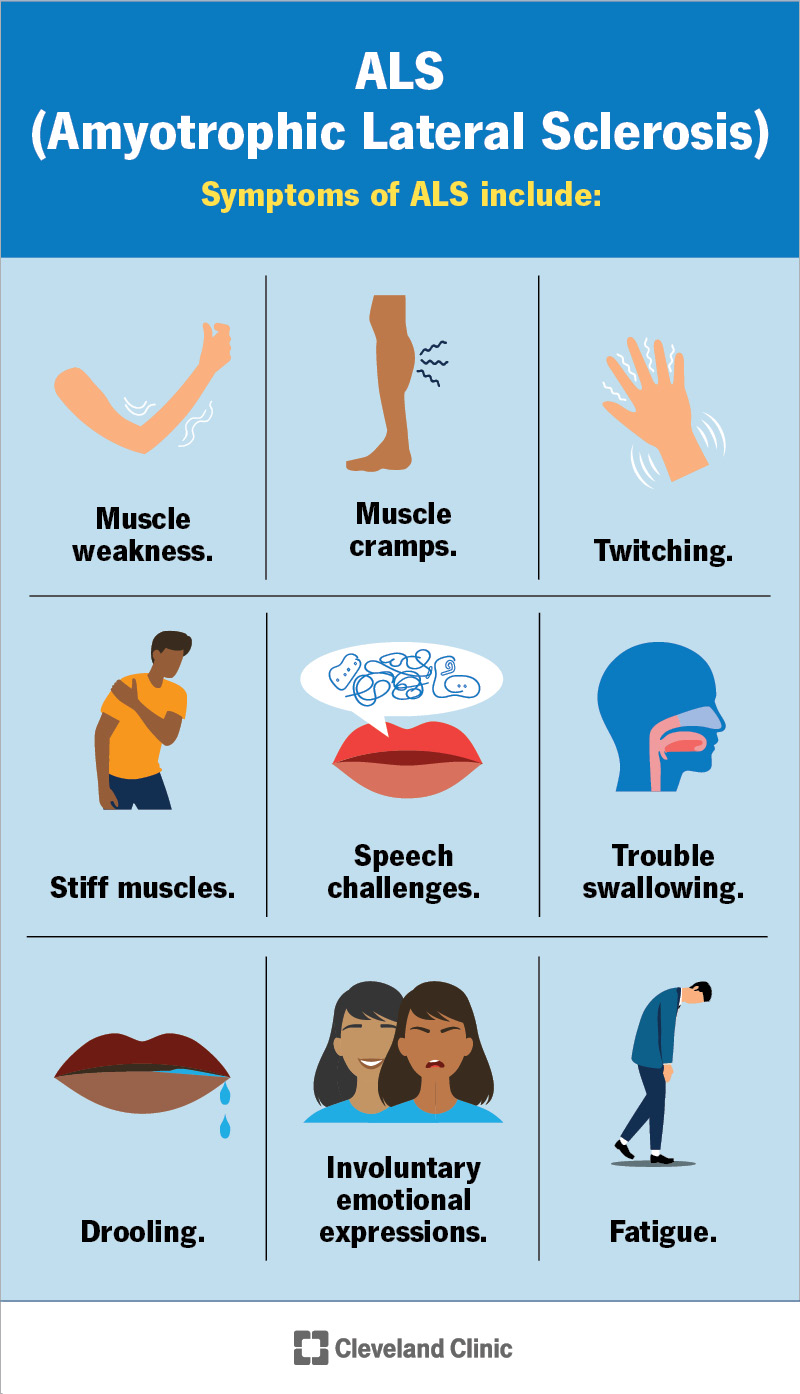
ALS often begins with muscle twitching and weakness in an arm or leg, trouble swallowing or slurred speech. Eventually ALS affects control of the muscles needed to move, speak, eat and breathe. There is no cure for this fatal disease.
Symptoms of ALS vary from person to person. Symptoms depend on which nerve cells are affected. ALS generally begins with muscle weakness that spreads and gets worse over time. Symptoms might include:
- Trouble walking or doing usual daily activities.
- Tripping and falling.
- Weakness in the legs, feet or ankles.
- Hand weakness or clumsiness.
- Slurred speech or trouble swallowing.
- Weakness associated with muscle cramps and twitching in the arms, shoulders and tongue.
- Untimely crying, laughing or yawning.
- Thinking or behavioral changes.
ALS often starts
in the hands, feet, arms or legs. Then it spreads to other parts of the
body. Muscles get weaker as more nerve cells die. This eventually
affects chewing, swallowing, speaking and breathing.
There's generally no pain in the early stages of ALS. Pain also is not common in the later stages. ALS
doesn't usually affect bladder control. It also usually doesn't affect
the senses, including the ability to taste, smell, touch and hear.
Mayo Clinic
Labels: Amyotrophic Lateral Sclerosis, Autoimmunity, Lou Gehrig's Disease, Research Potential New Therapies
posted by Pieface @ 8:34 PM


0 Comments:
Post a Comment
<< Home