Ruminations

Blog dedicated primarily to randomly selected news items; comments reflecting personal perceptions

Friday, November 14, 2025

Tightening American Visa Opportunities

"You must consider an applicant's health."
"Certain medical conditions -- including , but not limited to, cardiovascular diseases, respiratory diseases, cancers, diabetes, metabolic diseases, neurological diseases, and mental health conditions -- can require hundreds of thousands of dollars' worth of care."
"All of these can require expensive, long-term care,"
"Does the applicant have adequate financial resources to cover the costs of such care over his entire expected lifespan without seeking public cash assistance or long-term institutionalization at government expense?" 
"Do any of the dependents have disabilities, chronic medical conditions, or other special needs and require care such that the applicant cannot maintain employment?"  
"There is no ‘bright-line’ test. You must consider all aspects of the case and determine whether the applicant’s circumstances… suggest that he is more likely than not to become a public charge at any time." 
U.S. State Department -- Visa Issuance Directives
https://npr.brightspotcdn.com/dims3/default/strip/false/crop/1024x570+0+0/resize/800/quality/85/format/webp/?url=http%3A%2F%2Fnpr-brightspot.s3.amazonaws.com%2F55%2F3a%2F51f05f2d450dbc2ebfd9e24d31cd%2Fgettyimages-1224917096.jpg

The Trump administration is directing immigration officers to consider some chronic health conditions like diabetes in deciding whether to issue visas to immigrants.CHRIS DELMAS/AFP/Getty Images 

"This guidance gives consular officers wide discretion to deny both immigrant and non-immigrant visas based on common health conditions that, by themselves, have never been treated as disqualifying."
Vic Goel, U.S. immigration lawyer 
 
"Taking into consideration one's diabetic history or heart health history — that's quite expansive."
"There is a degree of this assessment already, just not quite as expansive as opining over, 'What if someone goes into diabetic shock'?"
"If this change is going to happen immediately, that's obviously going to cause a myriad of issues when people are going in to their consular interviews."
Sophia Genovese, immigration lawyer, Georgetown University 
 
"The idea behind this is that obesity is connected directly to other costly chronic health problems including type 2 diabetes, heart disease, high blood pressure, stroke, high cholesterol and mostly inflammation in the body."
"This could present an unpredictable and impactful cost to the health system, which is already overburdened."
Dr. Marc Siegel, Fox News' senior medical analyst  
https://a57.foxnews.com/static.foxnews.com/foxnews.com/content/uploads/2025/08/720/405/trump-administration-visa-fee.jpg?ve=1&tl=1

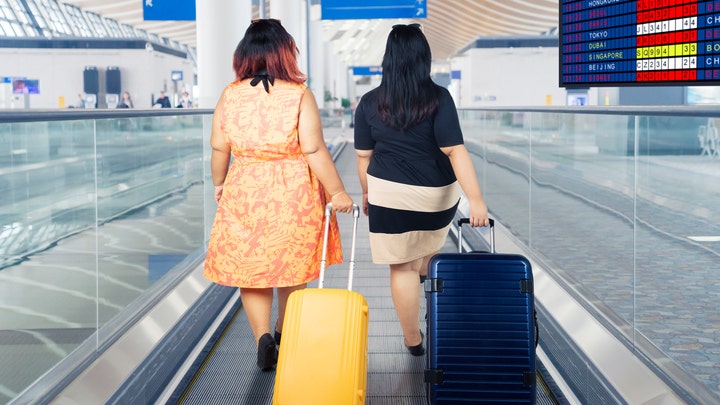
"Obesity is connected directly to other costly chronic health problems including type 2 diabetes, heart disease, high blood pressure, stroke, high cholesterol and mostly inflammation in the body," said a physician.  (iStock)

Visa officers in the U.S. and at diplomatic missions abroad have been informed by the Trump administration that when considering visa applications, chronic health conditions must be considered when deciding whether to grant visas to foreigners wishing to enter the United States. Perhaps it would be more useful to say that this is a reminder, since there are already existing cautions respecting the health status of those seeking visas for the U.S. Health cautions that may, over time, have been treated more casually than they should be, at a time of rising health costs everywhere.
 
The U.S. wouldn't be the only country to tighten its entry rules, revolving around visa holders' health needs and the impacts they would have, drawing on the services of the health system of the country they enter. In Canada, as an example, these very same considerations have always been taken seriously, and visa officers in the conduct of their duties are quite well aware of them.
 
A November 6 cable circulated from the State Department under the signature of Secretary of State Marco Rubio, informed American consulates and embassies globally of a heightened vigilance to health issues in signing off on entry visas to the U.S. At the present time there is an awareness of the need to monitor contagious diseases; the new order builds on current medical screening, reminding visa officers of the professional decisions in justifying application rejections. 
 
The move also builds on the administration's focus on curbing immigration flow.
 
Consulates are thus being given heightened awareness in the consideration of obesity's role to determine whether visas should be granted given that obesity can cause sleep apnea, high blood pressure, and clinical depression. Visa officers are given direction to consider ineligibility of applications to enter the United States for additional reasons -- whether they are past retirement age, how many dependents they have, and whether any dependents have disabilities or 'special needs'.  
 
The propensity for many foreigners to overstay their visas in favour of remaining in the United States with the perception that prospects for future opportunities can arise, promising a better economic future, as well as access to a wide spectrum of social services in a wealthy country also mitigate against easy entry with insufficient regard to what a visa applicant can offer the country, as opposed to the benefits they could conceivably draw upon. 
 
https://a57.foxnews.com/static.foxnews.com/foxnews.com/content/uploads/2025/11/720/405/president-trump-bans-fat-visa-seekers-fox-news.jpg?ve=1&tl=1

"If an applicant is uninsured and unable to show they can cover potential medical costs, like those associated with a chronic condition, that can indicate a high risk of becoming a public charge and make them a strong candidate for visa refusal," said a Heritage Foundation official.  (iStock)


Labels: , , ,

0 Comments:

Post a Comment

<< Home

 
()() Follow @rheytah Tweet