President Donald J. Trump's Wildly Popular Canada Tariffs
"A lot of the private conversation is trying to push to stop this war with Canada.""A lot of them privately are putting pressure on this ... and are going to the Commerce Department, Treasury, White House and saying, 'Look you're really hurting Americans here. Knock it off'.""It does not seem like Trump seems to care ... whether tariffs are popular or not or whether people are being harmed or not.""You don't get very far in American politics by telling people, 'I've got your vote in the bag, and I don't care about you.""What I would like voters ... to pull out of all this at the end of the day is to understand that tariffs are taxes.""They're not taxes on foreigners; they're taxes on your own people, your own industries, your own businesses, and that this is not the solution."Richard Stern, vice-president, Plymouth Institute for Free Enterprise, Advancing American Freedom"Canada buys about ... 82 percent of everything North Dakota sells abroad.""[And] 88 percent of everything Montana buys from abroad comes from Canada."Kat Miller, policy analyst, Advancing American Freedom"Canada is not China. It is our neighbour, our friend, our closest ally, and our biggest trading partner.""I have been strongly voting against the tariffs with Canada, but I've also been working behind the scenes."Senator Susan Collins, Maine
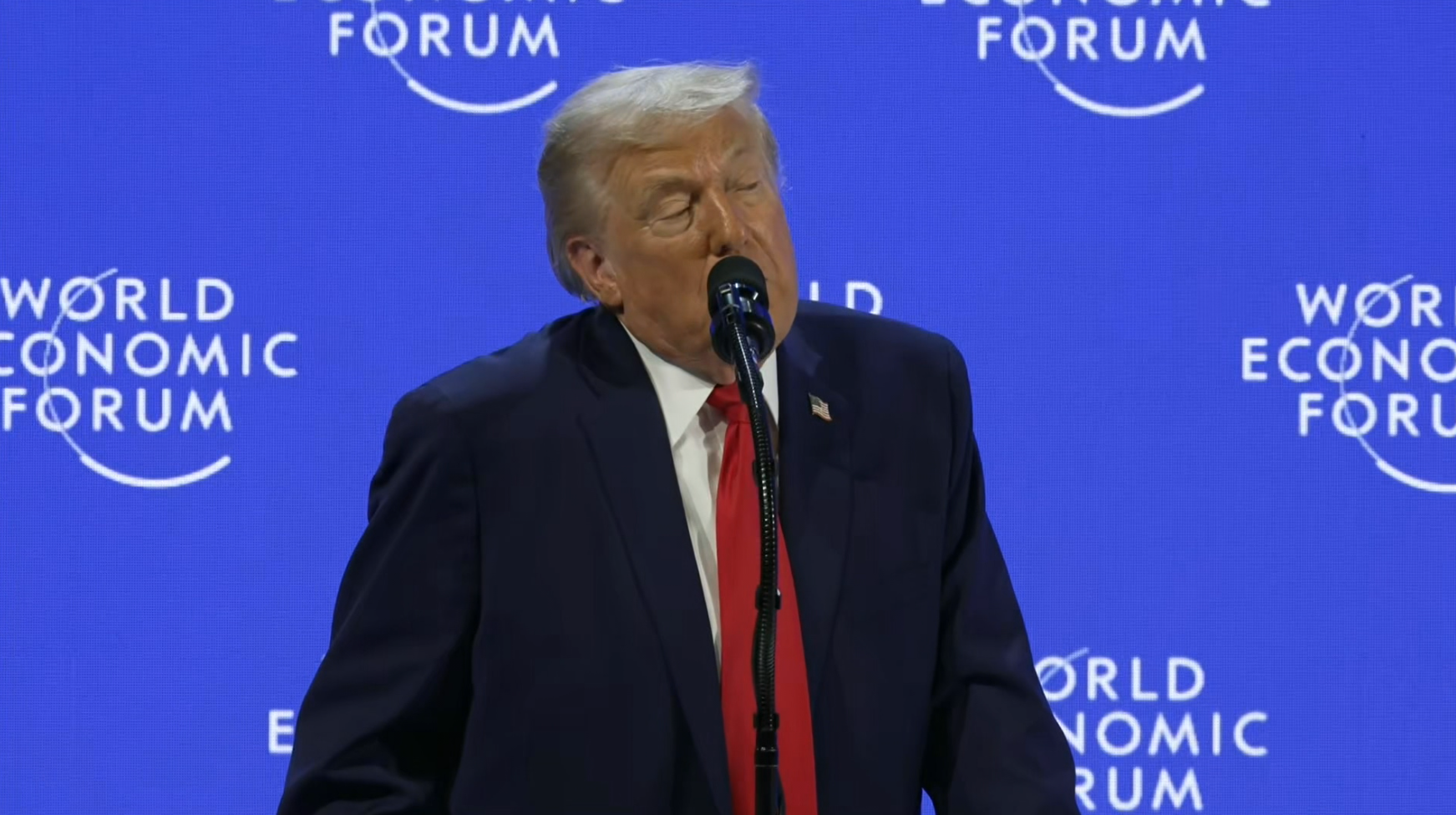 |
| “They’ll end up being the 51st state, because that’s the only way it works,” Trump told the crowd. “We don’t need them, but they need us.” NTV |
Along the Canada-U.S. border the states neighbouring Canada are deeply unhappy about their president's tariff war with Canada, according to a new analysis by Advancing American Freedom. Canada, it points out, plays a vital economic role even in deeply red Republican states like Montana and North Dakota, and not only in Maine with its lumber trade, and Michigan's heavily integrated automotive manufacturing.
According to the AAF analytics, 62 and 55 percent of Maine and Vermont's international goods trade is accounted for by Canada. As for North Dakota and Montana, states that President Trump carried by 36 and 20 percentage points respectively in 2024, trade with Canada accounted for 77 percent in both of those Republican states. Mineral fuels account for 80 percent of North Dakota's exports to Canada, exempt from Canadian countertariffs.
The disruption in trade between signal American states and Canada has had a deleterious impact not only in Canada, but in the United States as well, and a rising tide of anger over their imposition is impinging on the prospects of the upcoming midterm elections. In deep-red states the impact of the tariffs has made for some pressure points for the White House to consider; whether party loyalty will carry through to election day or whether those Republicans speaking out against the tariffs will express their frustration at the ballot box.
 |
| U.S. Ambassador to Canada Pete Hoekstra said in a recent podcast appearance that American officials are 'closely watching' for election interference by Canadians. (Justin Tang/The Canadian Press) |
The Trump administration's representative in Canada, Ambassador Pete Hoekstra, as far from a diplomat as anyone can imagine, has issued a stark warning to Canada that the U.S. is 'watching closely' and Canada had better keep its 'nose out of' American politics. "We're monitoring it, we're evaluating it and if some of it becomes election interference then America will respond to it", warned Hoekstra darkly, accusing Canada of making trouble for the Trump administration.
Analysts have pointed out that this president works to bypass Congress; the tariffs have been imposed by presidential policy without Congressional involvement, leaving trade watchers skeptical that the disruptive disagreements between Republican senators and representatives uncomfortable with the tariff war and how it has impacted their states as well as voting patterns, will result in any notice by President Trump whose mercurial impulsiveness that fails to understand repercussions, no one can control.
"In terms of trade policy, it's very executive-driven these days", points out trade policy analyst Alfred Carillo at the Cato Institute. "Even if Congress did [push back], it probably wouldn't have made a difference." John Hopkins' Sands expressed his dismay with the apparent indifference to the electoral costs by President Trump who is immovable on his tariff file, indifferent to how his personal animosity to Canada may eventually play out.
The pure fact of the matter is that after several years of back-and-forth tariff threats that have proven to impact industry and consumers on both sides of the border, a majority of Americans are known, in a current atmosphere of a crisis of affordability to oppose the tariffs. At the same time it is believed by those who have a stake in this game of one-upshmanship, that Mr. Trump plans to continue his tariff agenda, whether or not it costs the GOP.
Voting outcomes on November 3 will demonstrate whether that opposition will ultimately transcribe to votes.
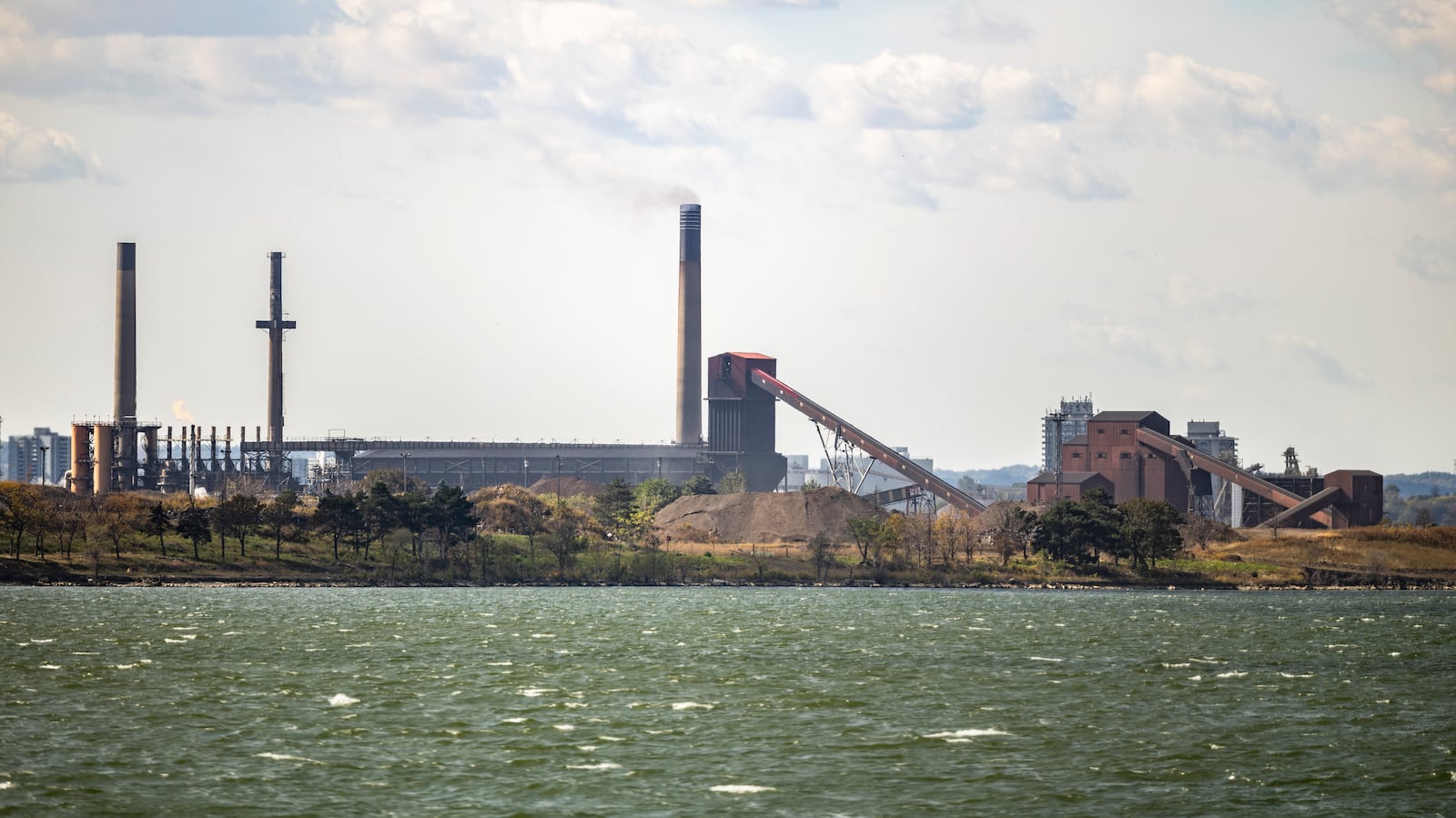 |
Canadian steelmakers offset some U.S. tariff pain with domestic demand Stelco's Hamilton operations steel production facility is pictured from across the Hamilton Harbour in Burlington, Ont., on Friday, Oct. 9, 2026. THE CANADIAN PRESS/Nick Iwanyshyn |
"In a normal presidency, yes, because it means there's somebody who the president knows who can pick up the phone and have a conversation ... and say 'We really need to do this for my voters who are your voters too.""This president hasn't worked Capitol Hill that much ... [Trump] seems to write off the whole institution as irrelevant.""His indifference to the fate of his party in Congress is ... pretty unusual."Christopher Sands, director, Center for Canadian Studies, Johns Hopkins School of Advanced International Studies, Washington"I think it does matter. In fact, this has always been part of Canada's playbook, which is to lobby with state and local governments that are Republican that are trade dependent with Canada.""Whether it's sufficient to ... nudge the president is another matter altogether.""[It] doesn't necessarily mean that the president is gonna change his tune."Christopher Hernandez-Roy, acting director/senior fellow, Americas Program, CSIS, Washington
Labels: Affordability Uncertainty, American Consumers, President Trump's Trade War With Canada, Republican Push-Back, U.S./Canada Industrial Relations/Integration
posted by Pieface @ 8:23 PM


0 Comments:
Post a Comment
<< Home