"[Cartels] have engaged in historic violence and terror throughout our hemisphere -- and around the globe -- that has destabilized economies and internal security of countries but also flooded the United Sates with deadly drugs, violent criminals, and vicious gangs."
"[The Defense Department would] undoubtedly play an important role toward meeting the president's objective to eliminate the ability of these cartels to threaten the territory, safety and security of the United States and its people."
Sean Parnell, chief spokesman, U.S. Defense Department
"[While not a signatory to the UN Convention on the Law of the Sea, the American military's legal advisers have nonetheless stated that the U.S. should] act in a manner consistent with its provisions."
"[Countries, under the convention are not to interfere with vessels in international waters, with limited exceptions, where a state is permitted to seize a ship ['hot pursuit'] chasing a vessel from a country's waters into the high seas]."
"Force
can be used to stop a boat but generally this should be non-lethal
measures. [The use of aggressive tactics must be] reasonable and necessary in self-defence where there is immediate threat of serious injury or loss of life of enforcement officials. [The U.S. moves were indubitably] unlawful under the law of the sea."
Prof Luke Moffett, Queens University Belfast
"The fact that U.S. officials describe the
individuals killed by the US strike as narco-terrorists does not
transform them into lawful military targets. The U.S. is not
engaged in an armed conflict with Venezuela or the Tren de Aragua
criminal organization."
"Not only does
the strike appear to have violated the prohibition on the use of force,
it also runs afoul of the right to life under international human
rights law."
"[The use of force in this case could amount to an] extrajudicial
arbitrary killing [and] a fundamental violation of human rights."
"Labelling everyone a terrorist does not make them a lawful target and enable states to side-step international law."
Professor Michael Becker, Trinity College Dublin
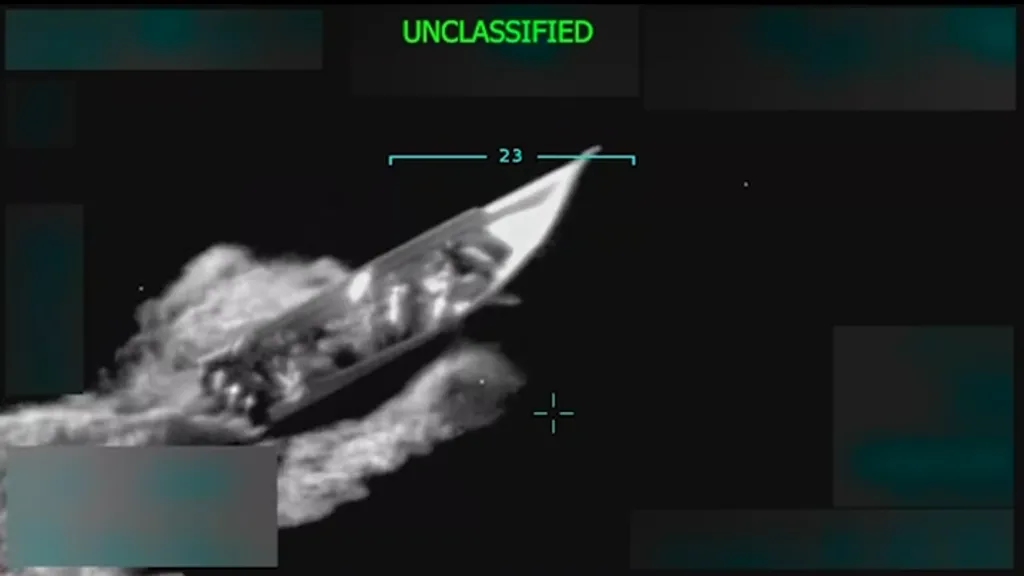 |
| Donald Trump posted a video on social media which he said showed the moment of the strike Donald Trump/Truth Social |
On Tuesday, U.S. President Donald Trump revealed that American forces under his command carried out a strike that destroyed a vessel which he claimed had sailed from Venezuela on an illicit mission. The boat operated by the Tren de Aragia cartel, he contended, was carrying a shipment of drugs...destination United States. This, in relation to a strike that occurred by American forces on a boat sailing in the Caribbean Sea. That strike, according to the White House, killed 11 drug traffickers whose deaths may have violated international human rights.
No details were available from U.S. defence officials respecting the strike. Footage of the strike was shared by Mr. Trump on Truth Social; legal authority relied upon to justify the strike was included in Trump's footage. "What we have seen so far suggests that the U.S. armed forces did
something that it has never done, to our knowledge, in more than 35
years of military involvement in drug interdiction in the Caribbean Sea:
an instant escalation to disproportionate lethal force against a
civilian vessel without any apparent self-defence justification", stated the Washington Office of Latin America (WOLA), a non-governmental
organization.
The U.S. action
"violates the letter and spirit of more than a century of international
standards and the United States's own regulations for maritime
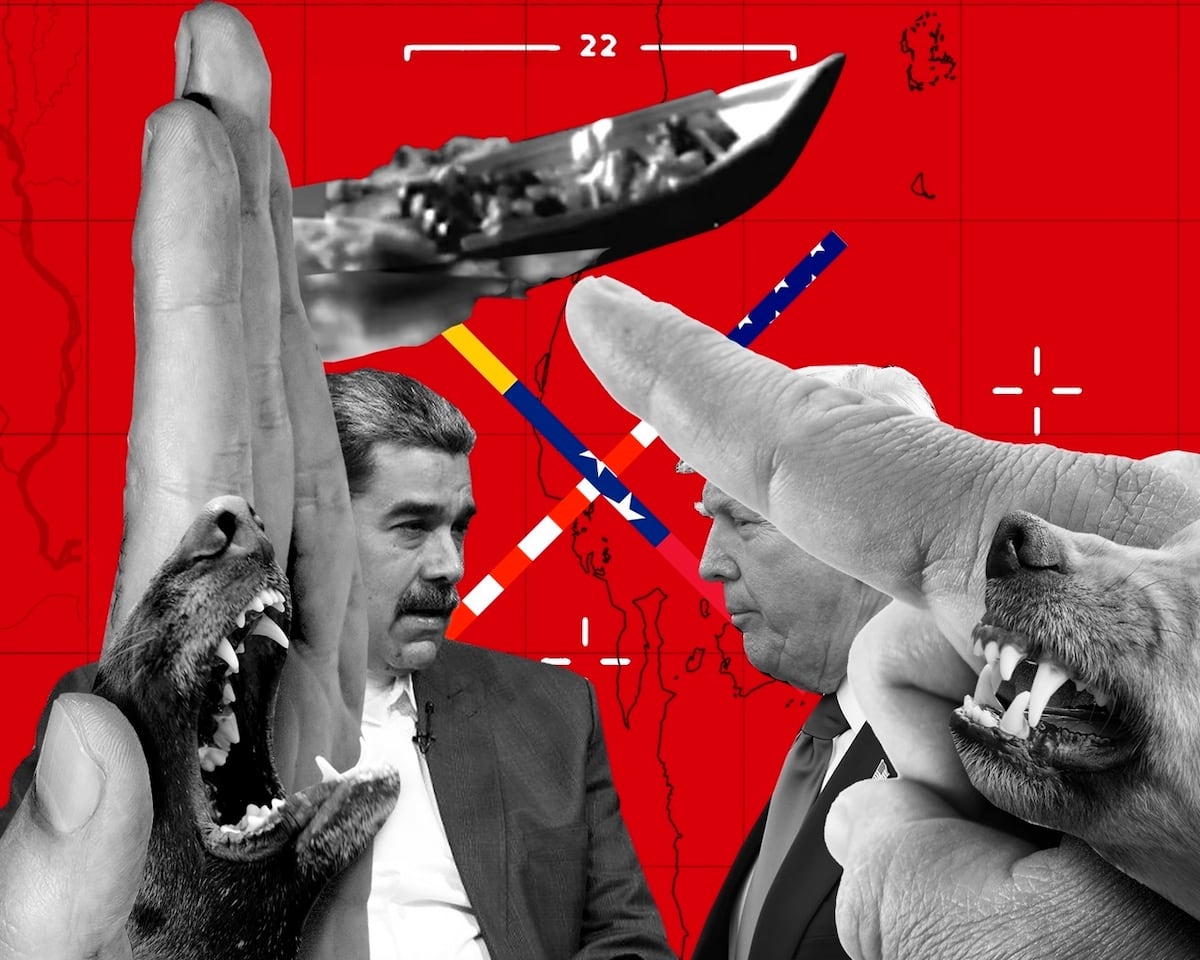
operations against civilian vessels in international waters", WOLA claimed. That was a kind of prelude, a warning shot across the bow of Venezuala's government led by Nicolas Madura. It has become clear of late that the Trump administration has been aggressive in raising tensions between Washington and the Venezuelan president. Grooming a situation that holds promise of developing into a direct kinetic confrontation.
American naval forces have been building a presence outside Venezuelan waters, while the administration increases its belligerent rhetoric on fighting drug cartels. Mr. Trump spoke of Maduro as a leader of a terrorist cartel, leading some to suspect whether the end goal is really to counter drug-smuggling at sea, or is equally ambitious on helping to stage a regime change conflict.
 |
| Sr. Garcia El Pais International |
A still-secret directive was signed by Mr. Trump in July with instructions to the U.S. Defense Department to make use of military force against some Latin American drug cartels his administration has labelled 'terrorist' organizations. Simultaneously the administration declared a Venezuelan criminal gang to be a terrorist organization, and that the Venezuelan president is its leader, as an illegitimate government led by a terrorist-drug-running enabler.
In response to the U.S. Defense Department moving Navy assets, including warships into the southern Caribbean Sea, Mr. Maduro announced he was deploying 4.5 million militiamen around his country, vowing to "defend our seas, our skies and our lands" from American incursions.
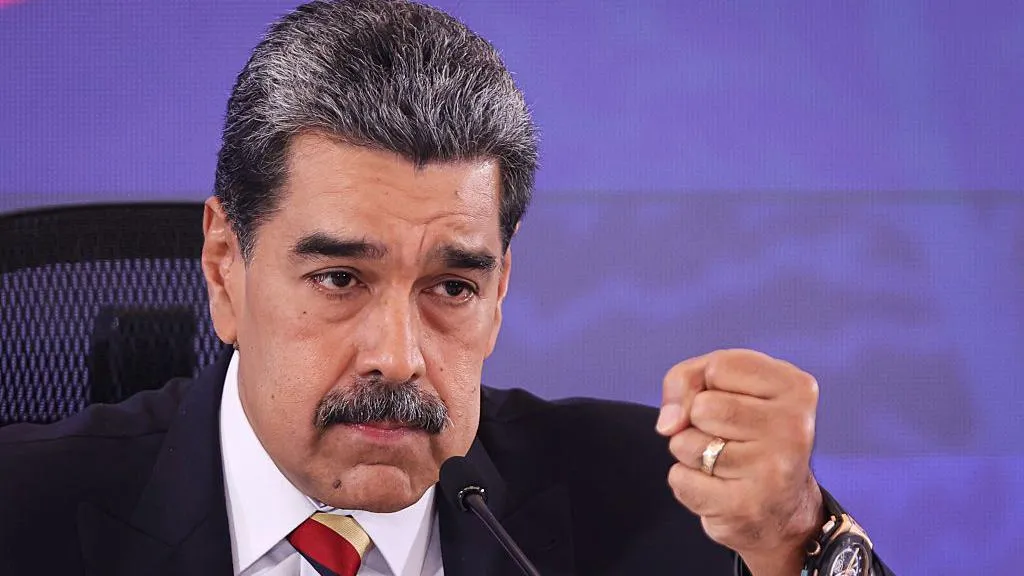 |
| Venezuelan President Nicolás Maduro has regularly clashed with the Trump administration Getty |
Three guided-missile destroyers are being deployed to the region. The warships have been tasked, according to U.S. officials, to target boats operated by drug cartels transporting fentanyl to the United States. Additionally the Iwo Jima Amphibious Ready Group that includes the U.S.S. San Antonio, the U.S.S. Iwo Jima and the U.S.S. Fort Lauderdale, carrying 4,500 sailors along with the 22nd Marine Expeditionary Unit, itself with 2,200 Marines are being deployed, according to Defense Department officials. Additionally several P-8 surveillance planes and a submarine are deploying to the region.
The warships are guided-missile destroyers, Arleigh Burke-class, equipped with over 90 missiles including surface-to-air missiles which can conduct anti-aircraft and anti-submarine warfare, and shoot down ballistic missiles. All this might and power to counter the drug-running boats of drug cartels.
A few days back it was revealed by a CBS news report and confirmed by the Defense Department that two Venezuelan aircraft "flew near a U.S. Navy vessel in international waters." The Defense Department issued a statement to the effect that..."This
highly provocative move was designed to interfere with our counter
narco-terror operations. The cartel running
Venezuela is strongly advised not to pursue any further effort to
obstruct, deter or interfere with counter-narcotics and counter-terror
operations carried out by the US military."
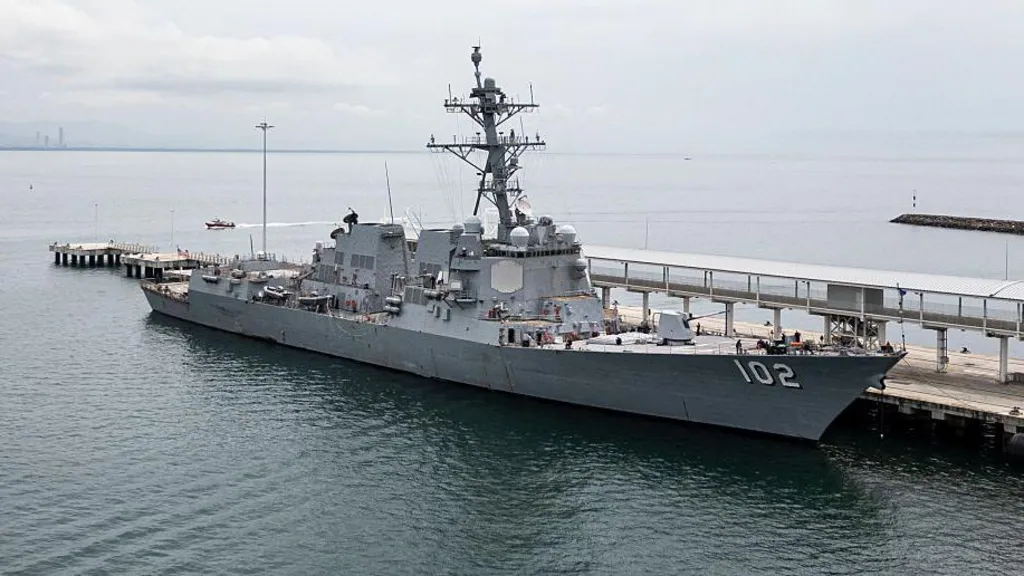 |
| The US has moved additional warships into the Caribbean Getty Images |


0 Comments:
Post a Comment
<< Home