Ruminations

Blog dedicated primarily to randomly selected news items; comments reflecting personal perceptions

Monday, March 30, 2026

The U.S.-Mexico Border : "The Most Secure in History"

 
The Bureau of Alcohol, Tobacco, Firearms and Explosives (ATF) today announced that since January 20, 2025, it has seized 36,277 illegal crime guns and 2,317,999 rounds of ammunition from prohibited persons, gang members, and suppliers for transnational criminal organizations.
4,359 of these seized firearms were bound for Mexico, where they would have been used by violent drug cartels and gangs.  648,975 rounds of the seized ammunition were bound for Mexico, which averages to over 1,600 rounds per day.
Since President Donald Trump’s inauguration on January 20, 2025, ATF has led an aggressive nationwide effort to dismantle the domestic and international networks that arm violent criminals.
“Illegal crime guns increasingly originate from every state in the country. This is not a southwest border problem, it is a national threat,” said ATF Deputy Director Robert Cekada. “ATF agents are aggressively targeting gangs, cartels, and transnational criminal organizations that illegally traffic firearms and turn American streets into war zones. We will dismantle these networks at every level, cut off their access to weapons, and hold every criminal fully accountable under the law”.
Office of Public Affairs, U.S. Department of Justice, February 2026
https://www.justice.gov/d9/styles/banner/public/2026-02/20260212_155128245_ios.jpg?itok=cNzHxT_t
Seized Weaponry, Office of Public Affairs, U.S. Department of Justice
 
According to authorities in Mexico, up to 500,000 guns from the United States are smuggled through to Mexico on a yearly basis. A figure disputed by a former agent of the U.S. Bureau of Alcohol, Tobacco, Firearms and Explosives, specializing in covert gun-trafficking networks who hazarded a more likely figure of a million smuggled firearms. This, against a more familiar backdrop of President Trump threatening Mexico over drug smuggling into the United States as his reason for sky-high trade tariffs.
 
President Claudia Sheinbaum has been doing her best to placate her American counterpart and has seen to it that Mexican forces have intensified their crackdown on Mexican drug cartels. While at the same time politely pointing out to Mr. Trump that it is American gunfire flooding Mexico with powerful weaponry that her own police, national guard and military are forced to deal with in their ongoing efforts to try to control drug trafficking. 
 
The United States, it seems, is more interested in what is entering across the border from Mexico to the U.S. than monitoring the reverse flows. While the U.S. focuses on drugs entering and the need to stop the inexhaustible flow, pouring billions of dollars into intelligence, investigation and arrests, the Sinaloa Cartel powerhouse responsible for the bulk of fentanyl pouring through U.S. streets, is facing a multiple-pronged war of its own, against U.S. drug enforcers and other Mexican cartels challenging its primacy.
 
The result has been an explosion of gun-smuggling that arms smugglers in the U.S. are working happily overtime to fulfill the resulting orders. The U.S. plan to use its military to intervene in Mexico could see American soldiers confronted by ruthless Mexican cartel members armed with the latest in American firepower. Weapons that include the like of grenade launchers, machine guns and assault rifles.
 
The weapons are frequently stripped to their parts, concealed inside truck panels, hidden compartments in vehicles and then transported. Private planes can be stuffed with weapons parts, parts lashed to speedboat hulls or drivers stashing weapons in a car trunk. Not completely unaware, in 2020 the U.S. government initiated a federal task force for arms trafficking to be intercepted from the U.S. to Mexico.
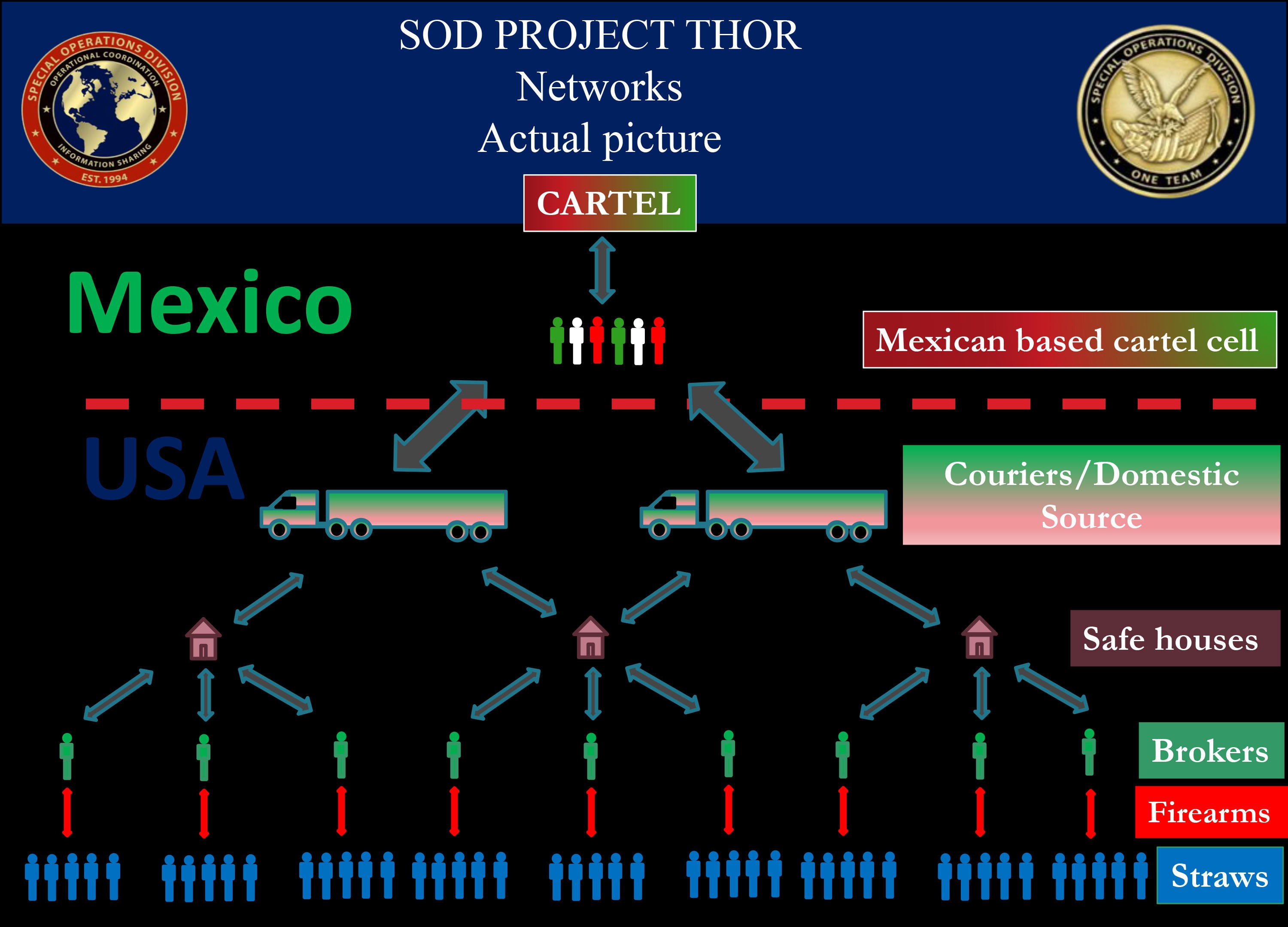
 
https://assets1.cbsnewsstatic.com/hub/i/2023/09/15/5b3163ff-8982-4a0d-bd77-51715fe269af/thor-network-infographic2.jpg
This infographic was created by the Drug Enforcement Administration's Special Operations Division as a visual representation of intelligence findings, to depict how an American supply chain provides firearms and ammunition to Mexican cartels. Project Thor / Obtained by CBS News
 
According to the ATF, over 4,300 firearms en route to Mexico were seized; representing a fraction of hundreds of thousands of weapons estimated annually to cross into Mexico. Mexico's security minister has asked his counterparts in the U.S. to investigate sources and suppliers of military-grade weapons not available from gun shops. The heavy weaponry that the Sinaloa cartel and Jalisco New Generation arm themselves with are of increasing concern to Mexico. 
 
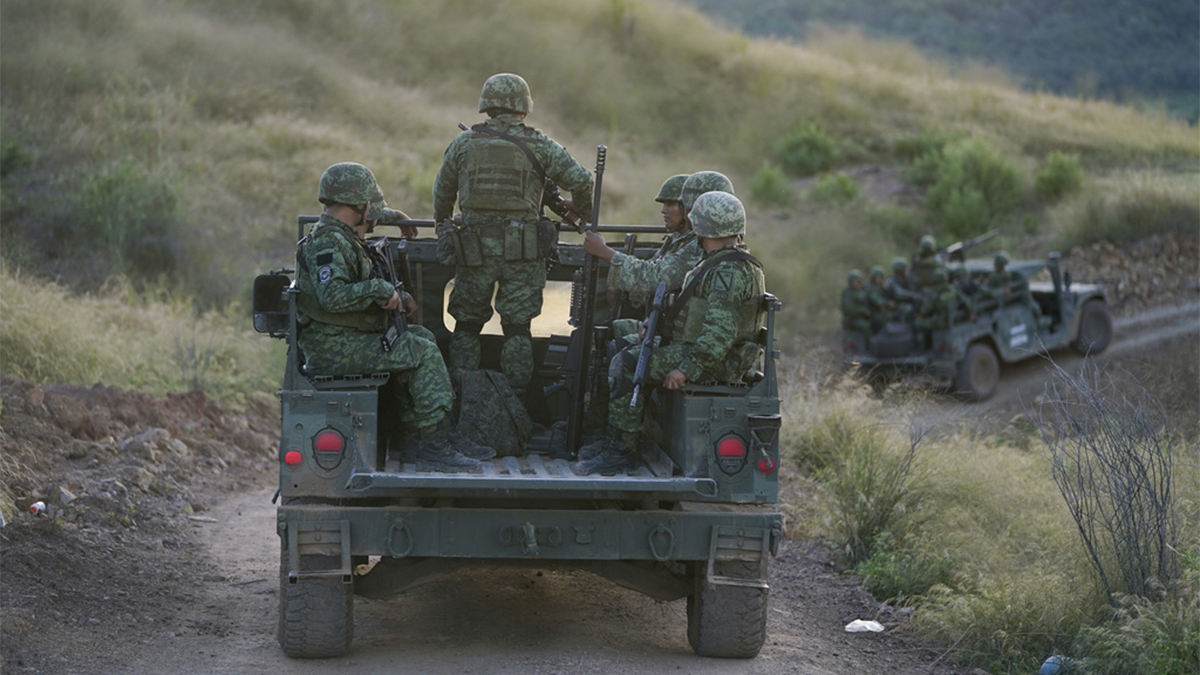
Pressure from the Trump administration moved Mexico to deploy thousand of National Guardsmen and military forces to Sinaloa state. Highway checkpoints have been increased countrywide. Leading the smuggling cells to shift to air transport with the use of private planes and landing strips, up to the present depended on for drug shipments, and now carrying smuggled weaponry. 
 
From multiple states in the U.S.  a network of trafficking coordinators operate smuggling cells. American  citizens or residents are paid by smugglers to buy firearms from licensed dealers at stores and gun shows. In recruiting individuals to legally procure guns, each buyer is tasked to walk in, buy an AR-15 or a .50-caliber rifle, then hand it off for cash, thank you very much. 
 
Gun store employees, managers and owners are being bribed. Some among them inflate purchase prices for their own profit, collect a 10 percent kickback, and falsify records. Information from past customers are reused to conceal such off-the-books sales. The collected weapons are then assembled in 'safe houses', the disassembled guns moved south in cargo trucks and fishing boats.
 
According to a former A.T.F. agent, firearms are considered a strategic lifeline to major criminal groups in Mexico. "We've put billions into the drug war and a fraction of that into weapons trafficking. If they lose their guns, they lose the war", he explained. Bribes are part of the picture, with payments handed out to U.S. officials, including Customs and Border Protection and others, to take care of interference into illegal shipments.
 
The agency, asked to explain accusations of bribes taken by its agents, stated that C.B.P. agents and officers "enforce our nation's laws along what is now the most secure border in history." 
 
https://www.justice.gov/d9/styles/banner/public/2026-02/20260212_155128473_ios.jpg?itok=Ork6M9YW
Seized Weaponry, Office of Public Affairs, U.S. Department of Justice


Labels: , , , , ,

Monday, September 08, 2025

Venezuela on Notice

"[Cartels] have engaged in historic violence and terror throughout our hemisphere -- and around the globe -- that has destabilized economies and internal security of countries but also flooded the United Sates with deadly drugs, violent criminals, and vicious gangs." 
"[The Defense Department would] undoubtedly play an important role toward meeting the president's objective to eliminate the ability of these cartels to threaten the territory, safety and security of the United States and its people." 
Sean Parnell, chief spokesman, U.S. Defense Department
https://ichef.bbci.co.uk/news/1024/cpsprodpb/3a9c/live/0d123430-88cf-11f0-8621-9dbb53d1b02b.jpg.webp
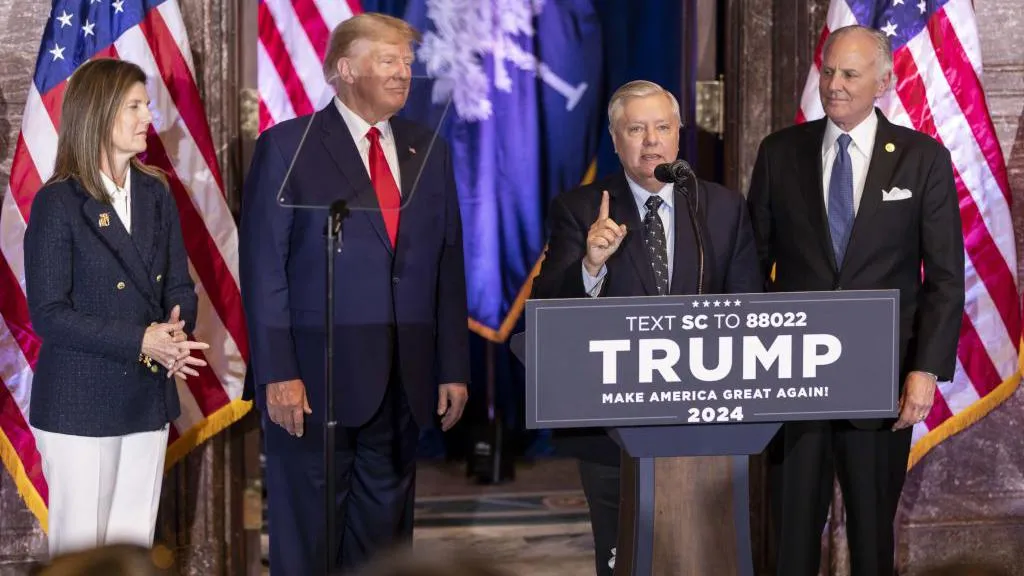
Republican Senator Lindsay Graham has defended the strikes   Getty Images
 
"[While not a signatory to the UN Convention on the Law of the Sea, the American military's legal advisers have nonetheless stated that the U.S. should] act in a manner consistent with its provisions." 
"[Countries, under the convention are not to interfere with vessels in international waters, with limited exceptions, where a state is permitted to seize a ship ['hot pursuit'] chasing a vessel from a country's waters into the high seas]."
"Force can be used to stop a boat but generally this should be non-lethal measures. [The use of aggressive tactics must be] reasonable and necessary in self-defence where there is immediate threat of serious injury or loss of life of enforcement officials. [The U.S. moves were indubitably] unlawful  under the law of the sea."
Prof Luke Moffett, Queens University Belfast  
 
"The fact that U.S. officials describe the individuals killed by the US strike as narco-terrorists does not transform them into lawful military targets. The U.S. is not engaged in an armed conflict with Venezuela or the Tren de Aragua criminal organization."
"Not only does the strike appear to have violated the prohibition on the use of force, it also runs afoul of the right to life under international human rights law."
"[The use of force in this case could amount to an] extrajudicial arbitrary killing [and] a fundamental violation of human rights."
"Labelling everyone a terrorist does not make them a lawful target and enable states to side-step international law." 
Professor Michael Becker, Trinity College Dublin   
https://ichef.bbci.co.uk/news/1024/cpsprodpb/e02d/live/c79f6990-8969-11f0-9df7-33c9b75a833d.png.webp
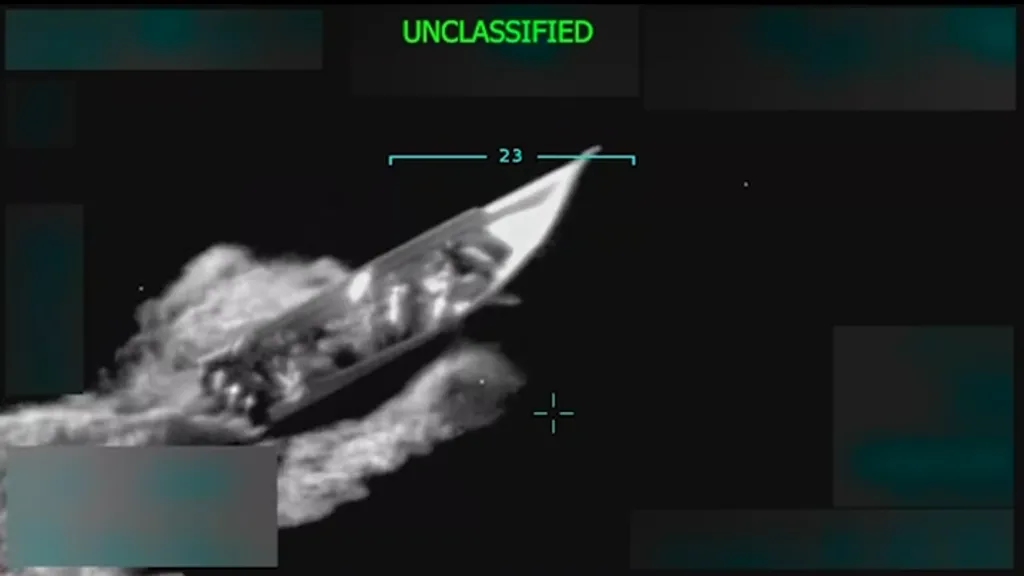
Donald Trump posted a video on social media which he said showed the moment of the strike           Donald Trump/Truth Social

On Tuesday, U.S. President Donald Trump revealed that American forces under his command carried out a strike that destroyed a vessel which he claimed had sailed from Venezuela on an illicit mission. The boat operated by the Tren de Aragia cartel, he contended, was carrying a shipment of drugs...destination United States. This, in relation to a strike that occurred by American forces on a boat sailing in the Caribbean Sea. That strike, according to the White House, killed 11 drug  traffickers whose deaths may have violated international human rights.

No details were available from U.S. defence officials respecting the strike. Footage of the strike was shared by Mr. Trump on Truth Social; legal authority relied upon to justify the strike was included in Trump's footage. "What we have seen so far suggests that the U.S. armed forces did something that it has never done, to our knowledge, in more than 35 years of military involvement in drug interdiction in the Caribbean Sea: an instant escalation to disproportionate lethal force against a civilian vessel without any apparent self-defence justification", stated the Washington Office of Latin America (WOLA), a non-governmental organization.
 
The U.S. action "violates the letter and spirit of more than a century of international standards and the United States's own regulations for maritime operations against civilian vessels in international waters", WOLA claimed. That was a kind of prelude, a warning shot across the bow of Venezuala's government led by Nicolas Madura. It has become clear of late that the Trump administration has been aggressive in raising tensions between Washington and the Venezuelan president. Grooming a situation that holds promise of developing into a direct kinetic confrontation.
 
American naval forces have been building a presence outside Venezuelan waters, while the administration increases its belligerent rhetoric on fighting drug cartels. Mr. Trump spoke of Maduro as a leader of a terrorist cartel, leading some to suspect whether the end goal is really to counter drug-smuggling at sea, or is equally ambitious on helping to stage a regime change conflict. 
 
https://imagenes.elpais.com/resizer/v2/IC2MBSBMBFDMHOQL5VA6UXDCWM.jpg?auth=a751b20d687ff03fd7eecc8b12aeff6a204d6198fd594b8f4346d354e7b90082&width=1200
Sr. Garcia  El Pais International
 
A still-secret directive was signed by Mr. Trump in July with instructions to the U.S. Defense Department to make use of military force against some Latin American drug cartels  his administration has labelled 'terrorist' organizations. Simultaneously the administration declared a Venezuelan criminal gang to be a terrorist organization, and that the Venezuelan president is its leader, as an illegitimate government led by a terrorist-drug-running enabler. 
 
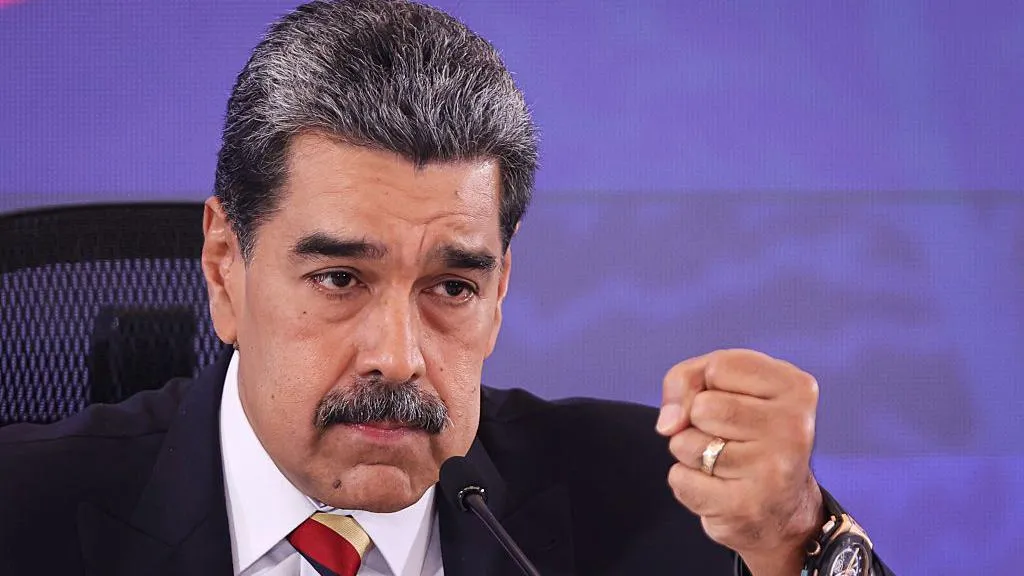
In response to the U.S. Defense Department moving Navy assets, including warships into the southern Caribbean Sea, Mr. Maduro announced he was deploying 4.5 million militiamen around his country, vowing to "defend our seas, our skies and our lands" from American incursions. 
 
https://ichef.bbci.co.uk/news/1024/cpsprodpb/f037/live/f41fa2a0-8923-11f0-b925-b728614782d0.jpg.webp
Venezuelan President Nicolás Maduro has regularly clashed with the Trump administration   Getty
 
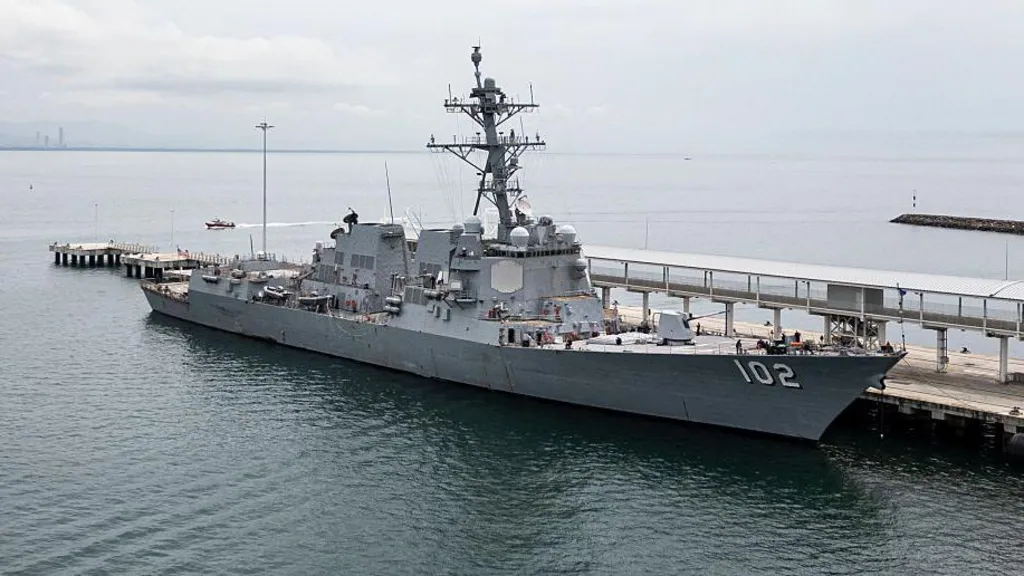
Three guided-missile destroyers are being deployed to the region. The warships have been tasked, according to U.S. officials, to target  boats operated by drug cartels transporting fentanyl to the United States. Additionally the Iwo Jima Amphibious Ready Group that includes the U.S.S. San Antonio, the U.S.S. Iwo Jima and the U.S.S. Fort Lauderdale, carrying 4,500 sailors along with the 22nd Marine Expeditionary Unit, itself with 2,200 Marines are being deployed, according to Defense Department officials. Additionally several P-8 surveillance planes and a submarine are deploying to the region.
 
The warships are guided-missile destroyers, Arleigh Burke-class, equipped with over 90 missiles including surface-to-air missiles which can conduct anti-aircraft and anti-submarine warfare, and shoot down ballistic missiles. All this might and power to counter the drug-running boats of drug cartels.  

A few days back it was revealed by a CBS news report and confirmed by the Defense Department that two Venezuelan aircraft "flew near a U.S. Navy vessel in international waters." The Defense Department issued a statement to the effect that..."This highly provocative move was designed to interfere with our counter narco-terror operations. The cartel running Venezuela is strongly advised not to pursue any further effort to obstruct, deter or interfere with counter-narcotics and counter-terror operations carried out by the US military."

https://ichef.bbci.co.uk/news/1024/cpsprodpb/5b9d/live/7e880730-8923-11f0-a8e2-831203df0ced.jpg.webp
The US has moved additional warships into the Caribbean   Getty Images


Labels: , , , ,

Tuesday, July 01, 2025

Increasingly Threatening Drone Weaponization by Non-State Actors

"Drones serve multiple functions, including intelligence, surveillance, and reconnaissance, as well as command and control in clashes between cartels, against Mexican state forces, or even against self-defense groups."
"They have also been used for aerial bombings, direct attacks, and propaganda or psychological warfare operations."
Robert Bunker, co-founder, Small Wars Journal 
 
"Even before Russia’s February 2022 invasion of Ukraine, unmanned aerial systems [UASes] and other advanced technologies were being employed by criminals, terrorists, and other non-state actors in Latin America in increasingly innovative and problematic ways."
Evan Ellis, author, “Latin America’s Drone Problem”, professor, U.S. Army War College Strategic Studies Institute

"The adoption of drones by TCOs [transnational criminal organizations] is the latest example of how powerful criminal networks often borrow from military and insurgent tactics to challenge the state."
"Mexico, for instance, has seen the rise of so-called narcotanques, monstruos [monsters], or, more technically, Improvised Armored Fighting Vehicles—up-armored civilian trucks and cars sporting heavy weaponry and often used to spearhead cartel assaults."
"In the case of drones however, TCOs may find even more uses for cheap commercial UASes than the conventional soldiers on both sides of the war in Ukraine."
CSIS/Center for Strategic & International Studies 
https://i0.wp.com/insightcrime.org/wp-content/uploads/2025/02/Feature-image-Crime-Name-file.jpg?w=1336&quality=100&ssl=1
Drones Fuel Criminal Arms Race in Latin America   insightcrime.org
 
There has been a revolution on battlefields in the past several years, with drones increasingly being used as unmanned vehicles of attack and destruction, a much less expensive alternative to flying warplanes and risking the loss of pilots when they're struck. Remotely controlled drones have proven indispensable in combat zones for their versatility, nimbleness, cost expendibility and ease of use. Ukraine's manufacture of technologically advanced drones has proven to be a brilliant combat success able to penetrate deep into Russian territory, wreaking havoc and demoralizing the Russian population. 
 
The battlefields in Ukraine have proven to be a military test case for the use of drones, in the country's response to the unequal combat challenge it faces through the assault of a much larger force than its own. Ukraine has managed against considerable odds, to hold its own, even while Russian troops are slowly and incrementally making inroads in capturing and annexing more Ukrainian territory as time goes by. Drone technology has given Ukraine the advantage of greater flexibility and surprise, to set Moscow back on its invasion heels, through sheer plucky counteroffense strategies. 
 
As with any innovations in military technology, all the more so when the new designs and purposes of an unmanned vehicle that can be adapted for a variety of purposes, it could never be confined to military use. Low production cost and greater market visibility made drones appealing to entrepreneurs in a variety of uses, from commercial delivery vehicles to monitoring traffic, to aerial photographic purposes, as well as appealing to amateur flight enthusiasts viewing the technology as yet another entertaining hobby.
 
And then there is the criminal class of entrepreneurs which can always find such technologies useful for a variety of purposes; sneaking drugs or arms over prison walls at their prisoner recreation sites, delivering drugs from one area of a country to another by powerful drug cartels. And the use of militarized drones to target rival gangs, and perhaps most troubling of all, manipulating drones equipped with weaponry to target police drug squads or the military.
 
Latin America appears to have taken wholeheartedly to the use of unmanned aerial vehicles to make their activities even more effectively efficient; for guerrilla insurgencies and drug cartels alike. In this part of the world drone use has devolved in the past year for use in drug warfare; testing ground use has surged in frequency, lethality and sophistication, becoming a growing threat to public safety, sovereign nationality and stability of entire regions. 
 
A report authored by Professor Evan Ellis with the U.S. army War College titled "Latin America's Drone Problem" warns of the destabilization and danger presented by drone use.
 
https://csis-website-prod.s3.amazonaws.com/s3fs-public/styles/1400x600/s3/2025-06/GettyImages-2208756128_Crop1.jpg?VersionId=4KoTPi3WPtIaMrPgzxOTeRX5lJzAeBFS&h=266da715&itok=BWF6zZ4J
Photo: MARCOS PIN/AFP via Getty Images
 
The use of drones readily available commercially at preferential cost, have been used to spy on authorities on border crossings, for smuggling cellphones into prisons and to deliver crude explosives to high-value targets. Their use for drug trafficking, transporting narcotics from Mexico across to the United States is not particularly new. But what is different, according to the report, is the increase in weaponization of the technology. 
 
Several months ago, a Colombian soldier was targeted in Catatumbo by a drone launched by the ELN guerrilla group. This was in response to a military operation where 80 people were killed and at least 50,000 were displaced. In Mexico, about the same time, a drone just missed assassinating General Jorge Alejandro Gutierrez in Chihuahua, during an ambush. 
 
A drone loaded with 40 pounds of explosives in Ecuador slammed into the roof of the country's maximum-security prison, La Roca, where plans were afoot to damage the prison to enable a mass prisoner escape to take place. The U.S. Drug Enforcement Administration identified over 150 drones used in cross-border criminal activity between 2012 and 2014. Ten years on, the numbers have increased substantially. The situation has led some Latin American governments to invest in drone detection and counter-drone technologies.
 
Countering the threat remains fragmented and underfunded, however with procurement delays, weak co-ordination between agencies and above all, limited access to cutting-edge tools which have left many countries' authorities desperate to successfully counter increasingly tech-savvy criminal adversaries.  
 
https://images.firstpost.com/uploads/2025/03/MexicoArmyDroneAttacks1200AP-2025-03-ceedf00f31ae9c6481e2b8c038ccea57.jpg?im=FitAndFill=(596,336)
Soldiers patrol near the hamlet Plaza Vieja in the Michoacan state of Mexico. The Mexican army acknowledged for the first time on August 2, 2024, that some of its soldiers have been killed by drug cartel bomb-dropping drones in the western state of Michoacan, without providing fatality numbers. AP

Labels: , , ,

Sunday, January 12, 2025

"One Dies and Ten More Addicts are Born ... We Don't Worry About Them"

"You inject this into a hen, and if it takes between a minute and a minute and a half to die, that means it came out really good."
"If it doesn't die or takes too long to die, we'll add xylazine."
Fentanyl cook 

"The illicit market gets much more benefit from its substances by cutting them with different things such as xylazine."
"You enhance it and therefore need less product, and you get more profit."
Alexiz Bojorge Estrada, deputy director, Mexico mental health and addiction commission
Mexico’s government on Dec. 3 announced the largest-ever seizure of fentanyl in Sinaloa state. The Sinaloa Cartel has been split by warring factions, but production continues. Omar H. Garcia Harfuch/Handout  via REUTERS
 
Cartel laboratories in Mexico are where the synthetic opioids that reach North American markets derive from. Those who are called 'cooks' mix chemicals to the point where they are felt to be acceptable for the street market; precision is not a prime consideration, whereas the cartel knows that the products that provide a big hit are; dangerous but totally effective, as far as the end-users are concerned and this is where their profits lie. 

Those who spend their time mixing chemicals in rudimentary cook sites, by default expose themselves to toxic substances, so much so that on occasion some cooks end up retching, then they pass out and occasionally die. University chemistry students are being recruited by the cartels to work as cooks. One of these students spoke to an undercover investigator revealing that drug users living on the street are sometimes brought in to test their formulas.
 
https://static01.nyt.com/images/2024/12/29/multimedia/29mexico-fentanyl-dispatch-1-ljqz/29mexico-fentanyl-dispatch-1-ljqz-superJumbo.jpg?quality=75&auto=webp
New York Times
 
Injecting them as guinea pigs with the synthetic opioid. "We've had people convulse, or start foaming at the mouth", the student said. No one has yet died in her experience she said, but bad batches have been responsible for bad outcomes. 

In Culiacan, Mexico, cartel operatives visit  homeless encampments, bringing with them syringes filled with the latest fentanyl formula, offering to pay those living at such camps up to $30, to those agreeable to allowing the experimental batches to be injected into them. There are times the operatives visit daily to watch as the drugs take effect; snapping photos and filming reactions to the drugs.

"When it's really strong, it knocks you out or kills you. The people here died", explained one of the homeless men who had volunteered himself repeatedly. The chemicals required to produce the opioid have become more difficult to access as a result of efforts to crack down on the synthetic opioid. Originally sourced from China, exports of the raw ingredients have now been restricted, leading the cartels to these risky new methods of maintaining production of fentanyl.
 
A member of the Mexican navy and a canine sentry patrol Mexico’s Port of Manzanillo last year. REUTERS/Daniel Becerril
 
This type of experimentation involves the drug being combined with a wide range of additives -- including animal sedatives and other anesthetics that can be dangerous. Testing the results they come up with involves injecting these mixtures into animals like rabbits and chickens, as well as human subjects willing to lend themselves as guinea pigs. According to a number of cooks, should the rabbits survive beyond 90 seconds, the drug is considered to be too mild for the American market. 
 
The U.S. government places the blame on fueling a synthetic opioid on the Sinaloa Cartel. According to one cook's explanation, he began recently mixing fentanyl with an oral surgery anesthetic. Another cook using a cartel safe house in Sinaloa State explained that if the batch was too insipid, he would add xylazine, an animal tranquilizer.

According to cartel members, drug users and experts, many users in North America look to access a particularly deadly batch they know will get them high. "One dies, and ten more addicts are born", one operative for the cartel said: "We don't worry about them".

https://www.reuters.com/investigates/special-report/assets/drugs-fentanyl-brokers/claudia-sheinbaum.jpg?v=030114040125
Mexican President Claudia Sheinbaum at the National Palace in Mexico City last month with a letter destined for Donald Trump. The U.S. president-elect has threatened steep tariffs if Mexico fails to stem a tide of drugs and migrants flowing north. Carlos Ramos Mamahua/Presidencia de Mexico/Handout via REUTERS

Labels: , , , ,

 
()() Follow @rheytah Tweet