Our Public Institutions of Care and Healing
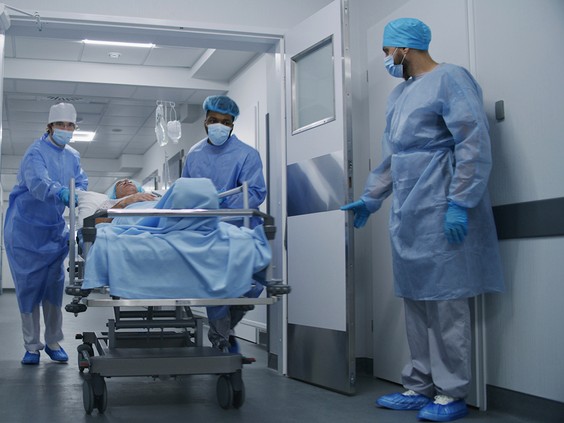 |
| Few cases of harm in hospitals involve true negligence, or, rarer still, a wilful, malicious intent to harm. However, many harms are avoidable or at least potentially preventable. Photo by Getty Images |
"[The overall harm rate acquired by patients in Canadian hospitals for the fifth year in a row is steady at six percent; outsizing the COVID years]; We haven't really rebounded.""The whole health system is still reverberating from the COVID period and still finding its feet."Melanie Josee Davidson, director of health system performance, Canadian Institute for Health Information"We've taken our eyes off the ball.""It shook everybody and woke everybody up [from hospital boards and CEOs to medical and nursing stations].""There was a lot of focus on patient safety, but, like any initiative, it fades over time if there isn't a constant pounding of the drum.""[Throw in COVID], and it took focus away from, how do we make current care better, to, how do we keep people alive during a horrible pandemic?"Dr. Ward Flemons, professor of medicine, University of Calgary"[It's] much like a game of snakes and ladders. We make advances, but too often we slide back due to shifting priorities, insufficient funding and resource capacity.""The extent of unsafe care is unknown to patients and the workforce.""To advance a safety culture, transparency must be valued, not weaponized."Ross Baker, University of Toronto and Peter Norton, University of Calgary

Two decades ago, the Baker-Norton report, produced by Ross Baker of the University of Toronto and Peter Norton of University of Calgary appeared. This was a stunning, watershed report detailing errors and unintended injuries that were occurring in Canada's hospitals. The report shook the health-care sector. Yet in the passage of time, tens of thousands of Canadians still become victims of harm during a stay in hospital and for many of these people, according to new data, these unfortunate experiences occur repeatedly.
Over 153,000 people in Canada -- analogous to one in 17 hospitalizations in the year between 2024/25 resulted in a patient experiencing a potentially preventable harm such as a drug error, hospital-acquired infection, "patient accident" (fall or radiation burn) or some level of incident deemed sufficiently serious to require treatment or a prolonged stay, according to the Canadian Institute for Health Information. Moreover some people experienced two or more harmful "events" in a quarter of the cases, during their hospital stay. Data based on 2.5 million hospital admissions.

Errors that did not impact the patient, considered to be 'near misses', were not captured in the data. Nor were harms undetected until the individual was sent home, or those involving people with mental health or substance use diagnoses, or harms occurring in emergency departments, or those that begin in hospital, but not detected until after discharge from hospital.
Safety experts feel that multiple, complex factors are mostly involved when things go wrong. Really wrong; such as the estimate that up to 23,000 people die in acute-care hospitals annually from adverse events, in Canada. Additionally, Canada is one of few countries in the world lacking a national patient safety plan. Efforts to improve hospital safety are recognized as "fragmented, and for the most part, voluntary", with no concerted spotlight on safety, wrote Drs. Baker and Thompson in Healthcare Quality.
The allied issue of a culture of secrecy to keep such errors under wraps and unreported have raised concerns, along with an absence of full and frank disclosures to patients and their families when errors occur. Few harmful episodes are the result of true negligence, much less do they result from a wilful, malicious intent to cause harm. The best of hospitals can see poor outcomes; on the other hand, many harms are avoidable or potentially preventable.
Six harms were identified as representing the majority of cases in Canadian hospitals: electrolyte and fluid imbalances, urinary tract infections, delirium, pneumonia, 'aspiration pneumonitis', and post-surgical or post-procedural infections.

On average, people harmed while in hospital end up staying five times longer on average than those who do not experience harms; close to a full month -- 28 days versus six days for someone who has not been harmed. Tying up badly needed hospital beds is one fallout from the situation, and the cost is another; where an average hospitalization has a price tag a mite under $10,000, caring for someone who was harmed comes to $45,000, some 4-1/2 times greater in cost.
There were 55,929 hospital-acquired infections in 2024/25 according to the data; 6,769 'patient accidents'; 33,470 procedure-associated harms (such as a puncture wound during surgery); and 86,817 medication-associated conditions. The crude rate overall of harm experienced was slightly higher in urban versus rural or remote hospitals, and men were somewhat more likely than women to experience harm.
"We also see fractures, or dislocations" in falls which account for most patient accidents where a frail patient might suffer a fracture or dislocated bone when moved, said Davidson of CIHI. "It's not necessarily that you got up and fell out of bed. But during the process of care there might be trauma to the body".
 |
| Hospital harm affects thousands of Canadians each year, report warns. (Credit: Pexels) |
"But it doesn't mean there isn't anything we can do about it.""You watch the drugs you give to people. You watch their fluid balance. You try to get them out of hospital as soon as possible. You try to get them up and mobile.""Nice to say, hard to do, but you get them into rooms where they can sleep at night."Dr. Ward Flemons
Labels: Accidental Falls, Canadian Hospitals, Delirium, Hospital-Acquired Infections, Incorrect Drug Dosage, Pneumonia, Unintended Harms
posted by Pieface @ 7:52 PM


0 Comments:
Post a Comment
<< Home