Heart Health Connections to Brain Health
 |
"There is a close interplay between heart and brain diseases.""As a result, heart and brain conditions frequently co-occur and confer reciprocal increased risks.""Almost no patients come through the door with only one thing.""This guideline was motivated by a growing recognition of the important connections between brain and heart diseases as a critical source of multiple chronic diseases in aging populations.""There is a close interplay between heart and brain diseases, with many comorbidities sharing overlapping risk factors, pathophysiological processes, and potential genetic and behavioural connections.""As a result, heart and brain conditions frequently co-occur and confer reciprocal increased risks."Dr. Jodi Edwards, director, Brain and Heart Nexus Research Program, University of Ottawa Heart Institute
New diagnostic medical guidelines, the first of their kind in Canada, are being promoted, reflecting the strong connection identified between heart disease and brain disease, leading to a recognition of the vital importance of screening an entire body rather than focusing on one isolated disease at a time. These new clinical guidelines reflect the latest evidence relating to how health providers should be focusing on the treatment of patience on recommendations based on new research findings.
Among the 10 practical recommendations for primary care professionals, subspecialists, allied health teams, and patients with cardiovascular risk factors are:
- Screening people with atrial fibrillation for risk of cognitive decline
- Screening for depression in people with coronary artery disease and treating with evidence-based therapies when detected
- Intensive blood pressure lowering in people at increased cardiovascular risk to lower the risk of cognitive impairment
- Intensified cholesterol lowering to prevent heart attack in people with a history of stroke, and to prevent stroke in people following a heart attack
- Routinely offering influenza, pneumococcus and shingles vaccination, especially to people aged 65 and over, to help prevent stroke, heart attack, and vascular cognitive impairment
- Use decision aids to facilitate guideline implementation
 |
| Canadian Cardiovascular Harmonized National Guideline Endeavour (C-CHANGE) University of Ottawa Heart Institute |
Reduced brain blood flow from heart disease through impaired mechanisms increases risk of cognitive issues, when normal blood flow fails to adequately reach the brain. The relationship between cardiac diseases and cognitive impairment have been studied in a number of research initiatives, one of which found atrial fibrillation to be associated with a 39 percent increased risk of cognitive impairment in the general population. A risk that may be responsible for an increase in early-onset dementia.
The most common type of sustained irregular heart rhythm, atrial fibrillation is related to electrical signal dysfunction which can lead to blood clots, strokes and heart failure. By age 80, this affects up to ten percent of the population; meaning that an estimated half million Canadians may be affected. Strong links have been established between heart disease and depression, with depression and anxiety considered under-recognized risk factors for women with cardiovascular disease.
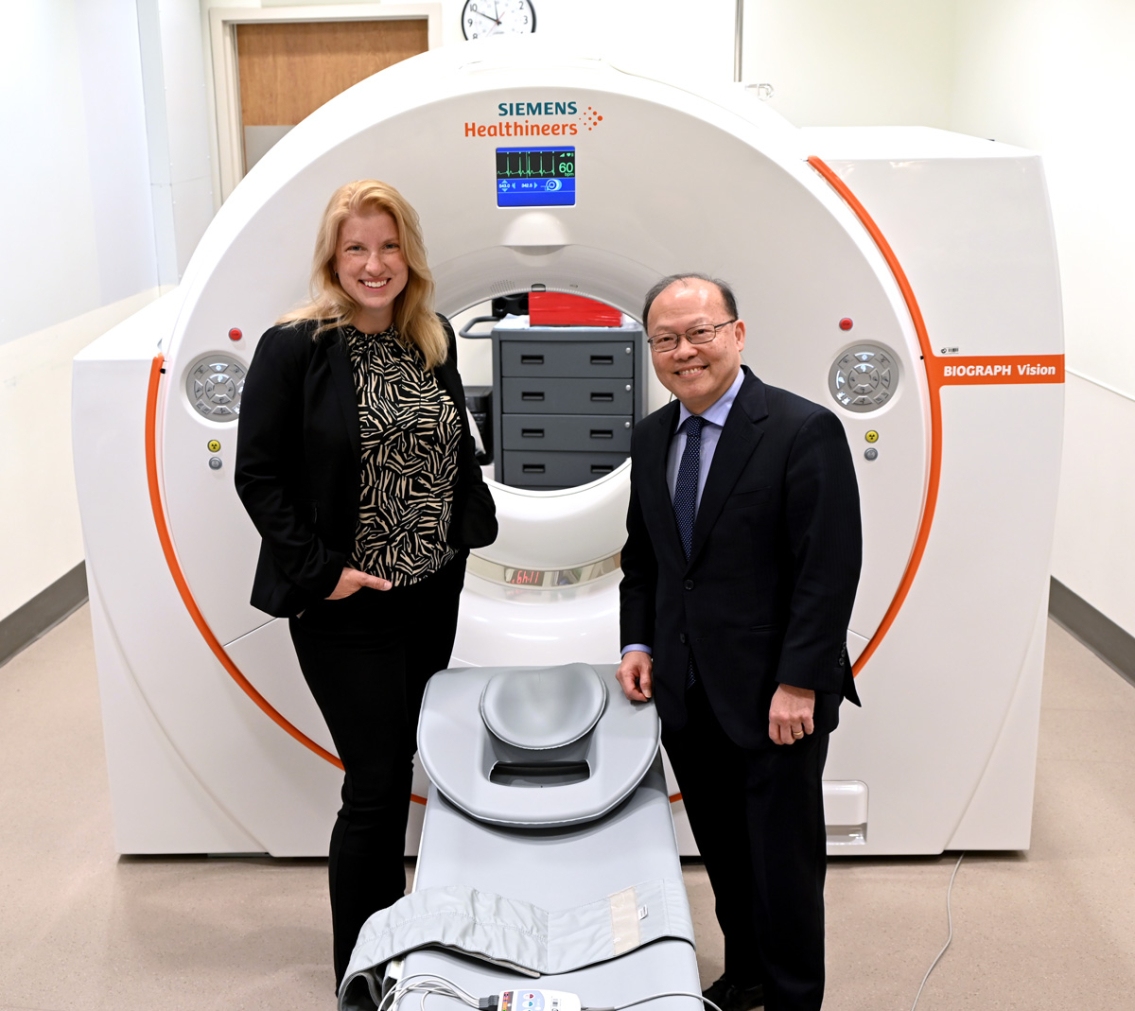 |
| At the University of Ottawa Heart Institute, Dr. Jodi Edwards (left) and Dr. Peter Liu, stand in front of a PET/CT scanner, an important diagnostic imaging tool to detect brain and heart diseases. |
Screening for patients diagnosed with certain cardiac conditions is among the recommendations contained in the guidelines, of which Dr. Edwards was the main author. Their purpose is to aid in informing health professionals whose patients have diagnoses related to cardiovascular disease, or risk factors. Screening people with atrial fibrillation for risk of cognitive decline; screening for depression in people with coronary artery disease, and treatment with evidence-based therapies if detected are among the recommendations.
People with high blood pressure and increased cardiovascular risk are called on through the guidelines to be treated with intensive blood pressure-lowering treatment to reduce risk of cognitive impairment. "Intensive" cholesterol-lowering treatment is to be prescribed to those with a history of stroke in prevention of heart attack; similarly to prevent stroke in patients who have undergone a heart attack.
According to the guidelines, health providers are encouraged to routinely offer patients 65 and up vaccines for flu, pneumococcus and shingles for stroke, heart attack and vascular cognitive impairment prevention. A growing body of evidence related to the protective benefits of some vaccines against the risk of cardiovascular disease and cognitive impairment validate attention to these issues. Recent studies find that shingles vaccine is associated with significantly lower risk of dementia development.
Adults with heart disease who received shingles vaccine experienced fewer heart-related complications within a year as opposed to those who were unvaccinated, according to a new study.
 |
| New guidelines out of the University of Ottawa Heart Institute are encouraging doctors in Canada to screen and treat heart, brain and mental health conditions in an integrated way. CBC News |
Labels: Brain and Heart Nexus Research Program, Canadian Medical Association Journal, New Medical Guidelines, University of Ottawa Heart Institute
posted by Pieface @ 8:59 PM


0 Comments:
Post a Comment
<< Home