Bunia, DRC, the Perfect Breeding Ground for Ebola
"If Ebola comes, we'll be wiped out as we're packed like sardines.""I've already heard of Ebola and it's a disease that scares me a lot.""We displaced people here have no hygiene. Our children play next to filthy toilets and even relieve themselves on the ground, in the middle of the tarpaulins that serve as our homes."Dorcas Mapenzi, Kingonze displaced tent camp, Bunia, Democratic Republic of Congo"Given these conditions, how are we going to protect ourselves against this disease, when everyone tells us we need to distance ourselves to fight Ebola?""We sleep piled on top of each other, with everyone's sweat.""If a single person gets infected here in this camp, everyone will die."Deborah Nzale, widowed family head, Kingonze camp, Bunia, Ituro Province, DR Congo
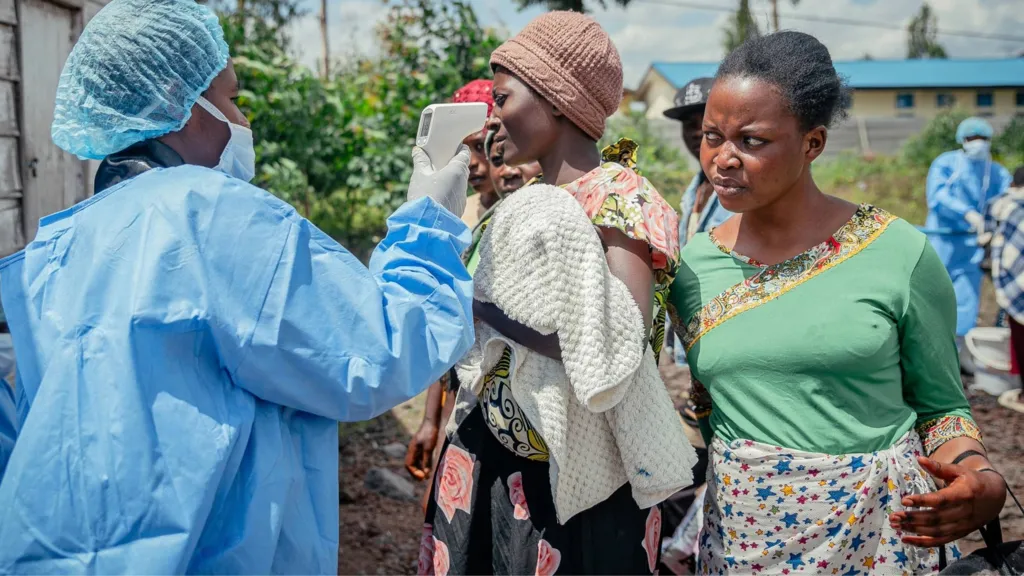 |
| DR Congo is the epicentre of the outbreak though a few cases have been detected in Uganda Getty Images |
"Two weeks after the declaration of the Ebola disease outbreak in Ituri Province, the situation is deeply alarming.""Never before has an Ebola outbreak recorded so many cases so soon after its declaration. [Teams on the ground were] witnessing a response that has not yet caught up to the rapid spread of the epidemic.""The reality today is that nobody knows the true scale and severity of this outbreak. New suspected cases are being reported daily, yet hundreds of samples remain untested."MSF deputy director Dr Alan Gonzales
According to the military governor of Ituri province in the Democratic Republic of Congo, there are roughly 61 displaced persons camps in the area, within which are close to 970,000 people being housed. "We need to deploy equipment and qualified specialist medical staff as quickly as possible, to spare this province from disaster", stated Lt. Gen. Johnny Luboya Nkashama. Certainly, the fearful people in those camps having been alerted by posters at camp entrances that warn "Ebola really kills", would be grateful.
In the Kingonze camp alone, where Dorcas Mapenzi, Deborah Nzale and Budjo Amos reside with other family groups, their elders and their children, a total of 25,000 people are co-housed. They are there, far from their native towns and villages, displaced by conflict in eastern Democratic Republic of Congo. Having fled proximity to the conflict, they now face another enemy whose death count may be higher than the potential threats from the conflict they fled.
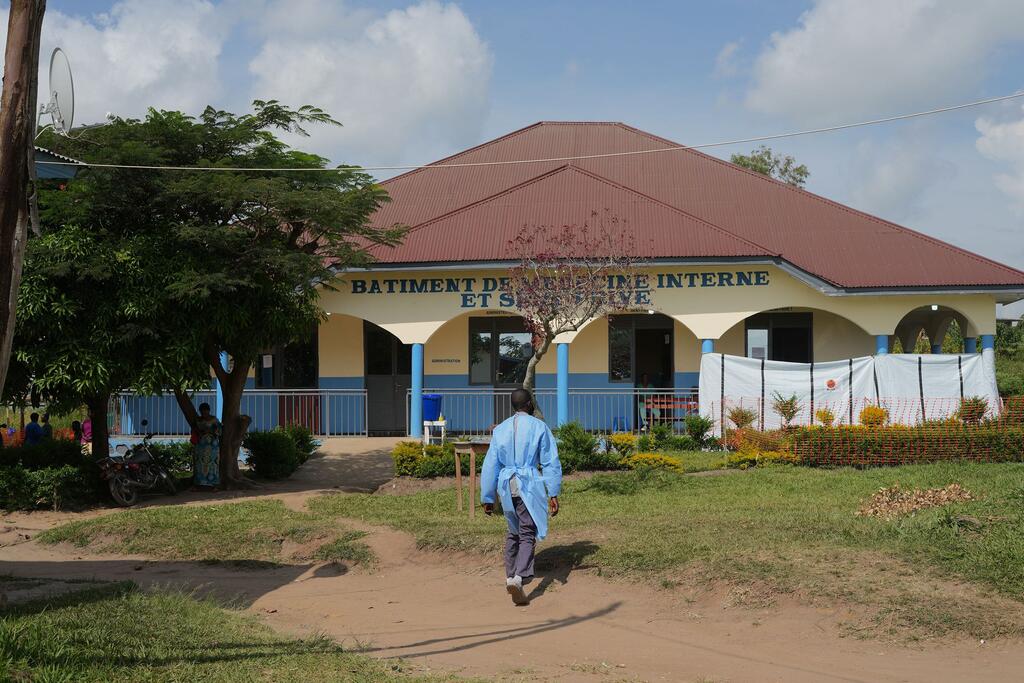 |
| The Rwampara General Referral Hospital in Ituri Province, DR Congo. |
Since conditions in the camp are absolutely horrendous in terms of infection potential, if government health agencies fail to move quickly to ameliorate the vulnerability situation of the people crammed into those sites, the results could be phenomenally devastating. Medical assistance and supplies are coming into the country and into Uganda from other countries better equipped to deal with such emergencies, but nature can be unforgiving in the pathogens she throws around that wreak havoc on animals, including humans.
The central African country's east, where decades of armed conflicts forced millions of civilians from their homes has created the perfect storm. Ituri province has both armed militia groups battling one another and hordes of people driven from their homes in the impoverished DRC. The World Health Organization warned that the eastern DRC "faces a catastrophic collision of disease and conflict"; fighting in the affected province interferes with efforts to try to manage the epidemic.
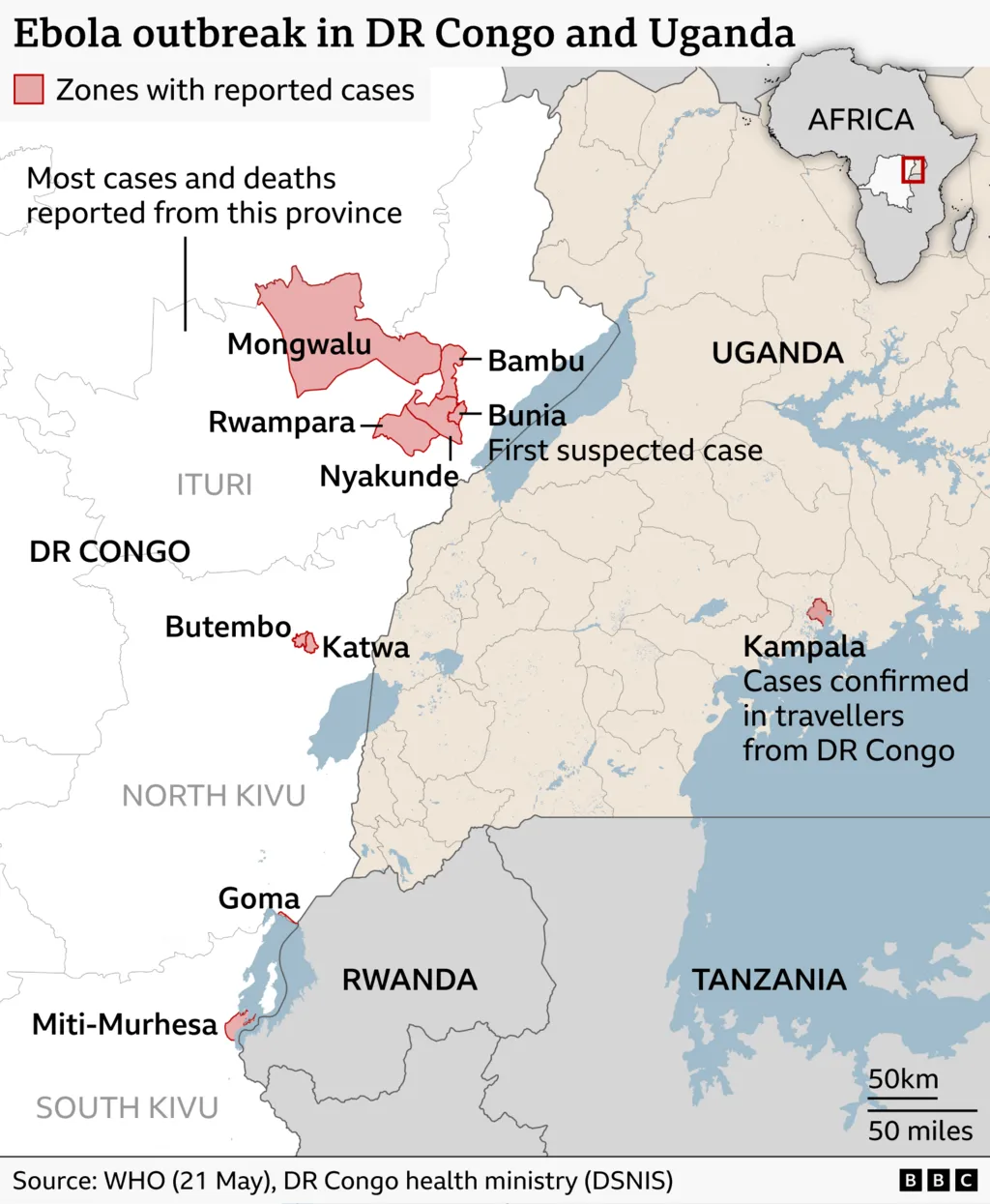
There have been 223 suspected Ebola deaths in the DRC since an Ebola outbreak was declared on May15 by the WHO, with another thousand suspected and confirmed cases up to May 24. Although no cases of infection have been recorded as yet at the Kingonze camp built in 2018, conditions are optimum for the disease where infection through close physical contact and bodily fluids, can prey on the unprotected. In tarpaulin shelters measuring three square meters, up to nine people live crammed together.
The strain of Ebola -- Bundibugyo -- responsible for this latest outbreak, lacks a vaccine or any measure of treatment, leaving efforts to contain its spread reliant for the most part on protective measures and rapid contact tracing. Clearly those measures are absent from the Kingonze camp, and likely most other camps in the province as well. No protective gear has reached Kingonze's displaced residents.
With a single borehole in the entire camp to draw up water, the tap flows for just a few hours daily. The Congolese state's slow response to the outbreak hasn't helped. Regional hospitals lack essential equipment, in particular isolation tents for affected patients.
"People looking to raise awareness come through here with messages but, surprisingly, we don't have the kit we need to protect ourselves.""I don't even have soap to wash my hands.""The most urgent thing is to give us clean water. The state has to intervene urgently."Budjo Amos, displaced man, Kingonze camp

"The Government of the Democratic Republic of the Congo (DRC) and the World Health Organization (WHO) reaffirm their strong partnership and shared commitment to protect the health and well-being of the people of Ituri Province and the nation at large, following the joint mission to Bunia led by Dr Samuel Roger Kamba, Minister of Health, Mr. Patrick Muyaya Katembwe, Minister of Communication and Medias, and the visit of WHO Director-General Dr Tedros Adhanom Ghebreyesus.""While the Bundibugyo strain presents additional challenges, including the absence of a licensed vaccine or specific treatment, proven public health measures remain effective in slowing transmission and potential full recovery. The Ministry of Health, WHO and partners are working to rapidly undertake randomized control trials on candidate vaccines and treatments.""Persistent challenges include early detection and isolation of cases, contact tracing, safe and dignified burials, robust infection prevention and control in health facilities, and strong community awareness. The Government and WHO call on all communities to continue adopting protective behaviours, including regular hand hygiene, early care seeking in health facilities, and sharing accurate information.""The DRC brings unparalleled experience to this response, having successfully contained multiple previous Ebola outbreaks. This experience, combined with strong political leadership at the highest level of the State and renewed international solidarity, provides a firm foundation for bringing the current outbreak under control."Government of the Democratic Republic of the Congo (DRC) and the World Health Organization (WHO)
 |
Labels: Armed Conflicts, Bundibugyo Strain, Displaced Persons Camps, Ebola Outbreak, Government Unpreparedness, WHO
posted by Pieface @ 8:47 PM


0 Comments:
Post a Comment
<< Home