Blog dedicated primarily to randomly selected news items; comments reflecting personal perceptions
Sunday, May 31, 2026
Bunia, DRC, the Perfect Breeding Ground for Ebola
"If Ebola comes, we'll be wiped out as we're packed like sardines."
"I've already heard of Ebola and it's a disease that scares me a lot."
"We displaced people here have no hygiene. Our children play next to filthy toilets and even relieve themselves on the ground, in the middle of the tarpaulins that serve as our homes."
"Given these conditions, how are we going to protect ourselves against this disease, when everyone tells us we need to distance ourselves to fight Ebola?"
"We sleep piled on top of each other, with everyone's sweat."
"If a single person gets infected here in this camp, everyone will die."
Deborah Nzale, widowed family head, Kingonze camp, Bunia, Ituro Province, DR Congo
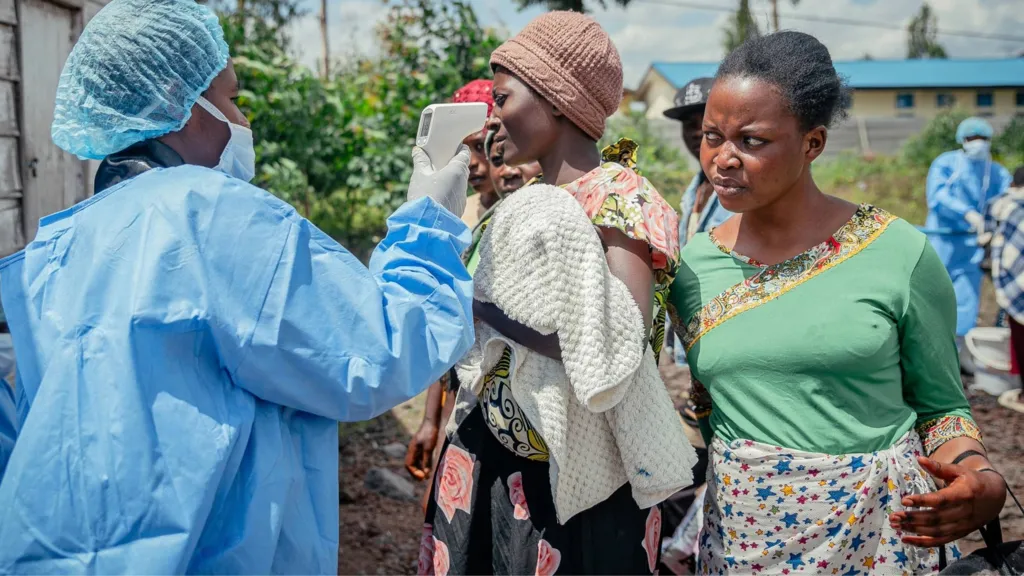
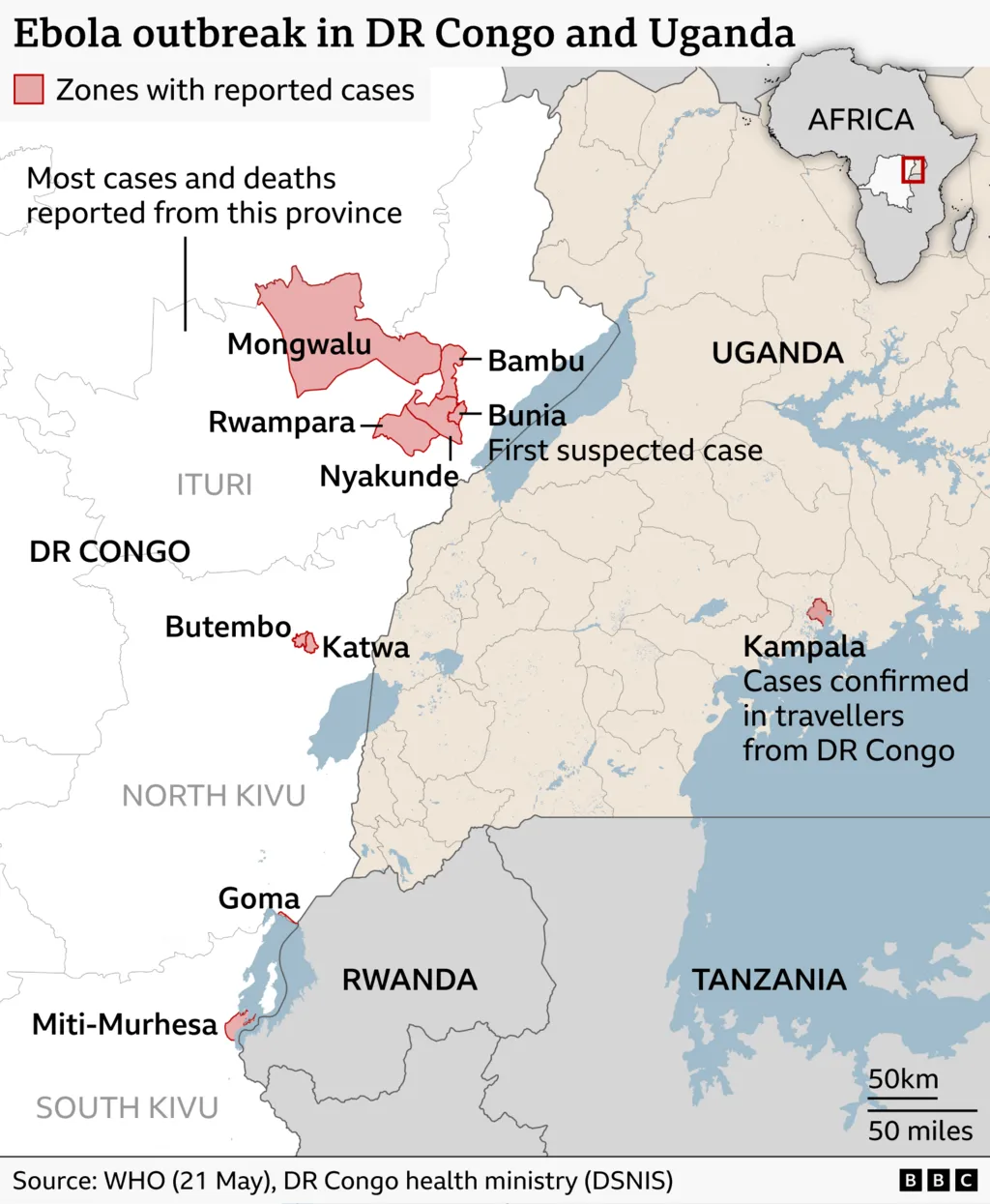
DR Congo is the epicentre of the outbreak though a few cases have been detected in Uganda Getty Images
"Two weeks after the declaration of the
Ebola disease outbreak in Ituri Province, the situation is deeply
alarming."
"Never
before has an Ebola outbreak recorded so many cases so soon after its
declaration. [Teams on the ground were] witnessing a response that has not yet caught up to the rapid spread of
the epidemic."
"The reality today is
that nobody knows the true scale and severity of this outbreak. New
suspected cases are being reported daily, yet hundreds of samples remain
untested."
MSF deputy director Dr Alan Gonzales
According to the military governor of Ituri province in the Democratic Republic of Congo, there are roughly 61 displaced persons camps in the area, within which are close to 970,000 people being housed. "We need to deploy equipment and qualified specialist medical staff as quickly as possible, to spare this province from disaster", stated Lt. Gen. Johnny Luboya Nkashama. Certainly, the fearful people in those camps having been alerted by posters at camp entrances that warn "Ebola really kills", would be grateful.
In the Kingonze camp alone, where Dorcas Mapenzi, Deborah Nzale and Budjo Amos reside with other family groups, their elders and their children, a total of 25,000 people are co-housed. They are there, far from their native towns and villages, displaced by conflict in eastern Democratic Republic of Congo. Having fled proximity to the conflict, they now face another enemy whose death count may be higher than the potential threats from the conflict they fled.
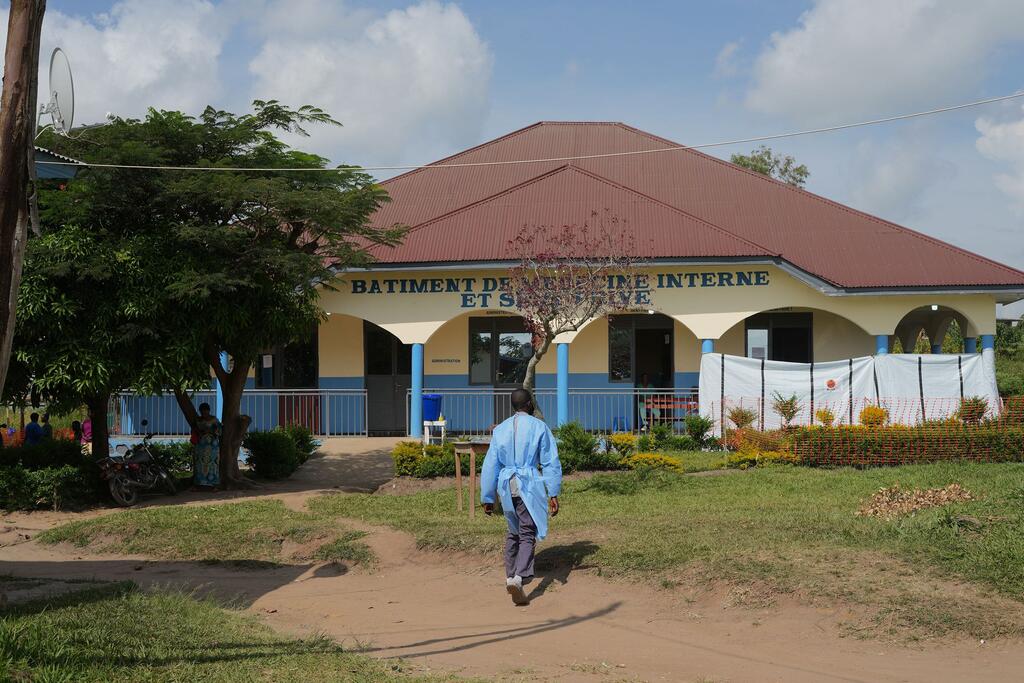
WHO/Joël LumbalaThe Rwampara General Referral Hospital in Ituri Province, DR Congo.
Since conditions in the camp are absolutely horrendous in terms of infection potential, if government health agencies fail to move quickly to ameliorate the vulnerability situation of the people crammed into those sites, the results could be phenomenally devastating. Medical assistance and supplies are coming into the country and into Uganda from other countries better equipped to deal with such emergencies, but nature can be unforgiving in the pathogens she throws around that wreak havoc on animals, including humans.
The central African country's east, where decades of armed conflicts forced millions of civilians from their homes has created the perfect storm. Ituri province has both armed militia groups battling one another and hordes of people driven from their homes in the impoverished DRC. The World Health Organization warned that the eastern DRC "faces a catastrophic collision of disease and conflict"; fighting in the affected province interferes with efforts to try to manage the epidemic.
There have been 223 suspected Ebola deaths in the DRC since an Ebola outbreak was declared on May15 by the WHO, with another thousand suspected and confirmed cases up to May 24. Although no cases of infection have been recorded as yet at the Kingonze camp built in 2018, conditions are optimum for the disease where infection through close physical contact and bodily fluids, can prey on the unprotected. In tarpaulin shelters measuring three square meters, up to nine people live crammed together.
The strain of Ebola -- Bundibugyo -- responsible for this latest outbreak, lacks a vaccine or any measure of treatment, leaving efforts to contain its spread reliant for the most part on protective measures and rapid contact tracing. Clearly those measures are absent from the Kingonze camp, and likely most other camps in the province as well. No protective gear has reached Kingonze's displaced residents.
With a single borehole in the entire camp to draw up water, the tap flows for just a few hours daily. The Congolese state's slow response to the outbreak hasn't helped. Regional hospitals lack essential equipment, in particular isolation tents for affected patients.
"People looking to raise awareness come through here with messages but, surprisingly, we don't have the kit we need to protect ourselves."
"I don't even have soap to wash my hands."
"The most urgent thing is to give us clean water. The state has to intervene urgently."
Budjo Amos, displaced man, Kingonze camp
"The Government of the Democratic Republic of the Congo (DRC) and the
World Health Organization (WHO) reaffirm their strong partnership and
shared commitment to protect the health and well-being of the people of
Ituri Province and the nation at large, following the joint mission to
Bunia led by Dr Samuel Roger Kamba, Minister of Health, Mr. Patrick
Muyaya Katembwe, Minister of Communication and Medias, and the visit of
WHO Director-General Dr Tedros Adhanom Ghebreyesus."
"While the Bundibugyo strain presents additional challenges, including
the absence of a licensed vaccine or specific treatment, proven public
health measures remain effective in slowing transmission and potential
full recovery. The Ministry of Health, WHO and partners are working to
rapidly undertake randomized control trials on candidate vaccines and
treatments."
"Persistent challenges include early detection and
isolation of cases, contact tracing, safe and dignified burials, robust
infection prevention and control in health facilities, and strong
community awareness. The Government and WHO call on all communities to
continue adopting protective behaviours, including regular hand hygiene,
early care seeking in health facilities, and sharing accurate
information."
"The DRC brings unparalleled experience to this
response, having successfully contained multiple previous Ebola
outbreaks. This experience, combined with strong political leadership at
the highest level of the State and renewed international solidarity,
provides a firm foundation for bringing the current outbreak under
control."
Government of the Democratic Republic of the Congo (DRC) and the World Health Organization (WHO)
The Three-year Vaporization of Daily Life in COVID
"We've been through a three year global crisis. It would be really hard not to have this play on the psyche of most individuals."
"Humans are inherently social creatures, and [social distancing guidelines] involve thwarting this natural urge to socialize."
"All of a sudden, everybody's life has changed."
"We're locked in our houses ... our homes became our workplaces, our source of recreation, our cages."
"We were getting information almost as it came out of the petri dish."
"It gets to a point where people start to desensitize, dissociate, turn off."
"But there hasn't been any encouragement, in fact, we could even say there's been a subversive, an unconscious or unintentional discouragement, of a larger public dialogue on what it's like to live through this."
"It's almost as if the world should be given a six-month stress leave to convalesce, to get over this."
Dr. Marnie Wedlake, psychotherpist, assistant professor, Faculty of Health Sciences, Western University
Associated Press
This is a three-year anniversary that no one individual, group, institution, authority, or nation is eager to celebrate. On March 11, 2020, the World Health Organization issued a declaration that the novel coronavirus that emerged in Wuhan, China, represented a global pandemic. Three years on, the SARS-CoV-2 virus that is responsible for COVID-19 in all its varied manifestations is still hovering about the world, more intensely viral than in its infancy, but causing fewer deaths. Those most vulnerable to its rapacious appetite for replication and its inevitable damage to the human respiratory tract and major organs have left life for those proving less susceptible to its raging appetite.
What was once a dire emergency on a global scale, has become an acknowledgement that human medical intervention has done all it could, in this situation, to forestall and to diminish the ravages of the virus. Tedium, alert fatigue and resignation have led to an accommodation of the realization that the virus is here to stay, leading the world community to resign themselves to its predations in the hope that the exposure to its appetite has led to at the very least, population semi-immunity to its most serious excesses.
Over the past three years, the pandemic has succeeded in infecting 759 million people; a confirmed number of cases, but by no means the actual total number of those infected by COVID. Of the most seriously injurious of those infections, over 6.8 million people failed to survive. The earliest months of the pandemic were the fiercest, weighted with fear and uncertainty as hundreds of thousands in any country were felled, and new infectious waves swept through a bewildered and frightened world community.
COVID is till in circulation, it always will be, for there are no expectations that a cure will ever be found. In the past 28 days, global reports put close to 4.5 million new cases having occurred, along with 32,000 deaths attributable directly to COVID, according to the World Health Organization. After three years of panic, fear and mourning, COVID remains an international threat to population health although WHO Director General Tedros Adhanom Ghebreyesus states the pandemic is "probably at a transition point. We remain hopeful that in the coming year, the world will transition to a new phase in which we reduce hospitalizations and deaths to the lowest possible level."
Researchers at McGill University studying the pandemic's psychological footprints published a study in the British Medical Journal this week, finding little evidence of a "large scale decline in mental health so far" attributable to COVID-19. Mental health in the general population overall was either "unchanged or worsened by minimal to small amounts", a reflection of he capacity of human resilience.
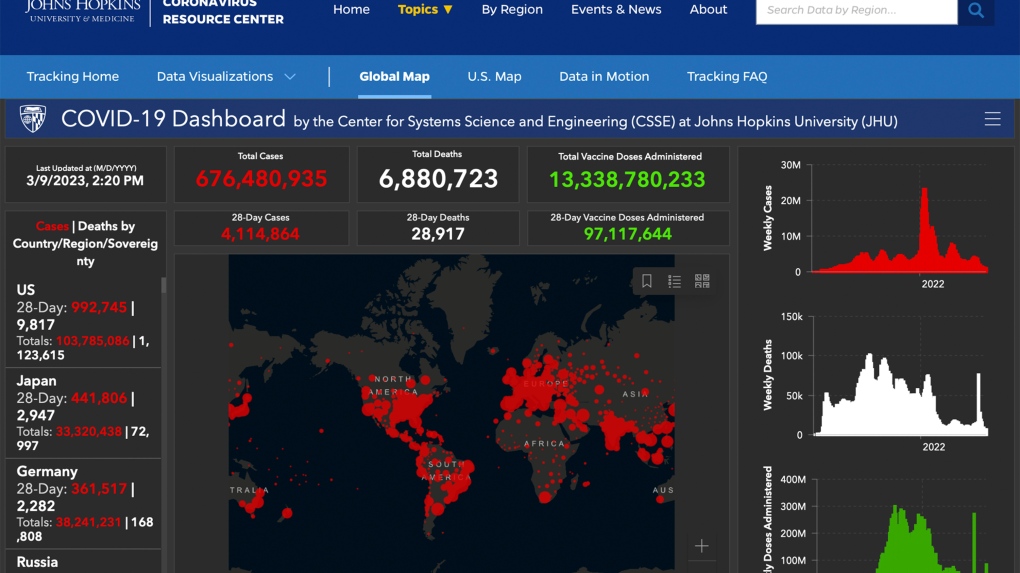
This image made from the
John Hopkins University COVID-19 tracking website shows global
coronavirus statistics on Thursday, March 9, 2023. With information
sources drying up, the university is shutting down its pandemic tracker
on Friday, March 10, 2023. (John Hopkins University via AP)
"The formula milk industry uses poor science to suggest, with little supporting evidence, that their products are solutions to common infant health and developmental challenges."
Linda Richter, developmental psychologist, University of the Witwatersrand, South Africa
“The
promotion of commercial milk formulas should have been terminated
decades ago."
"The fact that formula milk companies are
now employing even more powerful and insidious marketing techniques to
drive up their sales is inexcusable and must be stopped.”
Dr Francesco Branca, Director, WHO Nutrition
and Food Safety
"Evidence
of exposure to and impact of digital breast-milk substitutes marketing
was collected from several sources for this report. These include a
systematic review of the literature, social listening research, a
multi-country study of mothers’ and health professionals’ experience of
breast-milk substitutes marketing, individual country reports of
breast-milk substitutes promotions and an analysis of existing legal
measures to implement the Code."
World Health Organization
Video aid for breastfeeding Still from video
The producers of infant formula represent a $55 billion-a-year industry, one that the World Health Organization has produced a three-paper series critical of the industry's misleading marketing and aggressive lobbying tactics. Published in the The Lancet medical journal, the report points out that makers of infant formula make unsubstantiated claims relating to their products.
Claiming these products are similar to natural breast milk in their properties, leading to the health of babies. Claiming as well that the milk powder is capable of easing discomfort infants may feel. The paper is a call for a crackdown in the industry focusing on claims that new products like hypoallergenic or organic formulas or formulas derived from the milk of sheep and goats being marketed implying they have special benefits with premium prices attached to their sale.
The targeting by the industry of health professionals, caregivers and families through pervasive social media, the promotion of formula as a positive choice while devoting immense public relations resources in lobbying against legislation meant to protect breastfeeding, has come under scathing condemnation by the World Health Organization.
A recall of products by Abbott Laboratories linked to contaminated products led to a nationwide U.S. shortage of infant formula which led to scrutiny of the entire issue. Concerns of the outreach of the global industry in developing countries in particular dates to the 1970s, when infamously the Swiss baby formula producer Nestle was held responsible for convincing impoverished women that baby formula was healthier for infants than breast milk.
Mothers who were convinced, or who wanted to adopt the kind of baby feeding popularized in wealthy nations, turned to infant formula. Because of the expense of a product to take the place of natural maternal milk that nature designed for biological survival that cost nothing, women took to watering down the formula to make it last longer and their children suffered from malnutrition as a result, delaying normal healthy developmental milestones.
The WHO's 1981 International Code of Marketing of Breast-Milk Substitutes advising against free samples, setting standards for labelling was being violated. Among the most prominent manufacturers of infant formula are Nestle SA, Abbott, Reckitt Benckiser Group, Danone, China Feihe Ltd. and Dutch dairy co-operative Royal Friesland Campina. For all of these global corporations, the bottom line is of more importance than the health of the globe's infants.
The WHO report charged that the consumption of commercial formula has been normalized, as a result of the strenuous public relations success of the corporations producing the products. Despite scientific evidence of breastfeeding's superior energy and nutrients babies imbibe, while reducing the risk of infection and lowering rates of future obesity and chronic later-life diseases. Fewer than half of infants under six months of age are breastfed exclusively.
"Within health we need to acknowledge the influence of corporate power in prescribing practises", pointed out health campaigner pediatrician Guddi Singh, at a WHO briefing. In place for decades, WHO's marketing code for formula has been unable to stem the sales of baby formula. Legal measures substantially in alignment with the code only exist in 32 countries.
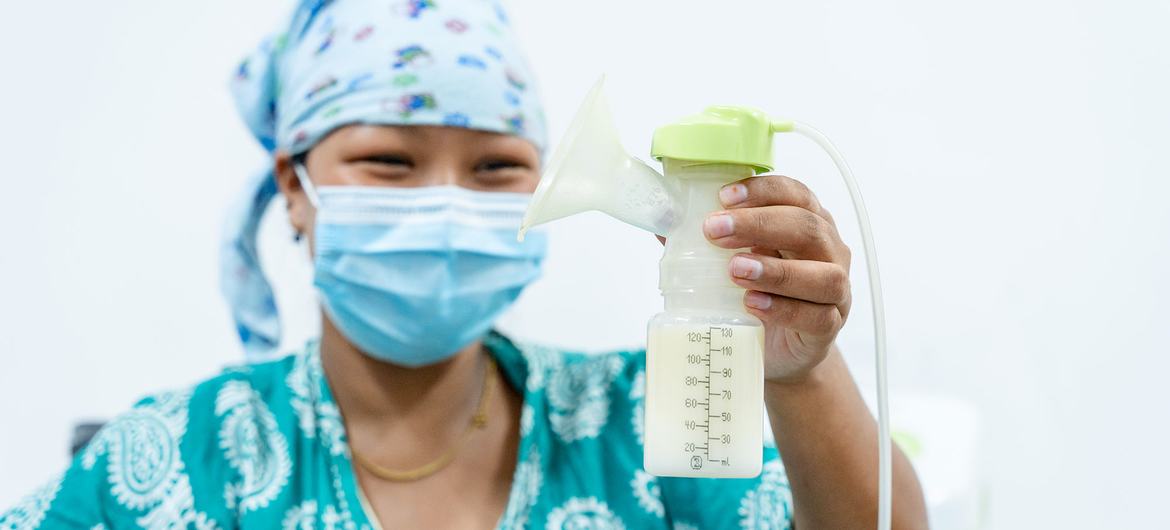
UNICEF/Rabik Upadhayay
A mother donates her breastmilk at the first human milk bank to open in Nepal.
"This report confirms our fears that the disruption of essential health services due to the pandemic could start to unravel years of progres against tuberculosis."
"This is alarming news that must serve as a global wake-up call to the urgent need for investments and innovation to close the gaps in diagnosis, treatment and care for the millions of people affected by this ancient but preventable and treatable disease."
Dr.Tedros Adhanom Ghebreyesus, Director General, World Health Organization
"In 2020, the COVID-19 pandemic pushed 100 million people into poverty."
"Nearly 20 percent of global tuberculosis incidence is attributable to under-nutrition."
"Without global vaccination, health-care systems in low- and middle-income countries will collapse."
"[Countries in southern Africa] are experiencing massive COVID-19 surges on top of already high tuberculosis and HIV co-infection burdens."
Article, New England Journal of Medicine
"Once COVID came, we totally lost track of the TB stuff."
"Housing is the biggest issue we face. There are multiple families per house. People are sleeping on couches."
Eric Lawlor, mayor, Pangnirtung, Nunavut, Canada
With
most private clinics closed, patients with H.I.V., TB and malaria have
few places to go for the kind of medical care offered at this Doctors
Without Borders clinic in Nairobi.Credit...Brian Inganga/Associated Press
In Canada, tuberculosis affects Inuit -- the majority of the Nunavut population -- disproportionately. Both TB and COVID are being spread in the territory by a housing crisis, since both diseases spread readily through person-to-person contact. Some 80 percent of Nunavut residents were given at least one dose of the COVID vaccine, and residents generally follow public health guidelines.
There is a rising realization globally that tuberculosis is increasingly leading to rising deaths for the first time in a decade and a half, attributable to the presence of COVID. In November, the World Health Organization raised the alarm by citing approximately 1.5 million tuberculosis deaths worldwide in 2020.
Tuberculosis remains the leading cause of death from infectious disease, though it's thought of by most people as an illness of the long-gone past. During the AIDS crisis in the 1980s, cases of TB were seen on a rise when AIDS patients with compromised immune systems were unable to fight off the infection. North American TB cases began decreasing in the mid-90s, but in many parts of Africa, Asia and Latin America it remains common.
Dr. Giorgio Franyuti said many patients with TB at a makeshift hospital in Mexico City were being misdiagnosed with Covid-19. Credit...Meghan Dhaliwal for The New York Times
Six countries of the world: India, Indonesia, China, Nigeria, Pakistan and South Africa, see sixty percent of worldwide tuberculosis cases. TB is a disease, like COVID, that primarily affects the lungs and like COVID it is transmitted by tiny droplets int he air. Unlike COVID, there is no vaccine for tuberculosis, and what makes it deadly is the antibiotic-resistance of many strains of TB.
What has brought about its resurgence is the medical attention having been shifted wholesale toward treating people with COVID; as a result fewer TB patients were being treated, diagnosed and prevented from dying pf tuberculosis because of a lack of access to medical care. According to the article published in the New England Journal, vaccine inequity represents a large portion of the problem.
Poverty and malnutrition help spread tuberculosis; so that countries with high levels of poverty and malnutrition are also those countries with limited access to the COVID vaccine, as a result of which greater numbers of COVID cases translate to more TB deaths.
A patient with tuberculosis waits to be seen by a doctor
at the Sizwe Tropical Diseases Hospital in Johannesburg, South Africa.
Annual deaths from the infectious disease are on the rise after years of
progress. Michele Spatari /AFP via Getty Images
"Back in March, the president of Tanzania, John Magufuli, died, very
likely due to complications from COVID-19. Ironically, the autocratic
ruler of the east African nation had been a staunch COVID-19 denier,
refusing to vaccinate his country’s population and instead recommending
traditional cures and prayer."
"Tanzania is by no means a basket case, nor is it embroiled in civil war,
as some other African countries are, and it has a relatively high
literacy rate of 77 per cent. Yet, at present, only 1.5 per cent of
Tanzanians are fully vaccinated. Their former leader routinely refused
offers of vaccine doses for his country, only grudgingly accepting that
COVID-19 was a reality shortly before his own death."
"No sensible observer would say that Tanzania’s low vaccination rate is
due to “global vaccine inequity,” yet many advocates for global social
justice would have you believe that the large disparity in vaccination
rates around the world is driven by hoarding in the global north, thus
making doses unavailable in the global south. The Tanzania case and
others like it disprove this simplistic narrative."
Rupa Subramanya, National Post
A health-care worker administers the Johnson & Johnson vaccine to a woman in Soweto, South Africa, on Nov. 1.Photo by Michele Spatari/AFP
"[The patent waiver would remove one barrier to] more companies being able to produce more vaccine doses in different parts of the world which should lead to greater availability of doses and greater access to them."
"All along, we and many other public health experts have been saying that it is absolutely essential that the world scales out access to COVID vaccine."
"[Both because it is the] morally correct thing to do [and because when it comes to public health] we know that vaccinating people helps to reduce transmission, and that should decrease the chances of the variants emerging from an unvaccinated unprotected population."
Jason Nickerson, humanitarian adviser to Canada, Doctors Without Borders
Getty, OlivierLemoal
The World Health Organization is fond of excoriating the wealthy nations of the world for its selfish behaviour in focusing on inoculating their populations against the SARS-CoV-2 virus, insisting that the stock of vaccines available must be shared. The sharing program, COVAX, set up by the WHO as a method of equalization to be administered by the UN health body accepts donations from wealthy countries both in cash and kind. It also permits those countries to draw from its store of vaccines when needed, even while what it stockpiles is meant to be distributed among the less-advantaged nations of the world.
WHO director-general Tedros Adhanom Ghebreyesus has nagged first-world countries to forestall administering third, or 'booster' doses to address the issue of waning vaccine potency over time, in favour of sending those 'extra' doses to Africa and India. Now that a problematical COVID strain has been identified in South Africa that is rapidly spreading around the world, given its high transmissibility rate, and as-yet unknown virulence, the world community is anxiously awaiting word on what its outcome may spell.
After a recent meeting of the World Trade Organization it announced "members expressed unanimous support for maintaining the momentum of the discussions on a common intellectual property response to COVID", referring to a proposal by India and South Africa requesting a patent waiver for COVID vaccines to enable them to produce the vaccines to serve their public, bypassing the pharmaceutical companies' distribution and sales in reflection of a formula they created, patented, and have financially gained from.
In Canada, South African High Commissioner Sibongiseni Diamini-Mntambo spoke to The Canadian Press, stating that the Omicron variant emerged in South Africa as a direct result of vaccine inequality, emphasizing that in South Africa, less than a quarter of the population is fully vaccinated. Any who fail to support a patent waiver, she averred, would "rather protect the profits of pharmaceutical companies than help in the global battle against the pandemic".
"I call on the nations gathering next week for the World Trade Organization ministerial meeting to meet the U.S. challenge to waive intellectual property protections for COVID vaccines, so these vaccines can be manufactured globally", U.S. President Joe Biden said prior to the WTO meeting. The Council for Trade-Related Aspects of Intellectual Property Rights took on the issue. "Members expressed unanimous support for maintaining the momentum of the discussions on a common intellectual property (IP) response to COVID-19".
"[Delegations are] committed to continue engaging in various configurations in the coming weeks to try and harvest any outcome that may still be possible."
In the Canadian House of Commons, a letter was circulated signed by Members of Parliament representing all parties; an open letter calling on support for the waiver: "Opponents of the waiver proposal argue that patent monopolies are necessary to allow firms to recover their investments in research and development. However, given that COVID-19 vaccine development was primarily financed through public investment and advanced market commitments, we strongly believe this justification does not apply."
According to the details examined, appraised and published by Rupa Subramanya, vaccine hesitation among populations, alongside denial of COVID threats manifest as one of the reasons for low vaccination rates in India and Africa. Where South Africa, the epicentre of the Omicron variant had a stockpile of vaccine doses it was unable to administer since vaccine hesitancy resulted in a slow rollout. At that juncture, South Africa postponed delivery of new Johnson & Jonson and Pfizer vaccines in a country where distrust of vaccines is nothing new.
She points out that Europe, particularly Austria, Germany and Switzerland are struggling with a fourth wave that has devastated their populations and their hospitals' ability to cope. Since the advent of vaccines, Austria has distinguished itself for, out of desperation, being the first developed country to fully lock down. Those three countries are among the wealthiest in the world and though they possess more than ample vaccine doses, they are also reflective of a high degree of vaccine hesitancy among their populations, resulting in low vaccination rates.
Not vaccine inequity, but the results of vaccine hesitancy, a situation reflective of that which pertains to the poor countries where the West is being informed their performance in protection of their populations is one of selfish disregard for the well-being of others on the planet without their wealth and accessibility to vaccines. Two days ago it was announced that the White House spokesperson revealed that South Africa turned down an offer by the US to provide it with additional COVID-19 vaccines.
White
House Press Secretary Jen Psaki speaks during a daily news briefing at
the James S. Brady Press Briefing Room of the White House November 19,
2021.
Alex Wong/Getty Images
"[With high levels of COVID immunity and a strong booster vaccination program, the UK is] unlikely [to experience a] catastrophic winter wave [of infections that would require a Christmas lockdown similar to last year]."
"[The UK is seeing a] hint of an uptick in the last few days [following
weeks of declining case numbers and hospital admissions]. We've had very high case numbers - between
30,000 and 50,000 a day - really for the last four months, since the
beginning of July.That has obviously had some downsides."
"It
has also paradoxically had an upside of boosting the immunity of the
population compared with countries like Germany, the Netherlands and
France, which have had much lower case numbers and are only now seeing
an uptick."
Professor Neil Ferguson, Scientific Advisory Group for Emergencies, U.K.
The UK government is urging the public to get their booster shots SkyNews
"Europe is back at the epicentre of the pandemic, where we were one year ago."
"[Countries in the region are at] varying stages of vaccination rollout [and region-wide an average of 47 percent of people are fully vaccinated."
"Only eight countries have fully vaccinated 70 percent of their population."
Dr.Hans Kluge, director, WHO 53-country Europe region
"We are clearly in another wave."
"The increased spread is entirely concentrated in Europe."
Anders Tegnell, chief epidemiologist, Sweden
"The epidemiological situation in Europe is very concerning now as we head into the winter with increases in infection rates [and] hospitalization."
"And we can also see the increase in fatalities."
Fergus Sweeney, head of clinical studies/manufacturing task force, European Medicines Agency
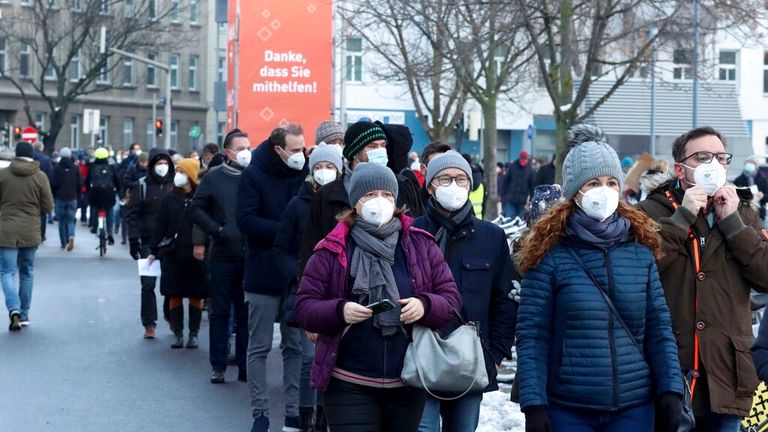
People waiting for a mass COVID-19 testing in Vienna, Austria Sky News
Even as the WHO's director general declared Europe to now represent the global pandemic's epicentre, Austria took steps to place millions of its unvaccinated citizens under strict lockdown. Those over age 11 not double-vaccinated only permitted to leave their homes to attend school, work, for exercise or to secure essential supplies. Two million of the country's 8.9 million population were affected by the order. It is, in fact, similar in nature to Beijing's severe orders in response to COVID outbreaks.
A greater than 50 percent leap in coronavirus cases in the past month in Europe has made it the epicentre of the coronavirus pandemic; this irrespective of a more than ample supply of available vaccines. "There may be plenty of vaccine available, but uptake of vaccine has not been equal", observed WHO emergencies chief, Dr.Michael Ryan.
The Dutch government has also announced new social restrictions for the Netherlands Sky News
European authorities were urged to "close the gap" in the tempo and coverage of inoculation. Tedros Adhanom Ghebreyesus, the WHO director general, stated that those countries that immunized over 40 percent of their population should now take a halt in proceedings and donate doses to developing countries not yet able to offer their citizens a first dose of vaccine.
"No more boosters should be administered except to immunocompromised people", he said, calling for vaccine producers to prioritize the supplying of COVAX, a distribution agency developed by the UN to share vaccine doses on a global scale. Just one percent of Pfizer's supply of vaccines has ended up with COVAX, with Moderna providing a million doses to the developing world from late October.
Although developing countries have to the present received fewer than one percent of the globe's COVID-19 production of vaccines, in Africa and Southeast Asia cases fell by nine percent last week. In the meantime, over 60 countries began giving booster doses to combat weakening immunity before the onset of winter, which is when the latest wave of COVID-19 is anticipated.
Children ages five to 11 began receiving COVID-19 doses in the United States once authorities there made the decision of the benefits outweighing potential risks. Dr.Hans Kluge from Copenhagen's offices as director of the Europe region, warned that coronavirus hospitalization rates had more than doubled in one week alone, predicting that the trajectory would lead the region to see another half-million pandemic deaths by February.
The WHO Europe region stretches east as far as the former Soviet republics in Central Asia, tallying close to 1.8 million new cases weekly, representing an increase of some six percent from the week before, and 24,000 weekly deaths caused by COVID; a 12 percent gain.
A specialist wearing personal protective equipment (PPE) sprays
disinfectant while sanitizing a chapel inside the building of the
Leningradsky railway station amid the outbreak of the coronavirus
disease (COVID-19) in Moscow, Russia October 19, 2021. REUTERS/Maxim
Shemetov
Case increases of COVID-19 have risen across the continent, identifying it as the only region in the world where COVID-19 continues increasing. In Central and Eastern Europe there are several countries in particular seeing daily case numbers shoot skyward. The Amsterdam-based European Medicines Agency experts have urged people to get themselves vaccinated.
"We think between now and the end of 2022, this is the point where we
get control over this virus ... where we can significantly reduce severe
disease and death."
Maria Van Kerkhove, epidemiologist, World Health Organization COVID
technical lead
"The loss of sense of taste and smell during acute illness is an
indication of the penetration of the virus into the nervous system and
increases the risk of long-term damage to memory and concentration."
"Long COVID is a multi-system syndrome attributed to the
period beginning 12 weeks after the acute illness. The information in
the literature is preliminary only, and from it, we find around 10% of
those who recovered will suffer from at least one symptom in this
period."
"The rate of the symptoms' appearance varies, and there is a lack
of information on symptoms that continue beyond half a year and on the
populations that are at increased risk for long-term consequences."
Dr. Ilan Green, Study research director
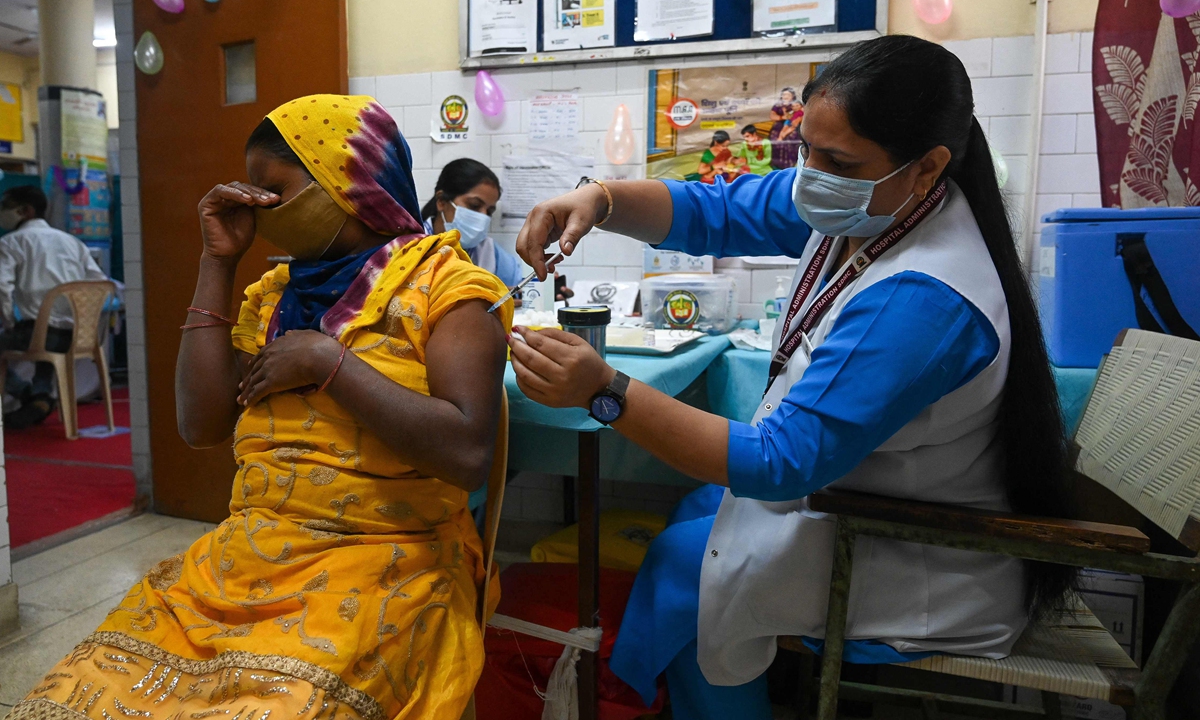
A health worker inoculates a woman with a dose of the Covaxin vaccine
against the COVID-19 at a health center in New Delhi, India on Thursday.
Photo: VCG
Over half of the world's population has not yet received a single dose of a COVID vaccine, according to Our World in Data. In low-income countries, fewer than five percent of the population have been given at minimum one dose. Leading the World Health Organization and other aid groups to appeal to the governments of the 20 largest economies for funding of a $23.4 billion program to close the gap in bringing COVID-19 vaccines, tests and drugs to emerging economies within the next year.
COVID cases worldwide are nearing the 250 million milestone. The surge experienced from the Delta variant, along with efforts to normalize trade and tourism is seeing some easing of the situation, even while some countries in eastern Europe are undergoing record outbreaks. Coincidentally, they are the same countries where vaccine uptake has been low, particularly in more rural farming and isolated communities..
Overall, in the large scale of things, the last three months has seen the daily average of cases falling by 36 percent, according to a Reuters analysis. However, while the virus spread appears to have relentedm 50 million people are still being infected every 90 days, resulting from the highly transmissible Delta variant's effect. Before its emergence, the original virus before mutation took place saw 50 million people infected worldwide over the space of a year.
There is growing confidence among experts in health care and epidemiology that in many countries the most serious effects of the pandemic are now behind them as a result of the availability of vaccines and from natural exposure. There is still, however, an expectation that the onset of colder weather along with seasonal holiday gatherings, an increase in cases could be realized.
Within the medical community globally, there has arisen through intensive study and observation, a better understanding of the SARS-CoV-2 virus causing COVID-19, though much has yet to be discovered about its volume of sometimes mysterious effects, including long COVID. As well, more intensive understanding has led to better treatments.
Britain is set to be the first country to approve a potentially successful COVID-19 antiviral pill which studies indicate could reduce the chances of dying or being hospitalized by half, for people most at risk of development severe COVID-19.
With good news there is often sobering news to balance the situation, and the reality is that infections are still on the rise in 55 of 240 countries. Russia, Ukraine and Greece are experiencing near record levels of reported cases since the start of the global pandemic two years earlier. Eastern Europe's vaccination rate is among the lowest in Europe. Over half of all new infections reported globally are from countries in Europe.
A million new infections are reported about every four days.
Medical
personnel provides medical assistance to a COVID-19 patient inside the
intensive care unit in an hospital which treats patients with COVID-19
coronavirus in Kiev on Nov 2, 2021. (SERGEI SUPINSKY / AFP
"Like many who work in public health, especially in sub-Saharan Africa, I have been waiting my whole career for a malaria vaccine. And even longer than that; I suffered from severe malaria when I was ten."
"Inspired by my own experience with malaria and the disparities I have seen in treatment, I founded a non-profit, Speak Up Africa, ten years ago to champion solutions developed in Africa to address public health challenges facing the continent."
"Malaria is at the top of the list, as it has arguably the greatest impact on African nations' economic and social development."
Yacine Djibo, founder, executive director, Speak Up Africa, Dakar, Senegal
WHO Africa
The first vaccine meant as a complementary tool for use in children living in at-risk geographies has been endorsed by the World Health Organization. Hailed as "historic", by the WHO and health experts globally, this is a milestone in the fight against global malaria. While wealthy nations have eliminated the threat of malaria, it is a disease that succeeds in killing some 400,000 people annually, most of those deaths taking place in Africa, targeting African children.
While the new vaccine, Mosquirix, has a relatively low efficacy rate in prevention of roughly 30 percent of severe malaria cases, it does not present as a miracle solution to the dread disease. On the other hand, some relief is better than none, and future prospects of newer, more effective malaria vaccines are likelier to surface now that the first of the vaccines has seen the light of day rating WHO approval.
Teams of local health workers are now required in increased numbers to enable swift response to cases, increasing access and administration of the new tool. The new vaccine fills in a needed gap, however imperfectly. Proof of concept has been revealed by the creation of the new vaccine which introduces the ushering in of a next generation of potentially more efficacious malaria vaccines that will be more effective through the use of technologies such as mRNA, used for the leading COVID-19 vaccines.
Malaria is spread by mosquitoes Bruce MacQueen/Alamy
The entire array of measures to combat malaria must be in play alongside the new malaria vaccine, boosting its effectiveness with complementary measures such as mosquito nets, antimalarial drugs, and indoor spraying of houses. Access to epidemiological data to comprehend where it is that populations are most at risk for infections, where insecticide and drug resistance occur and which tools are most effective in local communities is another weapon against malaria.
Investment in additional malaria vaccines already being worked on in laboratories around the world is certain to be spurred by this initial vaccine now being rolled out as an additional therapeutic resistance against malarial spread. Tools such as genomic surveillance to ensure that medical communities stay on top of growing drug and insecticide resistance, is yet another critical measure in the goal of better control of the malarial Plasmodium parasite.
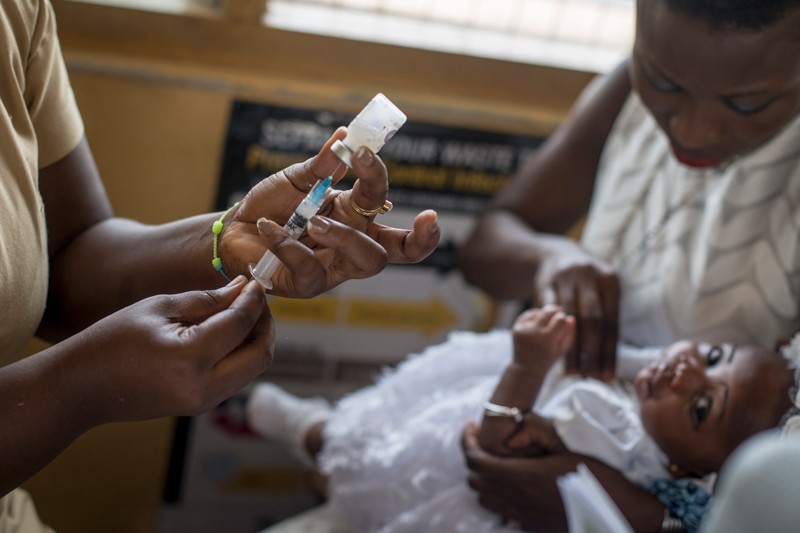
A baby receives a dose of the RTS,S vaccine for malaria in Cape Coast, Ghana.Credit: Cristina Aldehuela/AFP/Getty
The COVID-19 vaccine producer BioNTech is considering Senegal as a potential manufacturing hub for future mRNA vaccines, not only against COVID-19, but for malaria and tuberculosis as well. These are the continent's worse killers, alongside H.I.V./AIDs. Malaria is a life-threatening disease caused by
parasites that are transmitted to people through the bites of infected
female Anopheles mosquitoes. It is preventable and curable.
In 2019, there were an estimated 229 million cases of malaria worldwide.
The estimated number of malaria deaths stood at 409 000 in 2019.
Children aged under 5 years are the most
vulnerable group affected by malaria; in 2019, they accounted for 67%
(274 000) of all malaria deaths worldwide.
The WHO African Region carries a
disproportionately high share of the global malaria burden. In 2019, the
region was home to 94% of malaria cases and deaths.
Total funding for malaria control and
elimination reached an estimated US$ 3 billion in 2019. Contributions
from governments of endemic countries amounted to US$ 900 million,
representing 31% of total funding.World Health Organization
"People don't want to wait. Some have relatives. Some have business, some study, some work. Some simply want to go to Europe because they miss it."
"For Serbia, the demand has been growing like an avalanche. It's as if all our company is doing these days is selling tours for Serbia."
Anna Filatovskaya, spokesperson, Russky Express tour agency
Sputnik V vaccine (Pavel Golovkin/AP)
"The WHO has said that it needs more data, and it needs to go back and inspect some production lines where it saw issues early on."
"Those re-inspections are a multiweek process, with good reason. It's not something that they just gloss over lightly."
"[Sputnik V will be approved eventually] maybe not by the end of this year."
Judy Twigg, political science professor, global health, Virginia Commonwealth University
People wait in line at a COVID-19 vaccination centre in Belgrade,
Serbia, on Oct. 2. Russians are flocking to Serbia to receive
Western-approved COVID-19 shots as Russia's own vaccine, known as
Sputnik V, has not been approved by international health authorities. (Darko Vojinovic/The Associated Press)
Russia's vaccination rate is low with a mere 33 percent of the country's 146 million people having received at least one shot of a coronavirus vaccine and 29 percent fully vaccinated. Russia's main vaccine, home grown like all the others offered for COVID-19 protection in the country, is Sputnik V. There is also a one-dose version named Sputnik Light. And there are two other domestically designed vaccines that have seen use in Russia; none of which have been approved internationally.
It was a matter of national pride when Russian regulators gave their approval to the country's own coronavirus vaccines and initially people receptive to the idea of inoculating themselves against the SARS-CoV-2 virus causing COVID streamed toward injection sites. That original enthusiasm may have waned however and certainly Russian-originated vaccines still await international imprimaturs of approval for even the first of the lot, Sputnik V.
Without that approval from external health authority sources Russians vaccinated by Russian-produced research products are unwelcome at all the travel hot spots they had formerly taken for granted would receive them with open arms. Russians who love to travel and miss their former freedom to go where they wished, sought out alternatives to their dilemma by looking to internationally approved vaccines available elsewhere, but not in Russia.
Gravediggers disinfect the coffin of a COVID-19 victim at a cemetery outside Omsk, Russia, on Thursday. (The Associated Press)
Which is where Serbia comes into the picture, where hundreds of Russians have entered recently for western-approved COVID-19 vaccines. Russians are able to enter the allied Balkan nation visa-less and there they find a wide choice of Western produced vaccines. Soaring demand has seen organized tours for Russians to visit Serbia and while there they enjoy Belgrade hotels, restaurants, bars and vaccination clinics. Tour packages came on the market in mid-September with prices starting at $300 to $700.
Russia's Sputnik V saw approval in 70 countries, including Serbia, but the World Health Organization approval remains under review citing issues at a production plant Among the hurdles in approval is a lack of full scientific information and manufacturing sites inspections, according to WHO assistant director-general Dr.Mariangela Simao. Sputnik V still awaits approval from the European Medicines Agency for travel limitations to be lifted for those with the Russian formulae.
In Serbia can be found the Pfizer, AstraZeneca and Chinese Sinopharm vaccines. Croatia is now also being visited by Russian tourists where the one-shot Johnson & Johnson vaccine can be administered with no need for a return and a second dose as with the others. The Serbian population has reached around a 50 percent vaccination rate. According to official Serbian government data, close to 160,000 foreigners have been vaccinated in Serbia, mostly Russians.
Both Serbia and Russia have seen COVID-19 infections and hospitalizations at record levels in past weeks amid low vaccination rates and authorities unwilling to reimpose restrictive measures. In Russia, the daily coronavirus death toll surpassed 900 for a second straight day. Serbia is coping with a daily death toll of 50 people in the country of 7 million with a confirmed 1 million infections.
Russian Vitaly Pavlov receives a Pfizer shot in Belgrade on Oct. 2, 2021. (Darko Vojinovic/The Associated Press)
"There are many countries thankfully where that [downward trajectory] is happening. And there are many countries in which that downward trend is not being achieved."
"What we do know in countries that are applying persistent and consistent measures in terms of public health and social measures and individual behaviour that that is affecting the trajectory of all variants."
"[While they -- variants -- have a propensity for higher levels of transmission], what is clear is that the control measures ... are effective in driving that down."
"It's a lesson for all of us [in view of infections rising in some countries] that this is not over. It's not over for anybody. And any relaxation of our resolve is dangerous."
"We need to be very aware. This virus still has a lot of energy and if the measures we apply are not persistent, comprehensive and aimed at continuing to suppress transmission while introducing vaccines, we will pay a price."
Dr.Mike Ryan, director general, emergency program, World Health Organization
Some countries, such as the UK and
Israel, have begun mass COVID vaccination programs. But it’s probably
too early to see widespread impact.Joe Giddens/POOL/EPA/AAP
Globally there is good news about COVID-19; the number of confirmed infections with the SARS-CoV-2 virus is dropping. Case numbers have been reduced from over five million a week in January to the current 2.5 million in mid-February. Unfortunately this is neither universal nor uniform in countries all over the world. Some have had better 'luck' in their efforts to control the omnivorous virus than have others. Brazil, for one example of a country hit hard in the first wave of infections, and continuing to see runaway numbers, surpassed a quarter-million COVID-related deaths this week, ranking as the second-highest death toll in the world, behind that of the United States.
Five states in India with its vast population centres, see surging cases of the novel coronavirus. Mosques and schools in Iraq are closed and nighttime and weekend curfews have been imposed. In Mexico, hospitals are desperate for oxygen supplies, and it isn't the only low- and middle-income country to find itself in that position of desperation. In the country with, to date the worst record of deaths resulting from the virus, a steep fall in cases has occurred in the United States, where 73,400 new cases have been diagnosed in comparison to early January when 250,000 cases per day were registered, leading to suggestions the epidemic may be levelling off.
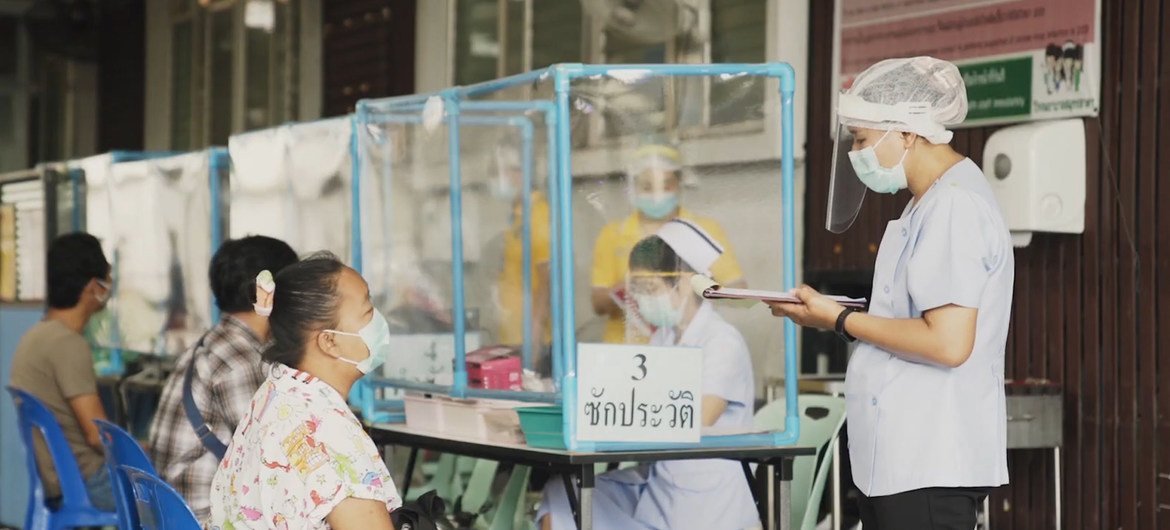
Village and community
health volunteers are the eyes and ears of Thailand's disease control
system, contributing greatly to the country's effective COVID-19
response. WHO
The new concerns in health circles around the world rest with "variants of concern", highly contagious viruses (VOCs) taking root everywhere. The number of global cases fell for the sixth consecutive week last week, representing an 11 percent decline, in comparison to the previous week, according to a World Health Organization situation update released on February 23. New deaths reported at 66,000 also fell, by 20 percent week-over-week.
Globally, Friday's figures read 111 million confirmed cases with 2.5 million deaths around the world. The United States, Brazil, France, Russia and India are the countries reporting the highest number of new cases yet some of the steepest declines puzzlingly have been in some of those countries the hardest hit last year; among them the United States, United Kingdom, South Africa, Israel and Portugal. COVID alert level in Britain declined a notch, reflecting that hospitals no longer see themselves at risk of being overwhelmed.
A three-week lockdown beginning March 8 to stem a surge in cases has been ordered in Finland, which boasts the third-lowest infection rate in Europe, after Iceland and Norway, with 590 reported this week, representing the highest number since the pandemic's start. According to experts, "patience, prudence" and vaccines are beaming a ray of hope for a reprieve from COVID.
According to Harvard University epidemiologist Michael Mina, vaccines are playing a part in raising hopes as confirmed case numbers are slowly dropping, along with deaths from t he virus, butit is tighter restrictions that can for the most part be attributed to the hopeful signs that COVID may yet be beaten in shorter order than prophesied by a worn medical community. Across England, as an example, infections have dropped by two-thirds since the lockdown that was initiated in January.
“No one likes lockdowns, they’re terrible and devastating, but they
work. If you have a lot of
cases in an area with a lot of people and you lock it down you are
going to see cases go down and we see this time and time again.”
"[Other measures, such as people wearing masks indoors, are] extremely helpful [in bringing new cases down but we] can’t discount
the seasonality [of COVID-19 being a factor in fewer virus
transmissions].
We still don’t know enough about it, but that may be a factor."
"We don’t have a cure. We have treatments which are fine but no cure. We know that younger people who are included in clinical
trials are unlikely to die because they’re young, but people are still
getting pretty sick – and in addition we know there are long-term
symptoms from this virus.”
“We have to respect the variants of concern, we don’t know enough about
them, we know that some are more transmissible – we saw one COVID-19
mutation get married to another COVID-19 mutation – we still don’t know
how that will work, that’s the recombinant virus."
"While we
have to be open-minded to new data, as things are reopening we need to
approach with caution so we don’t get a third wave."
Toronto infectious disease specialist Dr. Isaac Bogoch
EPA/Mauricio Duenas Castaneda
"One, we came off of really high numbers from the holidays."
"Second, there is pretty good evidence that people are doing a better
job of social distancing and mask wearing."
"Third, I think in a lot of
communities, we've had so much infection that you have some level of
population immunity. Not herd immunity, but enough population immunity that it is causing the virus to slow down."
Dr.
Ashish Jha, dean, Brown University School of Public Health.