Life-Preserving Food Aid Delivery By Drone in Isolated Nepalese Villages
"We’ve been operating back and forth early in the morning. So yes, it’s quite hectic, because we need to have this thing right now.""Nepal has this geography, this terrain where drones would be really faster, quicker and cheaper."Milan Pandey, Airlift Technology, drone operating companyUnited Nations World Food Programme Nepal Country's Director Riaz Lodhi"We have seen disasters, we have seen earthquakes, we have seen disasters caused by floods, we have seen war situations, conflicts.""We have had access challenges in many of these situations [but the challenges in Nepal were extreme].""This is a very unique access challenge where, in some places, the only way to reach people is by helicopters.""It's a very, very expensive operation.""When the first drone went up in the air with the food attached to it, I knew that it was a game-changer... It's an innovation in delivering food assistance.""What we are learning in Nepal with the use of these cargo drones will change the way WFP reaches people in need."
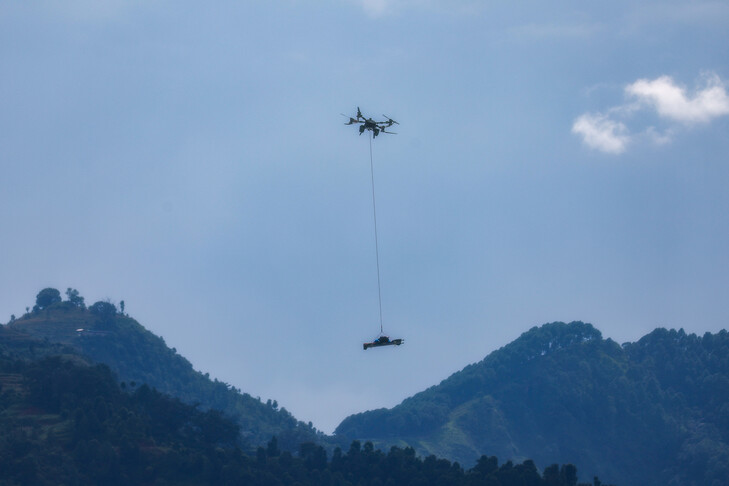 |
| Using drones to provide aid in Nepal is a game changer. Prabin Ranashat / AFP via Gety Images |
Following Nepal's devastating floods, the UN World Food Programme faced the most challenging of its responses to such devastation as was caused when a Himalayan glacier collapsed on August 26, causing a catastrophic flood at the China-Nepal border. The ensuing floodwaters destroyed roads, bridges and hydropower dams. The tentative figure of 1,446 dead and over 6,500 people missing across both countries is a testament to the severity of the situation.
According to Riaz Lodhi, head of the World Food Programme in Nepal, the tsunami-like flood and its aftermath produced a situation that distinguished itself as being among the "top three most challenging disasters" ever faced by his agency. Rescue teams faced arduous journeys to reach the isolated regions where the worst impact of the flood was situated. As a result of the altered landscape, efforts to reach the afflicted saw journeys that took two hours normally, became ordeals lasting a full day.
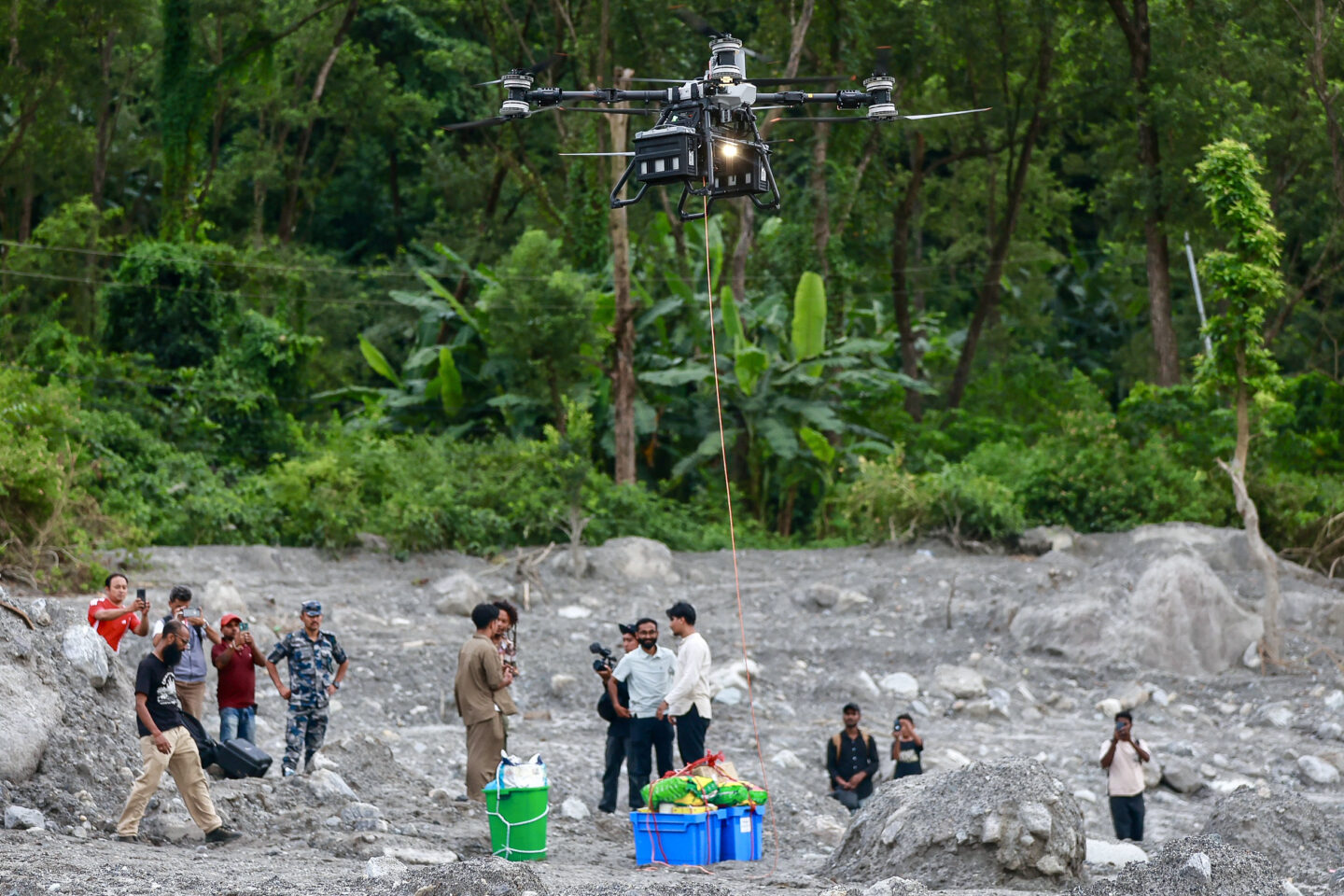 |
| A drone carrying relief supplies to a flood-affected area takes off in Trishuli, Nepal's Nuwakot district, on September 4, 2026. Credit: PRABIN RANABHAT / AFP via Getty Images |
Even so, there are many communities close to the epicentre of the flooding event that remain cut off, even yet. The World Food Programme decided to deploy cargo drones in delivering food to isolated communities. In 2015 during a previous deadly earthquake, the delivery of life-sustaining materials relied on the use of mules, yaks and porters hauling food on their backs. These missions could take two to three days before those in need were reached.
The drones are capable of carrying between 30 and 100 kilograms, given operating conditions. "People in need, they didn't have to wait for days", stated Mr. Lodhi. "The food was reaching there immediately", making the difference between death and survival under challenging conditions.
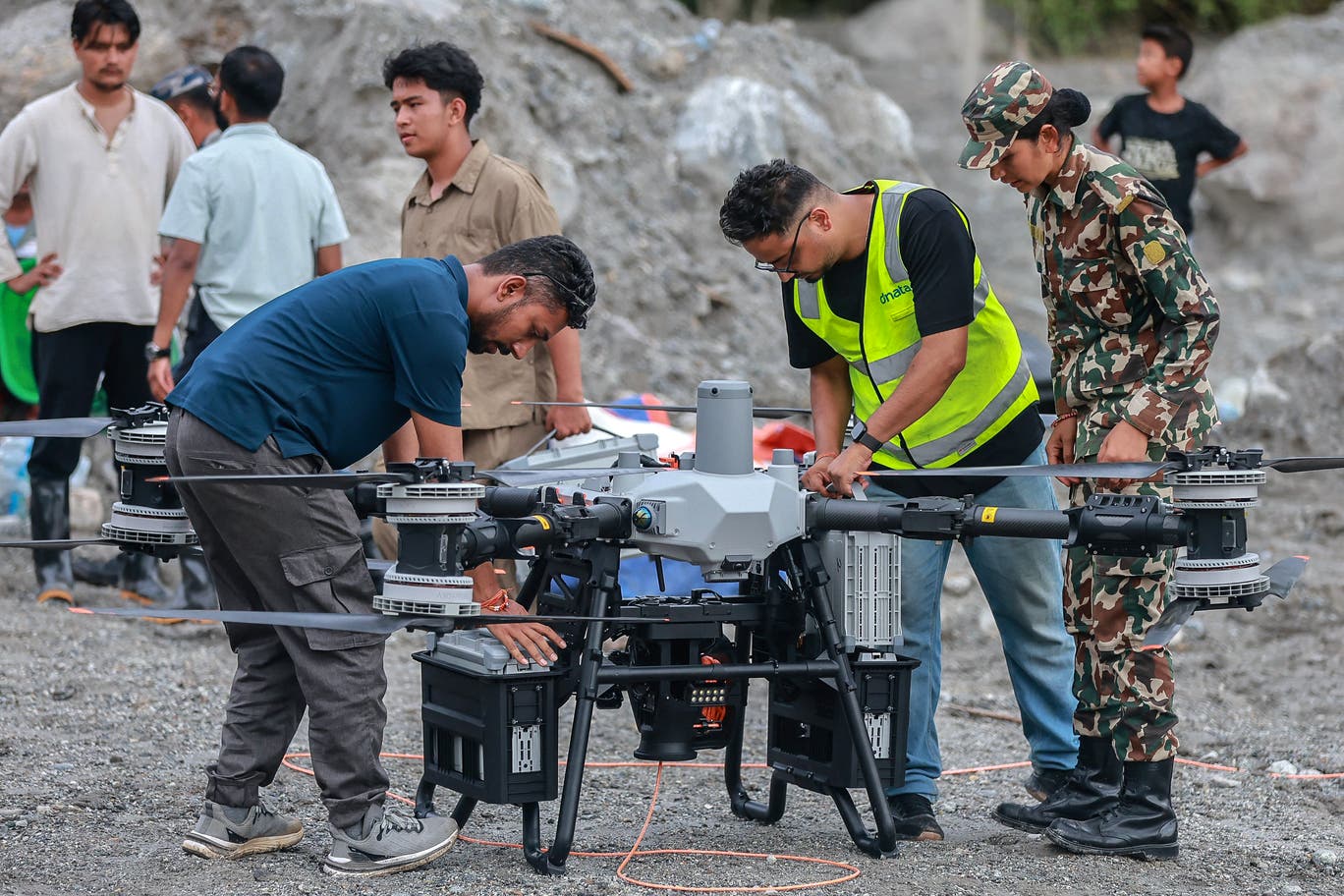 |
| Technicians prepare a drone before it carries relief supplies to a flood-affected area in Trishuli in Nepal on 4 September 2026 (AFP/Getty) |
Labels: Devastating Flood Humanitarian Rescue, Drone Delivery, Food Aid, Glacier Collapse, Himalaya, Nepal
posted by Pieface @ 8:11 PM


0 Comments:
Post a Comment
<< Home