The 7-Day Mission Everest -- Oh, and the Sherpas
"The guys just rallied around and put in rescue techniques to be able to get me down the mountain very quickly. The team ethos of having a team of operators that have such incredible skills, but also leave no man behind, get it done, let's move quickly.""Garth noticed my oxygen had run out. And Staz was putting rope systems in place to make sure I got down the hill quickly.""It wasn't that I'd become a liability yet, but it was mitigating the chance that I could become one. Those are the things that make these sorts of seven-day things possible because everybody's constantly awake and alert.""You're only getting three hours' sleep a day and it's very cold, very windy, very bleak, and your body's degrading.""Back now in Kathmandu, we've still not processed what we've just experienced. It's a bit like soldiering. Often you find yourself in very kinetic environments and it takes a while to process because things are moving so quickly."Kevin Godlington, one of four British men to set a time-record mounting Mount Everest
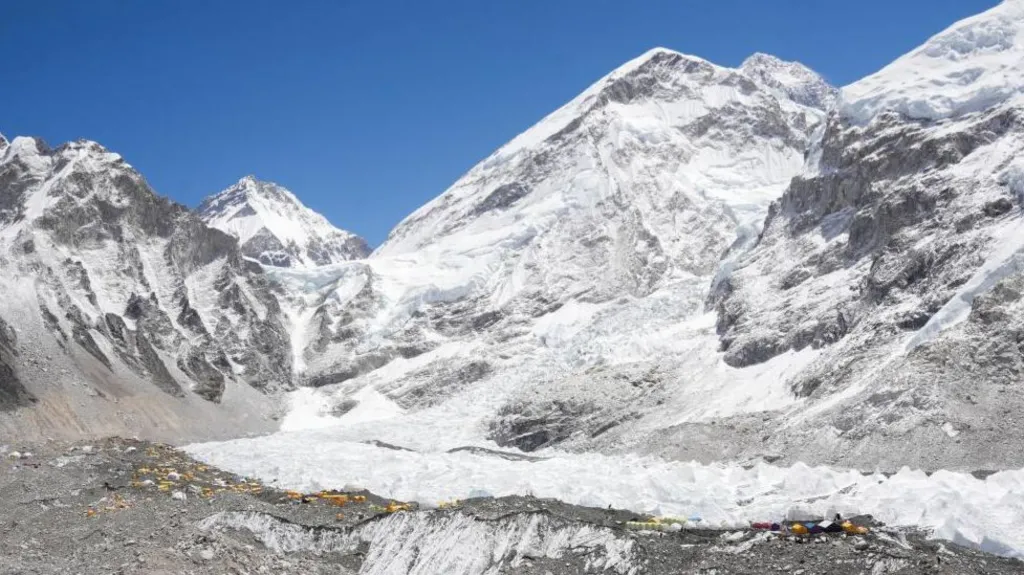 |
| Traditionally climbers have spent weeks between base camp and higher camps before summiting Everest Reuters |
Special British Forces veterans Al Carns, Garth Miller, Kevin Godlington and Anthony (Staz) Stazicker left London on May15, and reached the summit of Mount Everest on Wednesday morning, May 20 -- with them five Sherpas and a cameraman. The usual climbing time clocks in from weeks to days following acclimatizing beyond the mountain's base camp, timing the climb up the mountain in gradual rests at camps set up along the way to the summit. The need to acclimatize in gradual steps as progress is made toward the final summit, is to allow the human body to adjust itself to thinner air at higher points of the atmosphere, and in the process avoid a cerebral or pulmonary edema.
The British team set out to eliminate that typical, gradual process of acclimatization, in a bid to mount the 29,032-foot summit through a more direct and expeditious trip. Their goal was to achieve the total enterprise, from their homes in Britain to a return, goal achieved, with the summit sandwiched between departure and arrival back home. And they succeeded. Their preparations consisted of challenging their bodies before even setting out, by sleeping in hypoxic tents for months prior to arriving in Nepal. As well, they were treated with xenon gas, under the direction of Lukas Furtenbach who has experimented for years with methodology to cut short time spent on Everest.
 |
| Instagram |
They put in a total of 50 hours of climbing and returning to base camp during their "door-to-door" success in achieving their goal whose itinerary mapped out two days of travel, three days ascending the mountain and two days descending. The first day of climbing saw them challenged by an avalanche, while the "meandering of the jet stream" around the mountain kicked up ferocious winds that threatened to force the team back down the mountain precipitously. Of their number only Godlington became ill, with vomiting and diarrhea.
The use of xenon gas was promoted by German physician Michael Fries who had persuaded Furtenbach it had the potential for neuro-protection. And with its use, according to Furtenbach, the expedition managed to succeed in their enterprise to the extent that it "went better than expected". The four climbers inhaled the gas on May 5, its protective properties assessed to peak in synchronicity with their push to the summit of the mountain.
Al Carns spoke of his impression of the climbing experience, comparing it to climbing "30 100-story buildings" over a three-day period. The men's military experience came into play as they focused themselves solely on the goal. In the process they committed to raising funds for veterans and military families. Their decision to make use of xenon to minimize physiological risks in their unheard-of attack on the mountain in mere days has raised charges of the use of unconventional new fixes verging on 'cheating' to achieve their goal.
"When you sort of challenge the status quo, it does become something
that people immediately start to defend against. For us, the use of the
xenon gas has always been about the only two things that kill you in the
mountain physiologically: a pulmonary edema or a cerebral edema", countered Godlington. Everest's 'death zone' -- above 26,000 feet -- is notorious for the very real risk of cerebral edema, which xenon offered protection against. There is an annual death count where climbers have not made it off the mountain alive.
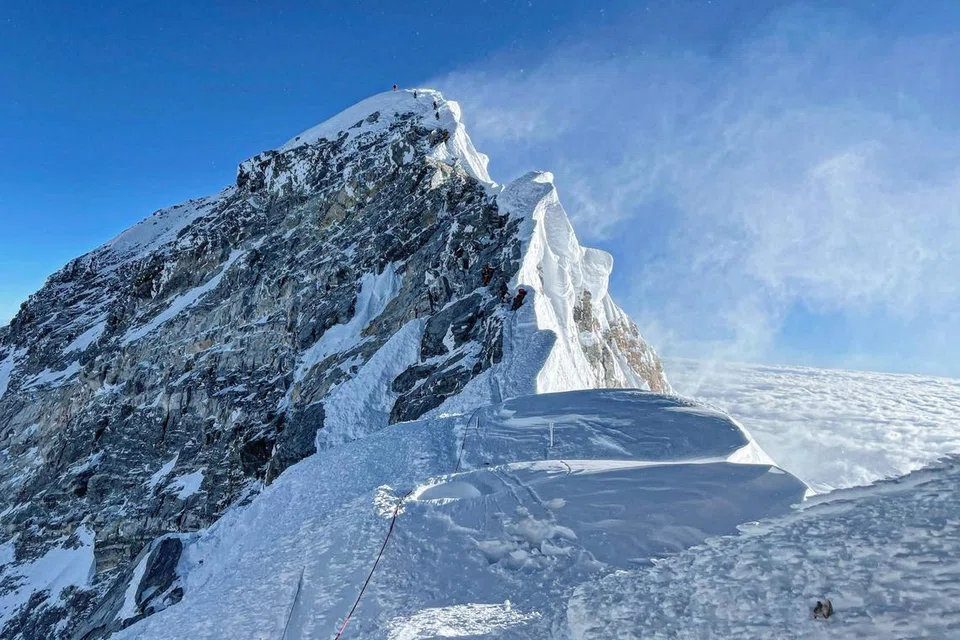 |
| The team's rapid ascent has drawn sharp scrutiny from Nepali authorities for the controversial use of xenon gas prior to their arrival. PHOTO: AFP |
There are bodies of those who were unable to complete their personal goals of a successful climb and a safe descent, that successive climbers are exposed to. Those corpses are left there on the mountain slopes simply because it is too difficult and dangerous to remove them, and they rest there in their eternal presence as testament to humanity's curiosity and search for challenges to surmount. Godlington pointed out that his team did not, as charged, use xenon "fundamentally to cheat, and it's never been about that".
And then, there is another kind of reality, one that has overlooked the role of Nepal's taken-for-granted guides, the Sherpas, five of whom accompanied the four British climbers, sharing with them the trials and difficulties encountered. Little fame attaches to their service to the British climbers who, without the attendance and assistance of the Sherpas likely would never have been able to make that enterprise a success. And while the British men made use of the protective gas, the Sherpas would not have.
In 2003, Lhakpa Gelu Sherpa climbed from base camp to the summit in 10 hours, 56 minutes after acclimatizing on Everest. In comparison, it took the four men four days and about 18 hours to go up and back, according to Furtenbach's estimate.
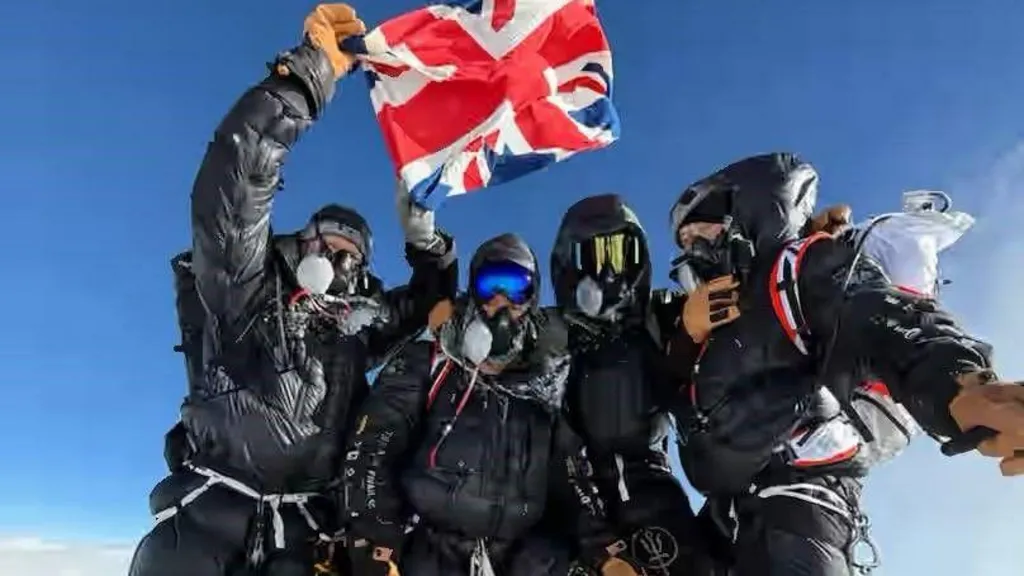 |
| The four British former soldiers aim to be back in London within the week Photo: Sandro Gromen |
"Immediately after taking the xenon, I didn't have noticeable physiological changes, so there's nothing really there to report.""We're very fatigued, but when we were on the mountain there were no headaches so it seems as if the neuroprotective properties and everything else must have been working.""We felt great from that respect because over a long time at altitude your body just degrades so maybe we can attribute some of that to xenon.""Climbing Everest is never just about reaching the summit. It's about pushing human boundaries safely, responsibly, and with integrity.""The 7-Day Mission Everest was never a stunt ... it was a meticulously planned scientific and medical expedition designed o explore the future of high-altitude mountaineering.""...Every step was calculated, every risk mitigated. Our goal? To improve mountain safety for everyone, not to glorify speed."Lukas Furtenbach, climb director
Labels: 7-Day Everest Expedition, Ascending Everest At Speed, Cerebral Edema, Experimental Gas, Four British Climbers, Sherpas
posted by Pieface @ 8:48 PM


0 Comments:
Post a Comment
<< Home