Child Deaths in Addiction Households in Canada
"As a pediatrician of 38 years, I beg to differ [with the contention that a child's best place is with the family]. I think it's usually with your family ... In many cases, sadly it is not.""The opiate puts you to sleep and convinces your brain to stop breathing. It doesn't take much. It doesn't take gram quantities to do it.""With opioid overdose, you don't die right away -- I think they put the baby down, thinking it was going to be OK, they went to sleep and woke up, and everything wasn't OK.""I think because of resource constraints [underfunded child welfare services] children are often in situations in which they might be potentially in harm's way.""Addiction is a horrible disease. It wires you badly. People in drug-using homes in drug-using circumstances, make decisions that do not seem rational. They do it because the addiction drives them."Dr. Michael Rieder, pediatrician, professor, Western University Schulich School of Medicine and Dentistry, London, Ontario"When you have an unexplained drug toxicity in a child, you just can't always say whether it got into them accidentally because of something somebody did, or was there intentional provision of that substance to the child.""It's very difficult to answer those questions at times."Dr. Dirk Huyer, chief coroner, Ontario
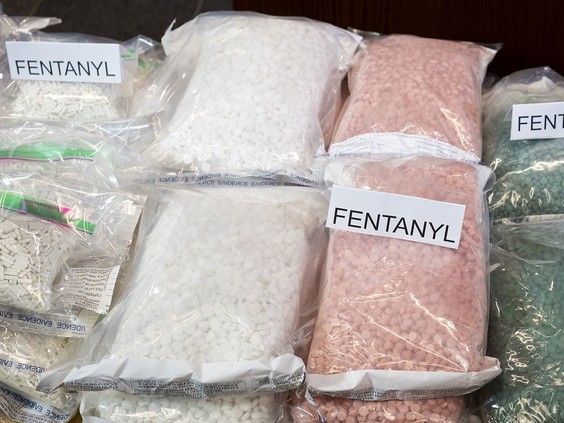 |
| Fentanyl recently seized, displayed during a press conference at BC RCMP Divisional Headquarters in Surrey, B.C., Friday, Feb. 23, 2024. Photo by Tijana Martin/The Canadian Press |
Ten fatal opioid poisonings in children under ten in Ontario over a four-year span was the subject of a recently published review which detailed the youngest of the fatalities was just nine months old and the oldest close to five, published in the journal of the Canadian Paediatric Society, Pediatrics & Child Health. What the review discovered in research carried out by Dr. Rieder and his colleagues was that with every case before the child's death from ingesting an opioid, child welfare services were involved.
One American study of 731 fatal drug poisonings in children five and under across 40 states, found one-sixth only had a history of open child protection service at time of death. Opioids accounted for close to fifty percent of the deaths. Leading Dr. Rieder to contemplate the old adage, respected by child welfare workers that a child's best place is with the family. "Societies get judged by how they take care of their kids. This is not a good judgement on us", he remarked.
Adults account for most fentanyl -- and other opiate-related deaths, with an average of 20 such deaths a day in Canada, but it is the "staggering effect" on pediatric mortality known as child deaths, that has been overlooked, reported Dr. Rieder and his colleagues. Who pointed out that fentanyl kill babies and young children in the very same manner that it does adults.
The drug acts on the body's central nervous system, causing sedation and euphoria. When the dose is of sufficient quantity, breathing slows, along with the heart rate, and as breathing slows, the body's cells become stressed from oxygen lack and carbon dioxide buildup. "Eventually the heart just packs it in and says, 'Enough is enough. I'm going to stop'", stated Dr. Rieder. The difference between an adult overdose and that of a child is obvious; for the child all it takes is a trace amount of ingested fentanyl to cause death.

The study group made use of anonymized data acquired from the Office of the Chief Coroner of Ontario; scrutiny of case notes were studied in an effort to understand the circumstances surrounding such deaths to improve the potential for intervention and aspire to prevent more children from dying, wrote the study authors. The primary drug of toxicity in the study was found to be either fentanyl alone, or in combination use with other drugs.
Fentanyl was found in the child sleeping or play area, with the common explanation that the child was discovered to be unresponsive after being settled down for a nap. In the youngest infants' instance, drug powder may have contaminated baby formula, ventured Dr. Rieder. The study's first author, Dr. Katrina Assen, pediatrician at the Alberta Children's Hospital in Calgary, pointed out that most childhood opioid deaths historically came by way of prescription medications. "Now we're switching to fentanyl."
Households where these deaths occurred were often small, cramped, disorderly, cluttered and untidy -- with often five people on average living in them. The mean age of the deceased children was under two, a particularly "exploratory age" when children move from age two to age four and "climb anywhere and eat everything", pointed out Dr. Rieder.
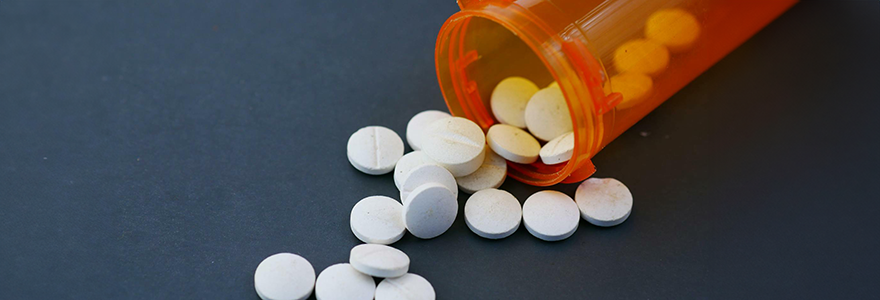 |
| Researchers share recommendations for preventing opioid-related deaths among children. (Towfiqu barbhuiya/Pexels) |
"[Should drug-associated material be found in a household], action by CWS [child welfare services] workers should be taken forthwith and followup visits [at a minimum education on safe drug storage be required] to ensure that these steps are put into place."Research team report"If concerns are identified, CAS's [Ontario Association of Children's Aid Societies] will work with the caregivers to create safety/mitigation plans and monitor these until the risk is reduced to a level [where] child protection intervention is no longer required.""For substance use issues these plans could be a number of things along a continuum of intrusiveness spanning from harm-reduction strategies to removal of children from the home and other legal intervention."Ontario Association of Children's Aid Societies
Labels: Addicted Parents, Child Deaths, Child Opioid Accidents, Fentanyl, Prescription Medications
posted by Pieface @ 8:19 PM


0 Comments:
Post a Comment
<< Home