 |
| Getty Images |
"Males tend to suffer from obesity at a younger age than females due to
the protective effect of estrogen on the female metabolism. Males generally tend to be more obese and tend to have more visceral obesity, which is sometimes described as 'beer belly'."
"The effect of obesity on the heart has been studied previously also in population-based studies."
"Most studies predominately classified obesity according to BMI [body mass index] and they found that a high BMI is associated with cardiac dilatation."
"Fewer studies investigated 'visceral' obesity according to WHR [waist-to-hip ratio], and some did not find a different effect of visceral obesity compared to general obesity."
"Moreover, many studies used echocardiography [ultrasound test that checks the heart's structure and function] to investigate how obesity impacts the heart's anatomy, which is broadly available but does not allow for further tissue characterization."
Dr. Jennifer Erley, radiology resident, University Medical Center, Hamburg-Eppendorf, Germany
 |
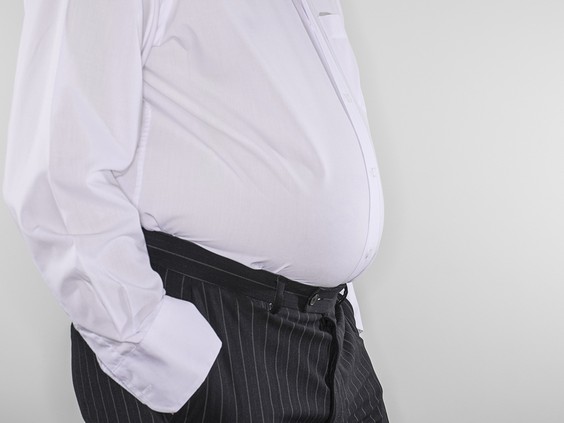
Men with higher waist-to-hip ratios showed early signs of heart damage even when their overall weight wasn’t very high. (iStock) |
New research now points to belly fat as being particularly problematic in the potential danger it poses to the male cardiac system. Abdominal obesity -- recognized as an unhealthy hip-to-waist ratio -- has been found to be associated with worrying patterns of 'cardiac remodelling' overturning the assumption that overall weight alone is the culprit. This was discovered by researchers studying advanced cardiovascular MRI [magnetic resonance imaging] scans of 2,244 adults between the ages of 46 to 78 with no known heart disease.
According to the authors of the paper published in research presented at the annual meeting held in Chicago of the Radiological Society of North America, these findings "highlight the need for personalized risk assessment in obesity-related cardiovascular disease". An estimated 3 billion people worldwide are overweight or obese. This is an epidemic that significantly contributes to many other chronic health conditions such as high cholesterol levels, Type 2 diabetes, high blood pressure and sleep disorders, and places them at higher risk of coronary artery disease and death from cardiovascular issues.
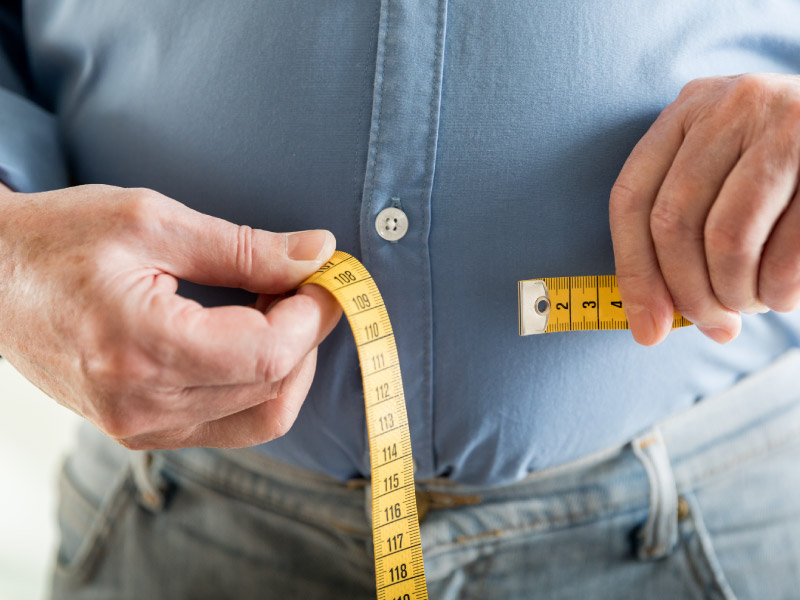
According to Statistics Canada, Canadians are experiencing "high and growing levels" of fat stored around the waist and stomach. Nearly half (49 percent) of adults in Canada aged 18 to 29 had a waist circumference greater than the threshold for abdominal obesity. In other words, higher than 102 centimetres for males and 88 cm for females.
 |
| (The Image Bank, Getty Images) |
"Similar to previous studies we found a high BMI is associated with bigger heart chambers, indicated by increased cardiac volumes [the amount of blood the heart holds and pumps] and an accompanying hypertrophy [thickening of the heart muscle]."
"Abdominal or visceral obesity, on the other hand, was associated with a proportionally greater hypertrophy but smaller heart chambers."
"This form of remodelling where the heart muscle thickens but does not enlarge, is called 'concentric remodelling' and we know from previous studies that this form of remodelling is prone to lead to heart failure."
Dr. Jennifer Erley
Up to three hours collectively of weekly physical activity is deemed to be sufficient to enable abdominal fat reduction. Physical exercise connected with dietary changes in some instances help to reduce abdominal obesity, even without achieving overall weight loss. Lifestyle changes leading to weight loss helps to improve blood sugar, blood pressure and cholesterol levels; factors referred to as metabolic syndrome. Inflammation is reduced, blood vessel function is improved and non-alcoholic fatty liver disease is eased.
Obesity may account for a fifth of all cases of atrial fibrillation -- quivering or irregular heartbeat. Each of the research subjects were measured for the size, thickness and volume of the heart's chambers through high-resolution MRI scans. Detailed health information, including weight, blood pressure, cholesterol, smoking status, and any history of diabetes was collected for all participants. The research conclusions led to clarification of the conundrum that some people with normal or moderately elevated BMI develop heart disease and others whose weight is considerably greater may not
"The male heart is exposed to the effects of obesity longer than the female heart."
"The sex-specific differences suggest that male patients may be more
vulnerable to the structural effects of obesity on the heart, a finding
not widely reported in earlier studies."
"Rather than focusing on reducing overall weight, middle-aged adults
should focus on preventing abdominal fat accumulation through regular
exercise, a balanced diet and timely medical intervention, if
necessary."
"Nowadays, we have a broad variety of therapeutic strategies to tackle visceral obesity and it's important to address obesity as a 'pathology', just like arterial hypertension and diabetes."
"Patients and clinicians should take obesity [particularly the accumulation of abdominal fat] just as seriously as those other pathologies."
Dr. Jennifer Erley
 |
Cardiac MRI scans revealed thicker heart walls and smaller chamber volume in people with excess belly fat. (iStock) |
Labels: Cardiovascular Risk, Diet, Exercise, Lifestyle Changes, Male Visceral Fat, Reducing Risk


0 Comments:
Post a Comment
<< Home