"There are too many challenges. There are no roads, they have all been washed away, and many areas are just not accessible."
"It is very difficult for my men. The area is still flooded, and elsewhere it is all marshland."
"Once my men are dropped, they have to roam over large distances to conduct search and rescue. But the helicopters have to return because there are not enough of them."
"For example, an area that was dry yesterday is completely flooded today [as the swollen river changes course]."
"It is unpredictable. Floods can come at any time."
E. Hawadi, Nepali police coordinator of rescue efforts, Nuwakot district
"This is the Himalayas."
"We have to be very careful when starting any rescue operation or relief operation."
"The gorges are very deep and steep, so that's the difficulty."
Nepali Foreign Ministry spokesman Lok Bahadur Poudel Chhetri
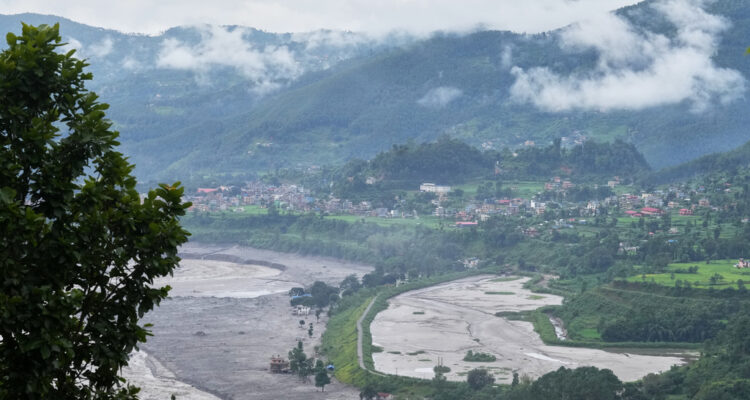 |
| Structures partially submerged in mud brought in by flash floods stand at the banks of the Trishuli river in Nepal's Nuwakot district, Thursday, Sept. 3, 2026. (AP Photo/Rajesh Kumar Singh) |
More than a week after catastrophic flooding killed over 1,200 people in Nepal when an unstable glacier broke off and plugged a river to swell into a lake, then went on to cause massive flooding near the border between Nepal and Tibet, rescue work is continuing, with the fading hope of finding some of the 4,471 estimated missing still alive.
Teams of rescuers face treacherous marshlands and an unpredictable river as they search for survivors. Nepal has suffered the majority of deaths and those missing, while Tibet saw 15 dead and 546 people missing, according to Chinese state media.
The fate of hundreds of missing hydropower project workers where the full force of the torrent occurred stands at 639 people unaccounted for. According to the Nepalese disaster agency, there remain 3,333 missing citizens. Among them are 45 Nepali army soldiers, 38 police officers, and 18 customs and immigration officers.
Another project the floods hit, the Upper Trishuli 3A facility took rescue workers six days to locate the tunnels encased in the thick mud. Roughly 30 to 40 people stuck in the tunnels there are believed to be alive. "We are expecting survivors in there because we are told there is a dry space inside. We are trying to break into the tunnel now", a Nepali army spokesperson explained.
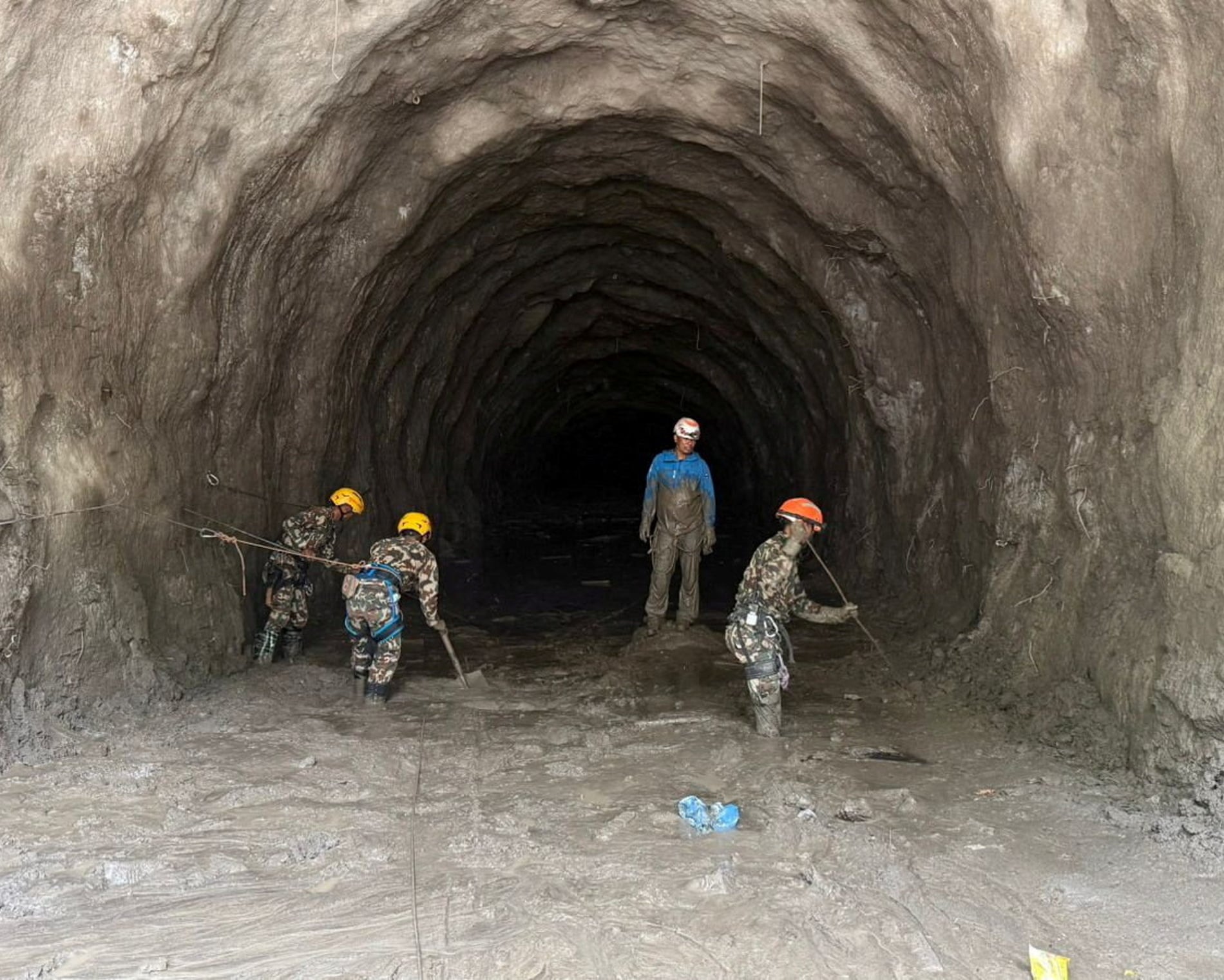 |
| A week after the flash-flood hit the Nepal-Tibet border, some officials believe trapped workers at the Rasuwagadhi hydropower plant could still be alive. Photograph: Naveen Srivastava/X/Reuters |
Where floodwaters have receded, the ground has been transformed into deep, slippery mud whose effect complicates rescue operations, slowing down movement. In other areas floodwaters remain high. Families have been left homeless in heavy rain as entire communities were swept away. Some have found shelter in temporary facilities. Mass graves are receiving unidentified bodies.
Rescuers, as a result of the difficult conditions they face in the remote settlements, must rely on helicopters presenting as the sole means of reaching those stranded communities. 40 bridges have been washed away in the floodwaters. Teams are dispersed across the sprawling disaster zone, with reinforcements being brought into the small town of Bidur on the banks of the Trishuli River. The problem of supplies reaching those who need them rests in the town, now the main hub for rescue operations.
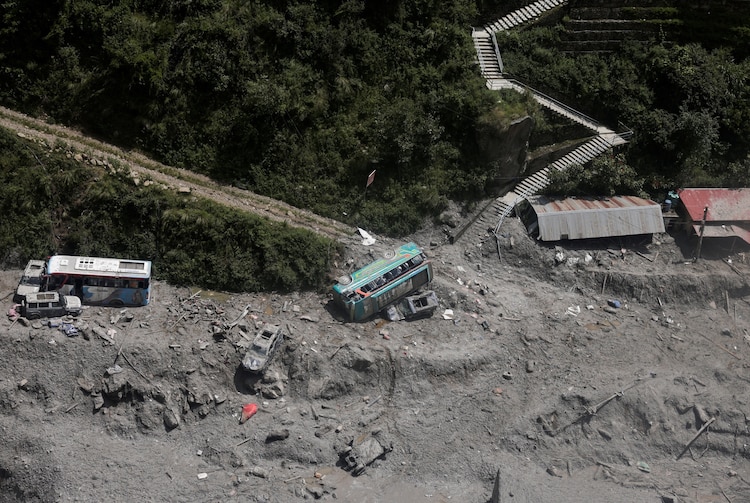 |
An aerial view shows vehicles lying amid debris at Timure Bazar following the deadly flash floods and mudslides in Rasuwa, Nepal, Sept. 3, 2026. Navesh Chitrakar/Reuters |
Some 93,000 people are felt to have been affected by the floods, according to the International Federation of the Red Cross and Red Crescent. Declaring that "many homes have been destroyed or severely damaged". Both India and China are sending quickly-assembled prefabricated Bailey bridges where no heavy equipment is required.
The UN World Food Programme is shipping in 2.4 tonnes of high-energy biscuits to sustain homeless families lacking the capacity to cook food. "Damage to roads, bridges, settlements, and critical infrastructure has severely disrupted access to affected communities, creating significant challenges for relief operations", they explained.
The swollen river responsible for widespread destruction changes course from time to time, and rescuers are forced to reassess their plans, while struggling with a lack of adequate equipment. Flotation devices are required to safely operate in floodwaters. Nighttime operations have been made impossibly hazardous in many areas, resulting from that unpredictability, while pressure to accelerate the search continues.
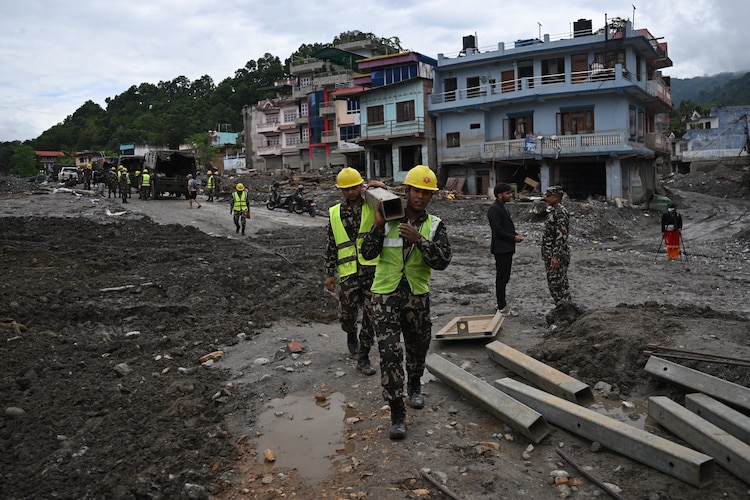 |
Nepal army personnel prepare to construct a bridge across Trishuli river at Devighat in Nepal's Nuwakot district on Sept. 3, 2026. Arun Sankar/AFP via Getty Images |
Labels: Catastrophic Flooding, Collapsed Glacier, Mountainous Himalayan Terrain, Nepal, Remote Isolated Villages, Rescue Efforts, Tibet


0 Comments:
Post a Comment
<< Home