Afghanistan's Starving Children
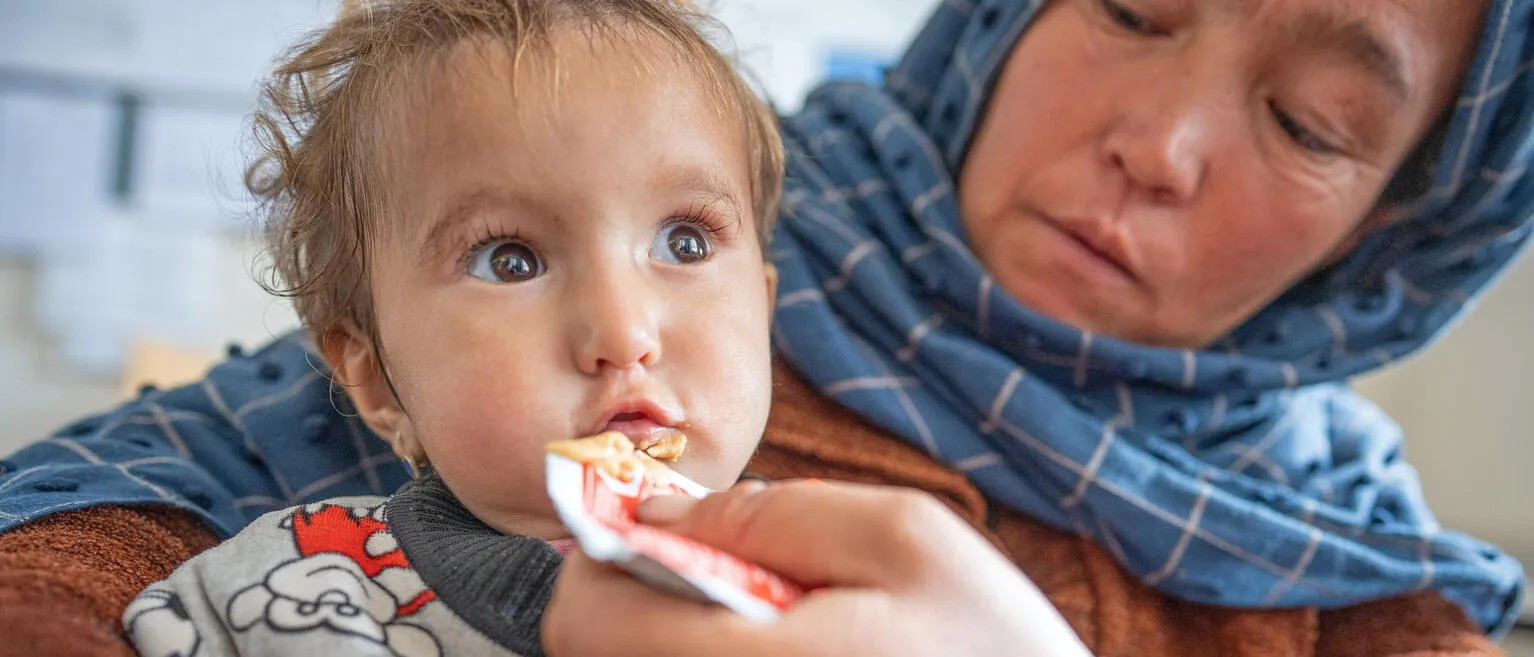
"One million children who are suffering from life-threatening severe acute malnutrition.""If there is no treatment, and we are not able to act fast, that one million number are at risk of dying.""Malnutrition plays a central role [in the growing number of deaths of very young children].""In parts of southern Afghanistan, some hospitals are now seeing three or four severely malnourished children for every available bed."UNICEF Afghanistan representative Tajudeen Oyewale
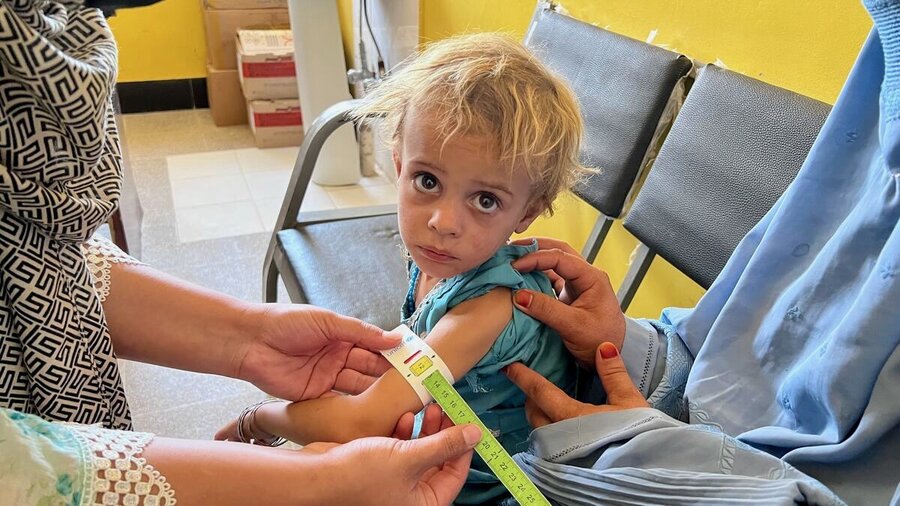 |
| Three-year-old child tested for malnutrition. Photo: WFP/Isheeta Sumra |
When the United States peremptorily pulled out of Afghanistan in 2021, while the Taliban was on the march toward Kabul, incentivizing other NATO nations to do likewise -- all the work that had been done by the international coalition to bring that war-wearied country into the 21st century, the establishment of medical clinics, schools, water wells in remote villages went to naught. During the U.S.-led invasion and occupation, women were empowered, able to reach academic levels toward professions they aspired to, humanitarian groups set up shop in the country to contribute to the modernization efforts and mitigate miserable living conditions -- all came to a grinding halt.
It took no time at all for the West-aligned Afghan government to dissolve in the pending approach of the Taliban forces. Government ministers fled abroad, government workers were cognizant that the Taliban meant to search them out, imprison and/or kill them. All the forward-looking enterprises that Afghanistan's population was able to develop were swiftly placed in mandatory retirement. The old misogynistic order where women were not permitted in public without wearing a burqa or abaya returned. Those employed by humanitarian agencies were forced to stop, and the humanitarian groups left the country.
Foreign investment that had been robust under the UN-approved occupation came to a stop. Afghanistan's assets abroad were frozen. Girls were no longer able to attend secondary, much less higher-level education past the primary grades. The strict separation of males and females became mandatory. Pre-teen girls were sold by their parents into marriages with older and elderly men to become their property. Men reverted to having multiple wives. Some Afghan women set up cottage industries in discreet locations where they could earn a basic living to keep food on the table.
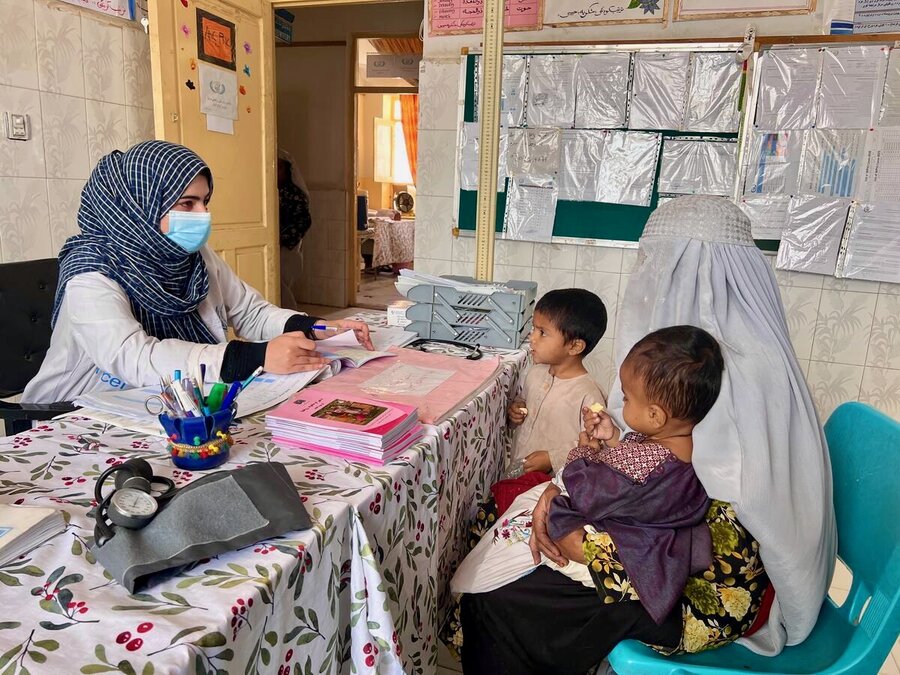 |
| Farida and her sickly children (R) need healthy food – which she cannot afford on the family's tiny income. Photo: WFP/Isheeta Sumra |
The country copes with natural disasters like drought, flash floods, regional instability along with clashes with neighbouring countries over territorial and trade issues. And the country's children are in parlous condition, warns the United Nations, where across Afghanistan, 3.7 million children suffer from wasting disease; a condition linked to malnourishment.
Babies under six months of age represent close to 40 percent of the children admitted to hospitals with severe wasting and grim medical complications. Over 80 percent of severe acute malnutrition cases in the country are represented by children under two years of age. The UNICEF country representative for Afghanistan speaks of a "worsening nutrition crisis" with over half a million children admitted to hospital in 2026 for high-risk, moderate and severe wasting conditions.
Families, reports Tajudeen Oyewale, are scaling back nutritious food and serve increasingly smaller meals to deal with food insecurity; an "increasingly alarming picture", where infants' first solid food graduating from breast milk can be represented by bread and tea or watered-down yogurt, "and for a growing child, this is simply not enough". A vicious cycle of poor nourishment, developing of severe diarrhea or respiratory infections while becoming more malnourished.
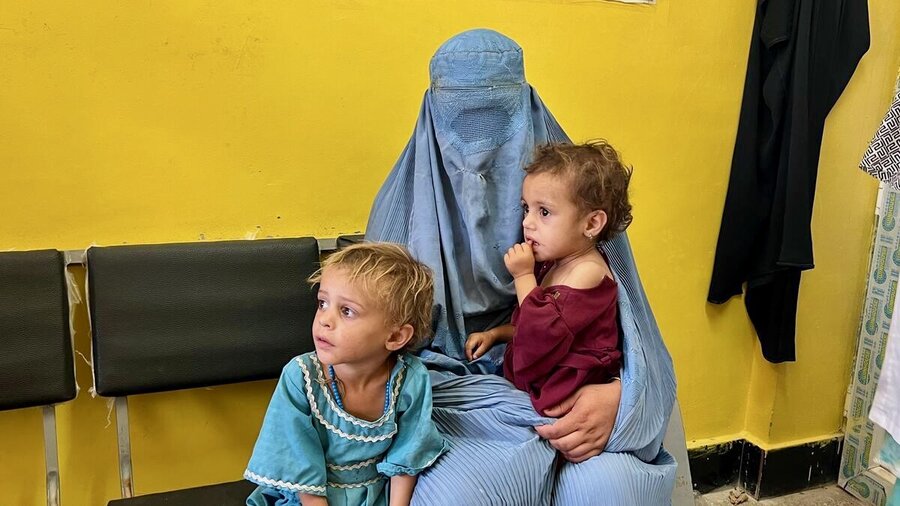 |
| Sediqa's two young girls count among nearly 3.7 million Afghan children projected to suffer from malnutrition this year. Her impoverished family often lives on a diet of bread and tea. Photo: WFP/Isheeta Sumra |
Labels: Afghanistan, Child Malnutrition, Endemic Poverty, Food Scarcity, Malnourishment, Taliban Rule
posted by Pieface @ 8:10 PM


0 Comments:
Post a Comment
<< Home