Israel's Right of Response Raises Negative Global Public Opinion
"I believe the negotiations will continue, and right now we are applying significant pressure on all fronts in order to relay a very clear message about our intentions.""It could be that this pressure, both in Gaza and elsewhere in the world, will ultimately bring about a breakthrough in the negotiations."Danny Danon, Israeli ambassador to United Nations"There's a difference between having a policy of [destroying Hamas] and then breaking international law as a country to carry it out.""And that seems to be what Israel has decided to do and which puts it on the wrong side of the international community."Nicholas Hopton, former British ambassador to Qatar, Libya and IranCurrent U.S. sanctions have not significantly impacted Iran’s relationships with its proxies. The State Department estimated that Iran spent more than $16 billion on support for the Assad regime and its proxies between 2012 and 2020. And in 2020 alone, the State Department estimated that Iran funneled more than $700 million to Hezbollah.The October 7 massacre by the Iranian-backed Hamas terror group in southern Israel that killed over 1,200 Israelis and other foreign nationals and took over 250 hostage, has further demonstrated the threat to global stability that Iran and its terror proxies pose. Since that attack, the Iranian-backed Hezbollah in Lebanon, Houthis in Yemen, and militias in Iraq and Syria, have led attacks against Israel.American Jewish Committee, June 2025
In the late 1960s Palestinian secular movements such as Al Fatah and the Popular Front for the Liberation of Palestine (PFLP) began to target civilians outside the immediate arena of conflict. Following Israel's 1967 defeat of Arab forces, Palestinian leaders realized that the Arab world was unable to militarily confront Israel. At the same time, lessons drawn from revolutionary movements in Latin America, North Africa, Southeast Asia as well as during the Jewish struggle against Britain in Palestine, saw the Palestinians move away from classic guerrilla, typically rural-based, warfare toward urban terrorism. Radical Palestinians took advantage of modern communication and transportation systems to internationalize their struggle. They launched a series of hijackings, kidnappings, bombings, and shootings, culminating in the kidnapping and subsequent deaths of Israeli athletes during the 1972 Munich Olympic games.These Palestinian groups became a model for numerous secular militants, and offered lessons for subsequent ethnic and religious movements. Palestinians created an extensive transnational extremist network -- tied into which were various state sponsors such as the Soviet Union, certain Arab states, as well as traditional criminal organizations. By the end of the 1970s, the Palestinian secular network was a major channel for the spread of terrorist techniques worldwide.Frontline, The Evolution of Islamic Terrorism: an overview, John Moore, PBS
 |
Israel's military incursion into Gaza following the Palestinian terrorist attacks of October 7, 2023 when thousands of Hamas, PLFP, Fatah, Islamic Jihad and Palestinian citizens flooded across the border into southern Israel with the intention of slaughtering Israelis, lit a firestorm of condemnation as the IDF pursued its mission to destroy Palestinian operatives indulging in their passion for murdering Jews. There was no option but to bomb the enclave in an effort to annihilate Hamas embedding itself within the civilian population, which promised to launch endless October 7s on Israel, over and above its countless strikes to that point.
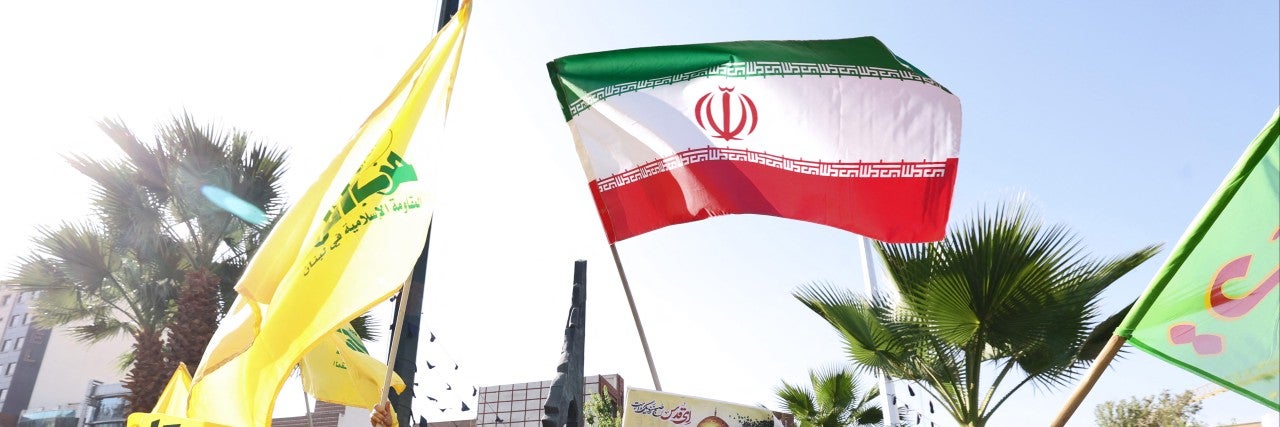
As Israel seeks the completion of its stated mission to eradicate the source of terrorism from Gaza, it gave additional attention to its northern border where from Lebanon, Iran-sponsored Hezbollah sent missiles into Israeli territory of the Golan Heights, and from Yemen, the Houthi terrorist faction attacked marine trade in the Red Sea with any Israeli links. Iran-supplied missiles from Yemen reached Israel, while Hamas, under siege, continued to bomb Israel. The Islamic Republic of Iran was inspired to send missiles into Israel after Hezbollah leaders were targeted in Iran.
Assailed from all these sources, there is no nation on the face of this Earth that would not return fire and spare no efforts to destroy its enemies before it would itself be destroyed. Yet this simple reality has not interfered with a global campaign to demonize Israel for responding to its existential threat; those world leaders and the leaders of international bodies criticize, slander, threaten consequences and do their utmost to isolate the Jewish state, calling Israel a 'rogue attack machine', destabilizing the region always on the cusp of ignition. In international law a country that is attacked has the inalienable right to respond. And any country that gives haven to the attackers sees a justified attack, also defended by international law.
 |
Logically, Israel knew it had to cast a wide net to neutralize Hamas political leaders who preferred to live abroad rather than in Gaza or the West Bank. Posing as 'political' leaders, as opposed to the Hamas 'militant wing', haven was offered in Turkey and Qatar where the Hamas leaders who set the death-cult agenda lived in opulence and security from the consequences of their orders; they nonetheless became targets for retribution by Israel, earning the condemnation of both those from the Middle East and the West.
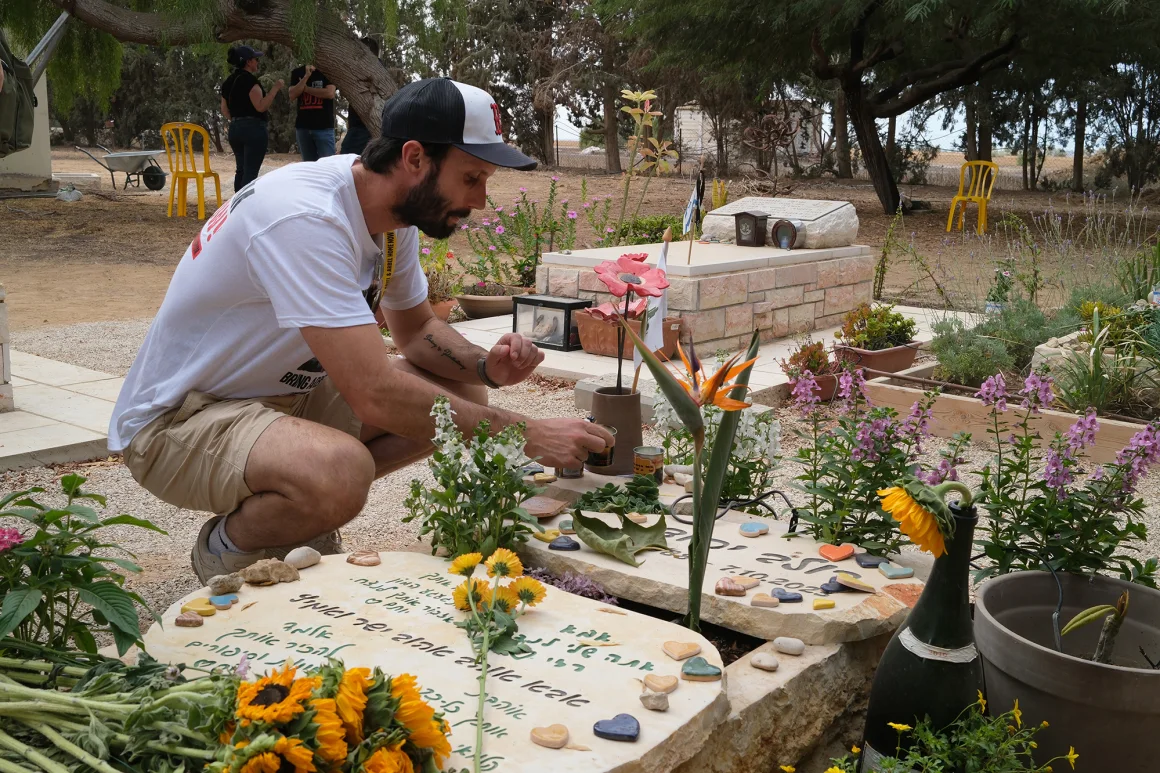
"We'll eliminate Hamas leaders in Qatar and Turkey", former Shin Bet chief Ronen Bar stated several months following the 2023 savagery where Israeli girls and women were raped, mutilated and murdered. "It'll take a few years but we'll get there", he said, in memory of the 1,200 Israelis, foreign farm workers and Israeli non-Jews who were slaughtered that infamous day. The entire nation of Israel has been suffering the trauma of loss, in addition to the fearful, mourning families of the 250 children, men and women who were taken hostage by Palestinian terrorists, held as bargaining chips, in inhumane conditions.
Avenging military targets in Iran, Yemen, Lebanon and Syria, all countries hostile to and demonstrably contriving to destroy Israel, became fair game to Israel's mission to protect itself from ongoing deadly attacks. The fierce response of the Israeli military under the direction of the Israeli government demonstrated once again to the world that there is a Jewish state dedicated to the security of Jewish life, one that prefers peace but will settle for the persuasive power of conflict to hammer home the message of Jewish endurance.
 |
"Israel believes the best strategy is to escalate in order to deescalate", stated Brandon Friedman, a senior fellow at the Moshe Dayan Center, Tel Aviv University, whose specialty is the Arab Gulf. In a first thing first scenario, the decision was made to set aside relaxed relations with the Gulf until Hamas is defeated. Almost two years have passed since the devastation of October 7 and hostages continue to be held by Hamas for whom loyalty among Palestinians in Gaza and the West Bank remains strong.
"I speak with the leaders of Arab countries.""Some of them issued very angry statements about Israel. But in informed conversations they say, 'Kudos' -- both because they dislike Qatar and because they dislike Hamas and radical Islam.""I think we should keep taking the lead in this campaign. The entire world is talking about a future without Hamas -- including even those who are today fighting us here in the UN, like France and Britain."Danny Danon
 |
Labels: Censure by Western Nations, Deadly Hamas Assault on Israeli Civilians, Eradicating Hamas, Israel Defense Forces' Response, October7/23
posted by Pieface @ 7:53 PM


0 Comments:
Post a Comment
<< Home