Lawsuit: Iraqi-Canadian-Jewish Family Vs Scofflaw France
"We all thought that it was lost, that we would never get it back.""I realized that this is not just about a house, it's about human rights. That was my motivating factor. It is hugely unfair. They are occupying our house.""If you have art that's stolen or a house that's stolen, it's the same thing.""It wasn't a person or a company who stole it, it's a country. And France was taking advantage of our misfortune and that's not right. They're a G7 country and they also stand up for human rights.""So how are they doing this? It doesn't make sense."Philip Khazzam, Montreal businessman, grandson of Ezra Lawee"[The Lawee family] were robbed of their property. When the regime of M. Saddam Hussein ordered the confiscation of all the property of Iraqi nationals of the Jewish faith.""[Iraq's claim to the house had no legal basis and was] purely and simply a plunder. [An Iraqi law for] the dispossession of Jewish people from their properties in Iraq when they returned to Israel [did not apply here; not only does it abuse international human rights but because the Lawees didn't leave in the airlift program and didn't settle in Israel].""It creates a very difficult situation for France, which occupies Jewish property seized in violation of rules, values of our Republic, and international law.""Apparently we did not understand each other well. This property is not the property of France. This property is also not the property of Iraq because it has been plundered and stolen.""This building is the property of my clients and of them alone."Lawyer Jean-Pierre Mignard
 |
| A historic aerial shot of the house, known in the family as Beit Lawee (Picture: courtesy of Philip Khazzam) |
In the 1930s in Iraq, two Iraqi Jewish businessmen, brothers Ezra Lawee and Khedouri Lawee, built a grand house for joint co-occupation of their two families. The mansion was built near the Tigris River, an area of the Middle East once historically known as Mesopotamia. The mansion boasts a stately entrance with stone steps curving before a round portico of four columns under an ornate balcony. This is a building of note which is central to a contentious international dispute. A building that houses the embassy of France in Iraq. For which France pays rent to the government of Iraq.
Iraq confiscated the property when the Lawee family fled their country of birth in the 1950s during a period of deadly pogroms. The descendants of the original Lawee brothers quietly campaigned for decades for compensation from France. Finally, they filed a lawsuit in Paris against the French government. Prior to the authoritarian aura prevailing in Iraq along with pogroms, tranquility for the Jewish minority prevailed in the Muslim-majority country where Jews have lived for millennia. Before 1950, the Jewish Iraqi demographic represented 3% of the entire population.
Iraq was receptive to the Nazi propaganda during the Second World War, as was much of the Arab world at the time. What followed was a period of mass violence against Jews. In 1948 when Israel declared its national return to its ancestral Judean land mass, Iraq joined an Arab military coalition that included Egypt, Syria, Lebanon and Jordan, along with a token Saudi Arabian contingent, to challenge the nascent Jewish state and destroy its foundation. A battle that the combined armies failed to win, against a basically impromptu Israeli military, fighting for its very life.
 |
| The French Embassy in Baghdad, Dec. 31, 2020 X.com/@FranceBagdad |
Discriminatory laws, public violence, executions, looting and religious repression followed, targeting the Arabized Jewish population throughout the Middle East, forcing some 300,000 of them into exile, dispossessed of their property and goods. An international airlift operation between 1951/52 brought Jews from Iraq to Israel, but the wealthy Lawee family chose to travel to England, then New York, and finally to resettle in Canada, in 1954 where they re-established their business representing General Motors in a dealership.
In their absence from Iraq, a caretaker watched their property on their behalf. Then in 1964, five years after achieving their Canadian citizenship, the brothers leased their Iraqi mansion to the French government in an agreement that encompassed the mansion, caretaker's home, two garages and a walled garden and greenhouse, a prestigious location for France with its investment and influence in Iraq. France paid rent to the Lawee brothers, attested to by documents. Then suddenly in 1970 the rental payments were cut off. Rather than pay the Lawee owners of the property, France had agreed to pay the Iraqi government.
In response the Lawee brothers sent government officials in Paris appeals over the rent owing them, but no resolution appeared. Following the defeat of Saddam Hussein, France continued its payment of rent to the Iraqi government, ignoring the family's appeals. After years of war, France resumed its presence at the Lawee mansion in 2004. The family hired Lucien Bouchard, lawyer, former Quebec premier, to renew their legal campaign. The Lawee brothers were still listed in Iraqi records as owners of the property. Mr. Bouchard's interventions were unsuccessful.
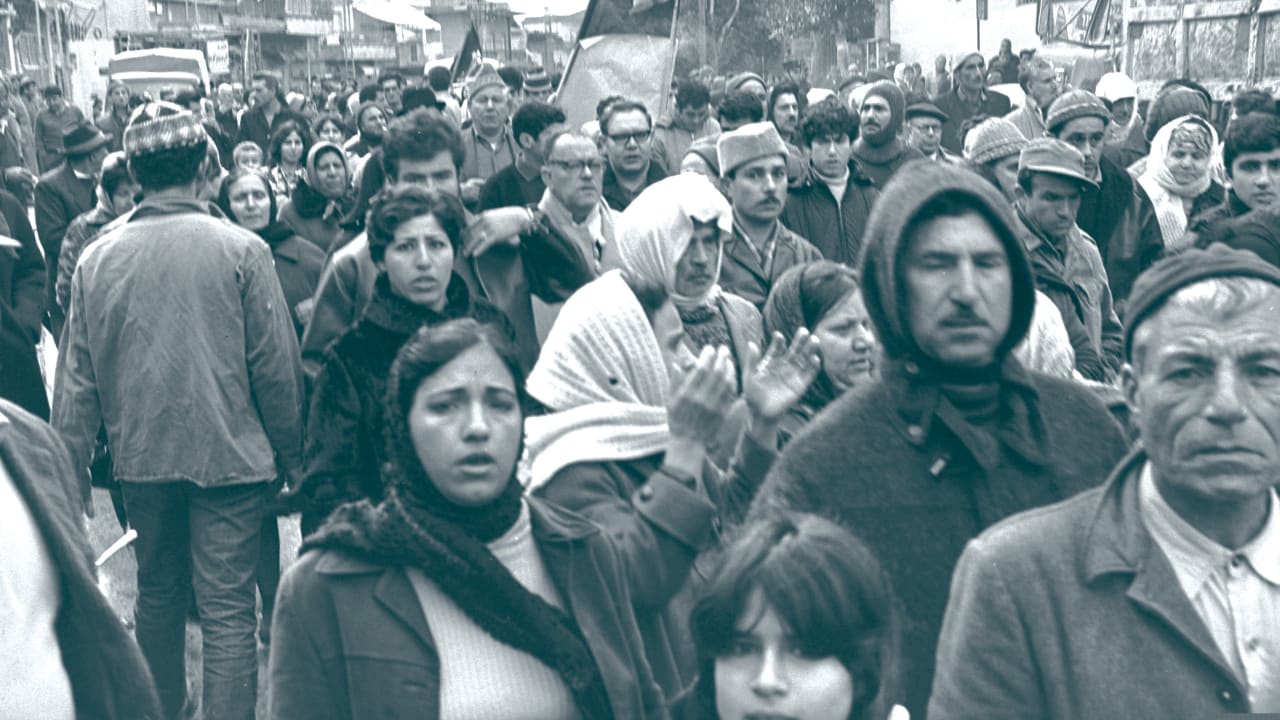 |
| IRAQI JEWS in Israel protest their counterparts’ persecution under the Ba’ath regime. (Photo Credit Fritz Cohen) |
Finally, the family hired a lawyer in Paris. The lawyer they chose had influence in high places in the French government. Jean-Pierre Mignard was close to Francois Hollande, and supported Emmanuel Macron. He wrote to his government in 2021 directly to France's foreign affairs minister. The family supplied copies of 22 documents attesting to their ownership of the property; comprised of architectural drawings, photos from the 1930s, title deeds, lease contracts, birth certificates, the Iraqi passports of the brothers, and their wills. Still nothing.
The value of the house and property fluctuates in estimates ranging from $10 million to over $20 million (US). The family feels that France owes them $10 million in rent never paid over the years. It is willing to cede the property to French ownership, once their responsibility to recompense the Lawee family follows through. Friday marked the deadline for both sides' submissions of documentation to the administration court in Paris, in this court battle. A trial is expected to take place in 2026.
"France refuses to acknowledge any responsibility, claiming that it is a decision made by the Iraqi government. This is false.""France could at least continue to pay the rent [to the owners] which would indicate that it is not complicit in the spoliation of Iraq.""We want France to be condemned, and we feel ashamed and sad because we are French lawyers and this is our country."French lawyer Jean-Pierre Mignard
 |
| The French government has ignored the family's request for reparations. Getty Images |
Labels: Criminal Court Proceedings, French Embassy, Iraqi Jews, Pogroms, Property Rights, Rabid Racism, Self-Exile
posted by Pieface @ 8:20 PM


0 Comments:
Post a Comment
<< Home