COVID mRNA Vaccines a Survival Boost to Cancer Patients
"The implications are extraordinary -- this could revolutionize the entire field of oncologic care.""We could design an even better nonspecific vaccine to mobilize and reset the immune response, in a way that could essentially be a universal, off-the-shelf cancer vaccine for all cancer patients.""One of the mechanisms for how this works is when you give an mRNA vaccine, that acts as a flare that starts moving all of these immune cells from bad areas like the tumor to good areas like the lymph nodes.""If this can double what we're achieving currently, or even incrementally -- 5%, 10% -- that means a lot to those patients, especially if this can be leveraged across different cancers for different patients."Elias Sayour, UF Health pediatric oncologist, Stop Children's Cancer/Bonnie R. Freeman Professor for Pediatric Oncology Research"Although not yet proven to be causal, this is the type of treatment benefit that we strive for and hope to see with therapeutic interventions -- but rarely do.""I think the urgency and importance of doing the confirmatory work can't be overstated."Duane Mitchell, director, UF Clinical and Translational Science Institute
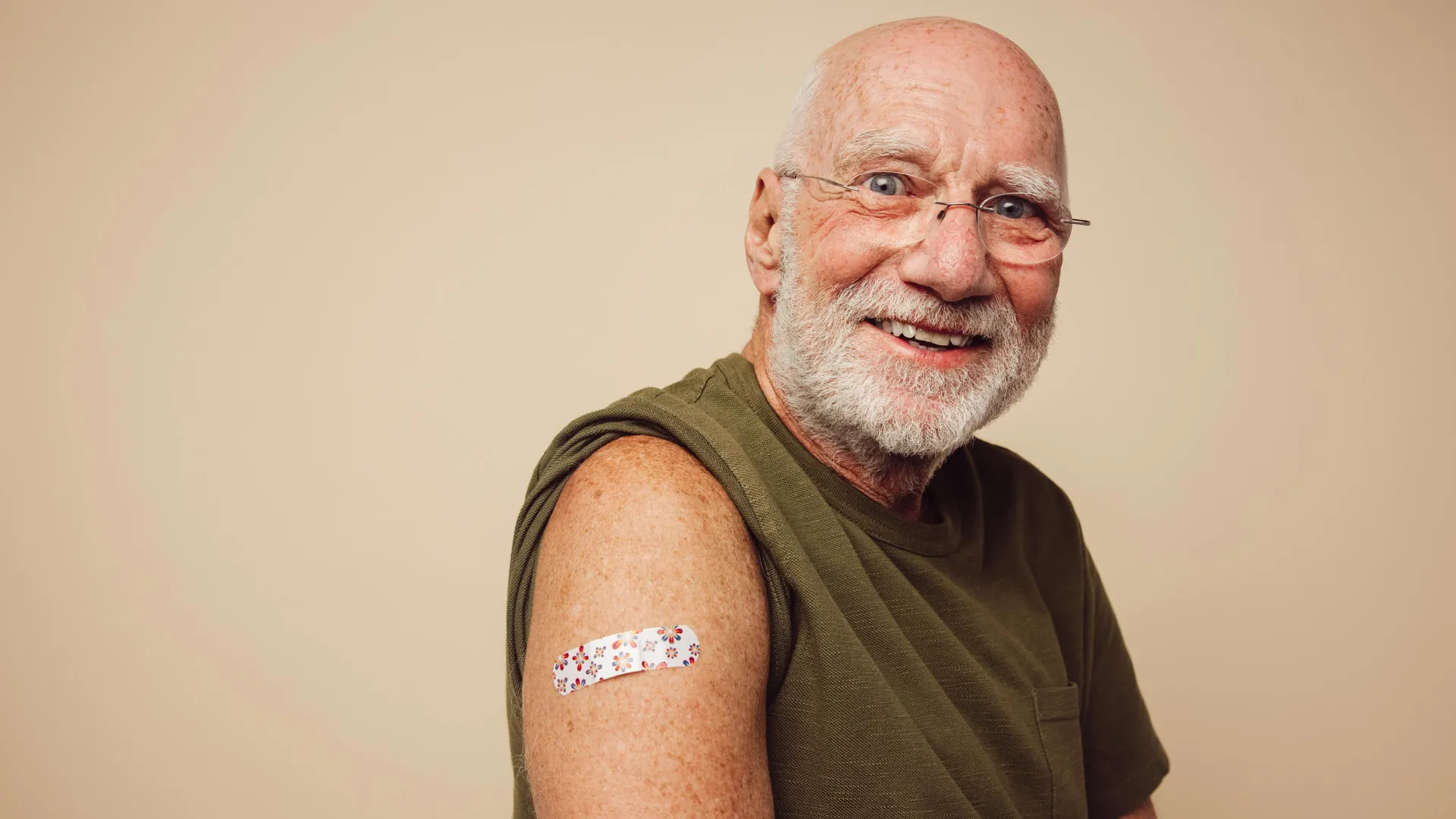 |
| Receiving a COVID-19 mRNA vaccine near the start of cancer immunotherapy dramatically improved survival in advanced lung and skin cancer patients. The discovery hints at a new era of universal, immune-boosting cancer vaccines. Credit: Shutterstock |
 |
"This data is incredibly exciting, but it needs to be confirmed in a Phase III clinical trial."
"The COVID-19 mRNA vaccine acts like a siren and activates the immune
system throughout the entire body, [including inside the tumour, where
it] starts programming a response to kill the cancer."
"We were amazed at the results in our patients."
"We’re sensitizing immune-resistant tumors to immune therapy."
Adam
Grippin, radiation oncologist, MD Anderson Cancer Center, Houston,
Texas
During the COVID pandemic, COVID-19 vaccines rallied the human immune system to fight off the often-deadly virus. What those mRNA vaccines also did, it turns out, was to almost double median survival-length of cancer patients, as a new retrospective study points out, by researchers at the University of Texas MD Anderson Cancer Center, and the University of Florida, who published their findings recently in the journal Nature.
Records of over a thousand patients who had begun approved immunotherapy for advanced non-small-cell lung cancer and melanoma (a type of skin cancer), comparing those who received coronavirus RNA vaccines against those who had not, comprised the backbone of the study. The hope is that scientists may develop a universal off-the-shelf vaccine for patients with various cancers, but the findings arrive at a difficult juncture for research into vaccines using messenger RNA.
Those vaccines, with a single-stranded molecule instructs the immune system -- without infecting the body -- teaching cells to produce a harmless virus protein. The Operation Warp Speed program introduced by President Trump's first administration saw scientists scramble to use the mRNA platform to develop vaccines in less than a year following detection of the Coronavirus, whereas such vaccine development can take up to 10 to 15 years in the development process.
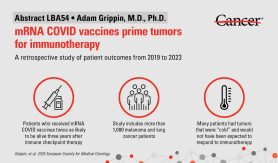
The study scientists examined records of close to 900 patients with advanced lung cancer, to find that those who were inoculated with COVID-19 vaccines within 100 days of beginning cancer immunotherapy experienced median survival of 37.3 months in comparison with 20.6 months for those not vaccinated. Those patients whose melanoma had not spread, also showed improved median survival when vaccinated.
The reason why mRNA vaccines proved so effective in awakening the immune system to the presence of cancer is not yet fully understood but it is hypothesized that it may be related to RNA's role in the evolution of life. "RNA preceded DNA evolutionarily, so cells don't like RNA from the outside world coming in", explained Elias Sayour, one of the paper's authors.
 | |||
| A healthcare worker prepares a shot of the Pfizer COVID-19 vaccine in La Paz, Bolivia, Jan. 7, 2025. (AP Photo/Juan Karita, File) |
Labels: Boosted Longevity, Cancer Therapy, COVID Pandemic, COVID-19 Vaccines, mRNA Vaccines
posted by Pieface @ 8:01 PM


0 Comments:
Post a Comment
<< Home