In Canada, Justice Delayed Is Justice Stayed
"In 2022-23 , nearly one in three [30.4 percent] of sexual assault cases in adult courts exceeded the Jordan limit.""Among these cases. 47.3 percent were stayed or withdrawn due to the limit.""Given that sexual assault cases in adult court were already the most likely to be past the Jordan limit, this means that 14.4 percent of all sexual assault cases in adult courts were stayed or withdrawn, representing one in seven cases of sexual assault in adult courts in Canada, or roughly 500 cases.""The risk of those records [medical records of victims testifying] being disclosed in court means that many survivors felt like they had to choose between justice or getting mental health help.""The threat of an aggressor gaining access to a survivor’s therapeutic records is a risk to the health and safety of survivors.""Reporting sexual violence is often framed as an individual choice, but survivors consistently indicate that their silence is in response to systemic barriers, institutional failures and inequality rather than personal unwillingness.""One survivor we interviewed talked about choosing to report knowing that it would be a difficult process, that it could cause harm, but doing it to protect the public. It's a sacred trust that people are putting in the system.""I do honour the fact that there are many good-hearted, effective people working across the system, but there are clear points that need to change so that survivors are better protected.""The harm is so well recognized that police officers and Crown attorneys regularly caution survivors against reporting or pursuing charges. The administration of justice is in open disrepute."Report, Benjamin Roebuck, federal Ombudsman for Victims of Crime
 |
| Report from Benjamin Roebuck, federal Ombudsman for Victims of Crime. Adrian Wyld/The Canadian Press |
Sentencing, bail and parole reforms is a large topic in Canada, where criminal offenders no longer feel the stern face of the law under this Liberal-led DEI-inspired government whose 'progressive' agenda has filtered down to every level of governance and all its institutions, including that of the administration of justice. Bail for criminal offences is now liberally applied, and sentencing has surrendered to the purported needs of the perpetrator, not the victim.
Structured release programs appear to have no interest in the fact that the accused or those convicted of previous, similar offences are once again free to re-commit.
That many offenders whose tender feelings have been salved by lenient judges who find reasons to excuse criminal behaviour linked to the offender's unprivileged past, may have amassed long criminal records, offending and re-offending at will -- particularly if they're recognized as a visible minority, or from an Indigenous group -- appears incidental to the sentencing apparatus, more committed to amending the injustices of the 'colonial' past than offering justice in sentencing to the victims of crime.
 |
| People who have been the victims of sexual assault can take the person who committed the assault to court in a civil case even if no criminal complaint was made. Educaloi |
A month ago, an Abacus Data poll found 80 percent of Canadians in agreement that obtaining bail for criminal offences is too readily come by. Repeat offenders, it is felt, should be impelled to produce proof that they merit such 'second chances'. Police forces countrywide, and provincial and territorial premiers have been asking the federal government for years to amend those portions of the criminal code that have made it a given that soft punishment for crimes have become the norm, leading to an atmosphere of rising crime rates, reflecting that soft punishment.
The recently released 300-page report from Benjamin Roebuck, federal Ombudsman for Victims of Crime, focused particularly on sexual-assault victims' experiences in the courts. Specifically the number of sexual assault cases that never go to trial -- even when the victims have testified -- due to the aggravated time lapsed between charges and the commencement of a trial date which have had the effect of staying not the charges but a court date at all.
The guarantee of a speedy trial, in other words, eclipses the administration of justice.
Where sexual-assault cases are abandoned on grounds of taking too long to bring the case to court ending in stayed proceedings. At times, police investigations resulting in evidence-gathering are tardy, at times it is the prosecution that is unprepared, leading to a too-long delay of proceedings.
"Charges in a criminal case can be ‘stayed’ or ‘thrown out’ when a judge or a Crown decides that the case cannot continue. When a case is stayed or thrown out [i.e. dismissed], it does not mean that the charge is withdrawn, that a victim or offender was victorious, or that the crime did or did not occur: instead, 'the issue of guilt or innocence is never determined'.""Stays 'can be granted when the state has acted unfairly, including a failure to bring the case to trial in a timely manner'. In 2016, the Supreme Court of Canada decision [R. v Jordan] established deadlines for when a trial must be completed. Delays that go on longer than these timelines violate the accused’s right to be tried within a reasonable time. An accused can then file a Jordan application; from there, a judge can grant the charges to be stayed.""In Ontario, this is what has been affecting violent crime cases, including a number of sexual violence and child sexual abuse cases."Ontario Coalition of Rape Crisis Centres
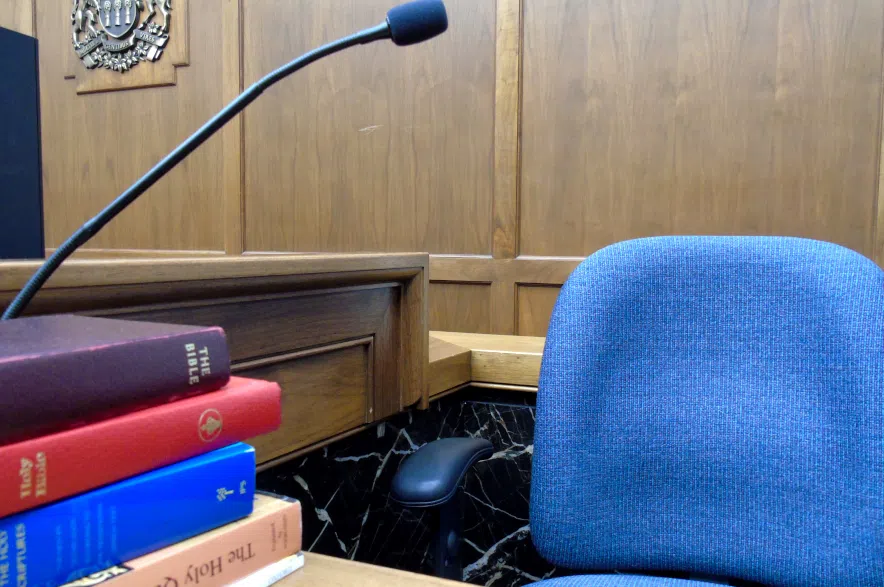 |
| A judicial stay isn’t the only way a judge can remedy a too-long court process, and other ways might be preferable in sexual assault cases. (9890 CJME file photo) |
Labels: Canada, Criminal Offences, Easy Bail, Light Sentencing, Repeat Offenders, Victim Impact
posted by Pieface @ 7:50 PM


0 Comments:
Post a Comment
<< Home