Ruminations

Blog dedicated primarily to randomly selected news items; comments reflecting personal perceptions

Friday, July 31, 2026

Russia, Diving Nuclearshod Over Its Arctic Neighbours

"Russia is determined to control access, setting the terms for exploiting regional shipping and resources. It wants to extend command over stretches of Arctic water, with little justification under international law."
"If Canada wants stronger maritime security -- as the Canadian Coast Guard's transfer to the Department of National Defence last September suggests -- it must grasp Russia's Arctic plans and the long-term persistent threat they pose." 
Alexander Dalziel, Macdonald-Laurier Institute
Sergey Sukhankin Jamestown Foundation 
 https://www.fpri.org/wp-content/uploads/2026/07/2013-02-06t000000z-1041876735-mt1zuma00095rac9-rtrmadp-3-zuma-1-1920x480.jpg
Canada has for too long neglected its share of the Arctic against the predatory plans of Moscow which has made no secret of its determination to extend its recognized territorial claims by rebuilding its old semi-abandoned bases, investing in nuclear-powered ice-breakers, strengthening its air capabilities in its long-range plans of controlling shipping lanes, and harvesting minerals and oil in their oceanic fastness. 
 
The provocative act of planting its titanium Russian flag on the Arctic seabed in 2007 was a signal of its entitled 'ownership' of an extended, contested area alerting placeholders, Canada, United States, Denmark and Norway that their own long-acknowledged territory at sea can no longer be taken for granted.
 
Securing and safeguarding the Arctic was a major topic for discussion, along with strengthening maritime security in the Arctic and North Atlantic oceans during the recent NATO summit in Turkey. Russian President Vladimir Putin's territorial ambitions focused the discussion on setting global terms for regional exploitation of the undersea resources, and the associated need to agree on how best to ensure maritime security in the face of a national leader unconcerned with international law. 
 
https://gcaptain.com/wp-content/uploads/2024/07/project-23550-combat-icebreaker-1536x981.jpg
Ivan Papanin was laid down in 2017 and is expected to join Russia’s Northern Fleet by the end of 2024. Two additional vessels of the type are under construction for the naval units of the country’s border patrol. gCaptain
 
Russia makes no secret of its intention to resort to military means with its formidable nuclear submarines in play and its paramilitary Russian Coast Guard prepared to control access to the Northern Sea Route, north of Russia, bordering on U.S. territory in the east, Norway in the west. Russia's focus is the promotion of year-round shipping through the Arctic. Its investment in ice-class liquefied natural gas carriers illustrate its regional power assertion.
 
Norwegian and European authorities sanctioned Russian fishing industries on suspicion of espionage and infrastructure sabotage. The Russian proposed "Transarctic Transport Corridor" to connect southern industrial centres and Siberian resource projects to foreign markets through the Northern Sea Route is a marked concern, while offshore drilling and underwater mining are seen as insurance against dwindling land resources. 
 
While Russia polishes its credentials as the only serious player in the Arctic, entitling it to expand its boundaries and without consultation with the other Arctic nations set standards running loops around its Arctic neighbours, its state media invested in propaganda elevating Russian plans, express contempt for Canadian, American or Danish development plans in the North American Arctic, marking them with a hostile purpose, a potential "bridgehead" with which to threaten Russia; its own three-decade military presence aside. 
 
https://gcaptain.com/wp-content/uploads/2025/12/three-nuclear-icebreakers-Atomflot-Telegram.jpeg
Three Russian nuclear icebreakers in the Arctic. (Source: Atomflot)
 
"The Arctic is central to Russia's deepening partnership with China and its broader authoritarian agenda. Moscow is courting Chinese investment while giving Beijing access denied by Arctic democracies."
"China  is using Arctic waters to diversify its export routes while gaining experience operating in the region."
"The Canadian Security Intelligence Service says that both countries are increasing their espionage activities."
Alexander Dalziel/Sergey Sukhankin 

Labels: , , , , , , , ,

Friday, July 03, 2026

Canadian Cannabis Consumption

"What followed commercialized legalization was a rise in cannabis addition as well as increases in hospital admissions for psychosis, including cases where psychotic disorders occurred alongside cannabis addiction."
"The emergence of a for-profit cannabis industry can result in commercial interests being prioritized over public health, just as we have seen with the alcohol and tobacco industries."
"Increased availability of cannabis products, greater product strength and active marketing of these products can increase the risk of harm."
Tom Freeman, psychologist, University of Bath
https://www.recoveryanswers.org/assets/Long_web-4.png
Cannabis-related hospitalizations associated with later mortality  Recovery Research Institute
 
The Liberal government of Canada gifted Canadians with MAID -- Medical Assistance in Dying. A program whose original protocol of accessibility was to ensure that patients' ebbing lifeforce was imminent, to spare them further pain and suffering. That soon changed, with guidelines for approval becoming more openly 'benevolent', where applicants eventually could simply decide life wasn't worth living any longer; poverty and lack of adequate medical care prompted some to end their lives. The latest 'improvement' on the guidelines was to include those suffering solely from mental illness; a decision still in abeyance.
 
Living the good life, courtesy of the Liberal government introduced legalized marijuana, and the licensing of cannabis shops throughout the country where the 'weed' and products flavoured with cannabis, some in shapes appealing to children were available. Leading to children being seen at hospital emergency rooms having consumed those appealing tidbits. Government argued that commercializing pot's easy availability would see the end of the illegal black market through regulation. Things haven't exactly worked out that way, with seasoned users still buying on the street at prices more than rivalling commercial outlets.
 
https://smartcdn.gprod.postmedia.digital/saltwire/wp-content/uploads/2026/07/tch-tk070226ganja-sized-scaled.jpg?quality=90&strip=all&w=564&h=423&type=webp&sig=-aEctXrgUW95xWPjI515wg
 NSLC's lone exclusivity cannabis-only outlet is seen on Clyde Street in Halifax on Thursday, July 2, 2026. The NSLC also operates cannabis dispensaries inside its alcohol selling stores across Nova Scotia. Photo by Tim Krochak /The Chronicle Herald
 
Now a global study recently published in the Lancet Journal of Psychiatry points out that the widespread commercialization of cannabis in Canada has seen an explosion of hospital visit for psychosis, psychiatric disorders, and addictive use of the product. Elsewhere globally where legalized cannabis is available, a tighter regulatory regime has been instituted not involving widespread commercial availability and as a result other countries where pot has been legalized don't face the pot-related problems that Canada does.
 
Titled International Cannabis Policies and Their Association with Cannabis Use, Cannabis Use Disorder, and Other Psychiatric Disorders, the study represents a global research survey of the policy of legalization of cannabis. As such studies go, this is the most recent research that raises concerns over health effects resulting from Canada's 2018 cannabis legalization and the commercialization that followed. 
 
https://i.cbc.ca/ais/1.5428221,1717212069000/full/max/0/default.jpg?im=Crop%2Crect%3D%280%2C474%2C4032%2C2268%29%3BResize%3D860
Seniors are among the fastest-growing age group for using cannabis in Canada. Meanwhile, the number of seniors ending up in emergency departments with cannabis poisoning has also risen sharply since legalization, new research shows. (Travis Dolynny/CBC)
 
Most troubling, society has seen teens and young adults to be the most affected. This, when science also warned that up to age 21, the human brain is still maturing, and exposure to the chemicals in cannabis is harmful to that development. A 2019 study published in Lancet Psychology, advanced the result of regular use of strong cannabis (20 milligrams per gram or higher), increases the potential of a psychosis by up to 1,000 percent among teens and young adults.
 
Data from Nova Scotia Liquor Corp. indicates as of 2023 that close to half of its sales were of cannabis products. Those products having a THC content of 20-25 mg/b (10 times stronger than the old weed), 30 percent of sales represented with 24-30 mg/g and just over 10 percent reflected a potency of over 30 mg/g. Further, according to the 2022 Canadian Cannabis Survey, youth in Nova Scotia (age 16 to 19) saw the highest use of marijuana in the country.
 
Halifax's wastewater tests contained the highest rate of cannabis metabolites per capita of any city in Canada. The Canadian Wastewater Survey testing for drug metabolites in wastewater, tracks consumption trends throughout the country. 
 
https://smartcdn.gprod.postmedia.digital/nationalpost/wp-content/uploads/2025/06/pot-1.jpg?quality=90&strip=all&w=564&h=423&type=webp&sig=dUibFWpkidyOOCCuTRkuNA
As pot becomes more potent and more convenient to purchase, emergency doctors are reporting more cases of cannabis hyperemesis syndrome. Photo by Getty Images
 

Labels: , , , , ,

Friday, June 26, 2026

Border-Crossing Drugs -- Transnational Criminal Operations

"There's a lot of frustration and it, in and of itself, lends itself to facile responses that look good, but in the end don't really do anything."
"Blowing up drug boats ... is a perfect example of a facile response that does absolutely nothing."
"We often think of [fentanyl] as just a border issue, and it's not just a border issue. These are transnational criminal operations."
Regina LaBelle, professor of addiction policy Georgetown University 
 
"The biggest concern we see is what's happening on our southern border being pushed up to our northern border."
"Over the last year, we've apprehended enough fentanyl that would kill 17 million Americans on our northern border." 
U.S. Homeland Security Secretary Markwayne Mullin
https://i.cbc.ca/ais/b860d07f-42a6-4870-85d2-346a964f35b9,1781881120949/full/max/0/default.jpg?im=Crop%2Crect%3D%280%2C0%2C5751%2C3834%29%3BResize%3D796
U.S. Homeland Security Secretary Markwayne Mullin said this week that more fentanyl is coming into the U.S. from Canada, which is not reflected in the latest data from U.S. border officials (Manuel Balce Ceneta/The Associated Press)
 
"I mean, it just really isn't happening."
"It's way too much trouble to ship [fentanyl] around and put it through Canada and then take it into the United States."
Mark Tyndall, public health scientist, professor of medicine University of British Columbia
 
"The flows that we know of across the U.S.-Canada border are token and trivial compared to the flows into the U.S., primarily across the southwest border or the flows into Canada of the precursors, not through the U.S."
"The fentanyl killing Canadians is mostly made in Canada with precursors that came from China."
"The U.S. supply chain is independent of the Canadian supply chain once the precursors leave China, but the manufacturing for U.S. markets mostly happens in Mexico." 
Jonathan Caulkins, drug policy researcher, Carnegie Mellon University
https://www.ctvnews.ca/resizer/v2/CEKXSUYIWANW2MWGKXF6XPXEVU.jpg?smart=true&auth=e17a063aff6d5ba209dd64d9b0e19ce2b080edb6273c9371f6aeb7dc0f35d6c5&width=1600&height=899
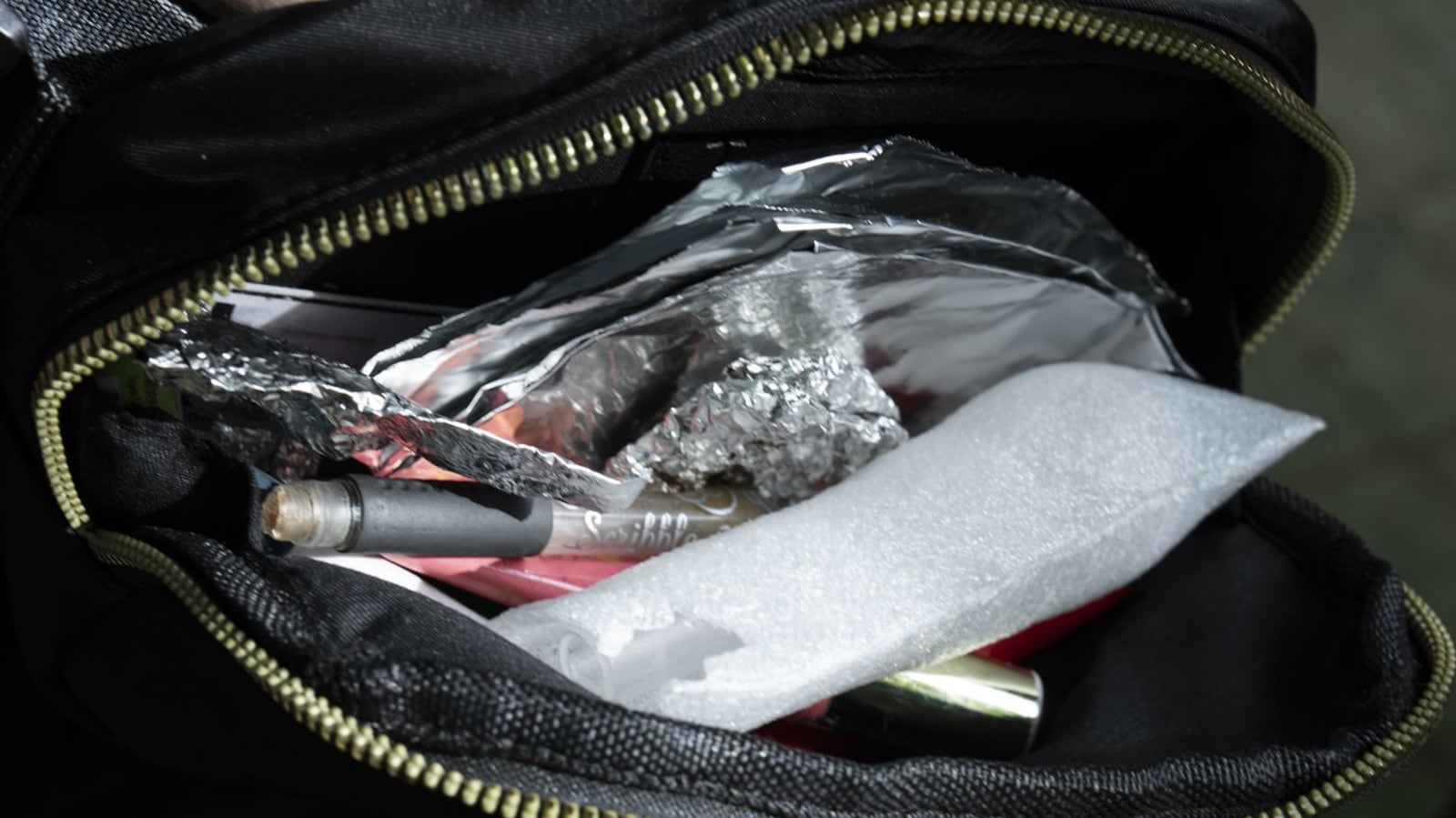
A bag filled with drug paraphernalia  (AP Photo/Jenny Kane)
 
There has been a realization of a drop in overdose deaths in both Canada and the United States. Drug policy experts can only theorize what the cause might be. The recently identified decline may be attributable to supply shifts alongside public health measures, eliminating tariffs or border crackdowns as part of the cause. The fearful public menace of overdose deaths has strike across all measures of society in both countries; everyone knows someone who knows someone who died of a drug overdose caused by synthetic opioids like fentanyl.
 
While Canada has developed no system of gathering statistics, the worst-hit province of British Columbia can boast that one in five residents knew someone who died from an overdose, in 2023. In 2024, close to half of Americans knew of someone who died from an overdose. Those who study the societal impacts of the drug trade tend to differ in their understanding of the situation, its impact and its victims and the possible causes, from politicians who view the subject from the perspective of ... politics.
 
And while Homeland Security Secretary Mullin claims pressure on the southern border drives cartel actions northward, including toward Canada, citing a surge in fentanyl moving across the northern border, he is contradicted by his Canadian counterpart who states data "really haven't borne that [Mullin's contention] out"
https://i.cbc.ca/ais/63a79de7-88cf-4007-bc58-70c021f4a018,1781881050227/full/max/0/default.jpg?im=Crop%2Crect%3D%280%2C164%2C7925%2C4457%29%3BResize%3D860
Kevin Brosseau, Canada's fentanyl czar, says his goal is to eliminate all fentanyl in the country. 'It's killing kids every day and destroying families,' he said. (Adrian Wyld/The Canadian Press)
 
Canadian fentanyl czar Kevin Brousseau cited U.S. Customs and Border Protection figures indicating some three kilograms of fentanyl seized at the northern order since October 2025. Which makes quite a comparison with over 3,000 kilograms seized at the southern, Mexican border. Nor are epidemiologists other than skeptical of charges that fentanyl trafficking has been shifting north.  
"We're talking about an illicit supply market that is entirely in the hands of illicit production traffickers, criminal organizations, and there's no regulation."
"[Supply conditions] can change very quickly again."
"A little change or an added highly toxic component to the drugs distributed could drive that toward an uptick."
Regina LaBelle
 
"From all I can gather, it's a mix of things, but the most likely driver of the drop in overdose deaths, at least on the Canadian side, has been changes in the fentanyl or in the synthetic opioid supply."
"[That could be construed as lower purity or products mixed with less lethal substances]."
Benedikt Fischer, professor, Faculty of Health Sciences, Simon Fraser University  
Precursor chemicals, usually shipped in from China, are generally available widely, enabling local production of fentanyl. The potency of the opioid calculates to a tiny amount able to supply the U.S. market. According to Professor Caulkins, trafficking capacity  and the criminal organizations that are involved are logically the most effective target by law agencies. 
 
Sharp declines in overdose deaths seen in both Canada and the U.S., since late 2023 where in the U.S. deaths involving synthetic opioids fell from 74,702 in 2023 to 48,422 in 2024, according to the Centers for Disease Control and Prevention, while positive in outlook, remain a puzzle in understanding why. The Canadian Public Health Agency data reflect 7,146 opioid-related drug toxicity deaths in 2024, 17 percent fewer than 2023, followed by another 2025 decline to 5,630.
The factors that may be assigned to these drops in fatal overdose occurrences range widely; expanded naloxone access, supervised consumption sites, drug supply prevention efforts, and increased public awareness among them. A 2026 study in Science magazine revealing a shock to the fentanyl supply having occurred in 2023 attributed to Chinese regulatory changes affecting access to precursor chemicals, another possible reason. 
 
In late 2023, deaths suddenly decreased in both countries, making it unlikely to point to one of the countries' policy changes, as a causative. Making it more likely that it is the supply that likely had an effect on the death rate. If so, this is a condition that may not continue. Academics now appear to favour the opinion that the fentanyl crisis is not vulnerable to border crackdowns, but more likely reacting to illicit market shifts and the capacity of public health systems to react accordingly. 
"If vigilance at any border drops, traffickers could use it as a transshipment route."
"Things that disturb the ability of the two countries on either side of the border to partner effectively are counterproductive."
"[Canada and the U.S. should refrain from allowing trade tensions to impair working in tandem at the border].
Jonathan Caulkins, Carnegie Mellon University 
https://www.ctvnews.ca/resizer/v2/I5REYHEHH5HGNA7UPRPCN74JPQ.jpg?smart=true&auth=7e0ff706ec68ee43779d3c561253bf255c5579a13323529a14e588cc74b08931&width=1600&height=899
A man sits on a sidewalk along East Hastings Street in Vancouver's Downtown Eastside. THE CANADIAN PRESS/Jonathan Hayward
 

Labels: , , , , , ,

Monday, June 15, 2026

"Secure Your Fertility Future With Confidence and Peace of Mind!"

"The advertising is coming across so strongly, and not providing any kind of real data about what success means and what the risks are."
"I think the industry is very effective at creating this perceived sense of control, and marketing of the technology is such that ... to be a good woman, this is something that you should do." 
"The entirety of egg freezing was generated as a business -- it is intended to bring in revenue."
"You have to be inherently skeptical of a medical technology that has that foundation." 
Kathleen Hammond, associate professor, Lincoln Alexander School of Law, Toronto Metropolitan University 
 
"There is a distinct difference between promotion and education."
"[Oversight of clinics' marketing by federal and provincial regulators could]  play a role in supporting accurate and responsible communication [and help ensure information is] evidence-based and not misleading."
Emily McIntosh, executive director, Canadian Fertility and Andrology Society (CFAS)  
https://i0.wp.com/ijb.utoronto.ca/wp-content/uploads/2026/06/pexels-valeriia-svietlova-215592657-11837653.jpg?resize=768%2C512&ssl=1
Of the 4.1 million babies born in Canada between 2013 and 2023, just 70 are known to have come from frozen eggs, according to data from the Canadian Fertility and Andrology Society (CFAS). PHOTO BY PEXELS.

In Canada, the egg-freezing industry more than doubled from 2020 to 2024, according to data from the Canadian Fertility and Andrology Society. Of course there is also the sobering reality that this business is not the sure-fire answer to the dilemma faced by women as they exit their prime child-bearing years and still hope that they will at some time in the near future bear a child through a successful pregnancy, at the same time that they're aware that healthy baby outcomes are more assured when the mother is still young and pregnancy is more biologically approachable.
 
So that, despite the 4.1 million babies that entered life in Canada during that time frame a mere 70 were the result of frozen eggs is telling. The reason that is so, according to industry insiders, is lower survival rates for eggs through freezing, thawing, fertilization and implantation stages (this is not nature's design but one devised by human ingenuity). An additional fact; women who have committed to this elective procedure have not yet reached the point of drawing upon it, and many likely never will. 
 
The Investigative Journalism Bureau out of the University of Toronto has much to say about the absence of adequate government oversight leaving many private fertility clinics free to make use of aggressive marketing techniques whose actual purpose is the exploitation of women's feelings of insecurity and yearning for motherhood at some 'appropriate' time in their lives. The IJB identified a number of concerns over the industry related to misleading advertising, emotional manipulation, withheld opaque results, and accompanying financial cupidity. 
 
Catherine J. Lalonde, shown after her egg retrieval procedure in 2022. Of the seven eggs collected, only three survived the freezing process and none developed into viable embryos. SUPPLIED.
 
While there is no government record of the total number of fertility clinics operating throughout Canada, the IJB reporters analyzed the social media accounts and websites of 42 clinics with 110 storefront locations in seven provinces; three affiliated with public hospitals, 19 physician-owned, 17 with ties to private equity firms' ownership or through investments. Of the total, 35 were judged to produce misleading or overstated claims, leaving the impression that women opting into their programs could plan ahead with a certainty of success; while in reality only 25 percent of embryos from frozen eggs, transferred to wombs between 2013 and 2023 in Canada led to a live birth. Consistent with international data. 
  • OriginElle Fertility, Montreal ... "Thanks to #eggfreezing, you can preserve your eggs for later use and have more control over your #fertility";
  • NewLife Fertility, Ontario ... Women can look forward to "No pressure. No rush, Just options. Your body, your choice, your future";
  • Evolve, Toronto ... Through egg freezing women can delay or hit the snooze button" on parenthood;
  • Pacific Centre for Reproductive Medicine Vancouver/Edmonton ... "One day you'll be staring at the miracle you used to dream about";
  • Anova Fertility... "Egg freezing is helping more Canadians take charge of their future family plans". 
  • https://media-cldnry.s-nbcnews.com/image/upload/t_fit-1000w,f_auto,q_auto:best/newscms/2020_06/3213961/200203-ivf-egg-freezing-think-cs-1212p.jpg

    An independent government body is needed to regulate the fertility industry and ensure women get accurate information.  Getty Images

The process leading to egg freezing includes daily hormone doses to stimulate the ovaries in the production of multiple eggs, then harvested and frozen for hoped-for fertilization and implantation in the uterus at some future date, for the potential of a successful pregnancy. A single cycle can cost  up to $20,000. Patients must undergo weeks of self-administering medications. Going through this onerous process will not guarantee frozen eggs will at some point lead to a live, breathing baby. 
 
According to CFAS, an estimated $120 million was spent by Canadians in the decade 2013 to 2023 on 6,242 egg-freezing retrievals whereby 65,517 eggs were preserved. Most of which owners have not yet begun the process of having them fertilized and implanted. A 2025 study from University of California, Los Angeles, found between 2014 and 2016 a mere 5.7 percent of women in the U.S. made use of their eggs within five to seven years; low uptake seems universal.
 
Frozen eggs must be processed through steps that by their very nature many frozen eggs will not survive; some 80 to 90 percent thaw successfully; roughly 70 to 80 succeed in sperm fertilization, then the trial of embryo development and potential live birth leads to further survival rate declines, according to the Society of Obstetricians and Gynaecologists of Canada practise guidelines.  Fewer than four percent of eggs frozen in Canada from 2013 to 2023 went through thawing for fertilization. 
 
https://torontolife.mblycdn.com/tl/resized/2026/03/w2560/R5SA4611-Edit-e1773064233277.jpg
Sarah Attia and her husband spent more than $100,000 on fertility treatments. Toronto Life


Labels: , , , , ,

Thursday, May 21, 2026

The Cost-Cutting Expedient of Medical Assistance in Dying for the Elderly Ill

"MAID [Medial Assistance in Dying] has already become in Canada a form of elder care."
"The people who are dying from [Canada's] MAID are disproportionately vulnerable. They're disproportionately disabled. They're disproportionately elderly."
"It is very difficult to not see assisted suicide or euthanasia as some sort of escape hatch. Or maybe overflow valve is a better way of putting it."
"When you have long wait times and sick populations, it's very difficult when you have a legalized pathway of suicide that does not become a tempting program." 
Alexander Raikin, fellow in bioethics and American democracy, Ethics and Public Policy Center, Washington
 
"It's not even hypothetical. It's Canada today,"
"[There are] news stories of people who don't even have a lethal condition."
"They go in for a potentially disabling condition, and they're referred for MAID, because their condition's expensive."
Lyman Stone, demographer, Pronatalism Initiative, Institute for Family Studies 
https://i.cbc.ca/ais/1.2950084,1734473933000/full/max/0/default.jpg?im=Crop%2Crect%3D%280%2C0%2C620%2C348%29%3BResize%3D860
New research suggest medically assisted dying could result in substantial savings. But the study's author says costs should not be considered when individual patients consider the option. (Chris Kreussling)
 
Public health systems in both Canada and the United States have for far too long been facing unsustainable delays in delivering critical health care to their ailing and elderly citizens. It can take months for a referral to a specialist to become a reality. Patients are left dangling, awaiting treatment and surgery. Wait times mean that people suffer longer, their condition deteriorates, sometimes to the point of no return. And while needed surgeries burden an ever-slower delivery time for anxious people requiring attention to prolong their lives, one service is able to swiftly accommodate those who wish to access it and are given help in doing just that, by the medical community.
 
This is the finality of treatment offered by Canada's Medical Assistance in Dying. Its adherents are passionate about its purpose as they see it, reducing pain and suffering for those whose deaths are imminent due to an incurable or unmanageable stage of a disease. End-of-life issues such as the voluntary choice for closure is of massive importance to those in society who believe it is the human, charitable thing to do; offer people the medical means to leave life. And they want that offer to be extended; to those whose mental anguish as well as physical stem from psychiatric conditions.
 
In Canada, people have been known to make that final choice as a result of the misery their life has become; dispirited beyond reckoning by endemic poverty,  homelessness, illness. Ethicists place themselves in either side of the issue, many of them uncertain whether this is the moral path that should be proffered to those eager to take advantage of it. Or choosing that path because they cannot foresee any other choice that could alleviate their pain and suffering. 
 
MAID Committee hearings exposed a deeper problem: Ramona Coelho in The Hill Times
The MacDonald Laurier Institute
 
Now another issue comes to the fore in the argument, the fear that as health care costs continue to rise, and the medical community remains hard pressed to serve the needs of a growing population, might MAID be viewed as a health-service cost-cutting device? MAID is an option for adults whose deaths are reasonably foreseeable, for those suffering from an irremediable condition. Those with mental illnesses are set to be included in another year. In 2024, 16,499 individuals chose MAID to end their lives; that was 5.1 percent of Canadian deaths; the numbers rise year-over-year. One in 20 Canadian deaths are now attributable to MAID.
 
 Medical aid in dying laws, allowing for prescribed drugs for patients with a death prognosis within six months is available in the United States in 14 states. Data indicate that 1,242 people took advantage of that prescribed aid-in-dying medication in 2024. Now, demographers and health experts feel that MAID may become an increasingly advantageously grotesque way to curb the growing cost of elder care, as the number of elderly citizens reaching their final years continue to mount.
 
Canadians over 85 years of age represent the swiftest growing segment in the country and that number is forecasted to double and more, over the following  several decades. There were 58 million U.S. citizens over age 65 in 2022, a number that will explode to about 82 million by 2050. In both the United States and Canada, seniors are expected in short order to represent close to a quarter of the entire population. 
 
https://smartcdn.gprod.postmedia.digital/nationalpost/wp-content/uploads/2026/05/erwait1_290549866.jpg?quality=90&strip=all&w=564&h=423&type=webp&sig=EtMFtI6fbuOtNjxW51kTXA
An ambulance is shown at the emergency department entrance at the Windsor Regional Hospital Met campus. Photo by Dan Janisse /Windsor Star
 

Labels: , , , , ,

Friday, March 13, 2026

On Offer In Canada -- Death In A Hurry

"Canada is now noted as the fastest growing assisted dying program in the world."
"Although many participants [in MAID deaths] experienced respectful, caring and compassionate interactions with health-care professionals involved in the [Medical Assistance in Dying] process, others did not, adding to already stressful and intense emotional pain."
University of Alberta researchers
 
"It was just like a series of losses, right."
"You lose the ability to work. You lose the ability to play. You lose the ability to eat, to sleep, to do everything."
"So, the loss was already there."
"The final, the MAID, was just like the grand finale of the loss journey."
Relative of a MAID participant 
 
"My mom needed psychiatric help. My mom was a victim of a broken health-care system."
"My mom had been trying to see specialists for months and months and months [for a brain injury]. It got to the point she lost all hope."
"And so my mom ended her life because of desperation, not anything to do with dignity."
Transcribed research interview 
(Thomas Northcut/Getty Images)
 
A new study out of the University of Alberta and published in the  journal BMO Palliative Care, once again sheds light on the  experiences of families dealing with doctor-assisted death.  Some of the study's interviewees were satisfied with the care their loved one was given to the end of their life under Canada's Medical Assistance in Dying protocol, and many others complained that the process was too rushed, too impersonal and traumatic, not the least bit helped in facing cheerfully smiling assisted-suicide providers under the program.
 
The purpose of the law that came into effect in June of 2016, with strict parameters that had to be considered before consent would be given for MAID, was to  focus on the rights and autonomy of individuals to make the decision when their lives should be ended in a program envisioned as 'dying with dignity'. Death would have to be foreseeable in the near future, the result of all medical measures having been taken to deal with disease, injury and illness. 
 
In the years that followed, the law was amended to permit entry to the program of a greater number of people, those whose pain and misery failed to respond to medical intervention, whose quality of life was utterly abysmal and in their personal opinion, unlivable. Applications for MAID consideration would have to be made when an individual was of sound mind to be able to do so; relaxed rules allowed for applications to be honoured prior to an applicant's health descent to the point of no longer being in possession of their full mental awareness.
 
Two independent medical assessments must be made for those deemed eligible for MAID. An individual whose suffering cannot be medically ameliorated and who voluntarily makes application must also give a final assent on the day of the procedure, unless the use of an advance consent has been accepted. During the University of Alberta's researchers' outreach study, many families felt that family members should be involved in a profound decision of such a nature as voluntary life-cessation. 
"I got a phone call on June 1st from her family doctor that I had never met. She said, 'I'm sorry to inform you that your mother has passed away'."
"And I literally told the doctor, I said, 'No, no, no, you've got the wrong person, like you've called the wrong person."
Interviewee 
In another instance, despite having been denied assisted death through previous requests in Ontario, 26-year-old Kiano Vafaeian died by MAID in a Vancouver funeral home after experiencing vision loss from diabetes; his constant state of deep depression led him to seek an assisted death. When informed that her son was no longer living, his mother immediately thought this was someone's idea of a bad joke.
 
Between legalizing MAID in the Criminal Code in 2016 and December of 2024, there had been 76,475 MAID deaths reported in the country. That number is expected to rise to 100,000 by the summer of 2025.  
Euthanasia has now become the fifth leading cause of death in Canada. Another amendment to the MAID law is being deliberated on by a special joint parliamentary committee, to extend 'dignity with dying' to people whose only condition is that of a mental illness; to come into effect in March of 2027.
 
The study funded by Health Canada, saw researchers inviting families from British Columbia, Alberta, Saskatchewan, Ontario and Quebec to discuss their experiences -- in support of 35 Canadian family members who received Medical Assistance in Dying -- through one-on-one virtual interviews. The decision to apply for MAID in some instances could be triggered by "unmanageable or unbearable symptoms"; severe shortness of breath, or unmitigated pain.
 
Some were driven to seek out MAID fearing loss of personal agency, having to rely on others for bathing or toileting; even the possibility of having little option but to move into a nursing home. For some, lack of adequate home care led to the final decision. Hasty assessments, lack of deep discussions of alternative options and advice on how families  could help relieve distress "led to their loved ones choosing MAID sooner than they may have", concluded the researchers.
 
The observation was also made that on occasion a second assessor appeared to 'rubber stamp' the first assessor's eligibility agreement. Health issues rated concerns of not having been fully addressed. "Booking our MAID date was like booking a dinner reservation, So, it's just all very, very, very impersonal." The cheerfulness of one assessor was profoundly off-putting for another family. Although either a doctor or a nurse could perform the final MAID injection some families found it a struggle to find a willing provider.
 
"It was an absolutely brutal contradiction of trying to fight for somebody to be able to die when you don't want them to die", explained one family member. 
 
Dr. Cheryl Rowe a Toronto psychiatrist, says she believes patients have a right to die a dignified death. ”Who am I to say you’re suffering, it’s too bad, you just have to find a way to live like this?” Nick Lachance
"MAID policy is often framed as purely about autonomy. But health care has never treated autonomy as absolute."
"Most families are not asking for veto power. They are asking to share information, to be involved and to know that all safeguards and care options were meaningfully considered."
Dr. Ramona Coelho, family physician, member Office of the Chief Coroner MAID death review committee, Ontario  

Labels: , , , ,

Friday, January 30, 2026

Canada, Diminished and Faltering

"One could argue that we've lost that unifying sense of right and wrong."
"The very sense of [the] liberal, permissive, non-judgmentally embracing society that our countries were fundamentally founded on is now being openly exploited for the purpose  of reshifting the balance." 
Former Vice-Chief of the Canadian Defence Staff, Mark Norman
 
"Symbolic politics has never been sufficient, it is a sign of weak leadership. Condemnations without enforcement, statements without consequences and gestures without policy are not leadership."
"Canadians do not need additional legislation layered over existing statutes. We need the consistent application of the laws already in force.e"
"Canada is lost and no longer immune. A nation cannot remain open if it forgets how to be a nation. The choice is not between tolerance and cohesion. It is between a confident pluralism anchored in shared civic norms, and a politics of endless accommodation that dissolves the very framework that makes diversity possible."
Larry Maher, CEO, Exigent Foundation
https://smartcdn.gprod.postmedia.digital/nationalpost/wp-content/uploads/2024/12/protest-prayer-1.jpg?quality=90&strip=all&w=564&h=423&type=webp&sig=cR05VijxOvQxlyMLZ2mhaQ
 
It took no more than a  decade to fundamentally alter Canada, reverse many of its values, not the least the outstanding human right assurance of equality and rights under the Canadian Charter of Rights and Freedoms. With that assurance came the expected responsibility of each member of society to respect the social contract that ensured equal opportunities (if not equal outcomes) to succeed and prosper for Canadian citizens who obeyed Canadian laws and whose experience in the general education system helped them to understand their citizen obligations to the country. 
 
In an earlier era those rights and obligations were unevenly applied and issues of discrimination against minority groups reflected a European heritage of entitlement and belittlement of the exotic 'others' who had made their way into North America, many as refugees fleeing persecution and conflict. Under moderately good governance evinced by leaders who at best understood their own guiding obligations to the people they served, laws were passed that ushered Canada into an era of fair justice and social cohesion.
 
Migrants from abroad who entered Canada in the first half of the 20th century as immigrants from impoverished backgrounds to make a home for themselves in a new country where opportunities abounded worked hard, obeyed laws, and accommodated themselves to a new culture with values that suited their own notions of being and belonging. Canadian authorities refined immigration rules to eventually reflect Canada's needs in a point system that rewarded education, professional qualifications, age suitability and an assessed philosophical fit.
 
A succession of Liberal governments in more recent times gradually morphed toward the kind of liberal progressivism that loosened qualifications and requirements of suitability to join the Canadian population. Sympathy for people searching for haven from authoritarian governments, from endemic poverty, from societal crime rates, from conflict zones opened the gates of entry to Canada wide, including the refugee class and illegal migrants who bypassed normal entrance procedures to declare themselves refugees. 
 
https://smartcdn.gprod.postmedia.digital/nationalpost/wp-content/uploads/2026/01/CP175643100-1.jpg?quality=90&strip=all&w=564&h=423&type=webp&sig=6A6W4-uztecW2wA-YBVNKQ
 
The intake swelled, fulfilling what government and business leaders professed to be a need to replace an aging, low-child-bearing population with new recruits to build Canada's working population. Entry to the country no longer relied on screening for adaptability and suitability for integration into the prevailing culture, its values and its laws. To the point where landed immigrants and new citizens openly declared their defiance of those values and accompanying laws, bringing havoc and division and open discrimination to the very streets of the cities throughout the country where they settled in influential numbers.
 
Newcomers to the country felt no loyalty to the country that had adopted them and there were no expectations from government that they should integrate and accept the prevailing social order as it was. Instead religious and ideological divisions erupted and with no amending reaction from government and institutions at any level, those divisions deepened, becoming more publicly expressed, including through deliberate acts of law-breaking.   
 
Canadians of long standing were treated to displays of overt challenges to the  public order in universities and cultural institutions where mass protests took to the streets, bringing foreign campaigns, conflicts, ideological convictions averse to Canada's own, to the fore, with no government intervention at any level. All the while Canada congratulated itself as a bastion of liberal democracy. Politicians rather than applying themselves to Canada's and its populations' defense, eyeing the numbers of voluble protests and the votes they represented, chose appeasement of activist groups.
 
https://static01.nyt.com/images/2026/01/17/multimedia/17canadaletter-CX-mfgv/17canadaletter-CX-mfgv-superJumbo.jpg?quality=75&auto=webp
Canadian PM Mark Carney : China's President Xi Jinping AP
 
And from the outside world, lax attention to the actions of foreign powers that invaded Canada's sovereignty through the infiltration of foreign agents acting on their behalf on the social, academic and political levels exercised the 'soft power' of authoritarian regimes and of extremist movements, effectively interfering in Canada's politics as well as the social contract unique to Canada. Russia, China, Iran, 
Qatar, Turkey and the Muslim Brotherhood all have made an indelible impact within Canada with their malign presence. 
 
The moral, institutional foundations of Canada's principles of equality and human rights have been assailed by Islamist, Marxist, socialist and other radical engagements in destabilizing Canada, as well as other Western nations they have entered both legally and under the radar. What all these Western nations appear to have in common is an attitude of oblivious disinterest in the interference and subtle changes being wrought in normalizing abnormal social behaviour and its effect on their institutions.
 
The exploitation of liberal societies, priding themselves on their Democratic principles of inclusion appear willing to accept the slow erosion of their adherence to the public weal rather than risk being labelled racist, exclusionary or 'Islamophobic'. Identity politics, moral relativism, and DEI guide governments content to do nothing in response to the unravelling of their nations' stability and social coherence. If there is a solution to Western democracies' inaction in the face of this dilemma, it has not yet shown its face. 
 
https://universityaffairs.ca/wp-content/uploads/2024/11/644x374-McGill-supporting3.jpg
Canadian universities have seen a surge of pro-Palestinian protests following similar demonstrations across North America.  University Affairs
 

Labels: , , , , , , , , ,

Friday, December 26, 2025

Islamic State Thrives and Lives On Globally

Twenty-one years after its founding in 2004 and eleven years since declaring a caliphate in 2014, the Islamic State’s territorial presence in Iraq and Syria has diminished significantly. At its height, the organisation fielded up to 80,000 militants, including more than 42,000 foreign terrorist fighters from over 120 countries. In contrast, by mid-2025, estimates suggest only 1,500 to 3,000 fighters remain active in Syria and Iraq.  
Despite the Islamic State having shrunk in the Middle East, its global presence has expanded significantly, and by the end of 2024, the Islamic State remained the deadliest terrorist organisation in the world. Since the loss of its self-proclaimed Caliphate in Syria and Iraq in 2019, and some 60,000 combatants, the organisation has undergone radical structural and operational changes. In 2025, the Islamic State relies primarily on a dynamic network of regional affiliates who operate with a greater autonomy of action than ever before."
The Islamic State’s digital operations in 2025 remain a key pillar of its strategy to maintain global influence, project power, and advance its ideological and operational goals. The organisation  effectively exploits social media platforms and encrypted messaging tools to disseminate propaganda, radicalise, and recruit supporters, particularly targeting younger demographics who are both most active online and vulnerable to radicalisation. 
International Centre for Counter-Terrorism
https://thesoufancenter.org/wp-content/uploads/2025/12/AP17060675958753-768x384.jpg
AP Photo/Khalid Mohammed
 
"With the events of last weekend — an Islamic State (IS) attack in Palmyra, Syria that killed three Americans and an IS-inspired (or directed, pending further investigation) terror attack in Sydney, Australia targeting a Hanukkah celebration that killed 15, the Islamic State is once again back in the headlines."
"One of the most frequently asked questions from journalists and the media was, does this suggest the beginning of a new wave of IS attacks across the globe? In truth, nobody knows."
"But the attacks were less about a resurgence of IS, and more a reflection of a longstanding reality — the group has not been defeated and will remain a major counterterrorism challenge for the foreseeable future."
The Soufan Center 
One of the three men arrested in Toronto charged with hate-motivated extremism targeting women and members of the Jewish community last week, 26-year-old Waleed Khan faces ISIS-linked terrorism charges. Khan conspired with "persons known and unknown" in Toronto and elsewhere in Ontario to commit murder, according to the RCMP. It appears fairly reasonable to comprehend from this that Islamic State-linked extremists dedicated to jihad make their homes in Canada. 
 
Earlier occurrences in Montreal and Newmarket respecting ISIS-related arrests, make this most recent one in Toronto, a third in what appears to be a growing series where since 2023, 23 such arrests have taken place in Canada. Mere days ago an ISIS attack in Syria killed three U.S. soldiers, while an ISIS-inspired attack on a Hanukkah celebration at Bondi Beach in Sydney saw 15 people killed and 40 wounded. A reminder to the world that the Islamic State Caliphate has morphed from a since-routed territory within Syria and Iraq to the far more difficult-to-expunge minds of aspiring Islamist jihadists where the Internet plays a central role in radicalizing young Muslims.
 
https://i.cbc.ca/ais/aa49f2fc-5475-4a27-9846-48901b482bc7,1765847919320/full/max/0/default.jpg?im=Crop%2Crect%3D%280%2C0%2C1920%2C1080%29%3BResize%3D620
Australian PM: Bondi Beach Atrocity inspired by ISIS
 
The Canadian Security Intelligence Service (CSIS) has ventured an estimate of at minimum 200 individuals with connections to Canada travelled overseas to serve as fighters, recruiters, fundraisers and propagandists in league with Islamic State in its heyday. The agency warned early in 2025 of its "increasing...concern" for the risk of ISIS-inspired attacks at  home. A Canadian has been identified as one of the group's most notorious online propagandists. The kind of propaganda appealing to restless young man prone and prey to self-radicalization as "lone-wolf" terrorists eager to make their mark striking anywhere.
 
The psychologically corrosive allure of violent action in a cause believed to be divine, with the faithful of Islam responding to one of the major faith edicts of jihad, promises a role for those willing and able to weaponize the grievances of victimhood and nowhere at present is that target of lethal vengeance more alive than in Israel's military response in Gaza to the Palestinian terrorist attack of 7 October 2023; a flashpoint of rage and retribution. 
 
Waleed Khan, Osman Azizov and Fahad Sadaat are facing a shared total of 79 charges including attempted kidnapping and sexual assault.
Waleed Khan, Osman Azizov and Fahad Sadaat are facing a combined total of 79 charges according to police, including attempted kidnapping with a firearm and sexual assault with a weapon, police say. Khan is also accused of funding ISIS and aiding terrorist activity, the RCMP said. (Toronto Police Service/YouTube)
 
As the most recent arrests to take place in Canada demonstrate, terrorism's allure is increasingly for the young to incite violence within their own areas of domicile where governments tend to be lenient in their response to the destabilizing, socially divisive solitary and group actions of the disaffected demographic that reacts compulsively to the prods of incitement that claim Israel has mounted a genocide against the people of 'Palestine'. Clamouring for Israel's destruction from afar has its satisfying long-range echoes, but Jew-hate can be practised anywhere and in Canada, the ongoing 'pro-Palestinian', anti-Israel marches target the Jewish contingent in the country for a 'Final Solution'. 
 
Deviations from a crowd mentality are those lone wolves who strike out to commit violent acts of terror; acts as wide-ranging as fire-bombing synagogues, firing at Jewish parochial schools, vandalizing Jewish community centers and Jewish businesses, and now the most recently revealed pursuits, hunting down Jewish women with the intention of kidnapping and sexual assaults. Petty and disturbing incidents of ripping mezuzahs (small metal lozenges containing sacred scrolls) commonly placed on Jewish door posts, are disconcertingly frightening for the elderly residents in targeted homes.
 
And yet, through all these warning signs, along with the rising decibel of fear and loathing, Canadian authorities at all levels cling to inaction. Failure to make use of existing laws against public disorder, threats, violence and instigation of acts of violence have served to embolden those who continue to slanderously stigmatize others, threaten their peace of mind and deviate when it suits them from targeting Canadian Jews, to harass shoppers at Christmas markets, or enter Jewish-owned businesses to confront those shopping there. 
 
The Government of Canada recently announced additions to its terrorist list. A year ago it added Samidoun, yet it still permits the terrorist entity to operate its foreign affiliates out of Vancouver. 
 
The Government of Canada is taking action to counter terrorism and violent extremism, in particular the radicalization of young people online, by adding four new organizations to the Criminal Code list of terrorist entities. These measures help protect Canadians and communities from intimidation, hate, and acts of violent extremism and terrorism.
Today, the Honourable Gary Anandasangaree, Minister of Public Safety, announced the addition of the following groups: 764, Maniac Murder Cult, Terrorgram Collective, and the Islamic State of Iraq and Syria (ISIS, also known as Daesh) affiliate Islamic State-Mozambique.
Under Canada's Criminal Code, these organizations are now legally defined as "terrorist groups". This gives Canadian law enforcement and security agencies stronger tools to prevent and disrupt terrorist activity. Key implications include:
  • All property owned by these groups in Canada must be frozen and reported to CSIS or the RCMP.
  • It is a criminal offence for anyone in Canada and Canadians abroad to knowingly deal with property belonging to a listed terrorist group.
  • Providing property or financial services that benefit these groups is also prohibited.
  • Immigration and border officials can use this listing to inform decisions on admissibility under the Immigration and Refugee Protection Act.
764, Maniac Murder Cult and Terrorgram Collective are transnational ideologically motivated violent extremist (IMVE) networks. They use social media and online gaming platforms to recruit and radicalize individuals, spread propaganda and violent extremist narratives, and incite violence both online and offline. Canada is the first country to list 764 as a terrorist entity, taking a leadership position in combatting the significant threat of IMVE and fighting against emerging terrorist trends. Listing these groups helps Canada protect the safety and security of Canadians, including children and vulnerable populations, against terrorism and violent extremism.
Islamic State-Mozambique (IS-M) is an official ISIS branch. It is an armed insurgent group based in Mozambique seeking to replace the governing authority with Sharia-based governance by seizing territory, infiltrating civilian populations and security forces, and committing violent acts of terrorism.
Listing these entities will help Canadian security, intelligence, and law enforcement agencies in combatting their crimes and terrorist activities, and make our communities safer.
Government of Canada, December 10, 2025
 
https://www.washingtoninstitute.org/sites/default/files/styles/square_720/public/imports/IraqISISmosulRTR3VIB1.jpg?h=b69e0e0e&itok=X_Cxj4pk
Washington Institute for Near-East Policy


Labels: , , ,

Wednesday, December 17, 2025

Cornering the World Market on Fentanyl : Beijing's Industrial Complex

"We're looking to collaborate with China, because it's not an indictment against the Chinese government, per se."
"It's companies, chemical companies in China, that are engaged in this kind of conduct -- and the Chinese government has taken a lot of action in terms of regulating and prohibiting various [fentanyl] precursors."
"There's very little north-south movement of produced fentanyl across the borders [U.S./Canada/Mexico]."
"Even if [there's 0.01 of a pound or percent going across, my uber-focus -- while I suppose to a degree aspirational -- has been to lower that to zero, and to eliminate fentanyl the best as I can from a supply perspective, but also reduce demand in this country."
"[U.S. officials expressed] strong acknowledgment of the efforts being made and encouragement to continue on this path [tackling fentanyl, if not necessarily] satisfaction." 
Kevin Brosseau, Liberal government 'fentanyl czar'
https://substackcdn.com/image/fetch/$s_!ImwC!,w_1456,c_limit,f_webp,q_auto:good,fl_progressive:steep/https%3A%2F%2Fsubstack-post-media.s3.amazonaws.com%2Fpublic%2Fimages%2F47dbc55f-4600-414f-89d8-53886fbb499d_2434x1660.png 
 
In line with Canadian Prime Minister Mark Carney's plan to visit China next year to confer with President Xi Jinping over trade issues primarily linked to poisoned diplomatic relations over the past several years when Beijing's hostage-diplomacy went a long way to alienating its regard in Canada, along with China's penchant for industrial piracy and cyber espionage as well as blatant interference in Canadian politics, a move is underway to collaborate with China for the purpose of putting a halt to the chemicals pouring into Canada used in the production of the synthetic opioid that has caused an overdose epidemic in Canada. 
 
Under successive Liberal governments, business and trade with China has always been seen as a high priority. This, despite China's investing in Canadian universities to launch China-friendly studies, and its record of criminally taking possession of industry and government blueprints to enhance and speed China's own industries at a cost to those whose successful systems, mechanisms and techniques made them world leaders in the world of  high tech. The end result has been China perfecting its rival industries and those from whom production expertise was surreptitiously taken saw their own collapse.
 
Canada's liberal governments were always able to overlook these inconveniences in favour of smoothing over differences and getting on with what they considered to be the more important work of benefiting from trade and cooperation with the world's industrial colossus. Years ago the United States managed an agreement with Beijing to help ensure that opioid-type drugs and their chemical precursors would be monitored in an effort to stop the carnage in human lives they cause as they flood into the West. The situation has persisted and continues to take its toll.


To believe that the Chinese Communist Party is incapable of fully controlling the flow of fentanyl and its precursors produced by chemical producers in China, is to disregard the total control it has over its industries, many of which have direct ties to the government or to the Peoples' Liberation Army. China monitors its population carefully and closely, thanks to face recognition technology and the ubiquitous presence of closed circuit cameras and apps Chinese must download to their iphones. To assume it has little knowledge of fentanyl production and trade is naive. It is just another industrial production that Beijing nurtures in control of a lucrative market.
 
The punitive tariffs that the Trump administration has slapped on trading partners throughout the world has made strange bedfellows in any event. U.S. President Donald Trump, in his insistence that the United States would no longer be taken advantage of through what he claims is uneven trade, has upended the world economy as a struggle ensued to plead for a more moderate tariff toll on those who consider themselves allies of the U.S. who have been  hit just as hard as those the United States considers adversarial countries.
 
https://www.lowyinstitute.org/sites/default/files/2025-11/54890669668_9f11288970_k.jpg
Donald Trump in talks with Xi Jinping (Daniel Torok/White House Photo)
 
Citing illegal migration crossing the border from Canada into the U.S. as well as large fentanyl shipments entering across the border, the tariffs imposed on Canada as punishment for presumed laxity in those areas has been a stinging blow. Seizures of fentanyl at or close to the border with the U.S. are minuscule from Canada, averaging 3.5 pounds monthly over the past three years. In comparison those drug seizures with Mexico averaged slightly over 1,500 pounds per month. But even 3.5 pounds of a deadly opioid has catastrophic consequences. 
 
Citing China as "the primary source country for illicit fentanyl precursor chemicals" as well as pill-pressing equipment, U.S. intelligence agencies named India as second in line; the drug itself, acknowledges Brosseau, is produced now "largely" within North America. Adding that the US. produces its own fentanyl as well as what comes across its border from Mexico. Canada, on the other hand, is responsible for its own fentanyl production. In the background, President Trump signed one of his famous 'executive orders' classifying fentanyl as a "weapon of mass destruction".
 
https://www.lowyinstitute.org/sites/default/files/styles/interpreter_article_image/public/2025-11/GettyImages-2234387567.jpg?itok=uYe1yPYW
Barrels of fentanyl production precursor materials displayed to the media in Pasadena, Ca, September 2025 / Getty Images 
 

Labels: , , , , , ,

 
()() Follow @rheytah Tweet