Ruminations

Blog dedicated primarily to randomly selected news items; comments reflecting personal perceptions

Wednesday, July 01, 2026

Canadian Justice: Ease off on Abusers, Leave the Abused to Fend for Themselves

"The only way to make myself feel safe was to remove myself and get as far away from the threat as possible."
"I feel safer here [Mexico] because the person that attacked me does not live here. That's just basic common sense."
"I feel safer because I'm very far away. ... It could have been Germany, it could have been Peru, it could have been the USA." 
Anne Welyki, The Elevate Report 
 
"All eight charges, five in the provincial and three in the federal were stayed against my ex."
"I can't say his name, because it will forever be known as 'alleged' abuse."
"I can't live in Canada anymore, because it's not safe for me." 
Cait Alexander, now resident in California
The caption for this photo posted to X on June 5 reads: "Thank you Pierre Poilievre for taking the time to chat. I would have loved the opportunity to share in detail why I left Canada and how I believe it can be fixed." (Credit: Lioness0817/X)
 
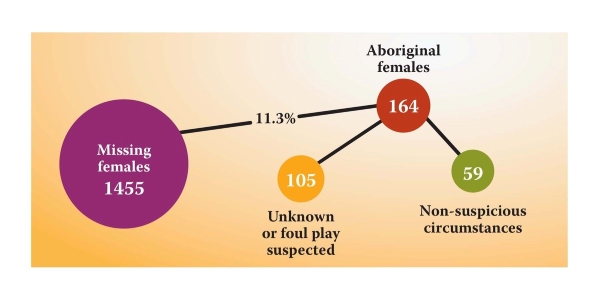
The infamously intractable issues of violence against Canadian aboriginal women has been a matter of shame, but not much mystery in the matter of 'Missing and Murdered Aboriginal Women' in Canada. With government vowing time after time that this tragic civilizational assault against the most basic of human rights for women of Indigenous heritage must stop. This is an issue well enough known, that for the most part injuries and deaths and absences of aboriginal women are the result of a cultural abomination, when they are victimized by none other than their intimate partners, aboriginal men.
 
In Canadian jurisprudence it has become a fait accompli that when judging aboriginal men for crimes they must  be viewed through the prism of colonialist trauma. Prison sentences meted out to aboriginal men who commit crimes and are convicted of those crimes must take into account their aboriginal backgrounds and the assumption that they are victims of racism, poverty and lack of opportunities in the white society that colonized Canada thus victimizing the Indian tribes already settled in the country. In penalizing Indigenous men to a lesser degree than their crimes warrant, Indigenous women are doubly victimized.

https://afn.ca/wp-content/uploads/2022/08/AFN-CATTROLL0247_2.jpg
Assembly of First Nations
 
But this uneven application of the law has also been extended to include people of colour as well as migrants without status. Indigenous men and Blacks are over-represented in Canadian prisons despite that they represent a minority in Canada. Their penchant for committing crimes against society is higher than other groups in society, including the majority. That their numbers are over-represented in comparison to their minority numbers within the population is viewed as a fault in Canadian society, rather than as a possible reading that these groups tend to gravitate in greater numbers to the commission of crimes.
 
To sentence a migrant, refugee or undocumented person in Canada to a prison term long enough for them to be incarcerated in a federal prison is  to consign them to a removal order by Canadian Border Services, leading judges to opt for lesser sentences through the compassionate lens of 'fairness' to a presumed underdog. Invariably all too frequently those who commit criminal acts tend to take advantage of the situation, where bail is also readily available, enabling them to return to the commission of criminal acts resulting in minimal punishment.
 
Conservative leader Pierre Poilievre happened to describe an encounter he had with a woman from Vancouver who left the country for her personal safety under duress. At Vancouver International airport the woman had approached Mr. Poilievre to briefly inform him that she had left Canada to escape from an attacker. "You're my favourite Canadian", she told him. Then she described her reason for leaving Canada.  "I said I'd like to come home, and he said, in return 'We're going to get you home'," she later explained during an interview on the podcast The Elevate Report.
 
For his part, Mr. Poilievre mentioned the encounter with an anonymous woman when he responded to a question during a Vancouver press conference about public safety. "I met a lady at the airport the other day who told me that she moved from Vancouver to Mexico so that she would feel more safe", he stated. Online mockery over the statement was quick to follow. Flavio Volpe, president of the Automotive Parts Manufacturers' Association wrote on social media: "Of all the things that did not happen, this one did not happen the most."
 
Doubts over the veracity of Mr. Poilievre's statement was raised again when a reporter, after speaking to World Cup fans in Vancouver relayed to him that they felt "pretty safe"; that "data shows that Mexico is far more unsafe than Vancouver". Mr. Poilievre was not to be shaken; he responded that the encounter at the airport really had occurred, that "there are a lot of women who frankly feel very unsafe in Canada today. And there are cases we've had of women testifying before parliamentary committees that they have left Canada because their partner, their violent partner, has been released from prison despite crime after crime after crime." 
 

End Violence Everywhere

Cait Alexander who had testified to the Status of Women Committee in 2024, founded the group End Violence Everywhere. She had been brutally beaten by an intimate partner who was freed on bail the following day. She lives now full-time in California.  
"I left the country for certain reasons and I'm upset about it. I love my country."
"Do you think this would be my first choice. Or do you think I would rather be at home with my friends and family?"
Anne Welyki 

Labels: , , , , ,

Saturday, April 11, 2026

Canada's Social Crime Rate Soaring

https://www.narcity.com/media-library/aerial-view-of-toronto.jpg?id=64914191&width=1245&height=700&quality=50&coordinates=0%2C104%2C0%2C104

New Toronto crime statistics revealed which neighbourhoods had the highest break-in rates last year. Christopher Eng Wong | Dreamstime 

"Incidents that were once rare, now frequently interrupt operations, put staff and customers at risk, and strain already limited resources."
"Many businesses have adopted informal safety protocols including having a buddy system, rules about who works late, who handles certain situations, and decisions about when to lock their doors." 
"In some cases, businesses keep their doors locked all day, allowing entry only by doorbell or appointment."
"[Nearly one-third of Canadian Federation of Independent Business members -- 29 percent -- informed poll surveyors] they do not report crimes because the process feels futile, time-consuming, or unlikely to result in meaningful followup."  
Canadian Federation of Independent Businesses crime survey 
Country-wide, there has been a steady increase, reported to police agencies, of incidents of organized shoplifting where  brazen groups of thieves stroll into stores  unmasked, take their time to fill baskets with thousands of dollars in merchandise, then calmly walk back out the door as though what they are doing is not unusual and there will be no penalties for outright theft. Often enough, they're right; such thefts are no longer unusual; their frequency and the panache and entitlement with which they're carried out, while leaving store personnel open-mouthed and customers scandalized, thieves fail to be apprehended.
 
https://www.ctvnews.ca/resizer/v2/2FPG3LD6KZDK3KHZJFLZ2VHX7A.png?auth=04e74e308e38ca69943ccf050be0e1184c672983c4eac51b0d11b7ef6ce4f324&width=1440&height=810
The Your Independent Grocer on Bank Street in Ottawa's Centretown neighbourhood. Ottawa police say 12 people were arrested during 'Project Pantry' at the store in January. (Brad Quinn/CTV News Ottawa)
 
From store, laden down with stolen goods, to parking lot, to waiting vehicle and an orderly removal from shopping cart to open trunk, followed by a drive-away with pilfered goods. The CFIB report points out as well that retail staff are now increasingly exposed to personal threats, physical assaults and even confrontation with lethal weapons. Business employees, for their safety, are informed by their employers that it would be best not to confront the thieves, so they stand by, witness to thefts that defy the very essence of the social order.
 
The tragic, sobering encounter by Montreal depanneur owner Chong Woo Kim was a dangerously acute example of what outraged confrontation of a theft could lead to. Xavier Gellatly who stabbed the business owner to death, and held in his murder, was discovered to have committed an earlier murder in 2012, the result of a random stabbing. He was out of prison on full parole when his encounter with Chong Woo Kim made him a murderer two times over.
 
https://i.cbc.ca/ais/1.7157122,1711557800000/full/max/0/default.jpg?im=Crop%2Crect%3D%280%2C135%2C5000%2C2812%29%3BResize%3D860
Handguns are pictured near recovered stolen cars during a Toronto Police Service press conference in Toronto, Ontario on Wednesday, March 27, 2024. Police say the surge in auto thefts has led to rises in home invasions, violent robberies and gun violence throughout the Greater Toronto Area. (Greg Bruce/CBC)
 
A January Angus Reid Institute poll concluded that businesses were the front lines of a broad apprehension among Canadians in general, of diminished security and safety in Canada. "For those working in retail, shoplifting, verbal abuse, and physical threats have become the norm", read the poll conclusion. 
 
This, in a criminal justice system where overworked police forces make arrests, and when trials eventually take place, they witness with exasperation the justice system using a Liberal-government penal formula that allows for lax bail conditions, leading to frequently charged serial offenders who are streamed through an equally overworked justice system, are given paltry sentences barely reflecting the gravity of the crime committed and early release means that offenders feel free to continue their criminal activity with no penalizing incentives to cease and desist.
 
Private security details are now a common sight at retailers, banks and any number of businesses on high alert either because they've already suffered theft, or because of the general aura of apprehension among businesses in recognition of the splurge among criminal elements exercising their modus operandi with the assurance that penalties that accrue will be manageable as balanced against their gain. Grocers across Canada are equipping staff with body-cameras to help crack down on shoplifting and identification of employee assailants. 
 
https://smartcdn.gprod.postmedia.digital/nationalpost/wp-content/uploads/2024/01/pjt-security-9-.jpg?quality=90&strip=all&w=564&type=webp&sig=kROxXMxc20NmC7glaUcjQw
Corporate Protection and Investigative Services President Ken Vongkham showing the lawn signs that they provide for their clients. Photo by PHOTO BY PETER J. THOMPSON /National Post
 
And nor are private homes exempt from these crime sprees. One of the wealthiest neighbourhoods in Toronto, Rosedale, has been experiencing a rash of property crimes in recent years, with cars stolen from driveways, armed home invasions, families disturbed at night by sounds of breaking glass and housebreaking men shouting their intentions along with threats of compliance. Armed home invasions have become common occurrences. Perhaps there's a kind of irony in the fact that these wealthy urban communities are solidly politically Liberal.
 
They've taken to paying for private security patrols at night. One security company specializes in private K9 patrols: "Our use of canine accompaniment for all daily foot patrols enhances crime prevention by creating an obvious and natural deterrent", the website promises. Spiking levels of crime and street disorder is not confined to Toronto. Canada has become a country of high walls, bars on windows, security cameras at every doorway and private security patrols.
 
Manitoba, through the course of a year, added 900 new licensed private security guards. The number of licensed private security guards surged in Ontario by75 percent in the last six years. 92,615 licensed Ontario security guards in 2020, swelled to 162,320 by 2025. In North Battleford, Saskatchewan, a plan to hire teams of private security to patrol the downtown was approved by city councillors. 
 
In Kelowna, British Columbia, according to a 2025 Statistics Canada report on crime severity, the city was ranked as the fifth-highest-crime city in the country. To which designation, the city produced a detailed analysis of 2024 crime figures finding that 1,335 police files had been opened for only 15 repeat criminals. "The pattern of persistent criminality by this select group is staggering and relentless", the report pointed out.   
 
https://i.cbc.ca/ais/1.7162331,1712162805000/full/max/0/default.jpg?im=Crop%2Crect%3D%280%2C0%2C3000%2C1849%29%3BResize%3D796
Ontario Provincial Police and the Canada Border Services Agency said they've seized 598 stolen cars that were destined for export at the Port of Montreal, during a news conference on April 3. The vehicles had an estimated value of $35.5 million dollars. (Graham Hughes/The Canadian Press)


Labels: , , , , , , ,

Saturday, November 22, 2025

In Canada, Justice Delayed Is Justice Stayed

"In 2022-23 , nearly one in three [30.4 percent] of sexual assault cases in adult courts exceeded the Jordan limit."
"Among these cases. 47.3 percent were stayed or withdrawn due to the limit."
"Given that sexual assault cases in adult court were already the most likely to be past the Jordan limit, this means that 14.4 percent of all sexual assault cases in adult courts were stayed or withdrawn, representing one in seven cases of sexual assault in adult courts in Canada, or roughly 500 cases."
"The risk of those records [medical records of victims testifying] being disclosed in court means that many survivors felt like they had to choose between justice or getting mental health help."
"The threat of an aggressor gaining access to a survivor’s therapeutic records is a risk to the health and safety of survivors."
"Reporting sexual violence is often framed as an individual choice, but survivors consistently indicate that their silence is in response to systemic barriers, institutional failures and inequality rather than personal unwillingness."  
"One survivor we interviewed talked about choosing to report knowing that it would be a difficult process, that it could cause harm, but doing it to protect the public. It's a sacred trust that people are putting in the system."
"I do honour the fact that there are many good-hearted, effective people working across the system, but there are clear points that need to change so that survivors are better protected."
"The harm is so well recognized that police officers and Crown attorneys regularly caution survivors against reporting or pursuing charges. The administration of justice is in open disrepute."
Report, Benjamin Roebuck, federal Ombudsman for Victims of Crime 
https://i.cbc.ca/ais/0765d1d7-a797-4483-a2c2-0a8e941a02e8,1763572695802/full/max/0/default.jpg?im=Crop%2Crect%3D%280%2C0%2C8470%2C4764%29%3BResize%3D620
Report from Benjamin Roebuck, federal Ombudsman for Victims of Crime. Adrian Wyld/The Canadian Press
 
Sentencing, bail and parole reforms is a large topic in Canada, where criminal offenders no longer feel the stern face of the law under this Liberal-led DEI-inspired government whose 'progressive' agenda has filtered down to every level of governance and all its institutions, including that of the administration of justice. Bail for criminal offences is now liberally applied, and sentencing has surrendered to the purported needs of the perpetrator, not the victim. 
 
Structured release programs appear to have no interest in the fact that the accused or those convicted of previous, similar offences are once again free to re-commit.
 
That many offenders whose tender feelings have been salved by lenient judges who  find reasons to excuse criminal behaviour linked to the offender's unprivileged past, may have amassed long criminal records, offending and re-offending at will -- particularly if they're recognized as a visible minority, or from an Indigenous group -- appears incidental to the sentencing apparatus, more committed to amending the injustices of the 'colonial' past than offering justice in sentencing to the victims of crime. 
 
https://educaloi.qc.ca/wp-content/uploads/529069225_1200x563.png
People who have been the victims of sexual assault can take the person who committed the assault to court in a civil case even if no criminal complaint was made. Educaloi
 
A month ago, an Abacus Data poll found 80 percent of Canadians in agreement that obtaining bail for criminal offences is too readily come by.  Repeat offenders, it is felt, should be impelled to produce proof that they merit such 'second chances'. Police forces countrywide, and provincial and  territorial premiers have been asking the federal government for years to amend those portions of the criminal code that have made it a given that soft punishment for crimes have become the norm, leading to an atmosphere of rising crime rates, reflecting that soft punishment.
 
The recently released 300-page report from Benjamin Roebuck, federal Ombudsman for Victims of Crime, focused particularly on sexual-assault victims' experiences in the courts. Specifically the number of sexual assault cases that never go to trial -- even when the victims have testified -- due to the aggravated time lapsed between charges and the commencement of a trial date which have had the effect of staying not the charges but a court date at all. 
 
The guarantee of a speedy trial, in other words, eclipses the administration of justice.
 
Where sexual-assault cases are abandoned on grounds of taking too long to bring the case to court ending in stayed proceedings. At times, police investigations resulting in evidence-gathering are tardy, at times it is the prosecution that is  unprepared, leading to a too-long delay of proceedings.   
"Charges in a criminal case can be ‘stayed’ or ‘thrown out’ when a judge or a Crown decides that the case cannot continue. When a case is stayed or thrown out [i.e. dismissed], it does not mean that the charge is withdrawn, that a victim or offender was victorious, or that the crime did or did not occur: instead, 'the issue of guilt or innocence is never determined'." 
"Stays 'can be granted when the state has acted unfairly, including a failure to bring the case to trial in a timely manner'. In 2016, the Supreme Court of Canada decision [R. v Jordan] established deadlines for when a trial must be completed. Delays that go on longer than these timelines violate the accused’s right to be tried within a reasonable time. An accused can then file a Jordan application; from there, a judge can grant the charges to be stayed."
"In Ontario, this is what has been affecting violent crime cases, including a number of sexual violence and child sexual abuse cases." 
Ontario Coalition of Rape Crisis Centres 
https://media-cdn.socastsrm.com/wordpress/wp-content/blogs.dir/648/files/2024/07/ls-file-photo-court-of-kings-bench-trial-courtroom-witness-box-and-books-jul-18-2024-16-edit.jpg
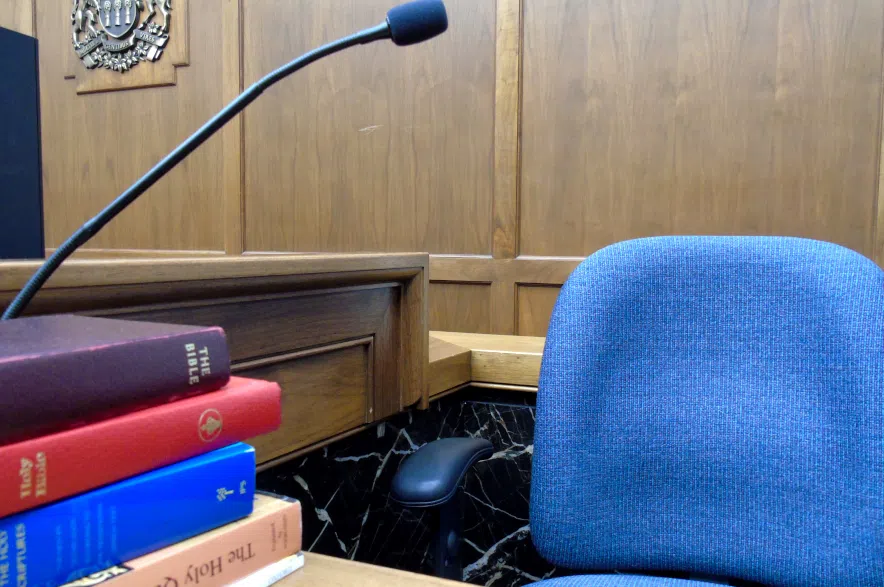
A  judicial stay isn’t the only way a judge can remedy a too-long court process, and other ways might be preferable in sexual assault cases. (9890 CJME file photo)


Labels: , , , , ,

 
()() Follow @rheytah Tweet