Iran At A Crossroad
"We are very frightened because of these sounds [of gunfire] and protests.""We have heard many are killed and many are injured.""Now peace has been restored, but schools are closed, and I'm scared to send my children to school again."Iranian mother of two"[Protesters are the] butlers [of Israeli Prime Minister Benjamin Netanyahu and] Trump’s soldiers.""[Netanyahu and Trump should await] hard revenge from the system.""Americans and Zionists should not expect peace."Ayatollah Ahmad Khatami, member of Iran’s Assembly of Experts and Guardian Council"I believe the president [Trump] is a man of his word.""Regardless of whether action [U.S. military intervention] is taken or not, we as Iranians have no choice to carry on the fight.""I will return to Iran."Exiled Crown Prince Reza Pahlavi
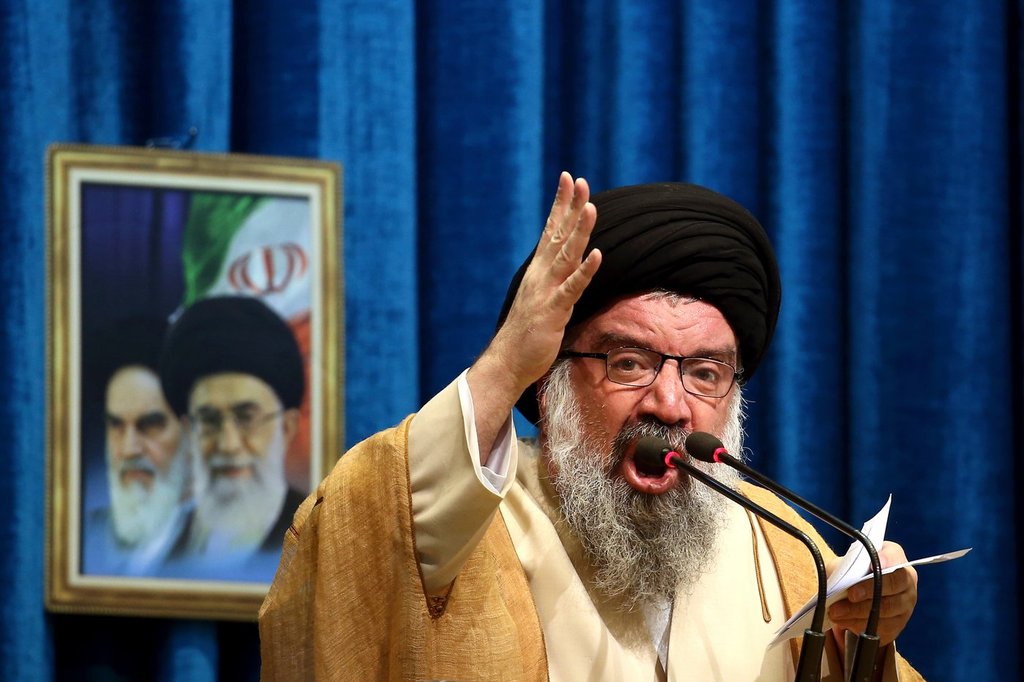 |
| Iranian senior cleric Ahmad Khatami delivers his sermon during Friday prayer ceremony in Tehran, Iran. (AP Photo/Ebrahim Noroozi) |
Demonstrations in Iran were initiated by Iranians frustrated with the collapse of the Iranian rial currency, an economic collapse that has wrung Iranians' disposable income for the acquisition of ordinary household items and food dry of purchasing power. But that frustration was piled upon years of government exploitation, coercion, theocratic decrees and punishment meted out harshly by a totalitarian government reliant on the threat potential of the Islamic Republican Guard Corps and the volunteer Basij militia to keep the population in check any time Iranians grew restive and demanded changes that would more closely reflect the values of ordinary people in the country.
Iranians knew that international sanctions levied on their nation resulted from its nuclear program. They were aware that their government was using its vast natural energy resources to fund terrorist groups while the population suffered deprivation of heating oil, medicine, and basic food staples. When the protests grew exponentially day after day for two weeks, with ever larger numbers of people and merchants participating to express their anger and rejection, the regime responded with force to control the crowds, arresting thousands.
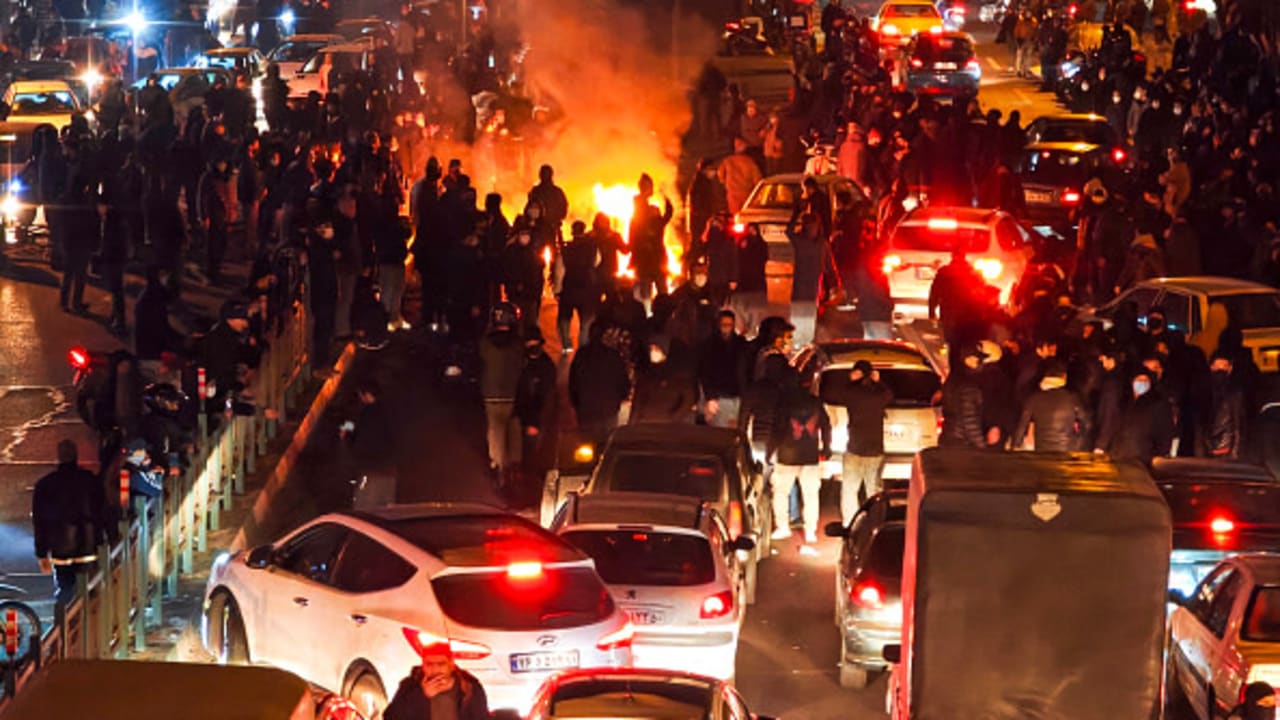
Soon the methods of policing control accelerated to the use of lethal force and bodies began to pile up in morgues, while hospitals were overwhelmed with the wounded. Expatriate Iranians living in the West did their utmost to give emotional support to their families back in Iran, and begged their governments to intervene to stop the carnage. Israel and the United States both responded to the unfolding national chaos of protests breaking out everywhere across the country and the theocratic regime's hard response, by championing the protesters and applauding their courage against the savage response of their totalitarian government.
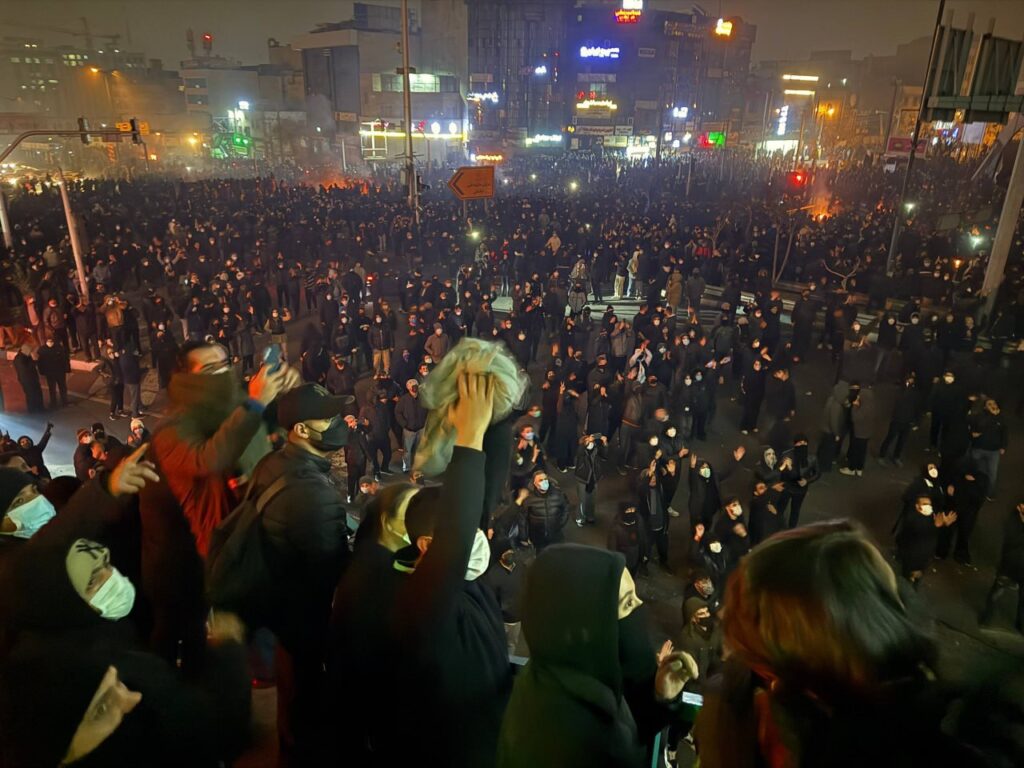 |
| Iranian protesters demonstrate against the regime in Tehran on January 10, 2026. (Social Media via ZUMA Press Wire) |
President Trump repeatedly made statements in support of the protests, urging the people of Iran to continue to express their grievances. He has also on numerous occasions warned the regime of the potential of American military action in response to the wanton slaughter of civilians. The memory of last summer's 12-day war alongside Israel when Tehran was aerial-bombed, nuclear and rocket sites targeted, and key military personnel were assassinated, no doubt alarmed the Ayatollahs while heartening the populace.
The head of the Iranian judiciary spoke of fast trials and hanging executions in store for those detained in the nationwide protests, despite repeated warning from the American President of military action over peaceful demonstrators being killed. Iranian authorities warned of its intention to commit a pre-emptive strike, alleging that Israel and the United States had orchestrated the protests.
During the demonstrations an estimated 100 security force members were killed which led to a mass state funeral where tens of thousands of mourners attended, holding Iranian flags and photographs of Ayatollah Ali Khamenei. Draped in Iranian flags the caskets were stacked three high and covered with red and white roses and framed photographs of the dead.
In contrast, human rights groups estimate that between 12,000 and 20,000 Iranian protesters had been killed. When grieving families attempted to claim the bodies of their loved ones, they were only able to take possession of the cherished bodies if they paid the government levy of an immense sum of thousands of dollars which few among them could afford. As ransom for the corpses of their 'terrorist' family members.
Plainclothes security forces milled about some neighbourhoods leaving people in the streets fearful of the regime's promise that any who defied the regime, insulted it and rallied against it would be in line for the death penalty. Anti-riot police and members of the paramilitary Revolutionary Guard's all-volunteer Basij force returned to their barracks. The protests have been subdued.
The governments of Qatar, Turkey, Oman (allies of Iran) and Egypt have persuaded President Trump that he should seriously second-think his stated goal of intervening militarily on behalf of the beleaguered population of the Islamic Republic. To do so, they warned would pose a real risk of wider regional disturbances that had the potential of beginning an all-out war. "Unprecedented consequences" would result in the region that could explode to a "full-blown war".
 |
Labels: Iranian Protest Movement, Iranians' Rejection of Totalitarian Theocracy, Islamic Republic of Iran, Regime Violent Response
posted by Pieface @ 8:28 PM


0 Comments:
Post a Comment
<< Home