Islamic Emirate of Afghanistan Penal Law
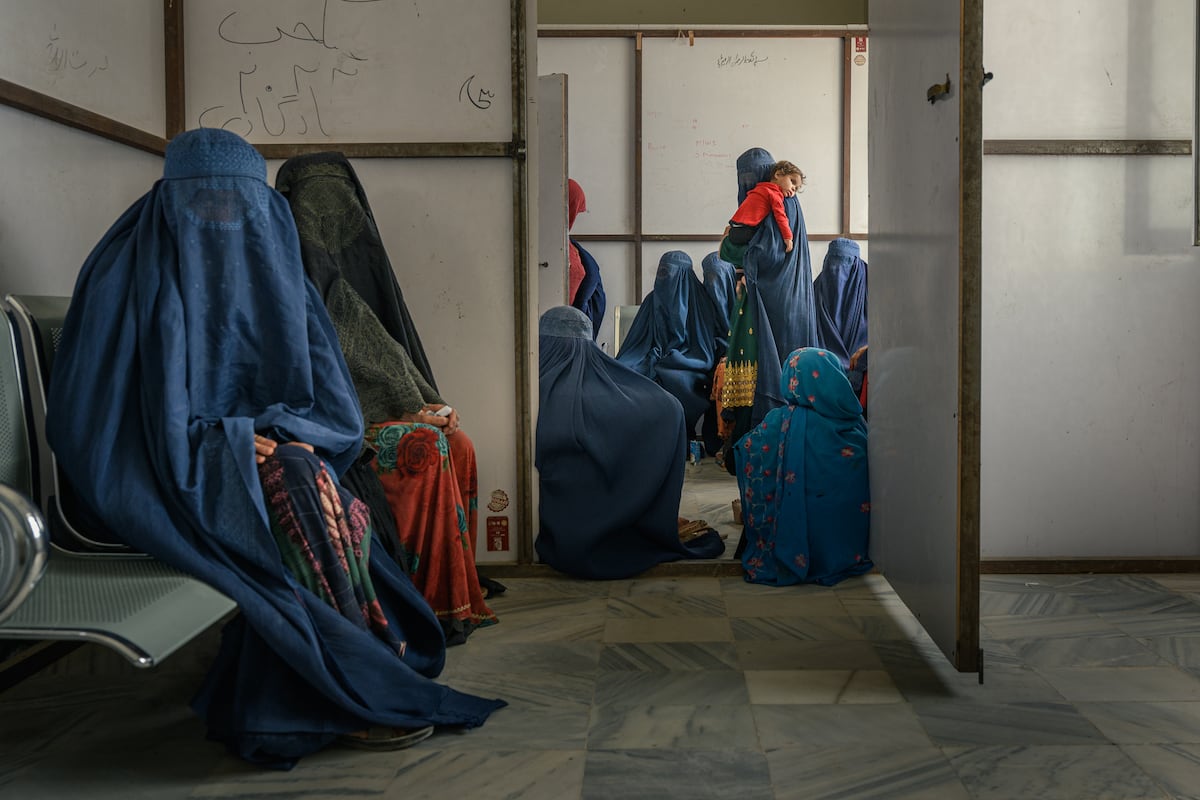 |
| Women wait in a hospital in Ghazni, August 2025. Elise Blanchard (Getty Images) |
"On 4 January 2026, the Taliban adopted the “Criminal Procedure Code for Courts” (De Mahakumu Jazaai Osulnama). Until then, Taliban leader Hibabullah Akhundzad simply posted new rules on X, which were subsequently applied – often inconsistently – by Taliban “judges” with no formal legal education. ""A formal written code is an improvement, standardising the applicable law and making it more predictable.""However, the new Code substantively contradicts international human rights standards by formalising discrimination against religious minorities, restricting basic freedoms, and enabling arbitrary arrest and punishment.""It simultaneously omits core fair-trial safeguards; weakens legality and the presumption of innocence; and relies on confession and testimony, heightening risks of torture and abuse."Oxford Human Rights Hub"[There is] no article, clause, section or ruling that is not in accordance with Islamic sharia and has no sharia source, but is completely in accordance with Islamic sharia.""[Any objection to "Emirate laws is therefore] an objection to sharia, [a protest based on] ignorance or neglect [and itself constitutes] a crime that will be punished."Islamic Emirate of Afghanistan Ministry of Justice"It provides for the use of corporal punishment for numerous offences, including in the home, legitimizing violence against women and children.""And it criminalizes criticism of the de facto leadership and their policies, in violation of freedom of expression and assembly."UN High Commissioner for Human Rights, Volker Turk
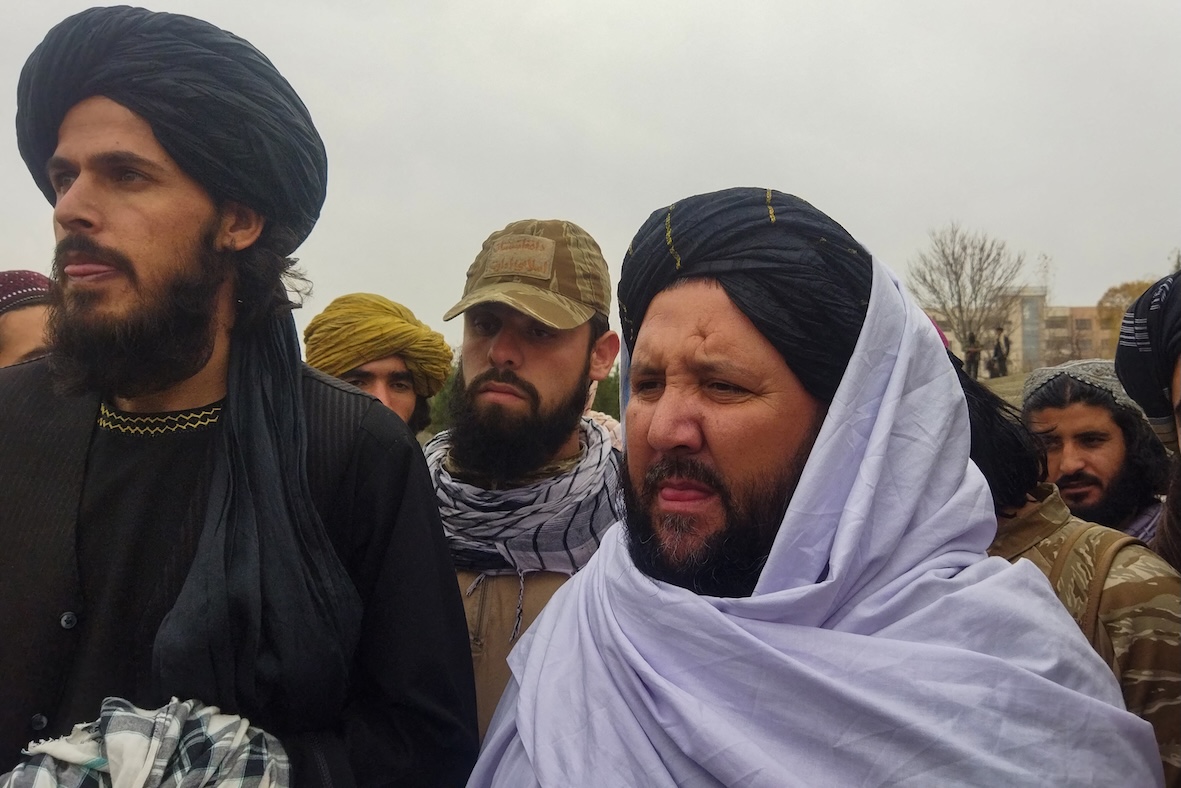 |
| Taliban officials and members look on during the public flogging of 27 people, women and men, in front of a large crowd at a football stadium in Charikar city in Parwan province on 8 December 2022. Photo: AFP |
Harsh punishments have been formalized within a new penal code in Afghanistan issued by decree. Signed by Afghanistan's Supreme Leader Hibatullah Akhundzada, the decree "defines several crimes and punishments that contravene Afghanistan's international legal obligations" according to Volker Turk, UN High Commissioner for Human Rights, as he spoke before the Human Rights Council in Geneva of the decree issued in early January.
The 60-page Decree No.12, comprised of 119 articles, sets penalties for women who visit their relatives without having first obtained permission of their husbands. Husbands and heads of households are permitted to mete out punishment in their own homes. A man who beats his wife sufficiently severely to cause a visible cut, wound or bruise, can face 15 days in prison, with the proviso that the women is able to prove her case to a judge (a difficult task to begin with since any man's word has precedence over a woman's).
On the other hand, a woman who leaves her home to go to her father's house and remains there without her husband's specific permission stands to be punished with three months in prison. That punishment extends as well to her family members should they fail to return her to her husband. What can be read into that item within the decree relates to an abused women leaving the marriage home to seek shelter at the home of her parents.
 |
| Taliban operatives intimidate/threaten Afghan women to obedience. |
Married women in Afghanistan become the chattel of their husbands; they no longer have personal agency in complete subordination to a man who has brought her into his home with the expectation that she will obey him completely and implicitly in every facet of their common life together; an indentured servant/slave to share his bed, work in his kitchen, tend to his every comfort, and raise their children.
The mistreatment of animals has its own onerous category of punishment. Which in other circumstances where there is no comparison to any other issues, would seem enlightened. Where anyone arranging for animals or birds to compete in a fighting arena faces penalties of five months in prison. Such fighting matches featuring animals and birds have a popularity as a social custom in Afghanistan, banned following the Taliban's return to power in 2021.
Similar types of crime are also treated differently on the new penal code, depending on social class, where scholars and "high-ranking people" can be penalized with a warning issued by a judge. A warning plus a court summons becomes standard for tribal leaders and businessmen, while "average people of society" face imprisonment. The harshest punishment, however, is reserved for "the lower classes" who are subject to physical beatings/public floggings for their unlawful infractions of the penal code.
 |
| Zan Times |
"In such a system, obedience to the imam or religious ruler is obligatory; a woman is half a man; Muslims have superiority over non-Muslims; and followers of one Islamic sect are superior to those of others. Thus, the authority to punish is granted, in order of hierarchy, to the imam, the husband, the master, and then to any Muslim. If one accepts a penal system rooted in sharia and does not question the concepts of hudud and taʿzir, it becomes impossible to demand equality before the law or the abolition of slavery-based and husband-dominated rules.""The Taliban have not limited this categorization to criminal punishment. They have applied the same gender, class, religious, and sect-based discrimination to education, dress, employment, travel, religious practice, and freedom of expression. Why would granting a husband the right to punish his wife seem “new” or “abnormal” when a woman’s presence outside the home is conditional on a male guardian, when a man’s marriage to four wives is legally sanctioned, and when male superiority is embedded across all laws and social norms?""The words slave and master may sound offensive today to many. Even in Afghanistan, formal slavery no longer exists as people are not openly labeled as slaves and masters. In practice, however, the Taliban system is quasi-slaveholding. The obedience they demand from the public and the restrictions and conditions they impose on women are manifestations of bondage."Zan Times
Labels: Afghanistan, Enforcing Female Obedience, Formalizing Slavery, Penal Law, Penalizing Classifications
posted by Pieface @ 8:34 PM


0 Comments:
Post a Comment
<< Home