Canada's Opioid Crisis and Compassionate Forgiveness for Fentanyl Trafficker
"Given [Kassar's] medical vulnerability, and given his dependence on uninterrupted treatment to avoid morbidity and potential mortality, I am satisfied that [he] has provided clear, convincing, and non-speculative evidence of the harm that he would experience if his removal is not deferred.""I do not take this fact lightly. The opioid crisis in this country is real, and it has harmed many people.""In most circumstances, the balance of convenience would favour the strong public interest in removing non-citizens who have played a role in that crisis.""He [Kassar] was sentenced to 36 months imprisonment for the fentanyl conviction, and nine months for the hydromorphone conviction, to be served consecutively. He was released on parole in June 2021."Federal Court Justice Angus Grant, February 11, removal stayed
 |
A federal judge has paused the deportation of convicted fentanyl trafficker Mohamad Kassar after medical evidence suggested he may have lung cancer. |
Ordered deported from Canada in December 2019 following his conviction for possession of fentanyl and hyrdomorphone as a trafficker in illegal street drugs, Lebanese immigrant Mohamad Kassar who had arrived in Canada about 35 years ago on a permanent resident visa, was to have been removed to Lebanon on February 13, as an undesirable in Canada due to his serious criminal record.
However, on the basis of a preliminary medial diagnosis Federal Court Justice Angus Grant studied, that the man may have a tumour on his lung, his removal from Canada was stayed on compassionate grounds. As it happens, over recent years Canada has experienced huge social problems of drug overdoses leading to death linked to the availability of the powerful drug fentanyl. Originally manufactured as an opioid in China and brought into Canada through internet orders, more latterly the precursor chemicals for the production of fentanyl have entered Canada supplying illicit labs set up to produce fentanyl domestically.
As an enabler through Kassar's illegal drug trafficking, there can be little doubt that the drugs made available by his enterprising illegal activities added in no small measure to the menace on the streets of Canada and the inevitable overdose deaths of many drug users. His own pecuniary interests obviously took precedent over any residual feelings of ordinary human compassion that may have pranged his conscience, but not to the extent that he took responsibility for the damage he wrought on people's lives.
His own medical-health vulnerabilities on the other hand, have played an outsized role in the man's efforts to remain in Canada rather than be returned to the violence-wracked Middle East country of his birth. The Canadian taxpayer will pay for this man's cost-lofty medical treatments as a perpetrator of criminal activity impacting the lives of Canadians consigning them to an early death. Thousands of lives have been lost in Canada with the proliferation of fentanyl as the dominant street drug afflicting people addicted to drug use.
Kassar submitted an application to remain in Canada on humanitarian and compassionate grounds, along with an application for a temporary resident permit and subsequently requested a deferral of his removal while he waits for a response to his applications. Kassar's pre-removal risk assessment representing his final bid to remain in Canada was rejected by an inland enforcement officer. "I am convinced that a serious issue arises as to whether the officer adequately considered whether Mr. Kassar's medical conditions, when considered in light of the health care system in Lebanon, posed an immediate impediment to removal", commented Justice Grant.
"Kassar is presently stable, but [that] this stability is tied to his current treatment, without which, his condition may deteriorate significantly.""If unable to access medication, the doctor stated that Mr. Kassar was at risk not only for morbidity, but also of mortality."Justice Grant
Kassar had been convicted in 2018 of possession of fentanyl and hydromorphone for the purposes of trafficking. Given his convictions, the order was launched to have him deported in December of 2019. Canada Border Services Agency did not immediately respond to the order to deport the man, and in April of 2025, Kassar applied for permanent residence on humanitarian grounds. Then in January he applied for a temporary resident permit. No official decisions have yet been made with respect to the status of the applications.
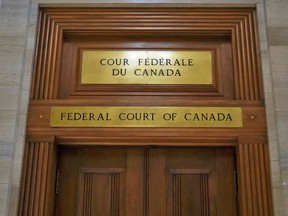
Kassar turned to the Federal Court when an inland enforcement officer turned down his request to put his deportation off until the decisions on the applications were received. The officer, contended, the Judge, concluded that Kassar's "claim that he would be unable to obtain treatment in Lebanon was speculative", claiming "that the health care system is imperfect but also noting that health care remains available". Leading the Judge to the opinion that a serious health care crisis exists in Lebanon, and as a result, the Toronto court ordered a stay in the drug trafficker's deportation.
 |
"[There are concerns over the Canada Border Services Agency officer's] consideration of the evidence on the health care system in Lebanon.""The overwhelming thrust of this evidence is that the Lebanese health are system is in a state of acute crisis, that it struggles to provide routine treatment for chronic diseases, and that it is essentially on the verge of collapse.""Instead of grappling with this evidence, the officer quoted isolated passages from the reports of two emergency relief organizations indicating that they do everything in their power to offer care to those in need [in Lebanon]."Justice Angus Grant
Labels: Canadian Justice, Deportation Stayed, Fentanyl Trafficker, Lebanese Immigrant
posted by Pieface @ 7:31 PM


0 Comments:
Post a Comment
<< Home