Ruminations

Blog dedicated primarily to randomly selected news items; comments reflecting personal perceptions

Thursday, July 09, 2026

Women in Afghanistan--Striving and Surviving

"Our mothers used to tell us that they worked hard so our future would be better and more peaceful."
"Our future did not become better or more peaceful."
"Now we tell our own children the same thing, but I don't think that will happen."
Fariba Noori, acting head Afghanistan's Women's Chamber of Commerce and Industry 
https://asiapacific.unwomen.org/sites/default/files/2025-09/af-20250422236-zafran-14-1679px.jpg
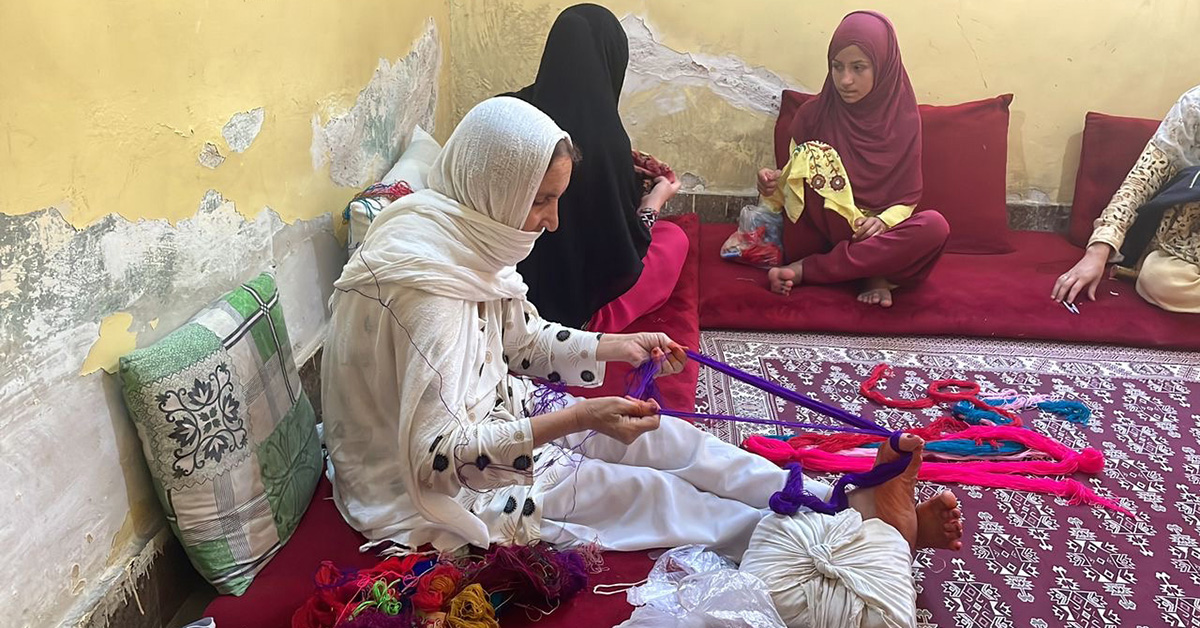
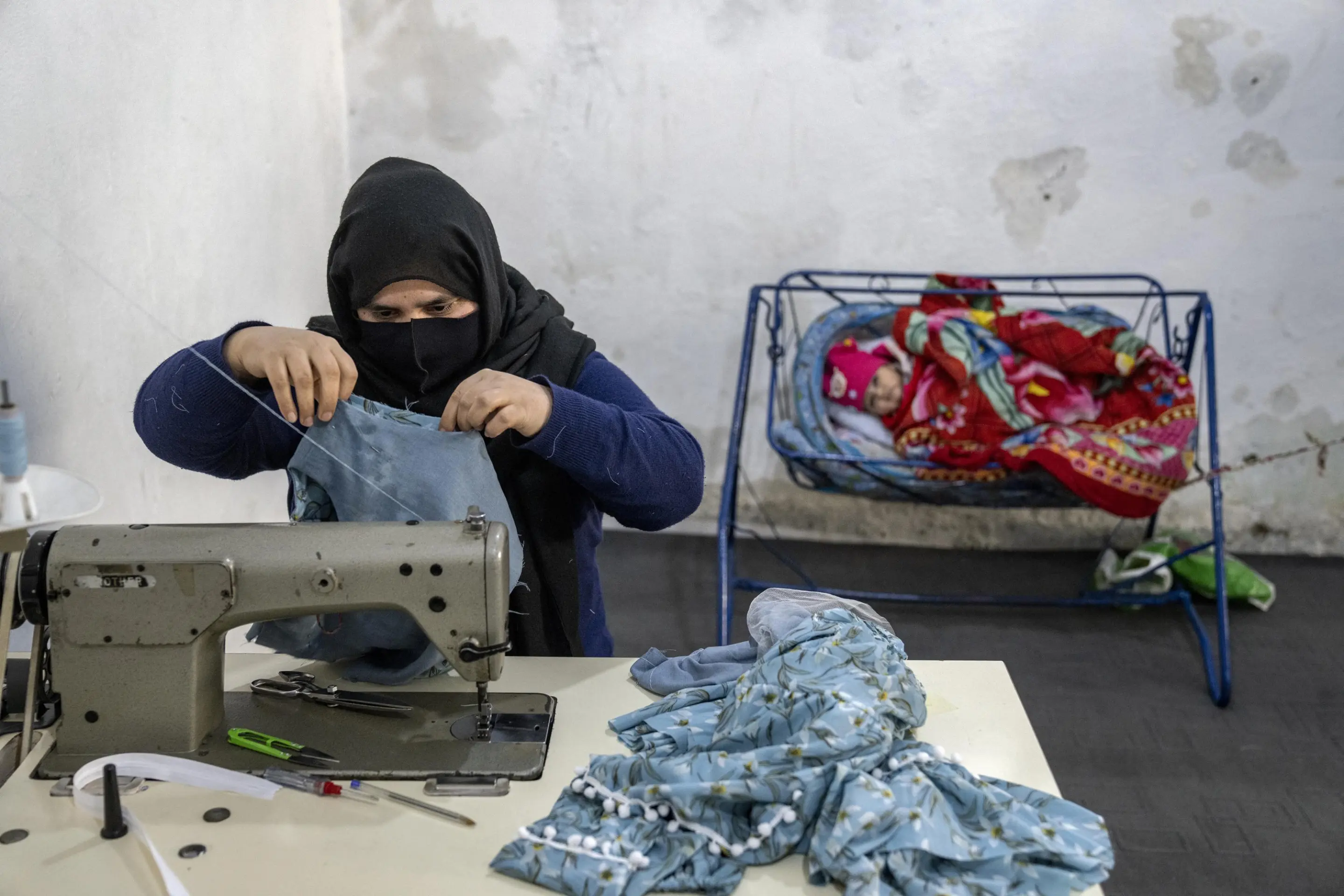
A woman working in a saffron company, Herat province, western Afghanistan, May 2023. Photo: UN Women/Sayed Habib Bidell
 
Over ten thousand Afghan women have secured business licenses, according to the Afghanistan Chamber of commerce and Industry, in the country where the ruling Taliban government has imposed the world's strictest restrictions on girls and women. Those same women and girls have been faced with the existential necessity of fending for themselves and some manage do just that by starting their own businesses which must comply with government rules. 
 
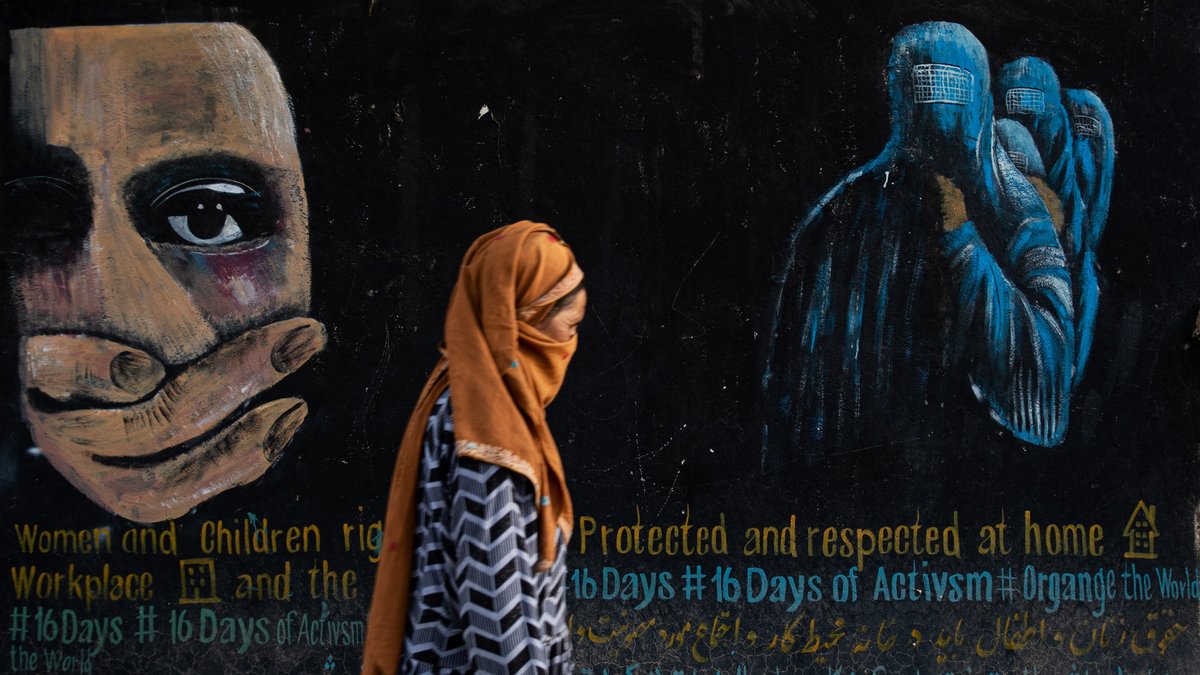
Women's enterprise in seeking out ways that can help them avoid starvation and feed their families, do so within the most incongruously infelicitous political/social/religious atmosphere almost anywhere on the globe under totalitarian Islamist governance. Girls may not attend school beyond the equivalent of a primary education; where once young woman in Afghanistan flocked to universities, this administration has locked them out. Women who once strode the streets of the country's cities with confidence employed in responsible positions, are now constrained by edict to remain in their homes.
 
https://solidaritycommittee.org/wp-content/uploads/sites/3/2026/03/Kandahar-treasure.jpg
Women-led businesses are the largest employer of women in the private sector. The company Kandahar Treasure is one of them. Photo: Kandahar Treasure
 
Once they were lawyers, engineers, university professors, medical practitioners in women's only hospitals, now they must seek no higher than to become of necessity carpet weavers, cosmeticians or vocational trainers -- for the Taliban government has closed them off from working at government jobs or for nonprofits. They may no longer operate beauty salons, study midwifery or nursing, speak with male clients, suppliers or banking officials.  
 
Fewer than 7 percent of Afghan women had employment in 2024, according to the United Nations Development Program, in a country that restricts its women from working outside their homes other than female-restricted places where men cannot enter. One of the last and only methods by which Afghan women can employ themselves gainfully in support of their households is through entrepreneurship, within the confines of the government's strict guidelines.
 
There are examples of success on a modest, life-saving scale emerging in an unhealthy economy. One such takes place in a warehouse in Mazar-i-Sharif where 60 women  knot, trim and weave rugs for their employer, 19-year-old Nasira Azazi. Barred from studying beyond grade six, she was 14 when the Taliban returned to power.
 
"I fell into depression. Here, there are at least more topics to discuss, more motivation to get the job done", she explained of the business she launched with financial support from the U.N. Development Program. Her business now employees about 450 female workers located in two workshops as well as at their own homes. The business by necessity has become a family affair.
 
She is reliant on her two brothers for the designs of the rugs her business produces, along with the marketing, while her father runs one of the workshops. Management, human resources, finances are Ms. Azizi's responsibility. She is limited in her public activities, since she cannot herself do business with male clients. Women themselves must rely on male family members to conduct business on their behalf.
 
https://static01.nyt.com/images/2026/06/17/multimedia/00int-afghanistan-women-businesses-30-qchz/00int-afghanistan-women-businesses-30-qchz-superJumbo.jpg?quality=75&auto=webp
Ghoncha Karimi, Photo Kiana Hayeri, The New York Times
 
Ghoncha Karimi, a 39-year-old beekeeper, occasionally outfits herself like a man in her travels outside Herat to tend to her apiaries on the city's outskirts. She has 50 beehives and the honey she is able to produce and sell contributes greatly to her family's income. When the Taliban, in 2023 made it clear she could no longer receive male clients in her shop, her sales were diminished. When she objected to these constraints to a Taliban official she was imprisoned for 20 days' punishment.
 
According to Samullah Ibrahimi of the Afghan Ministry of Work and Social Affairs, women are encouraged to pursue vocational training programs, with the women expected to respect "the principles of the country". He referred to a "committee for economic empowerment" that had provided work for 26 Afghan women in 2026, out of a population in Afghanistan of close to 45 million people.
 
https://asiapacific.unwomen.org/sites/default/files/styles/webp_only/public/2025-09/af-20250422236-woman-oman-expo-r02-1679px.jpg.webp?itok=zNfheJms
An Afghan woman entrepreneur displaying her products at the Oman expo, supported by UN Women, January 2025. Photo: UN Women
 

Labels: , , , , ,

Friday, February 27, 2026

Islamic Emirate of Afghanistan Penal Law

https://imagenes.elpais.com/resizer/v2/3DZHFRWEJ5HCLNLQISVQBFERIU.jpg?auth=e3124418d139f62994b3be8ce82bb4d6898a8605b2867b8f20487715171ee3d4&width=1200
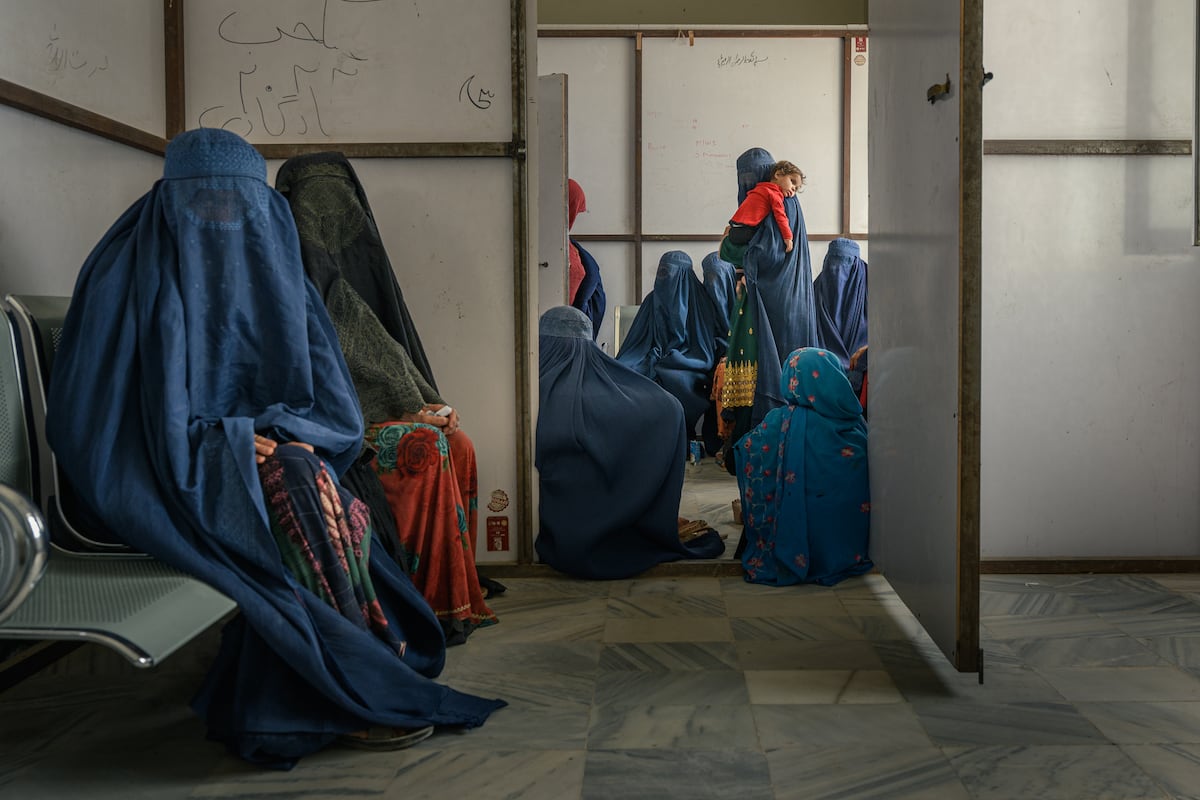
Women wait in a hospital in Ghazni, August 2025.  Elise Blanchard (Getty Images)

"On 4 January 2026, the Taliban adopted the “Criminal Procedure Code for Courts” (De Mahakumu Jazaai Osulnama). Until then, Taliban leader Hibabullah Akhundzad simply posted new rules on X, which were subsequently applied – often inconsistently – by Taliban “judges” with no formal legal education. "
"A formal written code is an improvement, standardising the applicable law and making it more predictable."
"However, the new Code substantively contradicts international human rights standards by formalising discrimination against religious minorities, restricting basic freedoms, and enabling arbitrary arrest and punishment."
"It simultaneously omits core fair-trial safeguards; weakens legality and the presumption of innocence; and relies on confession and testimony, heightening risks of torture and abuse."
Oxford Human Rights Hub  
 
"[There is] no article, clause, section or ruling that is not in accordance with Islamic sharia and has no sharia source, but is completely in accordance with Islamic sharia."
"[Any objection to "Emirate laws is therefore] an objection to sharia, [a protest based on] ignorance or neglect [and itself constitutes] a crime that will be punished."
Islamic Emirate of Afghanistan Ministry of Justice 
 
"It provides for the use of corporal punishment for numerous offences, including in the home, legitimizing violence against women and children."
"And it criminalizes criticism of the de facto leadership and their policies, in violation of freedom of expression and assembly."
UN High Commissioner for Human Rights, Volker Turk  
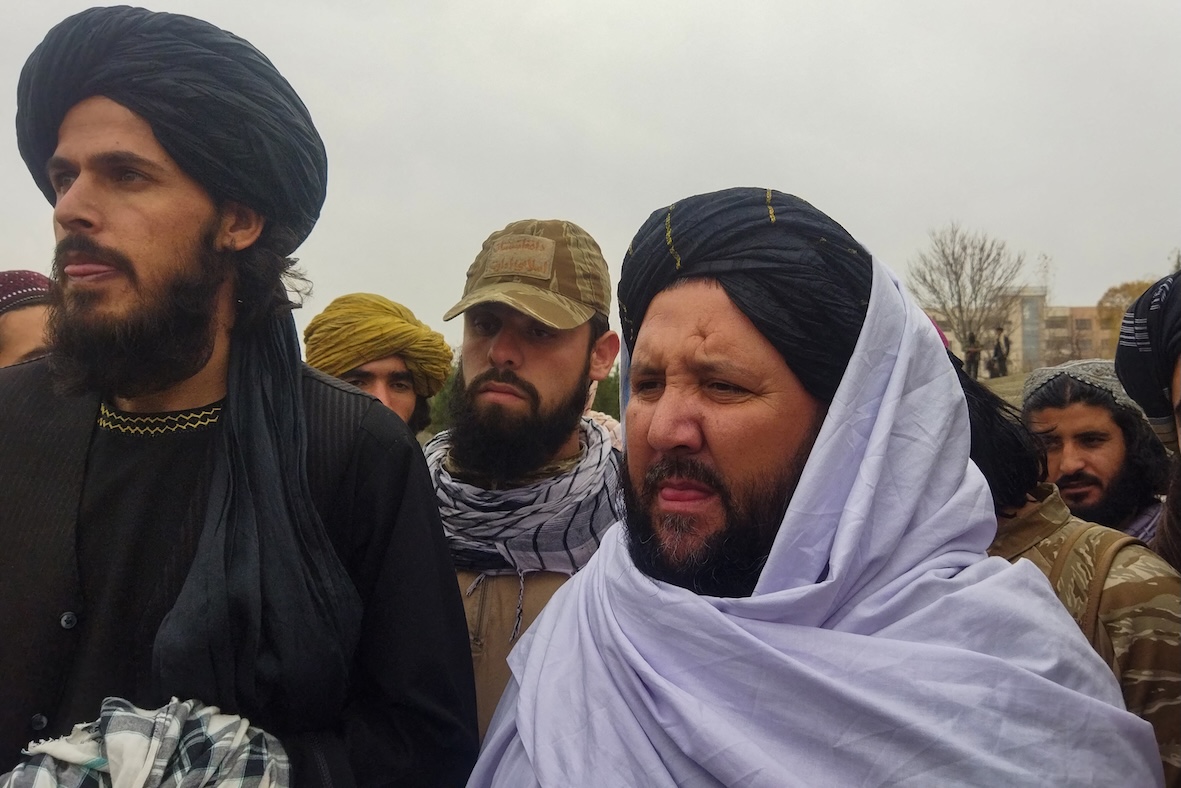
Taliban officials and members look on during the public flogging of 27 people, women and men, in front of a large crowd at a football stadium in Charikar city in Parwan province on 8 December 2022. Photo: AFP

Harsh punishments have been formalized within a new penal code in Afghanistan issued by decree. Signed by Afghanistan's Supreme Leader Hibatullah Akhundzada, the decree "defines several crimes and punishments that contravene Afghanistan's international legal obligations" according to Volker Turk, UN High Commissioner for Human Rights, as he spoke before the Human Rights Council in Geneva of the decree issued in early January.
 
The 60-page Decree No.12, comprised of 119 articles, sets penalties for women who visit their relatives without having first obtained permission of their husbands. Husbands and heads of households are permitted to mete out punishment in their own homes. A man who beats his wife sufficiently severely to cause a visible cut, wound or bruise, can face 15 days in prison, with the proviso that the women is able to prove her case to a judge (a difficult task to begin with since any man's word has precedence over a woman's).
 
On the other hand, a woman who leaves her home to go to her father's house and remains there        without her husband's specific permission stands to be punished with three months in prison. That punishment extends as well to her family members should they fail to return her to her husband. What can be read into that item within the decree relates to an abused women leaving the marriage home to seek shelter at the home of her parents. 
 
https://8am.media/eng/wp-content/uploads/2026/01/Taliban-Suppress-Protest-750x422.jpeg
Taliban operatives intimidate/threaten Afghan women to obedience.
 
Married women in Afghanistan become the chattel of their husbands; they no longer have personal agency in complete subordination to a man who has brought her into his home with the expectation that she will obey him completely and implicitly in every facet of their common life together; an indentured servant/slave to share his bed, work in his kitchen, tend to his every comfort, and raise their children.
 
The mistreatment of animals has its own onerous category of punishment. Which in other circumstances where there is no comparison to any other issues, would seem enlightened. Where anyone arranging for animals or birds to compete in a fighting arena faces penalties of five months in prison. Such fighting matches featuring animals and birds have a popularity as a social custom in Afghanistan, banned following the Taliban's return to power in 2021.
 
Similar types of crime are also treated differently on the new penal code, depending on social class, where scholars and "high-ranking people" can be penalized with a warning issued by a judge. A warning plus a court summons becomes standard for tribal leaders and businessmen, while "average people of society" face imprisonment.  The harshest punishment, however, is reserved for "the lower classes" who are subject to physical beatings/public floggings for their unlawful infractions of the penal code.

Zan Times
"In such a system, obedience to the imam or religious ruler is obligatory; a woman is half a man; Muslims have superiority over non-Muslims; and followers of one Islamic sect are superior to those of others. Thus, the authority to punish is granted, in order of hierarchy, to the imam, the husband, the master, and then to any Muslim. If one accepts a penal system rooted in sharia and does not question the concepts of hudud and taʿzir, it becomes impossible to demand equality before the law or the abolition of slavery-based and husband-dominated rules."
"The Taliban have not limited this categorization to criminal punishment. They have applied the same gender, class, religious, and sect-based discrimination to education, dress, employment, travel, religious practice, and freedom of expression. Why would granting a husband the right to punish his wife seem “new” or “abnormal” when a woman’s presence outside the home is conditional on a male guardian, when a man’s marriage to four wives is legally sanctioned, and when male superiority is embedded across all laws and social norms?" 
"The words slave and master may sound offensive today to many. Even in Afghanistan, formal slavery no longer exists as people are not openly labeled as slaves and masters. In practice, however, the Taliban system is quasi-slaveholding. The obedience they demand from the public and the restrictions and conditions they impose on women are manifestations of bondage."
Zan Times 

Labels: , , , ,

Tuesday, September 02, 2025

Afghanistan Earthquake : "Children are Under the Rubble"

"Children are under the rubble. The elderly are under the rubble. Young people are under the rubble."
"We need help here. We need people to come here and join us. Let us pull out the people who are buried."
"There is no one who can come and remove dead bodies from under the rubble."
Nurgal district resident
 
"I was half-buried and unable to get out."
"My wife and two sons are dead, and my father is injured and in hospital with me."
"We were  trapped for three to four hours until people from other areas arrived and pulled me out."
Sadiqullah, resident of Maza Dara area, Nurgal
 
"[The death toll had risen to at least 800 with more than 3,500 injured; most casualties were in Kunar]."
"Helicopters reached some areas but road travel was difficult]."
"There are some villages where the injured and dead haven't been recovered from the rubble, so that's why the numbers may increase."
Zabihullah Mujahid, chief spokesman, Taliban 
A man holds a child as a line of others pick their way through rubble
Residents walk by a house destroyed by the earthquake in Maza Dara, Kunar province, Afghanistan. Photograph: Wahidullah Kakar/AP

By Tuesday, following the Sunday tremblor, the death toll from a major earthquake in eastern Afghanistan passed 1,400 on Tuesday, with over 3,000 people injured. "We cannot afford to forget the people of Afghanistan who are facing multiple crises, multiple shocks, and the resilience of the communities has been saturated," said Indrika Ratwatte, the UN's resident co-ordinator for Afghanistan, urging the international community to step forward. "These are life and death decisions while we race against time to reach people." 
 
In desperate times of natural disasters, people living remotely in areas where access is difficult and made more so by conditions wrought by an earth upheaval, people are left to their desperate attempts to give aid to those among them unfortunate enough to be caught in the destruction of a shallow earthquake. Eastern Afghanistan teetered under the shock of a 6.0 magnitude quake, late Sunday. Before outside rescue assistance could arrive, locals were frantically trying to dig victims out from the rubble, moving it by hand.
 
According to one resident in Nurgal district where the quake hit villages in Kunar province not far from the city of Jalalabad, his entire village had been destroyed. The quake, hitting before midnight, was centred 27 kilometers east-north-east of Jalalabad, at an eight-kilometre depth. More damage tends to ensue with quakes of shallow depth. Aftershocks that followed the original quake, add to the panic and fear and ongoing danger and damage. 
 
https://i.cbc.ca/ais/e999e05e-cce3-46d4-b0fe-8648adb37c65,1756833664362/full/max/0/default.jpg?im=Crop%2Crect%3D%280%2C0%2C1280%2C720%29%3BResize%3D620
An earthquake of magnitude 5.5 shook southeastern Afghanistan on Tuesday, sparking fears of further destruction almost two days after a large quake in the same region killed more than 1,400 people and injured thousands more. CBC News
 
Rescuers were seen in footage, taking injured people from collapsed buildings on stretchers, placing them into helicopters. Most casualties from the quake were located, according to the Taliban government's spokesman Zabihullah Mujahid, in Kunar. Pakistan felt the quake as far as its capital, Islamabad, although no reports of casualties or damage have come out of Pakistan. 
 
Eastern Afghanistan communities are located in remote areas, within the mountainous landscape. Roads have been blocked and people are unable to communicate, while aid workers are forced to walk four or five hours before reaching  survivors. Rescue flights have operated out of Nangarhar Airport to  transport the rescued injured to hospitals for emergency care.
 
Low-rise constructions, of concrete and brick are hugely susceptible to earthquake damage, as are the homes constructed with mud bricks and wood. That they are poorly built, makes them more susceptible to damage. Homes were seen to collapse by one survivors, accompanied by the sounds of people screaming for help. Sadiqullah described being wakened by a deep boom he took for the warning signals of an approaching storm.
 
Once awake, he rushed to his children's sleeping quarters and was able to bring three of them to safety. On the cusp of returning to bring the remainder of his family out of danger, the room he was in collapsed on top of him. It felt, he explained, as though the entire mountain was shaking. Medical teams from Kunar, Nangarhar and the national capital Kabul, arrived in the area finally. 
 
A health ministry spokesman, Sharafat Zaman, explained further that many areas had been unable to report casualty figures, and "the numbers were expected to change as deaths and injuries are  reported".  Sherine Ibraham, country director for the aid agency, described entire roads and communities cut off from accessing nearby towns or hospital. "Although we have been able to act fast, we are profoundly fearful for the additional strain this will have on the overall humanitarian response in Afghanistan", he stated. 
 
 
https://i.cbc.ca/1.7622953.1756827036!/fileImage/httpImage/image.jpg_gen/derivatives/4x3_1180/2232653605.jpg?im=Resize%3D1180
A deadly earthquake in northeastern Afghanistan has killed more than 1,400 people and injured at least 3,000, according to the Taliban. Afghan volunteers and Taliban security personnel transfer the injured to a military helicopter in the Mazar Dara village of Nurgal, a district of Kunar province on Monday. (Wakil Kohsar/AFP/Getty Images)
 
In a statement by the International Federation of the Red Cross and Red Crescent Societies, immediate needs include search and rescue support, emergency health care and medical supplies, food, clean water, and restoration of road access to reach isolated communities. In October of 2023 a magnitude 6.3 earthquake had hit Afghanistan, with strong aftershocks following. An estimated 4,000 people died in that quake, according to the Taliban.
 
Now, according to the International Rescue Committee, Sunday's earthquake in Afghanistan was expected to "dwarf the scale of the humanitarian needs" that the 2023 disaster had caused. 
 
https://dims.apnews.com/dims4/default/4721483/2147483647/strip/true/crop/6000x4000+0+0/resize/800x533!/format/webp/quality/90/?url=https%3A%2F%2Fassets.apnews.com%2Fec%2Fb1%2F4877cb881423cc3fee569eddcb65%2F4f7913beced5493f91da0545b95942af
Civil defense workers, locals, and army soldiers prepare to evacuate injured victims of an earthquake that killed hundreds and destroyed numerous villages in eastern Afghanistan, in Mazar Dara, Kunar province, Monday, Sept. 1, 2025. (AP Photo/Hedayat Shah)
 

Labels: , , , , , ,

Sunday, February 16, 2025

The Sad Social Plight of Afghanistan's Women

"Our analysis shows that by 2026, the impact of leaving 1.1 million girls out of school and 100,000 women out of university correlates to an increase in early child-bearing by 45 percent and an increase in maternal mortality by up to 50 percent."
Alison Davidian, Country Representative, UN Women in Afghanistan
 
"Women like us, who fought against the Taliban and their ideology, need to be in safety."
"The Taliban shut down and destroyed everything I had in my facility [small farm where she kept animals as an animal-rights activist]. They're also against keeping pets. "
"With such routine [being virtually a prisoner in her own house] life becomes meaningless as you cannot do what you want outside  your home."
"There were days I couldn't get out of  bed [deep in depression]."
Negin, former UNICEF worker from Mazar-e-Sharif, Afghanistan
https://www.unwomen.org/sites/default/files/2024-03/afghanistan_photoessay_publishedmarch2024_008_1_1200x800.jpg?t=1709829765
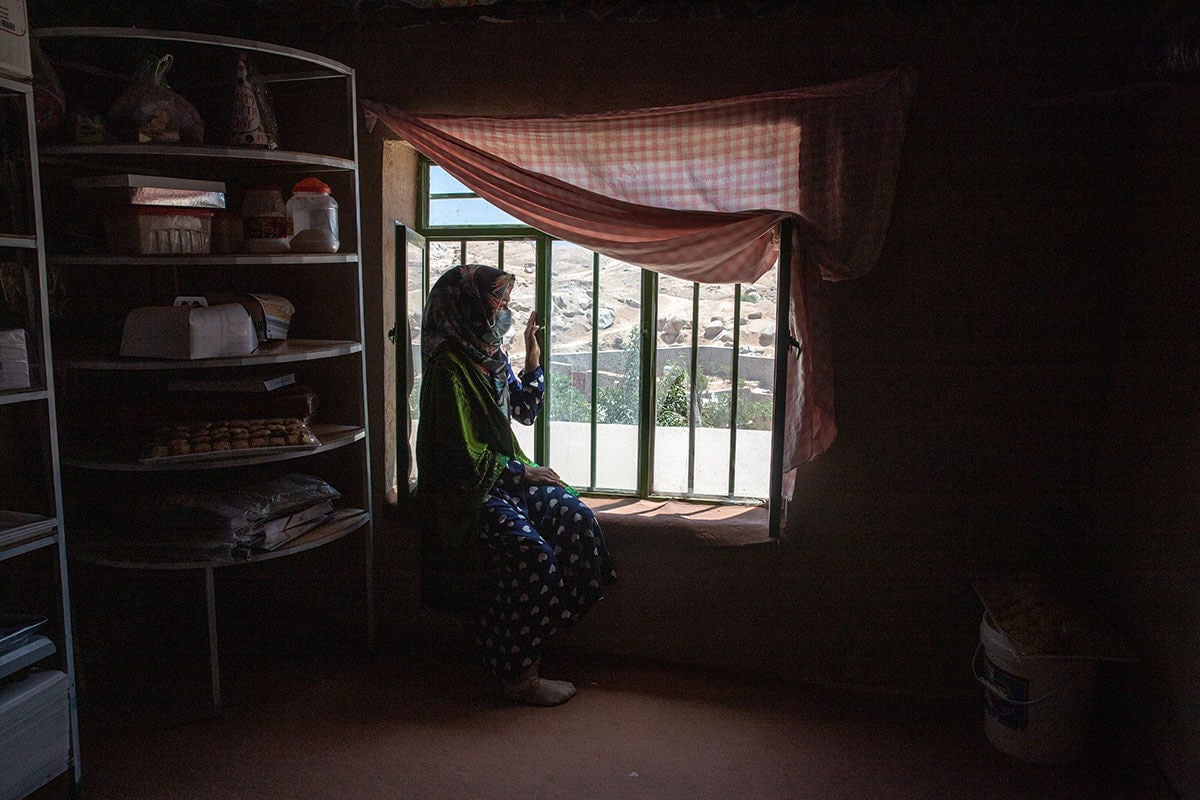
A 31-year-old woman sits by the window. She used to be an entrepreneur before the Taliban takeover. Photo: UN Women/Sayed Habib Bidell.

Up to four years ago, under the auspices of the U.S.-led international forces that dispelled Taliban rule and searched for the leader of al-Qaeda, Osama bin Laden, the eminence grise behind the deadly New York/Washington/Pennsylvania aerial suicide attacks of September 11, 2001, Afghanistan had its re-introduction to democracy and women were freed of the restrictive talons of the Taliban imposed upon them since 1989 following the Soviet Union's departure from Afghanistan after its failed invasion. 
 
In the presence of the Western coalition -- the twenty years from 2001 to 2021 introduced the war-torn country to sweeping social and economic changes. Afghans become involved in sports which both genders participated in, as well as music concerts with male and female singers. Cafes and restaurants served both men and women, after the Taliban years when women were not seen in public, confined to their homes, and permitted outside fully covered only in the company of male relatives. 
 
Women could not be treated by male doctors, nor could they attend hospitals meant for men only. Female surgeons in women-only hospitals served in operating room surgical procedures fully garbed in burqas.Women wee lashed in public squares, stoned in sports stadiums and punished for lack of adherence should they refuse to wear the hijab.
 
In contrast to the situation that prevailed under the U.S.-led coalition, when four million girls were enrolled in school from Grades 1 to 12 in the years 2002 to 2021. There were over 80,000 female teachers in over 18,000 schools while 100,000 Afghan women attended universities. The Afghan parliament had 63 elected female MPs, fully one-third of the total legislators; female journalists and media workers challenged male-dominated officialdom. Women served as cabinet ministers, mayors, governors of provinces, while women also operated small businesses, unlike the Taliban years when women were not permitted to work outside of their homes.
 
Until the Taliban succeeded on August 15, 2021 when the Afghan capital Kabul was captured by the resurgent Taliban. Ashraf Ghani, president of the Republic of Afghanistan, backed by the Western coalition fled to the United Arab Emirates and the nation was in chaos, as the United States withdrew all its troops and diplomatic officials in a 'peace deal' with the Taliban, and the allied nations under UN auspices departed, along with the U.S., leaving the country's population in the hands of the Taliban once again.
https://www.unwomen.org/sites/default/files/2024-03/afghanistan_photoessay_publishedmarch2024_012_1_1200x800.jpg?t=1709829762
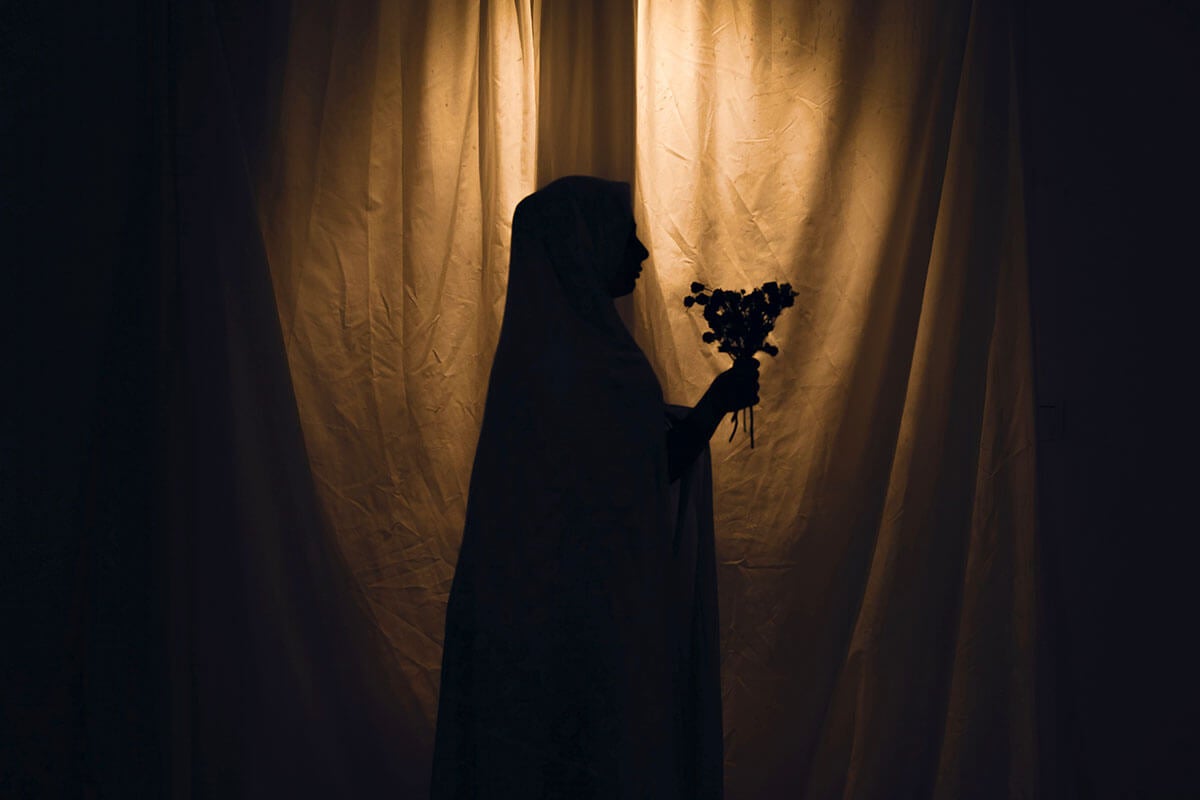
Many Afghan women and girls are forced into unwanted marriages. Photo: UN Women/Sayed Habib Bidell.
"I cried out loud when I got engaged. I felt helpless and found myself in a situation where I had no say in my decisions. I was in my second year of university, studying law and political science, and I aspired to work in the judicial system to protect women’s rights in our country. Unfortunately, my dreams were shattered after the return of the Taliban."
"Many of my friends have faced similar fates, giving up their hopes and marrying against their will. For all girls who have been unable to complete their education, marriage is not a choice but a forced reality."
Mahnaz, from Farah, former university student 
Although the Taliban leadership promised the West, in a bid for acceptance and badly needed investment by the West in economically starved Afghanistan, for international investment, and recognition by global bodies, that women's rights would be observed, that the rights of minority groups in Afghanistan would be protected, they soon returned to the former strictures imposed upon women and girls where both could be punished for not adhering to the Taliban's dress code. 

Once again afghan women could appear in public only covered from head to toe by all-enveloping burqas which also covered their faces. Beyond Grade 6, girls could no longer attend school, and university education for women was banned. No offices and workplaces could accept female employees. Women are banned from public places, parks, and nor may they travel long distances in the absence of a male guardian. Medical training as nurses or midwives no longer is permitted.
 
https://thediplomat.com/wp-content/uploads/2024/08/sizes/medium/thediplomat_2024-08-21-145346.jpg
Ebrahim Naroozi, AP
 
"Several times I was thinking of committing suicide because there was no hope and future for me. Women cannot laugh with one another in public. Women cannot go to parks. Women cannot work and study. Do you see hope for yourself?" Of course not, and it makes you think of ending your life."
"Whenever she sees a Talib, she [her twelve-year-old daughter] is scared of them. That's why she always stays at home and cannot go out. She is depressed all the time."
"Whenever she sees girls going to school and living freely in the West [watching television or on social media], she asks me 'Why don't I have such a life and freedom?' Her question stabs my heart like a dagger."
"The most painful part is that I can't do anything for her."
"In exchange for a peace deal with the Taliban, the world traded Afghan women and their future."
Negin, Afghan woman, Mazar-e-Sharif, Afghanistan


Labels: , , , ,

Wednesday, October 30, 2024

Afghanistan's Virtue and Vices Administration

"Even when an adult female prays and another female passes by, she must not pray loudly enough for them to hear."
"How could they be allowed to sing if they aren’t even permitted to hear [each other’s] voices while praying, let alone for anything else."
"[These are] new rules and will be gradually implemented, and God will be helping us in each step we take."
Afghan Minister of Vice and Virtue, Mohammed Khalid Hanafi
https://www.telegraph.co.uk/content/dam/world-news/2024/10/28/TELEMMGLPICT000399760337_17301430350100_trans_NvBQzQNjv4BqpVlberWd9EgFPZtcLiMQf0Rf_Wk3V23H2268P_XkPxc.jpeg?imwidth=960
Taliban minister Khalid Hanafi said: “God will be helping us in each step we take” Credit: AHMAD SAHEL ARMAN/AFP VIA GETTY IMAGES
"Whatever he says is a form of mental torture for us."
"Living in Afghanistan is incredibly painful for us as women. Afghanistan is forgotten, and that’s why they are suppressing us – they are torturing us on a daily basis."
"They say we cannot hear other women’s voices, and I do not understand where these views come from."
Afghan woman, Kabul
https://www.telegraph.co.uk/content/dam/world-news/2024/10/28/TELEMMGLPICT000399760457_17301429076620_trans_NvBQzQNjv4BqpVlberWd9EgFPZtcLiMQf0Rf_Wk3V23H2268P_XkPxc.jpeg?imwidth=960
The Afghan regime has banned women from working outside the home or attending school and university Credit: MOHSEN KARIMI/AFP VIA GETTY IMAGES

Women and girls in Afghanistan have suffered yet another blow to their human rights. There does not appear to be anything left of their civic, civilian and feminine rights as human beings to be withdrawn from them. The Taliban minister of vice and virtue (shades of the Islamic Republic of Iran) issued a directive in the last week. Women must now no longer recite the Qur'an aloud in the presence of other women, for it is haram for their voices to be heard. "If a woman is not permitted to perform Takbit (reading from the Islamic holy book), then how could she be allowed to sing?" So singing is out as well.

According to strict Islam, the voice of a woman is considered awrah; that which must be covered and should not be heard in public, not heard even by other women, according to Minister Mohammad Khalid Hanafi. Known for his Islamist piety in the West, Hanafi is blacklisted by the United Nations (for what that's worth) and sanctioned by the European Union (which is doubtless of zero concern to the man, attuned to the sub-humanity of females).

From August 2021 when Western powers decamped from Afghanistan with their diplomats, their militaries and their human rights groups, and the Taliban moved from the hinterlands of Afghanistan into governing control of the entire country, a series of restrictions have been restored in reflection of how the Taliban ruled that poverty-stricken, benighted, backward country before 2001. Afghan girls are once again barred from attending middle and high schools and universities. They may not work in government and international non-governmental organizations, since 2021.

Social restrictions have been imposed such as the closure of beauty salons; women are prohibited from leaving their homes other than in the presence of a male guardian. When they do exit their home, they must cover their entire bodies and faces. 
"They [the Taliban] are waging an all-out war against us, and we have no one in the world to hear our voices."
"The world has abandoned us. They left us to the Taliban, and whatever happens to us now is a result of Western government policies."
"I feel depressed. The world is advancing in technology and having fun with their lives, but here we cannot even hear each other’s voices."
"They want us not to exist at all, and there’s nothing we can do about it."
"They may succeed at some point, as many are taking their lives due to the pressure."
"They think ruling Afghanistan is only about suppressing women – we didn’t commit a crime by being born as women."
Former female civil servant under previous Western-supported Afghan government
https://www.telegraph.co.uk/content/dam/world-news/2024/10/28/TELEMMGLPICT000399760576_17301429887710_trans_NvBQzQNjv4BqpVlberWd9EgFPZtcLiMQf_4Xpit_DMGvdp2n7FDd82k.jpeg?imwidth=960
An Afghan woman searches for recyclable materials at a garbage dump on the outskirts of Mazar-i-Sharif     Credit: ATIF ARYAN/AFP VIA GETTY IMAGES
 
Taliban restrictions intensified in the past two months, recounted Samira, a midwife who traditionally goes by one name. Working in remote villages in western Herat province for eight years, she said female health workers are now forbidden by the Taliban from meeting with the male companions of female patients, complicating health services. "They don't even allow us to speak at checkpoints when we go to work. And in the clinics, we're told not to discuss medical maters with male relatives."

The United Nations special rapporteur of human rights in Afghanistan released a new report where the human rights situation in Afghanistan for women, children and minorities is detailed. A litany of edicts, rules and policies have been imposed, restricting virtually all aspects of women's and girls' lives. They are prevented from exercising fundamental rights; freedom of movement, education, work, health care, freedom of expression and access to justice.
"Other provisions further cement Taliban control over the lives, bodies and behaviour of women and girls."
"Women can be punished for singing or speaking outside their homes, while Muslim women are instructed to cover themselves in front of 'non-believing' women."
"Adult women and men who are not related are forbidden from looking at each other's bodies and faces."
Report, Richard Bennet, UN Special Rapporteur on Human Rights in Afghanistan
https://www.telegraph.co.uk/content/dam/world-news/2024/10/28/TELEMMGLPICT000396172589_17301430832730_trans_NvBQzQNjv4BqRo0U4xU-30oDveS4pXV-Vv4Xpit_DMGvdp2n7FDd82k.jpeg?imwidth=960
Armed Taliban security personnel ride motorcycles during a street patrol   Credit: AFP/GETTY IMAGES

Labels: , , , ,

Saturday, February 03, 2024

Aghanistan's Ministry of Virtue and Vices

"Women are banned from all walks of life. And, now, not only are girls deprived of education, but boys' rights are being violated because they're not learning the skills and knowledge that will prepare them for the workforce, for tomorrow."
"They should be raised with all the dreams and desires in their heart. If I find any chance, I want to do something for them."
"I won't stop talking about them."
Najia Haneefi, Afghan refugee in Canada

"People are facing extrajudicial killings, detention, calls for banishment. The Taliban keeps releasing decrees that replace laws."
"Women can' go to university, school, work, travel alone, be on the TV or radio."
"They're confined to their homes."
Razia Sayad, human rights advocate, PhD student of law and legal studies, Afghan refugee in Canada

"There was no reliable mechanism to which women victims of domestic violence could turn. Courts and prosecution units that were previously responsible for investigating and adjudicating cases of gender-based violence remained shut. The Taliban authorities and community-level dispute resolution mechanisms both punished women for reporting domestic violence."
"Institutions designed to support human rights were severely limited or shut down completely. Peaceful protesters faced arbitrary arrests, torture and enforced disappearance."
"The Taliban conducted extrajudicial executions, arbitrary arrests, torture and unlawful detention of perceived opponents with impunity, creating an atmosphere of fear."
Amnesty International report
Afghan women weave wools for making carpets at a traditional carpet factory in Kabul, Afghanistan, Monday, March 6, 2023. After the Taliban came to power in Afghanistan, women have been deprived of many of their basic rights. (AP Photo/Ebrahim Noroozi)
Women weave wool at traditional carpet factory/AP

When the United States and its allies left Afghanistan in 2021 and all troops were withdrawn, the Taliban returned to power, taking up where they left off after the U.S.-led invasion that led to the country being freed of Taliban oppression when al-Qaeda and the Taliban fled to the mountainous region between Afghanistan and Pakistan. With the return of the rule of the fundamentalist Islamist Taliban, sharia law was enforced, the previous justice system scrapped.
 
Repression of the population, and revenge meted out to those within the society who collaborated with the foreign presence, setting Kabul up to govern like a democracy, and introducing Western concepts of gender equality and justice saw women's place return to that of male possessions with no rights of their own. Girls in Afghanistan are now permitted to attend school up to Grade 6 only, banned from a secondary education and university attendance. Women may no longer serve as teachers to boys. 
 
https://dims.apnews.com/dims4/default/ca3728a/2147483647/strip/true/crop/3000x2000+0+0/resize/2880x1920!/format/webp/quality/90/?url=https%3A%2F%2Fstorage.googleapis.com%2Fafs-prod%2Fmedia%2Fc78ca989d24443469c1b08636ca8214b%2F3000.jpeg
Sewing workshop in Kabul/AP
 
Afghanistan has become a gender-apartheid country. Gender-segregation laws lock women out of social, political and economic life. Women are discouraged from working outside the home. And when outside the home they are expected to be accompanied by a male family member.The country's Ministry of Women's Affairs was disbanded and replaced with the Ministry for the Propagation of Virtue and Prevention of Vice which "issues restrictive and abusive decrees on women's and girls' rights".

A strict dress code is enforced, one that requires women to have chaperones in public and which bans women and girls from public parks, public baths and other sites among restricted public venues. Women who protested against restrictions were faced with "unlawful detention and violence".  According to a 2024 report from the United Nations, Afghan women's access to public life, particularly targeted to single women and those without male guardians, have been further restricted. Single women have been restricted in some provinces from accessing  health-care facilities.

Bus terminals are regularly visited by morality police where drivers are forbidden from permitting unchaperoned women to board buses. Girls and young women face forced marriages and sexual assault, leading them to attempt suicide when shunned by their families for being 'unclean'.  Internet services, available to those who can afford them, offer an opportunity to girls to help educate themselves once they can no longer attend school. A more recent decree banned women's beauty salons.
 
https://medicamondiale.org/fileadmin/_processed_/c/3/csm_Afghanistan_Frauen_CR_GettyImages_83f8408929.jpg
Medica Mondiale
"Girls in Afghanistan have been banned from secondary school and women from tertiary education. Women and girls have been banned from entering amusement parks, public baths, gyms and sports clubs for four months. Women have been banned from working in NGO offices. Since the takeover of Afghanistan by the Taliban in August 2021, women have been wholly excluded from public office and the judiciary. Today, Afghanistan’s women and girls are required to adhere to a strict dress code and are not permitted to travel more than 75 km without a mahram. They are compelled to stay at home."
"All over the country, women report feeling invisible, isolated, suffocated, living in prison like conditions. Many are unable to have their basic needs met without access to employment or aid, including access to medical healthcare and psychological support in particular for victims of violence, including sexual violence. It’s a sobering reminder of how swiftly and aggressively women’s and girls’ rights can be taken away."
United Nations Office of the High Commissioner

Labels: , , , ,

Monday, November 07, 2022

Girls' and Women's Sporting Life in the Arab Middle East

"Sometimes we face some difficulties, of course. Like, 'This is a game only for boys or males, why do you wear shorts?' --and so on. This is a huge problem we face."
"But I think with time, it's getting better and better."
Masar Athamnehy, 20, Orthodox Club women's soccer team, Amman, Jordan
 
"Life has become hell for us, as a woman we can't do anything by our choice."
"Unfortunately,l my dream  to make it to Afghanistan's national team] remained just a dream."
Sabera Akberzada, 17, Afghanistan
 
"You're a girl, it's not right [they tell me]."
"I fell in love with the game because it's got action. I love it a lot, more than any other sport."
Sarah Asimrin 13, Amman, Jordan
 
"There is no support for women's sports in the Gaza Strip -- no support to be like girls in other parts of the world."
Maha Shabat, team manager Beit Hanoun Al-Ahli Youth Club, Gaza

"On the internet, I see many girls [elsewhere] playing normally."
"[The biggest obstacle in Gaza is society and tradition but I just] think positively about the criticism. I will take it as a motive to proceed and challenge everyone."
Rama Ashour, 14, Gaza
Joud Shunti, 23-year-old goalkeeper, trains with the Orthodox Club's women's team in Amman, Jordan. (Raad AL-Adayleh/The Associated Press)
 
The Middle East is a geographic region where the game of soccer has enthusiastic fans everywhere. Even among girls and women for whom participation in any kind of sport, much less soccer, is untraditional and goes against the cultural/religious strain of what is viewed as fitting for women in society. In Amman, Jordan, 13-year-old Sarah Asimrin and her younger sister might be viewed as coming by their fascination with soccer as an inherited trait, since their father is himself a soccer coach at a private academy in Amman.

Mad for the men's game of soccer as the region may be, the women's game has no real status and there is little interest in financing it as long as conservative interests continue to insist that girls and sports just do not fly, along with the issue of uniforms being entirely unsuited since they typically reveal bare skin on legs and arms. Jordan stands out as one of the leaders in the region, with a network of girls' youth and school leagues.

In Saudi Arabia where only in the last few years were women given permission to even attend soccer games as spectators, the first matches of a new women's Premier League were held. For the first time the Saudi national women's team played against international teams. Tournaments newly launched allow women's teams opportunities in international competitions.

The smaller West Asian and Asian football associations held their own first women's club championships several years back. A women's club championship was inaugurated in Cairo by the African Federation last year. This year's games began in Morocco with a sizeable financial incentive for the winners even though the win was considerably less than the $2.5 million that goes to the winning men's club.
Football Player for the Egyptian National Team. Sarah Essam
 
Financial incentives are provided by Jordan's Football Association in support of forming women's teams, so that even some conservative clubs have joined. A holdup in promoting women's teams is the fact that they fail to generate income. Since Qatar was named host of the World Cup this year, it has departed from its traditional lag in promoting women's soccer, to develop women's teams at universities, holding soccer academies for girls, as a new initiative.

The region's most prominent contrast is Egypt with its men's teams -- wealthy powerhouses -- winning regional tournaments on a regular basis even while women's soccer languishes in neglect. Egypt's Wadi Degla wins most women's competitions. The price has been public backlashes where a victory by the under-20 national women's team over Lebanon led to a barrage of sexual harassment on social media of obscene comments and sneers at girls playing soccer.
The African Champions League is to require clubs in its men's tournament to include and promote women's teams, a move that should have the effect of moving the Egyptian clubs to alter their resistance to aiding the formation of women's soccer clubs. In the Palestinian West Bank, women's soccer is somewhat active, while it has a non-existent presence in the Gaza Strip where its 2.3 million residents are conservative and its Islamist government in Hamas has little patience for women's freedoms.

The Beit Hanoun Al Ahli Youth Club with 20 girls playing basketball and soccer wear pants rather than shorts, and long-sleeve shirts. Their soccer-playing days are over once they reach age 17, when they no longer play, looking toward marriage instead. And in Afghanistan since the Taliban takeover of the country, the nascent women's sport scene collapsed under order of the authorities, leaving hundreds of female athletes without recourse to the sports they love.

"I feel so worried and so sorry for women, young women who wanted to be independent. I don't think women will play sports again in Afghanistan", sighed Khalid Popal, a former captain of the women's national team now living in exile in Denmark, and desperately trying to get members of the under-15 team still in Afghanistan to safety outside her benighted country.

Soccer player Insherah Heyasat, left, gives instructions during a training of the Orthodox Club's women's team in Amman, Jordan, on Oct. 22. Women's soccer has been long been neglected in the Middle East, a region that is mad for the men's game and hosts the World Cup for the first time this month in Qatar. (Raad AL-Adayleh/The Associated Press)
 

Labels: , , , , , ,

Saturday, July 09, 2022

Canada, Leaving Afghans in the Lurch of Taliban Vengeance

"In Afghanistan, there is the risk of detention and prosecution for those who want to get a passport under the Taliban."
"Those who worked for the Canadian government and international partners -- the risk is always there."
"We wish and we hope there will be a more flexible approach when it comes to documentation inside Afghanistan and also the paperwork that is required in terms of bringing people to 
Canada."
"Women are being gradually but systematically erased from public life. They are denied access to education, they are not able to work, they cannot protest — it means they gradually become invisible." 
"Afghanistan is the only country in the world where girls are denied a secondary education."
"I am very much hopeful that the outcome will help with a kind of solution that will help with the humanitarian aid to Afghanistan, without helping the Taliban consolidate their power, without legitimizing the Taliban."
"[he Taliban are becoming increasingly hard-line and  not a moderate or more inclusive version of the previous regime; they are] the same old Taliban — they have not changed."
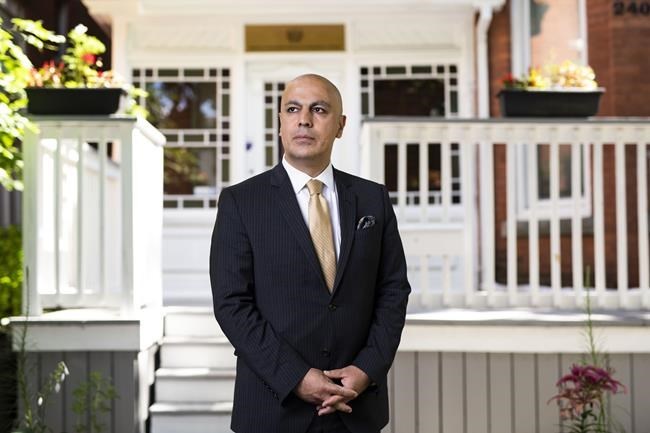
Hassan Soroosh, Afghan Ambassador to Canada 
20220708130756-72615691cd2c6fd6235b7a259c0b6605301387259d5e8b38050e7abcc72962db
Ambassador of Afghanistan to Canada Hassan Soroosh stands outside the Embassy of The Islamic Republic of Afghanistan in Ottawa, on Thursday, July 7, 2022. THE CANADIAN PRESS/Justin Tang

Clearly this fearless man is not speaking on behalf of the current government of the Islamic Republic of Afghanistan, but is reflecting the sensibilities of the previous Afghan government which gave him his appointment to represent the country in Canada. He dare not himself return to his country of origin as long as the Taliban remain in power, but his concerns are for fellow Afghan civilians and those whose lives are in danger under the present regime. His office continues to represent the interests of Afghan citizens outside Afghanistan requiring consular assistance.

And he is extremely concerned over the plight of people whom the government of Canada pledged it would extend security to as a recompense for their services to the Canadian diplomat corps, Canadian servicemen and Canadian charitable groups as translators and office workers while Canada deployed its troops along with other NATO countries in the U.S.-led mission to the country in an effort to ward off the Taliban, combat members of al-Qaeda and help the country modernize itself toward democracy and the upgrades of civic installations.
 
Taliban fighters stand guard at the site of an explosion in front of a Sikh temple in Kabul, Afghanistan on June 18. (Ebrahim Noroozi/The Associated Press)
 
Canada is one of the few countries involved in Afghanistan that has failed to honour its promise to withdraw vulnerable Afghans from the repressive threatening searches of the Taliban for people who they claimed 'betrayed' Islamic values by befriending and assisting foreign countries that invaded Afghanistan to free it from the first restrictive and oppressively violent Taliban rule. While other countries devised ways to extract those who gave aid to their military, those awaiting Canada's promise to be fulfilled remain in danger.

Canadian veterans' groups who worked with Afghan volunteers and workers as well as Canadian humanitarian charitable groups and members of the Canadian political opposition have all called upon the ruling Liberal government of Prime Minister Justin Trudeau to live up to Canada's obligations, to no avail. Complex paperwork must be completed, and special visas approved in a long, drawn-out process that leaves vulnerable people in danger. The year that has passed since the pullout of Western countries leaving the population of Afghanistan at the mercy of the Taliban has failed to convince the Canadian government of the urgency for it to act.
 
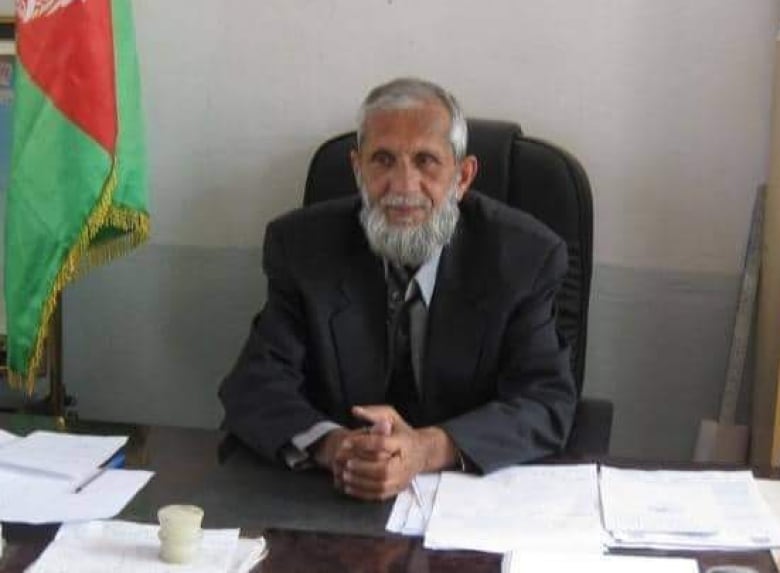
Painda Mohammad Noori, a former schoolmaster, died of a heart attack in Pakistan while his family waited for news in Islamabad about when they might be able to travel to Canada. (Submitted/Jamil Ahmad Noori )
 
Ambassador Soroosh emphasizes that those Afghans who committed to helping Canada prior to the Taliban's return have been left in a state of "high vulnerability", calling on Canada to widen the eligibility criteria for arrival to Canada under a humanitarian program meant to expedite vulnerable Afghans to Canada who face Taliban persecution. A need also exists, he emphasized, to provide Canadian charities aiding Afghans with needed paperwork to enable them to get on with their work.

Some Afghans awaiting final paperwork to enable them to board flights to Canada were able to leave Afghanistan to take up temporary haven in Pakistan on visas that have now expired. Leaving them at real risk of being involuntarily returned to Afghanistan and Taliban reprisals. Aidan Strickland, a spokeswoman for Canada's Immigration Minister, gave assurances that her department "can help facilitate travel to Pakistan", but not, unfortunately 'facilitate travel to Canada'.

A group of Afghans seeking to come to Canada on special immigration measures for former employees of the government and their families, hold a protest over travel delays in Islamabad on Canadian consular grounds in early May. (Submitted/Asad Ali Afghan )
 

Labels: , , , ,

Friday, August 27, 2021

"Our Brothers, The Taliban"

Liberal MP Monsef pictured on a Wednesday briefing call updating reporters on the military evacuations in Afghanistan.
"I want to take this opportunity to speak to our brothers, the Taliban."
"We call on you to ensure the safe and secure passage of any individual in Afghanistan out of the country."
"The Taliban are a terrorist group and yet they've claimed to be Muslims. We are calling on them, to immediately cease the violence, the femicide, the genocide, the rapes, the lootings and to return immediately to the peace negotiation table in an inclusive and meaningful way."
Liberal Member of Parliament, Maryam Monsef, Minister of Women and Gender Equality
This Minister in the Liberal government of Prime Minister Justin Trudeau, speaks of 'we', the government of Canada's expectations of the Taliban to comport themselves in a civilized manner. While speaking of their exploits in the Islamist terrorism cycle of conquest, defeat and return ... while excelling in the sport of genocide, rape, looting, an fundamentalist group of Islamist diehards who have their place on many countries' list of terrorists, including Canada's ... as a 'brother'.
 
When Hamid Karzai was in power at the political helm in Afghanistan, he was often infuriated at U.S. bombing raids against the Taliban, deploring the killing of the terrorists who thought nothing of killing other Afghans, yet speaking of them as 'brothers'. A mere cultural courtesy, responded Maryam Monsef, when she was queried about her choice of words and her seeming sympathies. Canadian soldiers, a diplomat and a journalist were killed by the Taliban during their assignment in Afghanistan. None among them thought of the Taliban as 'brothers'.
 
Hamid Karzai, however, a member of the ethnic Pashtun tribe like most Taliban, is now in negotiation with the Taliban, his 'brothers'. Making an effort, he feels, to bring them to reason. That in their second time around as the newly re-installed Islamic Emirate of Afghanistan, they might consider being less harsh in their administration of the country; as in no public floggings for offences such as men being clean-shaven, or women unescorted and not wearing burqas in public.
 
No impulsive beheadings, either. To consider, on the other hand, inclusiveness of the people of Afghanistan, treating all equally, the many different tribes and ethnicities. To achieve international recognition in moderation. To be vigilant that no other Islamist fundamentalist groups bitterly offended at the very existence of Western cultures and politics, seek to use Afghan soil as nurturing and launch-off spots for their terrorism-abroad plans to appease their rage and deliver more martyrs to the cause.
 
The Prime Minister of Canada saw fit to appoint a woman to ministerial posts whose cultural heritage was that of Afghanistan, a woman whose ethnic/cultural heritage has far more in common with her past, born in Iran of Afghan refugees who later returned with her to Afghanistan before finally leaving for the West -- to the ministry of Democratic Institutions. When she failed in that portfolio, she was shunted to the ministry of Women and Gender Equality.
 
Both choices incredibly inappropriate, but a reflection of Justin Trudeau's penchant for elevating ethnic minority candidates reflecting Canada's massive absorption of ethnic and cultural groups from all over the world who eventually form a voting bloc. That it might be wiser to allow immigrants to first immerse themselves in Canadian culture and values before bestowing on them the privilege of helping to administer the country's affairs plays second fiddle to reaping the vote.
 
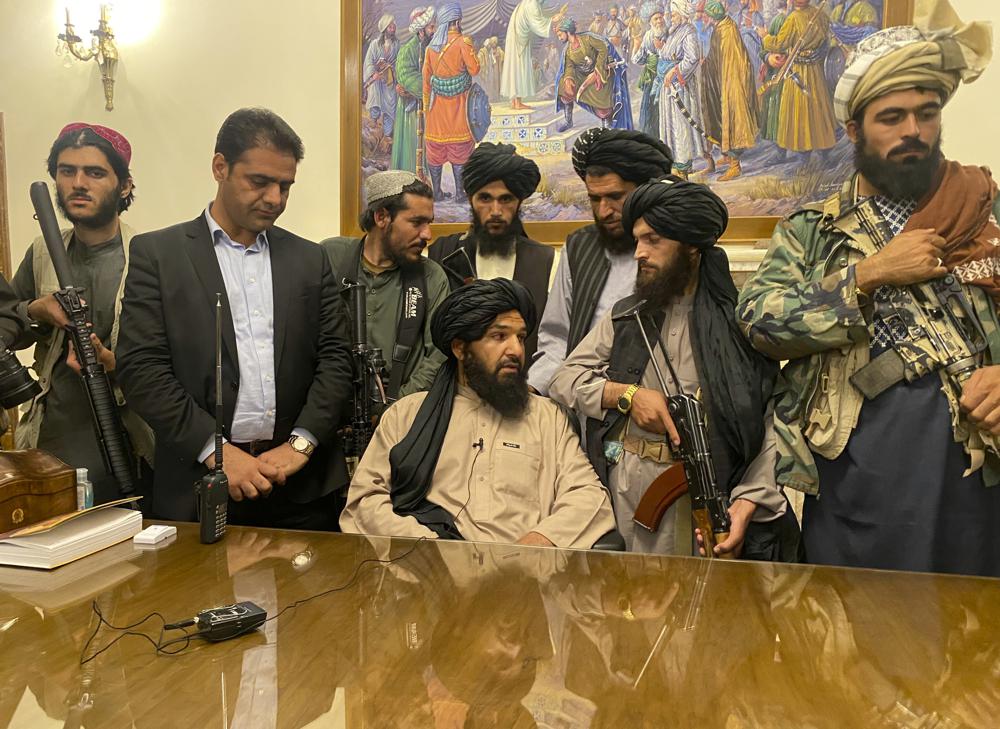
Taliban fighters take control of Afghan presidential palace after the Afghan President Ashraf Ghani fled the country, in Kabul, Afghanistan, Sunday, Aug. 15, 2021. Person second from left is a former bodyguard for Ghani. (AP Photo/Zabi Karimi)
 
The victorious Taliban whose swift return to power while brushing away any opposition the duly elected government or/and the national police along with the military initially proffered, are not in the habit of taking advice from mere women, much less from advice emanating from foreign countries, particularly one of no great reputation as a power broker. Evidently Maryam Monsef feels comfortable enough to address the terrorist group with the self-confidence of vainglorious conceit.

Even Hillel Neuer, director of United Nations Watch commented: "158 Canadian soldiers died fighting the Taliban. Thousands wounded, Taliban not our brothers." An Afghan refugee and political analyist, Zahra Sultani responded: "If you think ppl of Afghanistan -- even the most illiterate -- are OK with calling Taliban 'brother' and it's not a big deal, you're a bigot. Taliban is our enemy not our brother!"

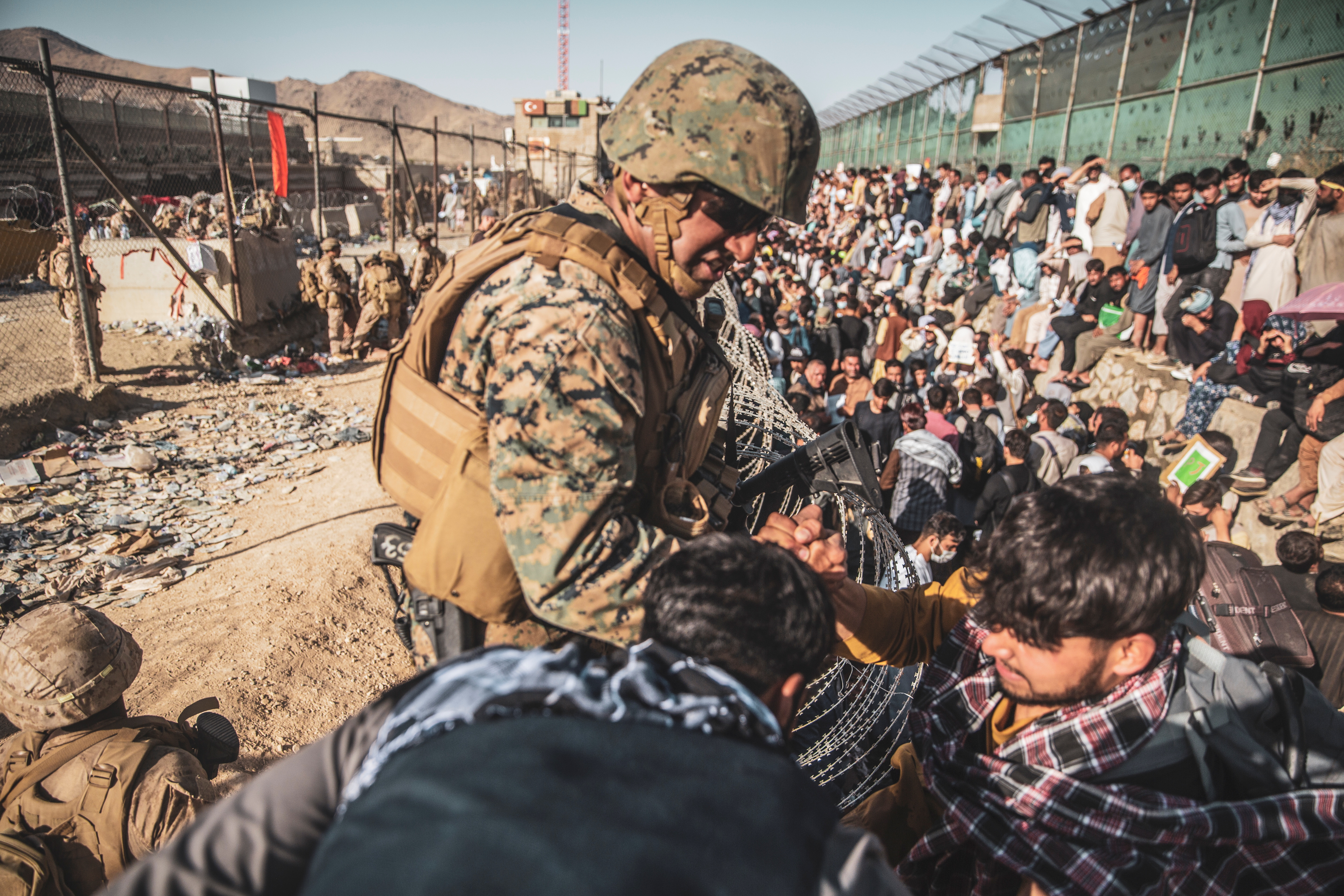
"Our BROTHERS the Taliban. Just take a moment and think about what that means to our troops and allies who fought and died in Afghanistan over the last 20 years", wrote David Jacobs, a frequent Twitter commenter on the failings and absurdities of the Canadian government under Justin Trudeau. Unknown thousands of people, mostly Afghans desperate to escape Taliban rule in their country court death by crowding around the Kabul airport in a desperate effort to depart elsewhere. None seem to regard the Taliban as their 'brothers'.

Labels: , ,

Wednesday, February 28, 2018

Memory Restoration

"We all have good days and bad days, times when we're foggy or when we're sharp."
"We found that jostling the system when it's in a low-functioning state can jump it to a high-functioning one."
"We find there's even more variability during retrieval than encoding more potential to increase performance." 
"It’s one thing to go back through your data, and find that the stimulation works. It’s another to have the program run on its own and watch it work in real time."
"Now that the technology is out of the box, all sorts of neuro-modulation algorithms could be used in this way."Michael Kahana, psychology professor, University of Pennsylvania

"We have good evidence that things like nicotine and aerobic exercise improve some aspects of attention."
"The stimulation may be activating some of the same systems, only more directly and precisely."
Zach Hambrick, professor of psychology, Michigan State University

"One woman in her sixties got to where she could recall more than one hundred words in correct order."
"That ability didn't transfer to any improvement in general cognition, like the ability to concentrate, to store new information without using the technique, or speed of processing."
David Balota, researcher, Washington University, Missouri
A magnetic resonance image of an epileptic brain. Scientists have tested a brain implant on people with epilepsy that aided memory. Credit Bsip/UIG, via Getty Images

It was revealed in February in the journal Nature Communications that scientists had developed a brain implant whose purpose is to boost memory. Yet another piece of bioscience coupled with advanced technology to aid people suffering from serious memory loss. Scientists at the University of Pennsylvania and Thomas Jefferson University studied decades of work devoted to the decoding of brain signals with the use of the most advanced techniques of machine learning.

The result was the development of a new implant represented by an array of electrodes embedded deep in the brain to monitor electrical activity -- somewhat like a peacemaker in that it can deliver a stimulating pulse when required and that would be when the brain struggles to store new information. It is felt that this device may provide support to people with extreme thought deficits and in so doing radically improve their lives.

For others, with normal brain function and thought processes, the central discovery advancing the device; that a wandering brain can be boosted to make it more alert -- already has resonance for people have been stimulating their brains and minds on their own, somewhat less formally and invasive in the technical-engineering sense, by using caffeine, nicotine, prescription drugs, and when all else fails, a brisk run in fresh air around green trees, to clear the mind and boost brainpower.

Some individuals have remarkable memories capable of storing data and retrieving it at will. Those who score high in memory tests depend on cues specific to their memory capabilities, thought to be partially inherited -- though psychologists appear to believe that almost anyone is capable of expanding a native ability, using techniques to mentally arrange new names, facts or words linked to a familiar place.
main article image
Science Alert
Researchers at Washington University in Missouri conducted a study where fifty older adults were trained to memorize word lists, with the use of location imagery. Building on the capacity to recall lists of facts using either imagery-based training or with the use of a brain implant may appear to those with normal memories to be without value; on the other hand, those suffering from serious deficits may find enormous value in the new brain implant technology.

According to the researchers involved in discussions on commercializing the technology, the device could correct injuries by aiding in listing and recalling critical life-enhancing details. As, for example, whom to contact for aid, how to use the telephone, keeping everyday but vital information foremost in mind. Perhaps the simple expedient of making reminder notes clear and concise and in handy view hadn't occurred as a simpler, more practical nudge in aiding memory...??

On the other hand, scientists looking to the future are perhaps likelier to switch the technology to the efficiency and practicality of memory retrieval, instead of mere memory storage.
Brain activity    SCIEPRO / Getty Images

Labels: , , , ,

 
()() Follow @rheytah Tweet