Murder While Black : Exemption
"As I have indicated, Mr. Downey has a substantial criminal record involving violence and firearms. I recognize, however, that the aggravating effect of his criminal record is offset in part by the mitigating circumstances of his background, as detailed in the IRCA.""He grew up in Toronto in predominantly Black and racially diverse neighbourhoods and attended racially diverse schools, and felt that he did not experience overt racism.""Mr. Downey explained to Dr. Duhaney that his experience living in communities which normalized racial diversity shaped his early sense of identity and belonging."British Columbia Supreme Court Associate Chief Justice Heather Holmes
 |
| Downey's lawyers unsuccessfully argued he should be found not criminally responsible on account of a mental disorder. (Shane MacKichan) |
Impact of Race and Culture Assessments (IRCAs) are a construct for court use in Canada to "Help criminal justice professionals better understand the effects of poverty, marginalization, racism, and social exclusion on Black and racialized offenders and their experiences", according to the Canadian Department of Justice. They are a counterpart to the more well-known Gladue reports used to lighten sentences for Indigenous offenders. And both appear to be beloved by Canada's justice system, where in meting out punishment for grave crimes, lighter sentences always prevail for these categories of criminal offenders.
In the latest case to gain some notoriety in news reportage, 35-year-old Everton Javaun Downey, a known criminal, stabbed his girlfriend, 15 times on December 19, 2021, fleeing the scene of the carnage, then later turning himself in to police. He was convicted of second-degree murder for taking the life of 25-year-old Melissa Blimkie for reasons known only to himself. Sentenced to life in prison, Crown prosecutors sought no chance for parole for 15 years, while the presiding Justice Holmes decided on 12 years; a discount for the man because he is Black.
 |
"[While Downey had] a significant criminal record that includes serious offences of violence, the IRCA submission made] clear that broader systemic, structural, and community factors relating to Mr. Downey's experience as a Black person have played a part in his life experience, bringing various types of trauma, negative peer influences, and mental health challenges.""[Under] mitigating circumstances [in the IRCA report] early exposure to violence, chronic instability, poverty, systemic anti-Black racism, and untreated mental health symptoms, such as hypervigilance, that may be trauma related.""The aggravating effect of his criminal record is offset in part by the mitigating circumstances of his background, as detailed in the IRCA."Justice Heather Holmes
University of Calgary social work professor Patrina Duhaney wrote up Downey's case for the IRCA through interviews with the man, prior to his sentencing. She described him as a Black man of African Nova Scotian, African-American and Jamaican ancestry, noting that in his early life he did not experience 'overt racism'. After moving in 2016 to British Columbia he drifted about in a small Black population with cultural norms he was unfamiliar with, leading to feelings of disconnect and isolation, summed up Justice Holmes, studying the IRCA.
He was familiar with poverty in his early background, a background that included an absent father. At home there had been domestic violence. The neighbourhood he lived in as a developing child was one that was no stranger to shootings. Leading to a 'lasting sense of danger and mistrust', with mental health effects gained from previous prison incarcerations and feelings of lonely pique over his separation from the comforting familiarity of his Ontario community.
Taking into account the bleak reality of a beloved family member, the friends and family of the murdered woman whom he killed in a stairwell at the Metrotown Shopping Centre in Burnaby, whose grief at her loss must surely have been given fresh impetus with the news that her killer was given a special dispensation of mercy in view of the colour of his skin. While B.C. Supreme Court Associate Chief Justice Holmes had compassion for a life-criminal-turned-murderer, and she spoke softly of the pain the family was left in, she still gave the man a three-year free pass to freedom. Betrayed by Canadian justice.
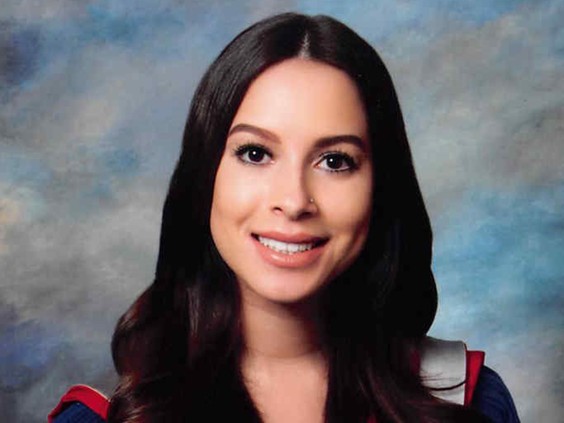 |
| Murder victim Melissa Blimkie. Photo by Handout/IHIT |
"The victims have suffered an almost unbearable loss that affects them profoundly, and, for some, in almost every aspect of their lives.""The family members feel the loss all the more deeply because they had no opportunity to say goodbye to Ms. Blimkie or to give her comfort in her final moments.""They also feel betrayed by Mr. Downey, who they welcomed into their homes."Justice Heather Holmes
"Following several weeks of investigation, the Integrated Homicide Investigation Team (IHIT) attained sufficient evidence for charges. On January 19, 2022, the BC Prosecution Service approved a charge of second-degree degree murder against 31-year-old Everton Downey. The two had been in a relationship for some time prior to the homicide.""On August 21, 2025, Everton Downey was found guilty of second-degree murder after a trial in Supreme Court in relation to the homicide of Melissa Blimkie. On February 13, 2026, Mr. Downey, now 35 years old, was sentenced by Associate Chief Justice Holmes to life in prison, with a parole ineligibility period of 12 years. The court also imposed a lifetime firearms prohibition and a DNA order."“This was a tragic instance of intimate partner violence that has had a devastating impact on Melissa’s family and her community”, says IHIT spokesperson Corporal Esther Tupper. “IHIT would like to thank the Burnaby RCMP, the BC Coroners Service, and the BC Prosecution Service for their work throughout this investigation. Our thoughts are with Melissa’s family and friends at this time.”B.C. Integrated Homicide Investigation Team
Labels: Black Victim Exemptions, Canadian Justice System, Murder While Black
posted by Pieface @ 8:39 PM


0 Comments:
Post a Comment
<< Home