Locked Out Shipping in the Strait of Hormuz
"Our candidates are worried. And they are not worried about the Middle East. They're worried about [the] United States and Israel ... There seems to be a lot of rules being broken, and that is a scary place to be. The candidates, they're sending pictures and posting stuff about fires. Some people are overly concerned. The rest of the people know that it's a fairly safe country in general. But again, the fear is not coming from the Middle East. The fear is coming from the U.S. and Israel and how far they're going to take it.""It's small wonder why many of the employees feel like sitting ducks. We work in oil and gas only, and all of our clients are the national oil companies. So they're government-owned companies for oil and gas, LNG production, and all of the employees have just been told to wait for it [the situation] to stabilize.""There's a lot of fear and desire to leave the area. And they're not able to. There's no way in or out. So if you're a Canadian citizen, the Government of Canada and the U.S. government aren't able to really do anything for the citizens who are living and working there, but the national countries' governments over there are doing quite a bit. The UAE is covering all the costs for hotels and whatnot, for stranded people and the people who are living there just being told to stay home."Anisa Rosvold, regional vice-president Arabian Gulf region, Petro Staff International
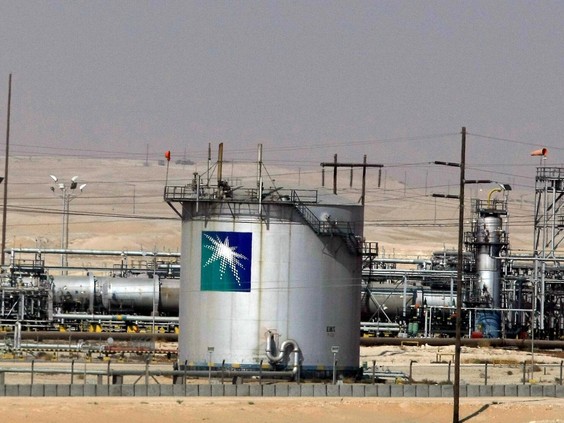 |
| A general view shows the Saudi Aramco oil facility in Dammam City, 450 kilometres east of the Saudi capital, Riyadh. Photo by Hassan Ammar /AFP/Getty Images |
"Insurance companies are cancelling war risk coverage for vessels in the Middle East Gulf as the widening Iran conflict disrupts shipping, leaving tankers damaged or stranded and at least two people dead.""Shipping through the Strait of Hormuz between Iran and Oman, which carries around one-fifth of oil consumed globally as well as large quantities of gas, has ground to a near halt after vessels in the area were hit as Iran retaliated against US and Israeli strikes.""One tanker in the region was ablaze on Monday, at least four others were damaged and about 150 ships were stranded."Business Recorder
Iran announced navigation has been closed through the Strait of Hormuz and waters surrounding it, from Sunday, the day following the first aerial attacks on the country by Israel and the United States. While defending its territory from the combined attacks that have targeted its military and nuclear installations, flattened government buildings, killed Iran's Supreme Leader and much of the government and Islamic Republican Guard Corps elite, Iran has also focused on causing total disruption and chaos within the Middle East in a surprising move that has alienated its neighbours, including those in support of Iran, like Qatar and Oman.
 |
| Birds fly near the boat in the Strait of Hormuz amid the U.S.-Israeli conflict with Iran, as seen from Musandam, Oman, March 2, 2026. REUTERS/Amr Alfiky |
While Iran's plans to foment a wider war, using its military resources to send out thousands of drones and missiles over Saudi Arabia, the UAE, Kuwait, Qatar and Oman, numbers greater in total than they launch to strike Israeli targets, what is left of the Iranian military command has not yet called on the services of its Houthi proxies in Yemen which has up to the present been striking international shipping in the Strait, upending normal international shipping.
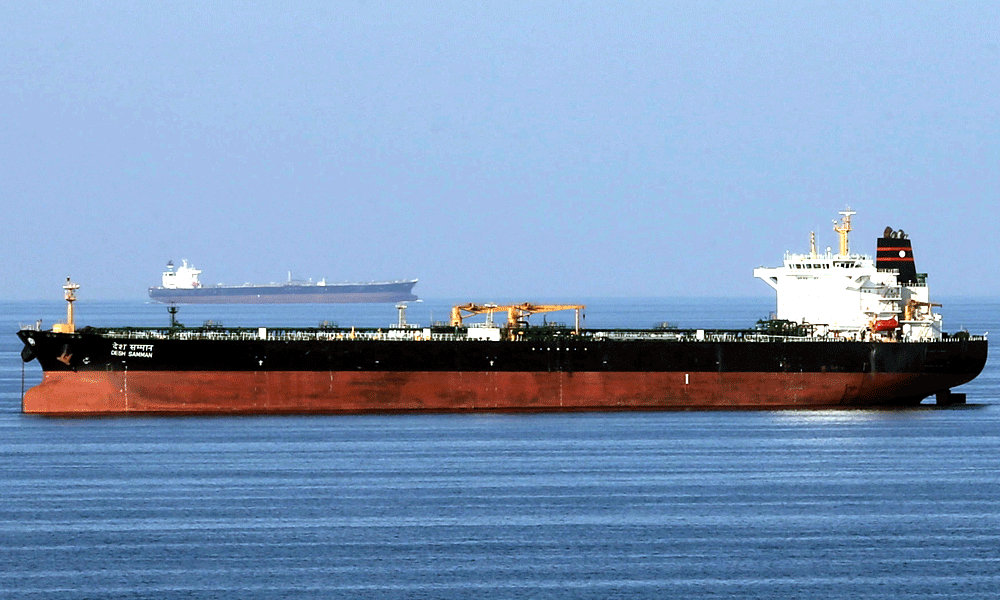
In the last few days 150 ships including tankers for oil and liquefied natural gas where 10% of the world's container ships pass through, have dropped anchor, unable to venture any further.
The ships have been ensnared in backups, cargo soon to begin accumulating at ports and transshipment hubs in Europe and Asia. Asian governments and refiners have been forced to assess their oil stockpiles in this aura of uncertainty where no one knows how extensive it will become or how long it will be before normal shipping passage can resume with safety.
With the threat issued by the IRGC commander that any ship attempting transit of the 21-mile-wide (34-km-wide) maritime chokepoint, tankers remain clustered in open waters off the coasts of Gulf oil producers, including Iraq and Saudi Arabia, and LNG giant Qatar. While berthed in the Middle East Gulf, one U.S.-flagged tanker was damaged by 'aerial impacts' while a Honduras-flagged tanker was burning in the Strait of Hormuz after being hit by IRGC drones.
 |
| Photo Reuters |
Contracted oil workers, thousands from Canada the United States and other western countries, have been stranded at work sites throughout Oman, the United Arab Emirates, Qatar and Kuwait. Several hundred Canadian workers out of Calgary dispatched by Petro Staff International are now stranded across the Gulf States and are fearful of the effects of the conflict exploding in the region. Their vulnerability to vengeance attacks by Iranian forces convince many that once they escape their nightmare they plan never to return to the Middle East.
Many of the Petro agency's workers are asking to be repatriated, to be stationed elsewhere -- anywhere that is safe in comparison to the conflict surrounding and threatening them. All these employees have been assured they will be safe as long as they follow local authorities' orders. And that to leave the region is currently just not possible until such time as it has become stabilized once again. No flights are able to get through, so all these employees must wait out the conflict where they are, for the time being.
 |
| Rumaila oil field, Basra, Iraq Reuters |
Operations have, in any event, been shut down temporarily with measures being taken by the Petro group to "minimize becoming targets", according to Anisa Rosvold of Petro Staff International.
Labels: Gulf Oil Workers, IRGC Maritime Threats, Oil and LNG Shipping, Strait of Hormuz, U.S.-Israel Attack on Iran
posted by Pieface @ 8:08 PM


0 Comments:
Post a Comment
<< Home