The Ebola Outbreak Continues to Plague the DRC
"This is the fastest growing Ebola outbreak ever, not only among the previous Bundibugyo outbreaks, but all the different viruses that are causing Ebola.""Unfortunately, the virus is still ahead of our response. It's moving faster than deploying the resources to control the situation."Wessam Mankoula, head, emergency preparedness and response, African Centres for Disease Control and Prevention
 |
| WHO/ Josua Mulala Raymond |
A statement from the World Health Organization on Thursday affirmed that the Democratic Republic of Congo's Ebola outbreak represents the "fastest growing" such communicable disease of its type ever. To the present, 600 people had died of its effect. The UN health agency's updated numbers were that 1,759 confirmed cases in DR Congo occurred since mid-May, when the outbreak was declared.
Mr. Mankoula compared the situation to the deadliest Ebola outbreak up to this point which occurred in 2013-16 in West Africa, with 994 cases in the first six weeks, while with the current outbreak and an identical time period, 1,596 had been enumerated. The rare Bundibugyo species identified with the current outbreak has no approved vaccine nor treatment. It is believed to have spread for an undetected period of time. Ebola spreads through close contact and infected bodily fluids.
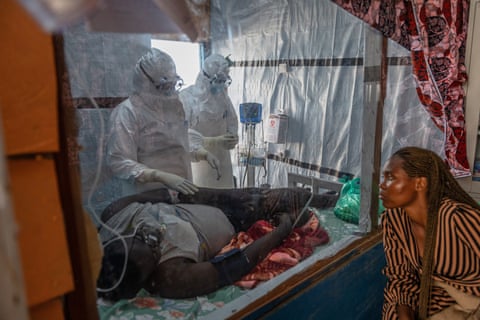 |
| Healthcare workers tend to an Ebola patient in Ituri. Photograph: Moses Sawasawa/AP |
Health authorities in the vast geography of the country which supplied the WHO's figures, indicate that the outbreak in the DRC has a case fatality rate of 34 percent. To date, 285 patients have recovered from their morbid infection. Another 304 suspected cases are under investigation. Four provinces have been hit by the disease in the northeastern DRC where the outbreak is located, where the worst-hit area is Ituri province.
On July 2nd, two potential treatments for Bundibugyo began as trials to evaluate the effectiveness of the monoclonal antibody MBP134 and the antiviral drug remdesivir alone and in combination. It was on May 15 following several deaths in Ituri province where armed groups have destabilized the area creating a massive number of displaced people living in internal refugee camps that the outbreak was formally declared.
According to Anne Ancia of the WHO in the DRC, there are some 700 beds available across 22 operating treatment centres. Efforts currently are underway to open an additional 300 beds. As well, and critically, over 10,000 contacts of those infected are being monitored, with a follow-up rate of 82 percent. Yet a 95 percent rate of follow-up of the infected is required -- according to the WHO -- to effectively tame the outbreak.
"Population movements, persistent insecurity, and the fragility of the health system continue to complicate efforts to bring the outbreak under control.""Humanitarian needs remain substantial, particularly regarding civilian protection, access to food, and essential health services, while other diseases such as malaria and measles continue to spread. ""[Treatment centres are operating at around 90 percent capacity] placing significant pressure on the response."Anne Ancia, DRC representative for the World Health Organization
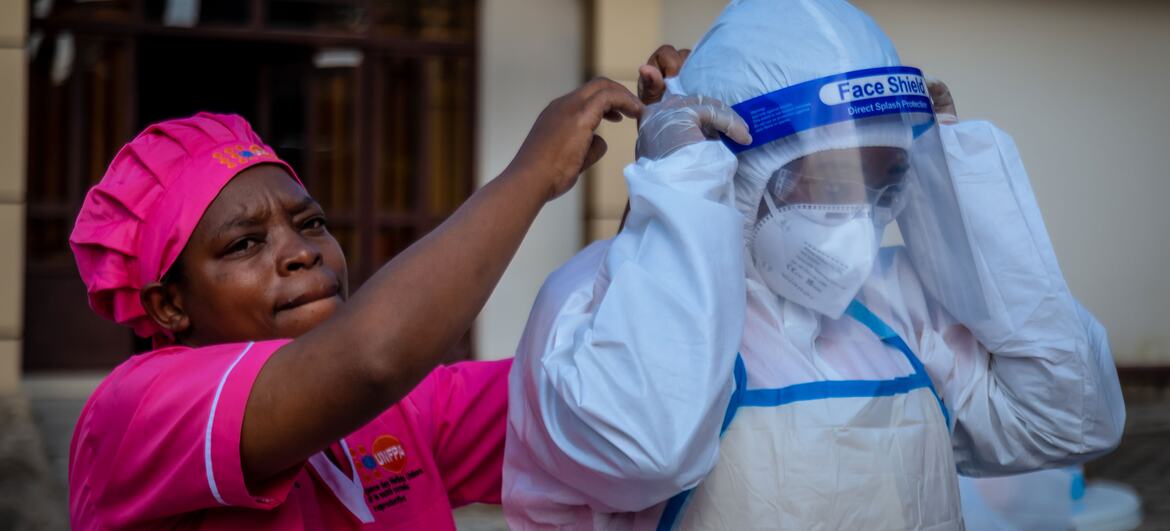 |
| Health workers in North Kivu, eastern DR Congo, prepare to treat patients as the Ebola outbreak continues. |
Labels: Africa Centres for Disease Control and Prevention, Bundibugyo Strain, Ebola Outbreak, World Health Program
posted by Pieface @ 8:21 PM


0 Comments:
Post a Comment
<< Home