The Political Impartiality of the International Joint Commission Over U.S.-Canada Boundary Waters
"He likes to make threats, like 'I'll end the Boundary Waters Treaty' that he perceives as important to Canadians.""It's just another weapon in his 'art of the deal' when it comes to maybe a trade agreement or something.""It's not bugging him too much, I don't think, because it's not blocking the things he wants to happen, as we see with him approving the mining."Daniel Macfarlane, professor, School of Environment, Geography and Sustainability, Western Michigan University"Ultimately, a lot of the co-operation on these water courses is really ingrained, and really sits a lot of the time at a local level.""These are cooperative mechanisms, which foster a lot of goodwill between the parties, especially at a local level."Riley Denoon, co-director, International Waters Governance Research Initiative
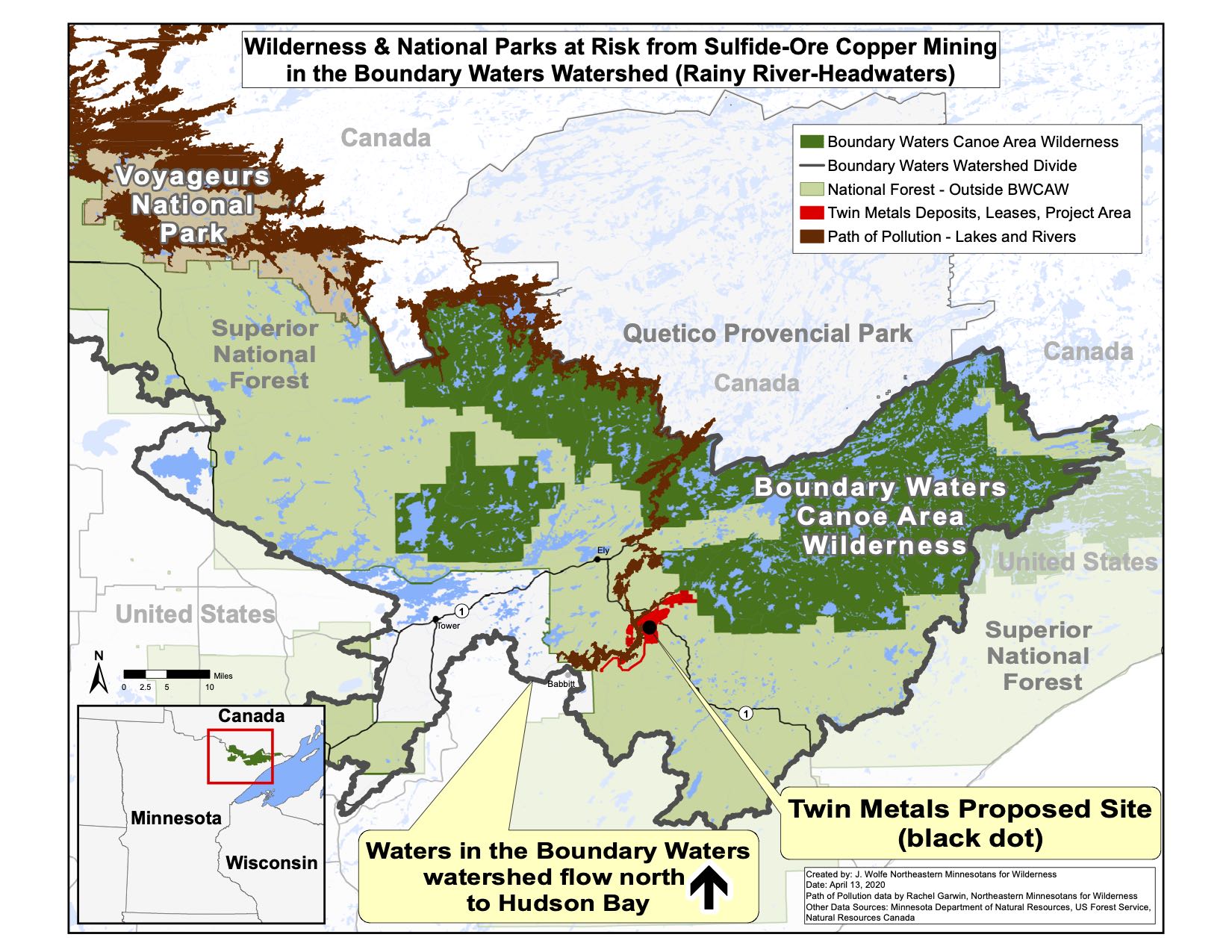
President Donald Trump signed House Joint Resolution 140 into law in late April, its effect being to roll back a Biden-era mining moratorium on over 200,000 acres of U.S. federal lands near the Boundary Waters watershed in Minnesota which drains into Canadian waters. This, in response to industry lobbying to develop minerals and geothermal energy in the region. Such mining, fear critics, will have the effect of undermining water protection.
Stating that he was interested in revisiting the two countries' sharing of lakes and rivers, President Trump in 2025 informed former prime minister Justin Trudeau he might cancel the 1908 treaty that demarcs the U.S.-Canada boundary, a water-sharing regime governed by several treaties and conventions with the 1909 Boundary Waters Treaty (BWT), representing the main foundational agreement for boundary waters of both countries.
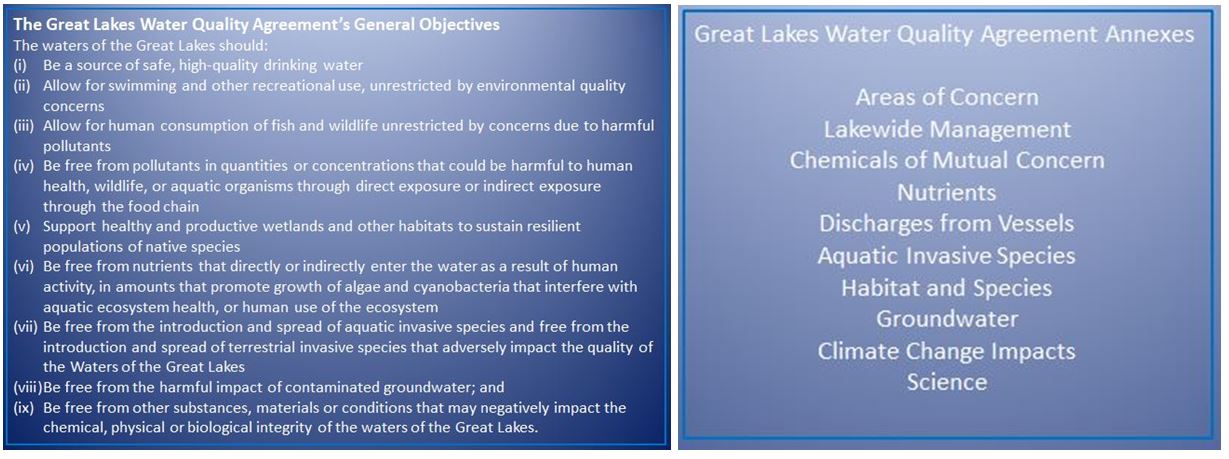
According to Professor Macfarlane, the pacts are vulnerable through the fact that there is a notable lack of enforcement mechanisms. There is no indication at present, he feels, that Mr. Trump views the treaties as an obstacle to his larger priorities. Should the president wish to withdraw the United States from the BWT, that very act would be politically and diplomatically consequential in its potential to jeopardize interconnected pacts, the Great Lakes Water Quality Agreement among them, which would place both countries at risk.
 |
| International Joint Commission |
"Politicians of all stripes and colours threaten a lot of things.""Whether they actually do it in the end, I would think that you don't want to cut off your nose to spite your face."Richard Paisley, director, Global Environment Facility International Waters Governance Initiative, University of British Columbia
Both countries would suffer through weakening a system preventing one side from harming the other through water diversions, flooding, or pollution, should such agreements be undermined.The BWT, established in 1909, was a formal agreement between the United States and Great Britain, which acted on Canada's behalf to prevent and resolve disputes in water usage by the two countries involved; addressing other transboundary water concerns.
That agreement established the International Joint Commission (IJC) a cooperative, technical and advisory body with six commissioners; three from each country. There are some experts who believe the authority of the IJC has been diminished over the last century and a quarter; that the original mandate failed to equip the institution to handle the complex challenges of today.
Both countries must ask the IJC to investigate any issues that concerns them both. As long as binational cooperation is operational, the organization's capacity to take decisive actions over urgent matters is limited when it cannot respond to items of concern to only one of the signatories. Concerns over water matters and pollution will be investigated when the IJC is asked to do so. While it has no authority to insist its recommendations are adopted, both sides have been reluctant to send disputes to the IJC for fear of rulings that might constrain economic activity, manufacturing, or agriculture.
To this point the ending of the mining moratorium by the Trump administration has not seen the IJC involved, since there has been no request for it to do so. The commission chair, Pierre Baril, declined comment on Trump's politics or treaty threats, pointing out the IJC is not political in nature, operating independently of changing governments, functioning through cooperation and consensus.
 |
| International Joint Commission |
"If Canada and the U.S. ask us to dig into the mining situation, we will do it.""We are quite immune. We still operate independently, whenever the Liberals or Conservatives in Canada are in power or the Democrats or the Republicans are in power in Washington."Pierre Baril, Canadian IJC commissioner and chair
Labels: Boundary Waters Treaty, International Joint Commission, Mining Boundary Waters, U.S. President Donald Trump, U.S.-Canada
posted by Pieface @ 8:15 PM


0 Comments:
Post a Comment
<< Home