Trump's Trade/Tariff Edicts Roiling the International Community
"President Trump recognizes that decades of moral suasion have not eradicated forced labor from global supply chains.""The United States has had a forced labor import ban for nearly a century, and rigorously enforces it; it's well past time for our trading partners to do the same.""We're not in favour of sweatshops, and we don't want anyone else to be in favour of it [sic] either."U.S Trade Representative Jamieson Greer"The Trump administration has shown little actual concern so far for human rights.""The Trump administration is using forced labour as an excuse to impose tariffs just as they declared emergencies under IEEPA to impose tariffs.""Many Americans are wearing clothes that have forced labour in the supply chain. The irony is that many of our allies who are the targets of these new tariffs have better laws and enforcement against forced labour."Andrew Hale, fellow, Advancing American Freedom, Washington
 |
| A cargo ship full of shipping containers is seen at the port of Oakland, California, U.S. REUTERS/Carlos Barria/ |
Canada is preparing, along with 59 other targeted trade-tariff countries, to have additional tariffs imposed, following the US Trade Representative having invoked Section 338 of the Tariff Act of 1930 to introduce anti-discrimination tariffs on a targeted goods list comprising about five percent of Canadian imports at the astronomical rate of 50 percent. According to Jamieson Greer, a forced labour investigation backgrounded the new tariffs under Section 301 of the Trade Act of 1974.
Canada and Mexico were included along with China and dozens of other countries, after findings resulting from two rounds of public hearings and over 2,100 public comments, concluded that screening goods produced by child or forced labour were not sufficiently undertaken. Back in March when the investigation had been completed, including Canada "was unbelievably shocking to me", admitted Clark Packard, research fellow at Cato's Herbert A. Stiefel Center for Trade Policy. "This poisons the well in terms of any USMCA negotiations", he prophesied.
"The administration is trying to recreate what they lost when the Supreme Court shot that abuse of power down.""[The 301 tariffs are] another unlawful power grab [by Trump and will likely be legally challenged].""In the end, Customs and Border Protection will spend billions in processing refunds."Andrew Hale
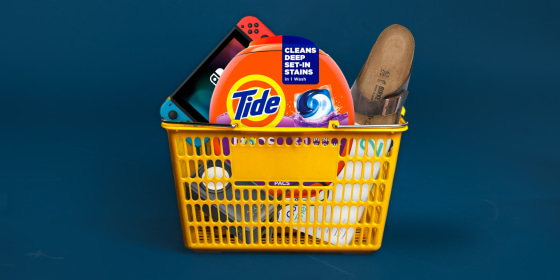 |
| Tech, clothes, baby gear, household basics and more are about to get more expensive, even if they’re made in the U.S.A. NBC News |
Under Section 301 which follows a formalized consultation and hearing process, it generally takes a year to complete investigations. Trade officials in the U.S. noted their expectations that the probes would be completed by midsummer -- expedited to replace the time-limited Section 122 duties imposed following the ruling by the U.S. Supreme Court against the International Emergency Economic Powers Act tariffs.
Three categories have been established for the new duties protocol: 10 percent for countries with forced-labour prohibitions including Canada and Mexico; 10 to 12.5 percent net of most-favoured-nation rates for some products from the European Union, Taiwan, Japan, South Korea and Switzerland; and 12.5 percent for the remaining countries. The Section 301 duties, unlike the 338 tariffs, include carve-outs for goods compliant with the Canada-U.S.-Mexico Agreement in accord with the Federal Register Notice.
"Given that USTR determined that Canada fails to enforce its existing legal regime against imports made with forced labour but provides scarce evidence as to this failure and its impact in displacing US exports, it's not immediately clear what Canada could do to obtain a wholesale reduction or elimination of this tariff."Alfredo Carrillo Obregon, trade policy analyst, Cato Institute, Washington"[Canada has] one of the world's most robust frameworks to prevent and address forced labour.""Canada shares the United States' objective of ensuring goods produced with forced labour do not enter our supply chains.""We will continue engaging constructively with the United States on this matter, as well as other outstanding issues, over the coming weeks."Canada-U.S. Trade Minister Dominic LeBlanc"[The Trump administration's justification for the new tariff regime is] too convenient to be taken seriously.""Forced labour is a real and pervasive problem in our supply chains and demands serious enforcement." "It should never be cheapened into a pretext for a tariff policy built on dubious legal theories and personal grievances."Congressman Richard Neal, Democrat/Massachusetts, U.S. House Ways and Means Committee
 |
| Source: U.S. Treasury Department |
Labels: Sky-High Punitive Tariffs, Squeezing Tight, Tearing Up Free Trade, Trade Gamesmanship, Trump Administration, Unfair Trade Practices
posted by Pieface @ 8:05 PM


0 Comments:
Post a Comment
<< Home