The Average Russian's Confidence in Vladimir Putin's Russia
"Drones are flying. Things are burning down. Nervousness is growing. And people's everyday wisdom may be kicking in that they need to have cash under their pillow and not somewhere in banks where it may never be returned.""For some banks this really is a problem. They didn't expect this and they invested all the cash elsewhere, and yet people are coming and taking out half a trillion rubles a month."Former (anonymous) finance official, Russia"It means people have no trust in the Russian banking system or in the Russian financial system.""This is all a consequence of the fear that the government will do something with the banking system, that it could nationalize deposits.""I would not exclude that the authorities could impose limits on withdrawals."Alexandra Prokopenko, former advisor, Russian Central Bank
 |
| Russian banks have been bleeding cash each day (Picture: EPA) |
First half of August: $3.4 billion (286.4 billion roubles) withdrawn in a span of just fourteen days. July: $7.3 billion pulled from commercial accounts, marking the single highest monthly withdrawal total of the calendar year. June: $4.5 billion removed as initial drone disruptions against critical logistics hubs began to escalate. Cumulative 2026 figure: Over $32 billion (2.5 trillion roubles) siphoned out of the formal banking architecture since January 1. "Beyond physical disruptions, the driving force behind the liquidity drain is an intense, pervasive rumour mill regarding the Kremlin’s plans for private savings.""As the war of attrition drags on, the financial demands of sustaining a military outfit numbering over a million active personnel, alongside funding defence contractors, wounded-in-action payouts, and death benefits, are burning through Russia's state budget.""Russia’s Ministry of Finance is operating under a widening federal deficit that standard taxation and energy export revenues can no longer comfortably cover.""With foreign reserves frozen in Western clearinghouses and access to international capital markets blocked by sanctions, Moscow must fund its war expenditures entirely through domestic borrowing, sovereign wealth drawdowns, and money creation.""In this environment, fears have mounted among ordinary Russians that the Kremlin will inevitably resort to extraordinary measures to tap into retail bank deposits."First Post summary
Billions are disappearing from Russia's banking system, as Russians display their penchant for economic survival against a backdrop of Moscow's floundering 'special military operation' which was meant to see the great Russian military swoop into defenceless Ukraine to liberate it from its 'neo-Nazi' government, bowing to the applause of grateful Ukrainian citizens and just incidentally picking up great regional swaths of its neighbour in the interests of rewarding Russian President Vladimir Putin's fixation on restoring Soviet-era influence, power and command of its neighbours' resources, from land to population to natural resources.
Who could foresee that Ukraine's government had its own plans that included staunch national sovereignty and a commitment to democracy in a country that prided itself on its peoples' defiance of the invader, and a national identity that was capable of coping with the stress of invasion by an enemy that recognized no civilized internationally respected conventions of war. Ukranians, prepared to improvise, to cope with scarcity and danger in support of their government, their innovative military, their proud history of struggle against all odds.
Above all, the courage of its smaller military service, and the improvisation of new technologies enabling them to hold their own. In the event, challenging Russia on its own turf, informing Russians there are no free lunches in Ukraine for them.
In the first two weeks of August, close to $3.4 billion was withdrawn, in addition to the $7.3 billion that Russians withdrew in July and over $4.5 billion in June; figures from the Russian Central Bank. In the first year of Russia's full-scale invasion of Ukraine, such withdrawals were recognized as a problem; at this juncture in the war total withdrawals this year are overtaking and doubling the 2022/23 withdrawals, according to Taras Skvortsov, senior executive at Sberbank, the largest retail financial institution in Russia.
Both Mr. Skvortsov and another former senior Russian finance official have stated that these withdrawals have led to liquidity problems -- with the financial sector already strained by increasing bad debts in the wake of a government lending boom to ramp up military output -- the financial sector is being overstretched. As pointed out by former adviser to the Russian Central Bank, Alexandra Prokopenko, these withdrawals are a reflection of the atmosphere of fear growing deeper within the Russian public.
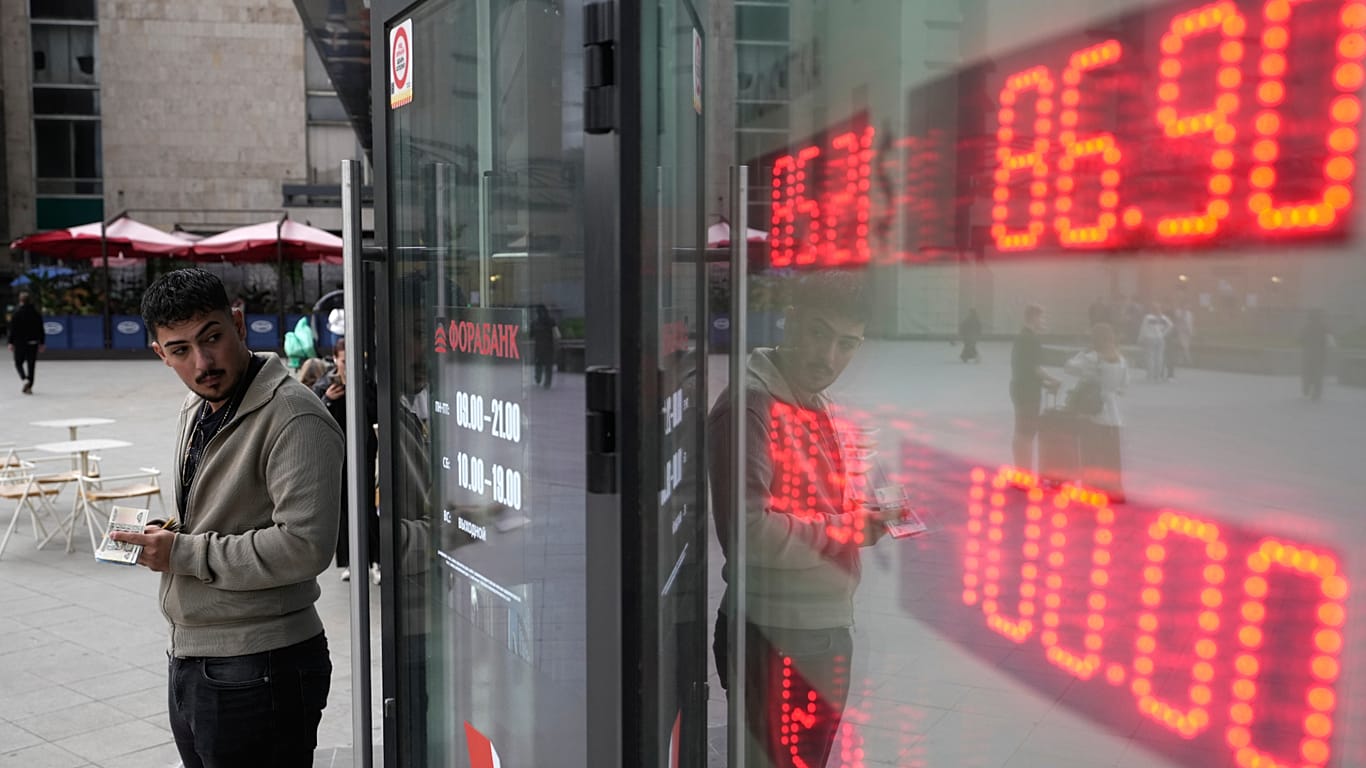 |
Russians pull billions from banks fearing Kremlin will seize savings for war AP Photo |
The situation is not a new occasion during which Russians express their doubts over their government's decision-making in imposing on them a violent conflict with a neighbour. During the initial two weeks of the invasion the Russian banking system lost $23 billion and even then banks seemed imperilled by depositors and businesses lined up with the intention of emptying their accounts. Then the government addressed the drain through the imposition of strict capital controls aligned alongside sharply raised interest rates.
The concerns over economic survival go beyond that of the Russian public, as big business also now seeks as well to move their money out of Russian regulatory reach, while anxiety increases over asset seizure potentials. Over $9.4 billion was transferred in the second quarter of 2026 out of Russia, according to data from Russia's Central Bank.
The government's plans to raise money to finance the war through the issuance of state bonds have been undermined by the withdrawals. After all, Russians, whether individuals or corporations, frantically engaged in protecting their cash assets by removing them from the possibility of the government's octopus reach into private property, are highly unlikely to voluntarily part with their cash at a time of severely reduced trust, to buy state bonds.
There is ample reason for distrust of the government's intentions. A nationalization drive to target wealthy Russians has been intensified; prosecutors confirmed that last year $51.5 billion in assets were seized in 2025. Prior to that, in June the state confiscated $7.6 billion with links to Vadim Moshkovich, Russian agricultural tycoon, representing the largest seizure since 2022 marking the Russian invasion of Ukraine.
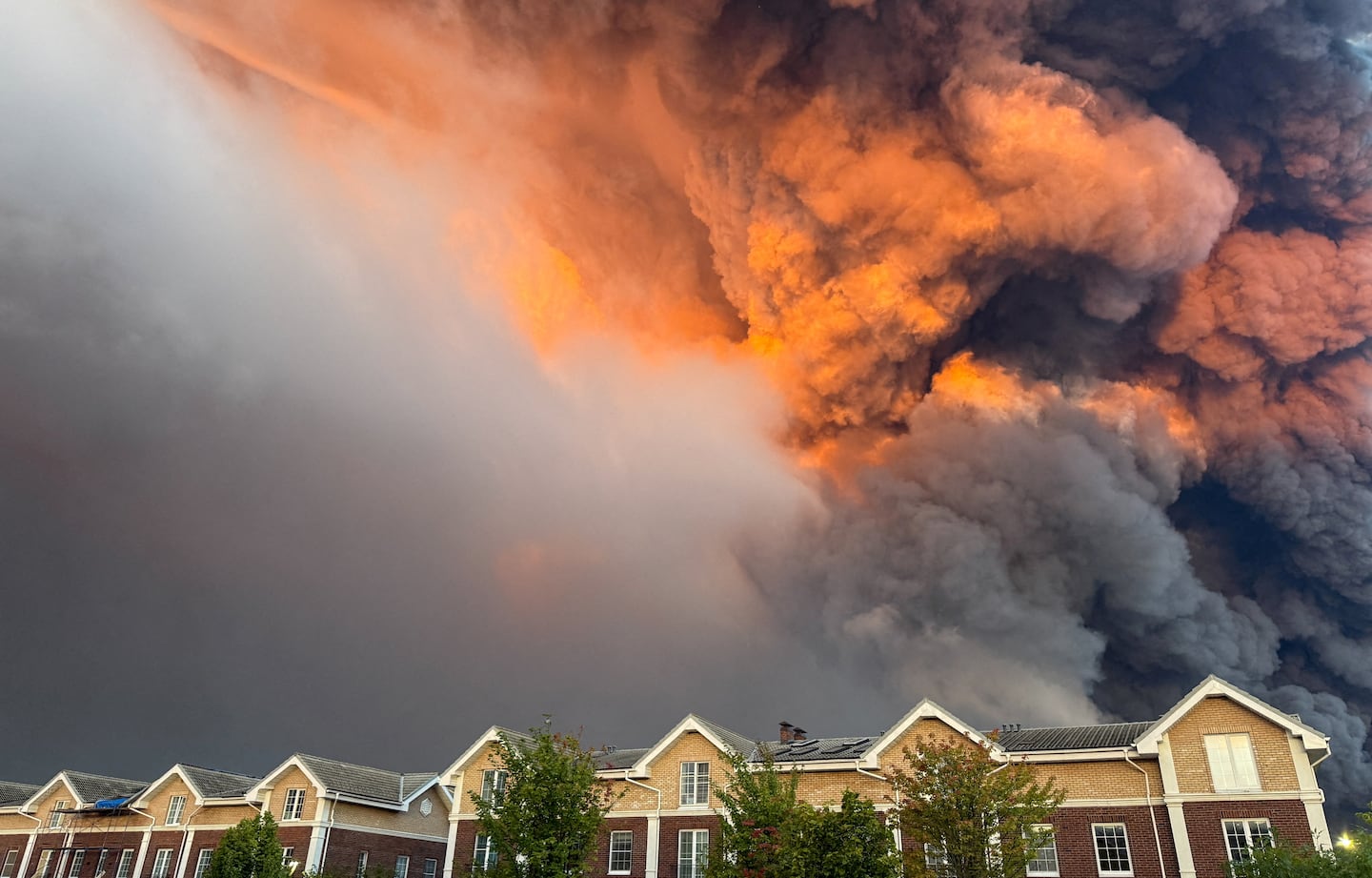 |
| Smoke billows from the burning Wildberries warehouses following a Ukrainian drone attack, August 16. Stringer/REUTERS |
"Each month there is a big outflow.""If the trend continues things are not going to get better."Taras Slvortsov. senior executive, Sberbank, Russia
Labels: Bank Withdrawals, Financial Insecurity, Russia's Invasion of Ukraine, Russia's Wobbling Economy, Russian Distrust of Moscow's Banking Intentions, Ukrainian Counteroffensive
posted by Pieface @ 7:25 PM


0 Comments:
Post a Comment
<< Home