Ruminations

Blog dedicated primarily to randomly selected news items; comments reflecting personal perceptions

Monday, October 12, 2026

Demeaning Ukraine, Elevating Russia, Trump's Stratagem

"I suggest they get a new leader who can make a deal. For some reason [Zelenskyy] never does."
"[If I had been U.S. president in 2022], that war would have never started. There was no reason that that war with Ukraine and Russia started. It started due to incompetence."
"[Zelenskyy has] lost 30 per cent of your country and you've had over a million people go between the two of them, over two million people killed. That's a war that should have never started. And I think it's time for Ukraine to get a new president."
"I have just concluded a highly successful discussion with President Vladimir Putin, of Russia] to deliver millions of tonnes of diesel fuel over the next few months]."
"Diesel prices for Americans and, indeed, the world, will be COMING DOWN, IN RECORD NUMBERS, AND FAST! Lower prices for Americans, especially our Great Farmers, Ranchers, and Truckers, is my greatest priority."
U.S. President Donald Trump 
 
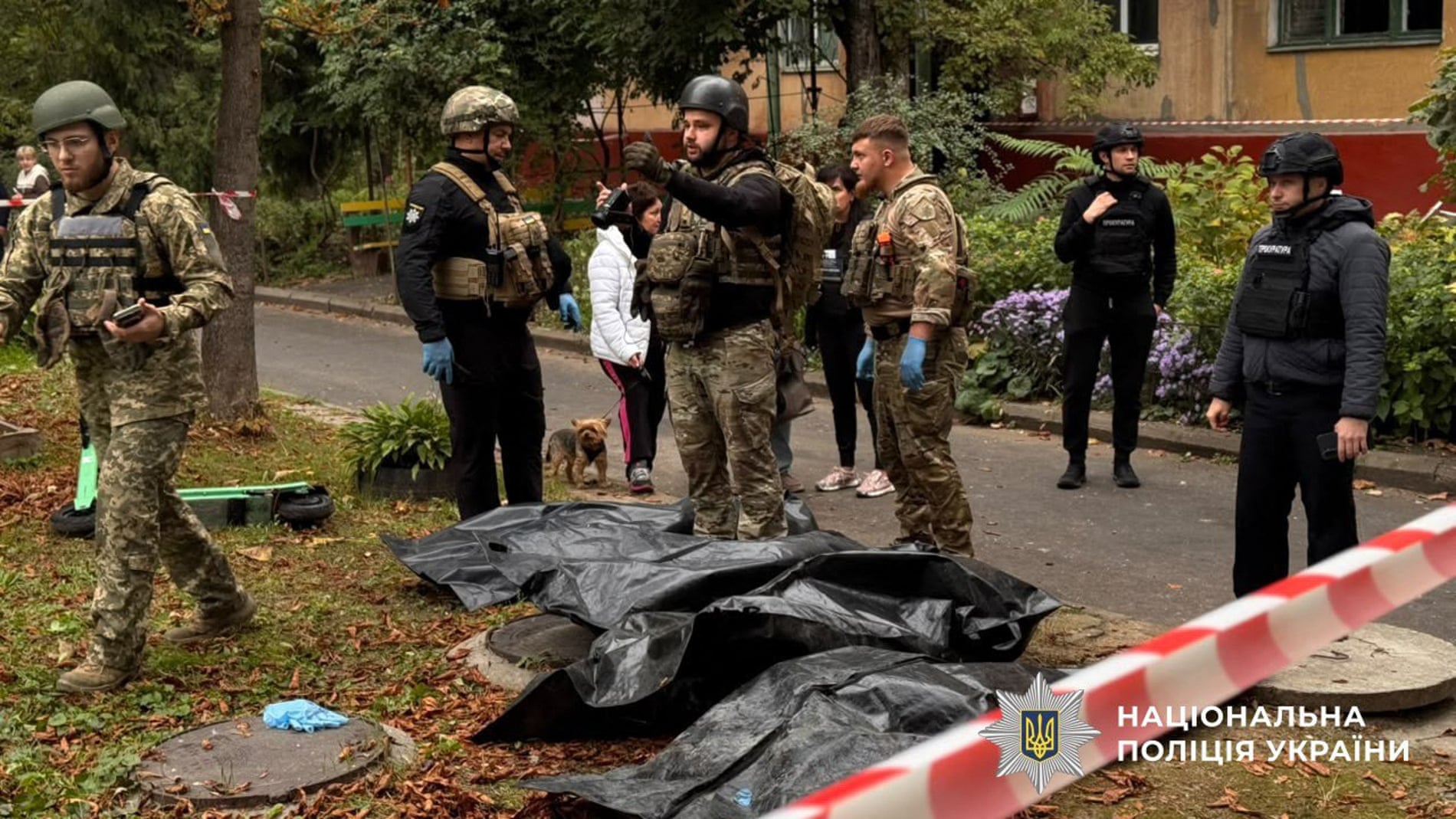
"Today, Russia expressed its thanks for the lifting of sanctions on diesel exports by dropping five glide bombs on residential buildings in Zaporizhzhia." 
"[The attacks show Moscow understands] any easing of pressure to mean they can keep fighting, to mean they can keep dropping bombs on cities."
"Russia's choice is war."
"[The diesel deal signalled to Moscow that] it is apparently permissible to continue attacking. And this needs to be corrected." 
"It plays into Russia’s hands — allowing it to kill more, wage war for longer, have even less respect for America, and inflict even greater losses and damage on the world."
Ukrainian President Volodymyr Zelenskyy
Ukraine's President Volodymyr Zelenskyy  and German Chancellor Friedrich Merz
Zelenskyy and German Chancellor Friedrich Merz arrive for a news conference on Oct. 4. Zelenskyy on Saturday criticized the new U.S.-Russia diesel deal. (Thomas Peter/Reuters)
 
"Propping up Putin’s war economy is morally wrong as he uses that money to bomb cities."
"The President’s policies towards Russia and Ukraine are failures. We need moral clarity not moral ambiguity."
Republican Congressman Don Bacon, Nebraska  
Mercurial isn't quite the description of President Trump's instant thought process as he sets about in his typically idiosyncratic way solving problems whose details he doesn't quite grasp, offering solutions to conflicts startling in their simplicity, entirely lacking common sense. With an ego as wide as the Pacific Ocean and a belief in his persuasive impulses as a reflection of his genius for getting at the heart of the matter and arriving at a brilliant point where he personally and his political cronies stand to gain financially, and placing him once again on the short list for next year's Nobel Peace Prize, he is unstoppable.
 
The world balances itself on tenterhooks over what this man straddling the most powerful nation on earth's foreign political decision-making, volatile enough to take a U-turn at any moment, the reliable old international world order now stumbles into a future of growing uncertainty. What is certain is this man's fascination with the kind of power wielded by tyrants, an admiration for strongmen whose casual disregard of human rights and international treaties are appealing to a man who himself shreds signed and sealed agreements with impunity. 
 
That Mr. Trump has difficulty distinguishing allies from enemies, treating the former as hostile to his world view and proclivities, and the former as collegial think-alikes, puzzles both allies and enemies. And while allies have been forced by new circumstances beyond their control that is the sole agency of one single man to form new coalitions under the grave reality that dependence on the United States is no longer an option for the free world, countries like Russia and China whose hostility to the United States, vying against it for great power status find themselves honoured guests by an amiably-inclined American president. 
 
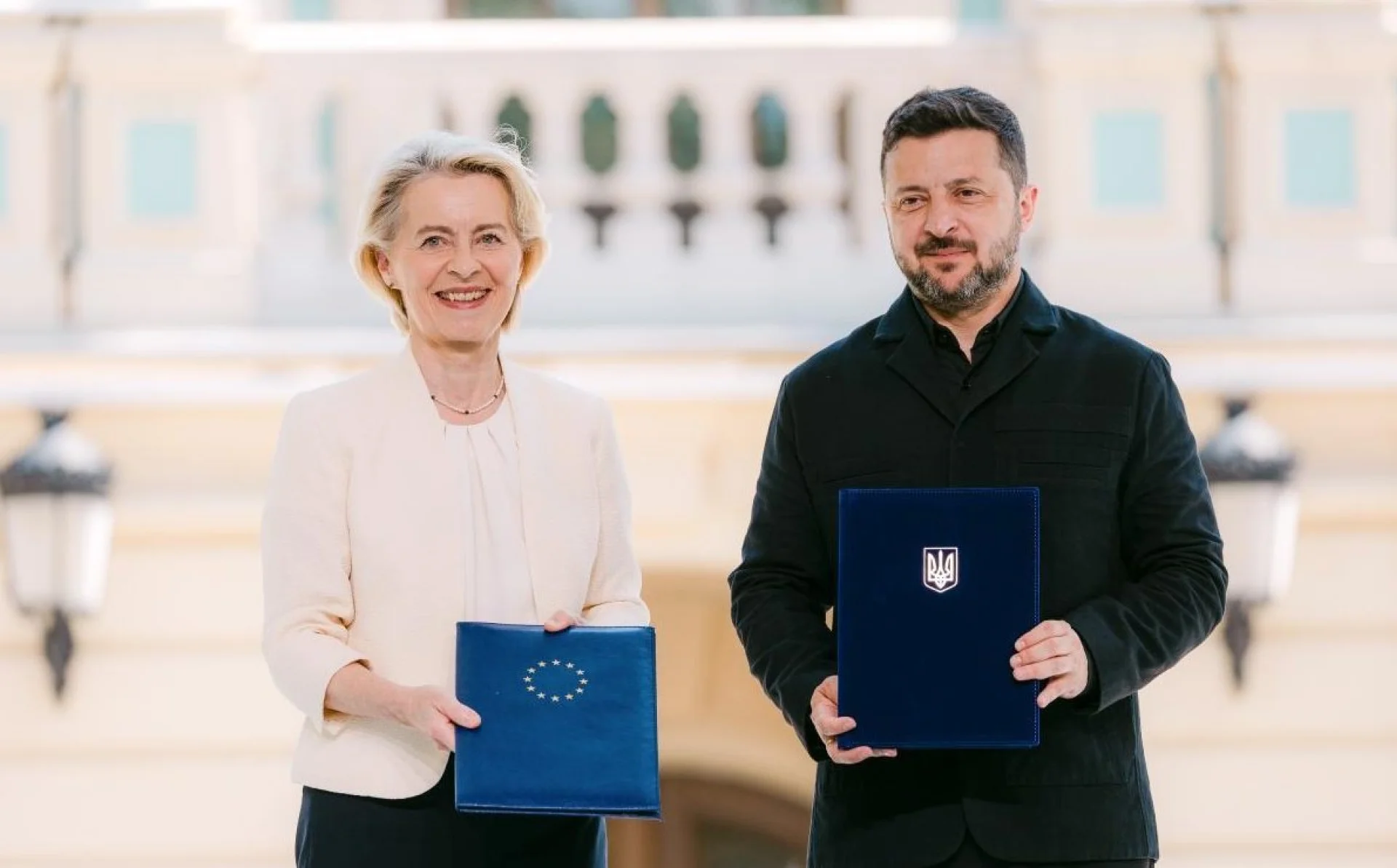
https://i.guim.co.uk/img/media/6e2ed014e9c547e73a5f878b2dbc5184b83d808c/1_0_1919_1080/1919.jpg?width=620&dpr=1&s=none&crop=none
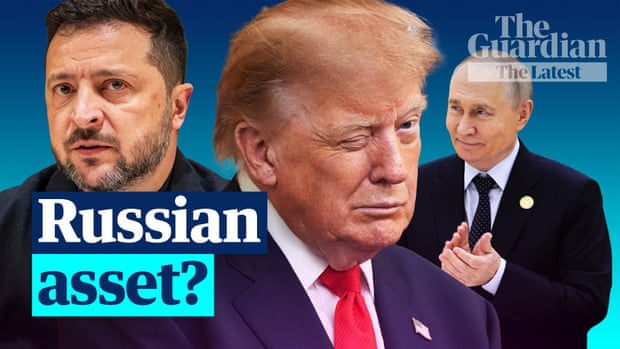
Trump rewards Putin and betrays Ukraine with Russia diesel deal - The Latest
 
A president who prefers to view victims as guilty of allowing themselves to become targets of aggressive warmongering territorial imperialists. The failure to use the power of his position to intimidate the Ukrainian president into submitting to his aggressor's demands to allow the evisceration of his country's geographic assets infuriated Mr. Trump while confusing Mr. Zelenskyy with its unreasonableness, even as he steadfastly refused the absurd recriminations tied to his government's counteroffensive against their mortal enemy rather than submit to Mr. Putin's demands.
 
Then came the news of the U.S.-Russia agreement of immediate supplying diesel fuel to the United States and to relieve global markets of its diesel shortage. Mr. Trump's calculated political imperative is to reduce the U.S. public's low approval rating of their president on economic grounds at a time of an increased cost of living, further aggravated by the on-again, off-again war on Iran and its effect of depleting the world supply of energy through the Persian Gulf, aligned with a similar situation with Russia's 'special military operation' in Ukraine.
 
The manipulation of public opinion at a critical time in the United States, with the approach of November 3's congressional elections to determine which party will control Congress, uppermost in the president's mind. So his 'highly successful' agreement where Vladimir Putin has agreed to supply an initial over 300,000 tonnes of diesel to U.S. and global markets, convinced Mr. Trump that the 'good news' would be universally welcomed. News, with its implied, if not actual forced surrender of Ukraine to Russia's ongoing predatory plans that served to stun an already-Trump-cynical world audience.
 
Washington had just latterly enacted additional sanctions on Russian energy producers, yet this latest scheme to isolate Ukraine and feed it bit by bit to the rapacious territorial appetite of Vladimir Putin to salve his own political future with a voting public irritated beyond end by the volatility and insensibility of their president as a prudent move, is destined for complete failure, adding another nail in the coffin of this president's reputation and historical legacy. 
https://i.guim.co.uk/img/media/9212bffee43aecd5823e0c7ce604fcf7b10a8e2e/0_0_1280_720/master/1280.jpg?width=1900&dpr=1&s=none&crop=none
Police officers standing next to the covered bodies of people killed by a Russian strike on a five-storey residential building in Zaporizhzhia. Photograph: Ukraine national police/AFP/Getty Images

A further one million tonnes are to be made available to the U.S. under the newly-minted general licence the U.S. Treasury Department issued to allow the importation of Russian diesel dating to April of 2027. Greater amounts would follow "based on the condition of their diesel refineries", damaged by Ukrainian attacks, noted Mr. Trump. Excoriating Ukraine for those attacks and demanding that they cease forthwith in Ukraine's response to Russia's unending attacks on Ukrainian civil infrastructure and energy depots to deprive the population of winter heating and cooking in a demoralization drive. 
"I said it to President Trump … to his team and to his people several times: we want peace, we are ready for [a] ceasefire, we are ready to begin from any kind of steps of de-escalation."
"And if the Russians want us not [to] attack their diesel, their refineries and etc., we are asking President Trump, give them signal not attack energy infrastructure of Ukraine."
"Don't attack us. Don't kill our children. We will stop attack[ing] your diesel. And I think it's [a] fair, fair deal."
Ukrainian President Volodymyr Zelenskyy
 

Labels: , , , ,

Wednesday, August 19, 2026

The Average Russian's Confidence in Vladimir Putin's Russia

"Drones are flying. Things are burning down. Nervousness is growing. And people's everyday wisdom may be kicking in that they need to have cash under their pillow and not somewhere in banks where it may never be returned."
"For some banks this really is a problem. They didn't expect this and they invested all the cash elsewhere, and yet people are coming and taking out half a trillion rubles a month."
Former (anonymous) finance official, Russia
 
"It means people have no trust in the Russian banking system or in the Russian financial system."
"This is all a consequence of the fear that the government will do something with the banking system, that it could nationalize deposits."
"I would not exclude that the authorities could impose limits on withdrawals."
Alexandra Prokopenko, former advisor, Russian Central Bank
https://metro.co.uk/wp-content/uploads/2026/08/SEI_306238258-64c5.jpg?quality=90&strip=all&w=646
Russian banks have been bleeding cash each day (Picture: EPA)
 
  • First half of August: $3.4 billion (286.4 billion roubles) withdrawn in a span of just fourteen days.
  • July: $7.3 billion pulled from commercial accounts, marking the single highest monthly withdrawal total of the calendar year.
  • June: $4.5 billion removed as initial drone disruptions against critical logistics hubs began to escalate.
  • Cumulative 2026 figure: Over $32 billion (2.5 trillion roubles) siphoned out of the formal banking architecture since January 1.
  •  
    "Beyond physical disruptions, the driving force behind the liquidity drain is an intense, pervasive rumour mill regarding the Kremlin’s plans for private savings."
    "As the war of attrition drags on, the financial demands of sustaining a military outfit numbering over a million active personnel, alongside funding defence contractors, wounded-in-action payouts, and death benefits, are burning through Russia's state budget."
    "Russia’s Ministry of Finance is operating under a widening federal deficit that standard taxation and energy export revenues can no longer comfortably cover."
    "With foreign reserves frozen in Western clearinghouses and access to international capital markets blocked by sanctions, Moscow must fund its war expenditures entirely through domestic borrowing, sovereign wealth drawdowns, and money creation."
    "In this environment, fears have mounted among ordinary Russians that the Kremlin will inevitably resort to extraordinary measures to tap into retail bank deposits."
    First Post summary
    Billions are disappearing from Russia's banking system, as Russians display their penchant for economic survival against a backdrop of Moscow's floundering 'special military operation' which was meant to see the great Russian military swoop into defenceless Ukraine to liberate it from its 'neo-Nazi' government, bowing to the applause of grateful Ukrainian citizens and just incidentally picking up great regional swaths of its neighbour in the interests of rewarding Russian President Vladimir Putin's fixation on restoring Soviet-era influence, power and command of its neighbours' resources, from land to population to natural resources. 
     
    Who could foresee that Ukraine's government had its own plans that included staunch national sovereignty and a commitment to democracy in a country that prided itself on its peoples' defiance of the invader, and a national identity that was capable of coping with the stress of invasion by an enemy that recognized no civilized internationally respected conventions of war. Ukranians, prepared to improvise, to cope with scarcity and danger in support of their government, their innovative military, their proud history of struggle against all odds. 
     
    Above all, the courage of its smaller military service, and the improvisation of new technologies enabling them to hold their own. In the event, challenging Russia on its own  turf, informing Russians there are no free lunches in Ukraine for them.
     
    In the first two weeks of August, close to $3.4 billion was withdrawn, in addition to the $7.3 billion that Russians withdrew in July and over $4.5 billion in June; figures  from the Russian Central Bank. In the first year of Russia's full-scale invasion of Ukraine, such withdrawals were recognized as a problem; at this juncture in the war total withdrawals this year are overtaking and doubling the 2022/23 withdrawals, according to Taras Skvortsov, senior executive at Sberbank, the largest retail financial institution in Russia.
     
    Both Mr. Skvortsov and another former senior Russian finance official have stated that these withdrawals have led to liquidity problems -- with the financial sector already strained by increasing bad debts in the wake of a government lending boom to ramp up military output -- the financial sector is being overstretched. As pointed out by former adviser to the Russian Central Bank, Alexandra Prokopenko, these withdrawals are a reflection of the atmosphere of fear growing deeper within the Russian public. 
      
    https://images.euronews.com/articles/stories/09/87/97/38/1366x768_cmsv2_d300740e-003a-5b49-b30e-e9e12a89a043-9879738.jpg
    Russians pull billions from banks fearing Kremlin will seize savings for war        AP Photo
     
     The situation is not a new occasion during which Russians express their doubts over their government's decision-making in imposing on them a violent conflict with a neighbour. During the initial two weeks of the invasion the Russian banking system lost $23 billion and even then banks seemed imperilled by depositors and businesses lined up with the intention of emptying their accounts. Then the government addressed the drain through the imposition of strict capital controls aligned alongside sharply raised interest rates.
     
    The concerns over economic survival go beyond that of the Russian public, as big business also now seeks as well to move their money out of Russian regulatory reach, while anxiety increases over asset seizure potentials. Over $9.4 billion was transferred in the second quarter of 2026 out of Russia, according to data from Russia's Central Bank. 
     
    The government's plans to raise money to finance the war through the issuance of state bonds have been undermined by the withdrawals. After all, Russians, whether individuals or corporations, frantically engaged in protecting their cash assets by removing them from the possibility of the government's octopus reach into private property, are highly unlikely to voluntarily part with their cash at a time of severely reduced trust, to buy state bonds. 
     
    There is ample reason for distrust of the government's intentions. A nationalization drive to target wealthy Russians has been intensified; prosecutors confirmed that last year $51.5 billion in assets were seized in 2025. Prior to that, in June the state confiscated $7.6 billion with links to Vadim Moshkovich, Russian agricultural tycoon, representing the largest seizure since 2022 marking the Russian invasion of Ukraine.
     
    https://www.thedailybeast.com/resizer/v2/7PA4CX7LHRHWXKIHGGER6EZ77M.JPG?auth=dce950c19d905bb594b6f7e6c2bf470b02f37ef3416475435f628bc3269e85a4&width=1440&height=921
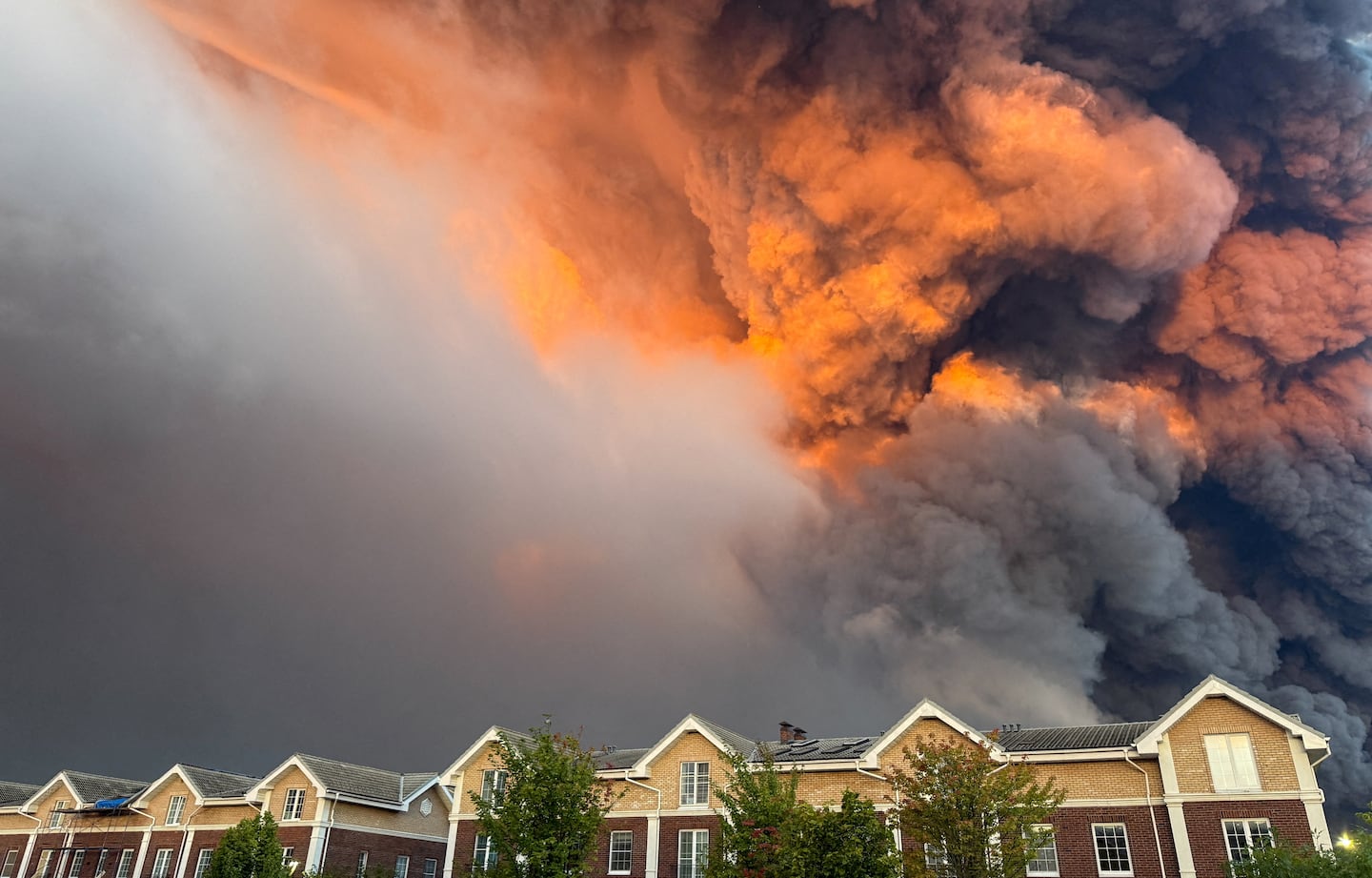
    Smoke billows from the burning Wildberries warehouses following a Ukrainian drone attack, August 16. Stringer/REUTERS
      
    "Each month there is a big outflow."
    "If the trend continues things are not going to get better."
     Taras Slvortsov. senior executive, Sberbank, Russia

    Labels: , , , , ,

    Thursday, July 30, 2026

    Ukraine, A Nation At War Becoming a Military Power

    https://www.regionalstudies.org/wp-content/uploads/2020/01/sm-iStock-498504418-300x200.jpg
    "Ukraine is now capable of striking Crimea, threatening Russian supply lines."
    "Ukraine is fighting. Ukraine is still suffering. Russian missiles have so long hit civilian targets that it is no longer even remarked that such were once recognized as war crimes."
    "More sobering, while Ukraine fights on, it is not evident how the war might end. It is entirely possible that Ukraine may not lose, but still not win definitively."
    Fr. Raymond J. De Souza, National Post 
    https://assets.cfr.org/images/t_gct_w1200/v1765909329/globalconflicttracker/Ukraine_05/Ukraine_05.jpg?_i=AA
    Ukrainian infantry soldier in Donetsk trench. Reuters
     
    When Russia first fully invaded Ukraine in February of 2022, Poland received almost two million fleeing Ukrainians. No refugee camps resulted. The Poles welcomed the refugees into their homes. A million such Ukrainian refugees are still left in Poland, sheltering themselves from constant Russian bombardment of missiles and drones over Ukraine's cities in the Kremlin's direct targeting of civilian populations, a noted war crime. 
     
    More recently, a revival of Polish right-wing populism has arisen and with it hostility to Ukraine, shifting to viewing Russia's Vladimir Putin with a measure of tolerance. Memories are not dead in Poland to the reality of Ukrainian World War II alliances with Hitler's death squads, helpfully assisting in the murder of Poles and Jews through the auspices of the Waffen SS, where an SS battalion of Ukrainian volunteers was formed, during the Nazi occupation of Ukraine. 
     
    https://upload.wikimedia.org/wikipedia/commons/thumb/d/db/Nachtigall_Battalion.jpg/250px-Nachtigall_Battalion.jpg
    Nachtigall Battalion in 1941
    Ukrainian auxiliaries were involved in the murder of Ukraine's Jews. Some of their leaders are still heralded as war heroes in Ukraine to the present day. Poles were their victims as well, while the Soviet military eventually became their liberators from the Nazi extermination project. Russia's President Putin has used that history to explain his full-scale invasion of Ukraine; 'liberating' it from the neo-Nazis still presumably governing the country from Kyiv.
     
    Even the Trump administration's soft spot for Putin expressed by President Donald J. Trump has had its influence, which  tended to view Ukraine with suspicion and Russia with a degree of admiration. There has been a levelling off of President Trump's expressed fondness for President Putin now that Ukraine's resolute self-defence has finally put Russia's plans on the back foot. No one appears to have realized that the Russian territorial grab of 2014 when it annexed Crimea and incited rebellion in the Donbas would lead to a full-scale invasion.
     
    https://assets.cfr.org/images/t_gct_w1200/v1772290651/globalconflicttracker/2026-02-28T103013Z_800024804_RC2XUJAU14VO_RTRMADP_3_IRAN-CRISIS-BLAST/2026-02-28T103013Z_800024804_RC2XUJAU14VO_RTRMADP_3_IRAN-CRISIS-BLAST.jpg?_i=AA
    February 28, 2026 joint strikes by U.S./Israel on Tehran, Iran.  Reuters
     
    Ukraine now is recognized as an Eastern Europe military power, producing its own armaments even while it continues to rely on military aid from Europe and North America. Ukrainian President Volodymyr Zelenskyy has been welcomed as an adviser for the Gulf countries under attack by Iran in response to the U.S.-Israel 2026 aerial attacks. Ukraine's formidable counteroffensive while producing millions of advanced drones, has enabled it to hit Russian targets from Moscow right up to Siberia. 
     
    Ukraine's fervent wish to become a member of NATO will be realized, post-war. There have been errors in judgement made by President Zelenskyy and he has been brought up short by public anger over them, as when his appointed defence minister and the chief of the Ukrainian military were at loggerheads, the former opting for a new approach in meeting the enemy, the latter wedded to the tried-and-true conventional responses with conventional weaponry. 
     
    When given an ultimatum to make a choice, the president fired his popular defence minister only to face days of demonstrations by furious Ukrainians, forcing him to reverse his decision. And the war goes on.
     
    Ukraine's President Zelenskiy meets with major general Drapatyi in Kyiv
    Ukraine's President Volodymyr Zelenskiy meets with Major General Mykhailo Drapatyi, amid Russia's attack on Ukraine, in Kyiv, Ukraine. Ukrainian Presidential Press Service/Handout via REUTERS
     

    Labels: , , , , ,

    Sunday, July 19, 2026

    Ukraine's 'Blood Experience' Parlaying Drone Expertise for Military Technology

     
    "One night in March, a two-person Ukrainian crew established a record  for the Ukrainian Armed Forces by shooting down, in one engagement, 23 Russian Shahed drones with Sting interceptor drones designed by the Ukrainian military technology company Wild Hornets. The story is noteworthy not only for the number of intercepted drones, but also for the operation’s cost efficiency and Ukraine’s interceptor-production capacity behind it."
    "A Sting interceptor costs about $2,500. In comparison, a single U.S.-made Patriot interceptor missile that does the same job costs more than $3 million and requires significantly more time and resources to build and operate than a drone. Lockheed Martin produced approximately 600 of the most advanced PAC-3 type of Patriot missiles last year; meanwhile, the Ukrainian Armed Forces used about 700 of these interceptors in the span of only four winter months in 2025-2026."
    "The conflict in the Middle East has further exposed the shortcomings of a high-end, slow-production approach to defense systems. In March 2026, when Iran launched hundreds of Shaheds at Persian Gulf states, countries with the most advanced U.S.-supplied air defense systems outside NATO watched their defense capabilities erode as their interceptor stockpiles drained quickly. The air defense systems worked as intended, yet they were not designed to protect against the intensity and scale of Iran’s attacks."
    "Kyiv is building drones in massive quantities out of wartime necessity against Russia’s ongoing full-scale assault, now in its fifth year. A key part of that necessity is Russia’s large-scale use of Iranian-made Shahed drones against Ukrainian cities and infrastructure. That Russian campaign has raised serious questions about Iran’s responsibility under international law. In response, Ukraine is rewriting the global rules of air power and air defense, replacing sheer mass and large stockpiles of weapons as key factors in warfare with the benefits of quantity, speed, and the ability to learn faster than the enemy. It is a novel and adaptive, low-cost military-industrial model that is already catching the interest of other countries."
    Lesia Bidochko, Just Security
     
    https://breakingdefense.com/wp-content/uploads/sites/13/2023/05/230526_ukraine_quadcopter_GettyImages-1468749342-scaled-e1693994223641-768x432.jpg
    Ukrainians train with handheld drones. (Photo by Sean Gallup/Getty Images)
     
    "Together we can work on joint production, on making all of the components of the systems work, and provide both defense industrial bases with the impetus needed to step up investments and production [following The European Union and Ukraine's drone deal to merge Ukrainian expertise in unmanned warfare with the continent’s industrial capacity, with the goal of ramping up production of drone and counter-drone systems]."
    "In Europe, we already have huge technological and industrial capacity that can be deployed. And we have safe and secure production sites that can help to scale up. But we do not have that battle-tested knowledge and expertise that Ukraine has forged. So the point I am making is that we need to combine our strengths. Together, we can work on joint production."
    European Commission President Ursula von der Leyen 
    https://euneighbourseast.eu/wp-content/uploads/yootheme/cache/b8/p-070254_00-43_02-high-18891-e1784191790901-b853af08.webp
    EU launches Ukraine defence industrial partnership, Drone Deal and disburses €1 billion for drones  EU Neighbours East
     
    Kyiv can be credited with many outstanding features in this uneven war imposed upon Ukraine by Vladimir Putin's ambitions to restore Greater Russia; among them the courage and intestinal fortitude to counter the full-scale invasion in its fifth year and add to that the determination to win this war, whatever it takes to repel the Russian beast. And nor can its ingenuity in designing new technological weapons of its own manufacture to match anything Russia obtains from the Islamic Republic in this new era of drone warfare, much less its entrepreneurial enterprise in marketing its products and its experience be overlooked.
     
    So while Russian drones -- the Iranian Shaheds -- have wrought their weight in deadly measure as a means to kill thousands of soldiers and civilians in Ukraine, countermeasures to Russia's innovative first-person-view vehicles, jet power, fibre-optic tethers and similar innovations have led to Ukraine developing its own versions in countering the Russian military's. EU member-states such as Croatia, Spain, Italy, Poland, the Netherlands, France, Denmark and Germany now see their own firms aligning with Ukrainian companies that specialize in first-person-view combat drones.
     
    Ukrainian President Volodymyer Zelenskyy, pushing the drone deals whenever and wherever he can now realizes a ready market. Where Hezbollah deploys unmanned aerial vehicles to attack Israel, and Iran uses them against several regional countries, a case in point. Kyiv has signed ten-year security agreements with Gulf allies Qatar, Saudi Arabia and the United Arab Emirates since the joint U.S.-Israel aerial attacks on the Islamic Republic which led to its missiles and drones hitting its neighbours' U.S. military bases. A proposal, Zelenskyy stated is "also on the table for our American partners".
     
    https://assets.cfr.org/images/t_cfr_3_2/f_auto/w_1920/v1781208642/UkraineDrones_A/UkraineDrones_A.jpg
    Ukrainian soldiers of the 127th Heavy Mechanized Brigade carry a Heavy Shot UAV across a field on May 8, 2026, in Kharkiv Oblast, Ukraine. Yevhen Titov/Global Images Ukraine via Getty Image
     
    "Latvia will adopt Ukraine's unique combat experience in airspace defence against drone attacks." 
    "[The deal includes] immediate access to technologies, but most importantly, the immediate arrival of Ukrainian anti-drone combat unit experts in Latvia."
    "Our skies can only be protected if we follow Ukraine's example, know-how and experience." 
    Latvian Prime Minister Andris Kilbergs  
    A joint drone production facility is to be built near Latvia's border with Russia. Russia's Eastern Europe neighbours are fully cognizant of the potential danger they are in, following Ukraine's invasion, led by the Russian President's roving eye and territorial acquisitiveness. Kyiv anticipates more military and economic support, in particular American-produced Patriot missiles in short supply, given U.S. forces fighting Iran. Its breakthrough arrived when President Trump stated Kyiv would be allowed to make Patriot missiles itself in Ukraine.
     
    "The terms must be beneficial for Ukraine, and the proceeds from exports must strengthen Ukraine's defence", stated President Zelenskyy of plans to release exports of Ukrainian drones. Reliance on early warning systems, radar, electronic warfare, mobile fire groups, helicopters, jet fighters and interceptors encompass Ukraine's anti-drone defences. Interceptors are increasingly being realized as the main line of defence for intercepting drones.
     
    Over 100 Ukrainian companies produce interceptors. "We have approximately 15 to 20 very effective interceptors, which are also extensively used at the front", revealed Andrii Hrytseniuk, chief executive of Ukrainian government organization Bravel, providing a platform for the country's defence tech sphere. 
     
    https://npr.brightspotcdn.com/dims3/default/strip/false/crop/6756x4504+0+0/resize/800/quality/85/format/webp/?url=http%3A%2F%2Fnpr-brightspot.s3.amazonaws.com%2F2a%2F3f%2F94838ea34ef89d3ad0aab35b86c8%2F7fe9e0cf-f2f3-4757-b380-2482f5095e99.jpg

    A Sting interceptor drone flies during drills at the Yatagan School for Unmanned Aerial Systems in the Kyiv region, Ukraine, Efrem Lukatsky/AP

     
    "There is no one single bullet. There is sort of this funny magical thinking that a lot of people are doing in terms of 'hey, just send us all your drones or your interceptors'. "
    "And what people are sort of missing is that is, even though there's tech and that's what everybody sees, it's only one piece of everything." 
    Deborah Fairlamb, American investor in military technology 

    Labels: , , , , ,

    Tuesday, June 09, 2026

    Ukraine's Existential War

    "Millions have left -- many of them young and able-bodied. You see them here in Calgary [Alberta]."
    "They're here on temporary status. They can work, but it's very, very difficult. People are not going to come back if no inch of Ukraine is safe -- and I don't use those words lightly. That's what Ukrainians tell me they feel."
    "No one voluntarily leaves their home. So the question is, if we give them citizenship, does that make it easier -- or harder -- for them to return? I'll be honest, that needs to be decided."
    "We know Russia is waging hybrid warfare here, including election meddling [in Canada]. Our friends in Ottawa seem to think if we expel theirs, they'll expel ours and we'll lose so much. We can get other countries to represent us."
    "Ukraine is still fighting. It will fight to the end. This is an existential war."
    "Whether it's the missiles, either defensive or offensive military kit, or really hard-core sanctions, I think many Western leaders are actually still afraid of Putin ... we're afraid that if we push him too hard, he'll do the worst and reach for the nuclear button."
    Michael Bociurkiw, Canadian-Ukrainian journalist, Odessa, Ukraine 
    https://smartcdn.gprod.postmedia.digital/nationalpost/wp-content/uploads/2026/06/Ukraine-war-1.jpg?quality=90&strip=all&w=564&h=423&type=webp&sig=QDaZVVyDqT9u5luJUbRxnA
    A  man carries a dog among rubble outside a residential building which was damaged during Russian missile and drone strike on Kyiv on June 2, 2026. Ukrainian refugees “are not going to come back if no inch of Ukraine is safe,” Canadian journalist Michael Bociurkiw warns. Photo by Roman PILIPEY/AFP via Getty Images
     
    "Yes, you [Vladimir Putin] can still force Russians to exist this way. But your resources are shrinking significantly. You will not have enough money or political capital to keep buying the loyalty of Russians the way you have for the past 26 years."
    "The front line today is the line from which diplomacy must begin [to negotiate an end to the war]."
    President Volodymyr Zelenskyy's meeting proposal with Vladimir Putin
     
    "I see no sense [in a meeting after receiving such a 'rude' letter]."
    "Is it a way to create conditions for a personal meeting and negotiations, or is it creating an environment in which it's impossible to hold any personal meetings at all?"
    "I think it's the latter."
    Russian President Vladimir Putin
    Volodymyr Zelensky in his office in Kyiv last year
    Volodymyr Zelenskyy in his office in Kyiv. The Ukrainian president tells Vladimir Putin in an open letter: ‘If you do not personally come to the conclusion that it is time to end this war, Ukraine will continue fighting for its existence.’ Photograph: Ukrainian presidential press service
     
    After over four years of relentless attacks by Moscow's larger military against Ukraine's domestic infrastructure and its civilian population, attacks geared to destroying the country's energy structures to impact as deleteriously as possible winter living conditions year after year, while denials from the Kremlin assure the watching world that its military never sends missiles or drones to target civilians -- only military targets -- the Russian president is incensed over the social niceties spurned by the president whose nation he has mercilessly and without cause shattered.
     
    https://ichef.bbci.co.uk/news/1024/cpsprodpb/b417/live/5ce90840-60e1-11f1-82ca-1380a42b6773.jpg.webp
      Putin insists Russia is winning the war and Ukraine must surrender territory   EPA
     
    Russian efforts at destabilizing the Ukrainian government and its society and demoralizing its population  have failed. There is unity of purpose in Ukraine, even among the exhausted war-weary population -- and morale continues to be as elevated as can be possible in such conflict circumstances. By seeking to divide the civilian population from its hard-pressed government, Russia has succeeded in pushing them closer together in the common existential purpose of survival.
     
    And while Ukrainian President Volodymyr Zelenskyy in a rare open letter to his Russian counterpart proposed a meeting for the purpose of negotiating an end to the war, face-to-face, it is clear that Russian demands and Ukraine's steadfast position can never come to any agreement, despite the urging of U.S. President Donald Trump, pleased at the prospect of the two meeting: "I'm glad that they're maybe talking about meeting, I think we had a lot to do with it. But I think it would be great if they met, they should get it done."
     
    https://i.guim.co.uk/img/media/95e3d13114f7f8a4867c40fa3869b46f89650428/0_0_5039_2835/5039.jpg?width=620&dpr=1&s=none&crop=none
    Trump says Zelenskyy-Putin meeting would be ‘great’ after Ukraine president’s letter - still from video
     
    For starters, President Zelenskyy made it clear that he was prepared for a "full ceasefire" and "all-for-all exchange of prisoners of war", even before such a meeting could take place. He made it abundantly clear that it is imperative for Russia to return the Ukrainian civilians and children who had been forcibly taken to Russia during the war. Alluding to recent successes for Ukraine on the battlefield, Mr. Zelenskyy also reminded Mr. Putin that Ukrainian intelligence-gathering affirmed that over 30,000 Russian soldiers were killed or seriously wounded in May alone.
     
    Russia itself has been caught up in a war its population never dreamed would reach them, as long-range Ukrainian drones have brought the civilian population in Russia the undreamed-of nightmare reality that they too, not only Ukrainians can become targets of deadly missiles and drones. The peace proposal reached by Putin and US. President Donald Trump last year in Alaska, requiring Ukraine to surrender land in exchange for an end to the conflict was rejected by Mr. Zelenakyy: "You can see for yourself that Ukrainian and European issues are not decided in Anchorage", he responded. 
     
    https://i.cbc.ca/ais/b4ffd4fd-e8b2-4e3c-a740-9b10176cb6c2,1779451299143/full/max/0/default.jpg?im=Crop%2Crect%3D%280%2C151%2C2807%2C1578%29%3BResize%3D860
    A Ukrainian serviceman of the 65th Separate Mechanized Brigade walks on a street near the frontline town of Orikhiv in Zaporizhzhia region on Wednesday. (Reuters)
     

    Labels: , , , , ,

    Tuesday, June 02, 2026

    Ukraine, Putting Up a Strong Defence

    "[Ukraine has significantly] slowed the enemy's advance and is gradually regaining the initiative."
    "[About 35,203 Russian soldiers were killed or severely wounded in April and the goal is] to inflict at least 200 enemy losses for every square kilometre of advance."
    "Together with the president and the diplomatic team, we explain to our partners that Ukraine is doing its homework."
    "What matters now is for our partners to do their part and help scale up what is already proving effective today."
    Ukraine Defence Minister Mykhailo Fedorov
     
    "Ukraine is putting up a strong defence."
    "If you look at the front line at the moment, it is stabilizing."
    "[Ukraine is even regaining territory] on net terms."
    NATO Secretary General Mark Rutte
    https://www.cbs17.com/wp-content/uploads/sites/29/2026/05/6a17591ec55f49.76867463.jpeg?w=876&h=493&crop=1
    Ukrainian servicemen of Khartia brigade launch a drone towards Russian positions at the front line in the Kharkiv region, Ukraine, Wednesday, May 20, 2026. (AP Photo/Andrii Marienko)
     
    There is a feeling among Ukraine and its allies that Vladimir Putin's 'special military operation' is on the cusp of failing, with Kyiv's position now of stabilizing the front line, stalling a Russian spring offensive. Ukraine is matching its growing effectiveness at drone deployment, inflicting heavy Russian troop losses, by also striking behind the front lines as well as deep drone and rocket incursions inside Russia, a situation that has succeeded in increased domestic criticism of Russia's president by a war-weary and increasingly vulnerable home population.
     
    Many among Russia's elite are becoming edgy about the situation, taking into account the worsening economic situation alongside the demoralizing effects that Ukraine's counteroffensive success has wrought. When some senior Kremlin officials reach the state of considering the conflict has reached a dead end, with no way appearing open to a resolution to the situation, Vladimir Putin must be feeling the heat. He plans to conclude the war by year's end, but as long as he counts on his demands being met, that plan cannot succeed.
     
    He needs a face-saving victory; nothing less than full control over the eastern Ukrainian Donbas region, despite that his greater forces have to date in four years of combat, failed to capture. He insists as well on a broader security agreement with Europe that would have the effect of acknowledging Moscow's new gains in territory. Eastern Europe, in fear of Putin's next moves to continue his grasping territorial ambitions with their own sovereignty next in line, is unlikely to give their stamp of approval to his military annexation of eastern Ukraine.
     
    https://static.cfr.org/sites/default/files/image/2025/06/Drones_0.jpg
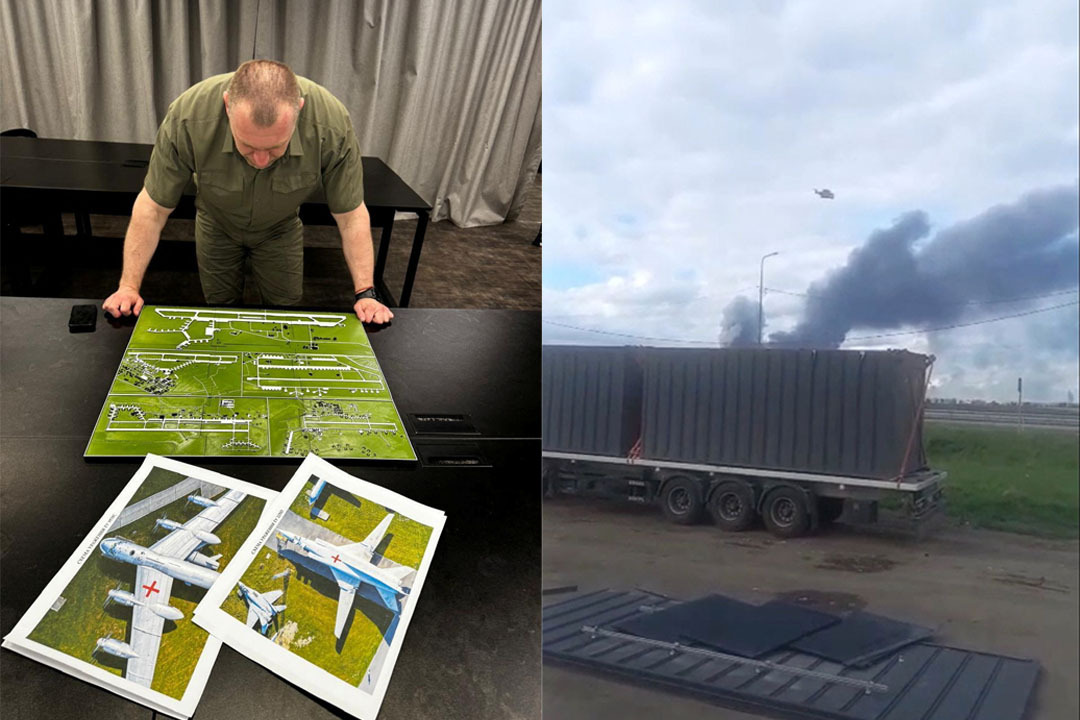
    Left: Head of Ukraine’s Security Service Vasyl Maliuk looks at a map of an airfield in a handout picture released June 1. | Right: A drone lifts off from wooden sheds loaded onto a truck at the perimeter of a Russian airbase in a social video on June 1. Left: Security Service of Ukraine/Reuters | Right: Social Media/Reuters
     
    A major security advance in the north of the country was announced on Thursday following President Volodymyr Zelenskyy's warning of the risk of a potential Russian offensive from the Bryansk region and from Belarus, in a repeat initiative that failed at the start of Russia's invasion in 2022. Anticipating the Kremlin's resorting to another conscription campaign, however unpopular it is with Russians, to enable greater troop support for another push this summer, Ukrainian forces have succeeded in holding the line after a winter lull.
     
    According to data from DeepState, a conflict mapping service in cooperation with Ukraine's Defence Ministry, much of the front was stabilized by mid-May. Ukraine's casualty ratio has significantly improved to approximately one Ukrainian soldier for every five Russian troops. In an assessment by U.S. Secretary of State Marco Rubio, Ukraine possesses now Europe's "most powerful armed forces". The game changer has been Ukraine's deploying in greater numbers, drones which has helped to offset a manpower disadvantage.
     
    https://www.thesun.co.uk/wp-content/uploads/2026/06/image_b4b02f.png

    UKRAINIAN drones have struck a key Russian oil station 800 miles behind the frontline in the latest blow to Vladimir Putin’s bloody war. Astonishing footage showed towering plumes of smoke billowing in the skies following Kyiv‘s precise attack. Huge plumes of smoke were seen after the blitz Credit: @ZelenskyyUa / X

     
    Kyiv launched one of its heaviest attacks on Moscow over the weekend, as well as on the surrounding region, leading many Russians to directly fault their president for bringing the conflict into Russia. In response, Russia has conducted massive drones and missile strikes recently, in an effort to destroy the public morale in Ukraine. The death toll among civilians rose last month, according to the United Nations, to the highest number tallied since July 2025. 
     
    All is not quite celebratory in Ukraine which itself has failed to achieve its strategic goals to reclaim most of the territory Russia occupies, nor moving any closer to an acceptable peace agreement in negotiations that lead frustratingly nowhere. Ukraine's population, understandably weary of the war, is increasingly unwilling to join the army, with broader conscription remaining deeply unpopular. Ukraine's Defence Minister Fedorov is preparing reforms to increase pay for service members in hopes of attracting fresh recruits.
     
    Adept at intercepting drones, the struggle by Ukraine's air defences continues against ballistic missiles that during the brutally cold winter decimated its energy infrastructure. Growing difficulties in securing ammunition for U.S.-made Patriot missile systems that experience proved to be the only really effective weapon against ballistic missiles, remain a sore point for Kyiv. 
     
    https://www.thesun.co.uk/wp-content/uploads/2026/06/photo-handout-state-emergensy-service-1085129486.jpg?resize=960,638&quality=90&strip=all
    Russia continues to launch attacks on Ukrainian towns and cities Credit: AFP
     
    "Russia is facing setbacks on the battlefield."
    "In order to sustain its war efforts in Ukraine, the Kremlin will almost certainly have to impose a second partial mobilization [within the next 12 months]." 
    Nigel Gould-Davies, senior fellow for Russia and Eurasia, International Institute for Strategic Studies, London 

    Labels: , , , ,

    Friday, July 04, 2025

    Ukraine's Dire War Production Requirements

    https://dims.apnews.com/dims4/default/64f36d7/2147483647/strip/true/crop/8640x5760+0+0/resize/1440x960!/format/webp/quality/90/?url=https%3A%2F%2Fassets.apnews.com%2F28%2Fed%2F4090b7af500feae9237a035b45bb%2F14703130810a4eacba39d2d2d4caf6d8
    Funeral of Ukrainian F-15 pilot in Kyiv, July 3, 2025    AP Photo
     
    "[Patriot systems are] critically necessary [for Ukraine, but U.S.-made HIMARS precision-guided missiles, also paused, are in less urgent need as other countries produce similar assets]."
    "Other countries that have these [Patriot] systems can only transfer them with U.S. approval. The real question now is how far the United States is willing to to go in its reluctance to support Ukraine."
    "There are enough missiles out there."
    "This is war -- and in war, steady deliveries are always crucial."
    Senior (name withheld) Ukrainian official 
     
    "We can’t let Putin prevail now. President Trump knows that too and it’s why he’s been advocating for peace."
    "Now is the time to show Putin we mean business. And that starts with ensuring Ukraine has the weapons Congress authorized to pressure Putin to the negotiating table."
    Rep. Michael McCaul, R- Texas
     
    "We can’t give weapons to everybody all around the world."
    "Part of our job is to give the president a framework that he can use to evaluate how many munitions we have where we’re sending them."
    "And that review process is happening right now and is ongoing."
    Pentagon spokesman Sean Parnell  
    https://www.economist.com/cdn-cgi/image/width=834,quality=80,format=auto/content-assets/images/20250705_EUP507.jpg
    Getty Images 
     
    Russia's larger military is in the process of a concerted movement on parts of the 1,000-kilometre front line in its conflict with Ukraine. It is also intensifying long-range drone and missile attacks, hammering Ukrainian cities. And it is at this critical time that Ukraine has been apprised by indirect means that the weapons it has been waiting for from the U.S., which during the three-1/2 year war have been supplied fulsomely, are now in pause mode. Ukraine's largest military backer since February 24, 2022 now sees the Trump administration disengaging even as there is no foreseeable end to the conflict, despite fruitless peace talks.
     
    President Trump held a "frank and constructive" talk with his Russian counterpart Thursday morning, which resolved nothing. President Putin's foreign affairs adviser, Yuri Ushakov, explained that Mr. Trump had emphasized his urging for a swift  end to the fighting. Vladimir Putin's response was to voice Moscow's preparedness in pursuing talks with Kyiv, while emphasizing that Moscow seeks to achieve its goals to remove the "root causes" of the conflict. "Russia will not back down from these goals", repeated Ushakov.
     
    Concerns are at their height in Kyiv relating to the military support allies are able and willing to supply and how expeditiously, as Ukraine races to build on its own domestic defence industry. Patriot air defence missiles are the  high-tech U.S. weapons seen to be irreplaceable, required to protect against Russia's ballistic missile attacks, costing a cool $4 million each. It is that vital system included in the delivery pause, leaving many of Ukraine's cities including its capital, increasingly vulnerable.
     
    Ukrainian President Volodymyr Zelenskyy has had to cope with, among other challenges, fraught relations with the American president, leading him to turn increasingly to his European partners for greater assistance for his country's plans in arms manufacturing. Lacking the production levels, military stockpiles or the technology to pick up the slack left by the U.S. pause, European supporters can do just so much, while Zelenskyy recruits their help for ambitious joint investment projects. Even while the situation feeds into NATO's new U.S.-imposed higher member-state commitments to spending on defense.
     
    https://live-production.wcms.abc-cdn.net.au/4f5a1192b00c92a874a08806e423c0c4?impolicy=wcms_crop_resize&cropH=1687&cropW=3000&xPos=0&yPos=157&width=862&height=485
    Donald Trump and Volodymyr Zelenskyy met up last month on the sidelines of NATO summit in the Netherlands.  (Ukrainian Presidential Press Service/Handout via Reuters)
     
    The Ukrainian parliament is preparing to vote this month on draft legislation to aid Ukrainian defence manufacturers scale up and modernize military weaponry production. Included is new facilities to be built at home and abroad, announced by Defence Minister Rustem Umerov. A month earlier President Zelenskyy announced that major investments will go to production of drones and artillery shells. "The volume of support this year is the largest since the start of the full-scale war", he commented of foreign countries' commitments.
     
    Also included in the pause aside from Patriot missiles, are the AIM-7 Sparrow air-to-air missile and shorter range Stinger missiles -- while Ukrainian cities will in all likelihood see more Russian missiles pierce their air defences.  There does not appear to be a shortage of ammunition for Ukrainian troops at present, despite that during the war there were times of such shortages, unlike the situation with Russian troops, amply supplied with ammunition. 
     
    The problem facing the Ukrainian military is its lack of soldiers. Its desperate manpower shortage has forced the army to turn to drones in compensation. As such, analysts claim the front is not in danger of a collapse. 
     
    https://ichef.bbci.co.uk/news/1024/cpsprodpb/4aa0/live/d3e093f0-56e7-11f0-9074-8989d8c97d87.jpg.webp 
     

    Labels: , , , ,

    Tuesday, January 07, 2025

    On the One Hand ... and Yet On the Other Hand ...

    "Ukraine is grinding down Russian forces. Russian gains are small relative to costs. There has been no collapse of the front."
    "[On the other  hand], Ukraine is losing territory. The coldest part of the winter is yet ahead."
    "The current theory of success is unclear, or what resources will be made available by the West in 2025."
    Michael Kofman, Carnegie Endowment

    "Measures to identify and destroy enemy assault groups that are trying to infiltrate our battle formations are underway."
    Ukrainian military command defending Kurakhove
    https://www.reuters.com/resizer/v2/TEG7M7NWYJMKLGJBNAVNUH5HWY.jpg?auth=24886f3f422f502f771aaf0082297ad63e9dd85f7d918c20ffbbb78e5b3d7296&width=1200&quality=80
    A soldier holds up a Russian flag in Kurakhove, Donetsk Region, Ukraine in this screen grab taken from a social media video released on January 5, 2025, obtained by Reuters
     
    Russia's Defence Ministry now claims that its troops in eastern Ukraine have taken command of the Kurakhove stronghold after months of battle, thus adding the ruined town to conquests claimed by the Kremlin. A Russian claim, however, denied by the Ukrainian force tasked to defend Kurakhove even while acknowledging that Russian forces were attacking urban areas.

    The previous day the Russian Defence Ministry revealed that Ukrainian forces were pressing renewed attacks in Russia's Kursk border region. To this claim, Ukrainian officials made no counter-comment as is usual, with Ukraine's leaders allowing a time lapse between Russian announcements, before responding.

    An air of uncertainty hangs over Kyiv, with the impending inauguration of incoming President Donald J. Trump, when no one knows how the mercurial and often adversarial new president will proceed with  his pre-election promise of putting a quick end to the conflict between Ukraine and Russia and his known reluctance to continue financially supporting Ukraine, and providing it with new weaponry.

    Kurakhove acts as a stronghold for the Ukrainian army on the eastern front line in the partially occupied Donetsk region. The town still holds about half of its original pre-war population of about 20,000 people. Under relentless attack from artillery, multiple rocket launchers, powerful guided bombs and drones, many of its buildings have been shattered. 

    Kurakhove is notable for its industrial zone, a thermal power plant, and a reservoir. It is established on a highway between eastern and southern Ukraine. In its determination to capture all of Donetsk, Russia has been pushing west in a slow and personnel-costly drive to capture its goal, with a view to capitalizing on greater land occupation before the inevitable start of peace negotiations driven by a Trump White House.

    Pokrovsk, a key road junction and rail distribution centre used to dispatch supplies to a broad span of the Ukrainian front line, is also in Russia's cross-hairs. Ukraine is short of front line troops, straining mightily to contain the larger Russian army. 

    https://media.cnn.com/api/v1/images/stellar/prod/gettyimages-2192142645.jpg?q=w_1110,c_fill/f_webp

    Labels: , , ,

    Saturday, November 30, 2024

    Western Powers Aiding Ukraine ... Placed on Notice of Russian Sabotage

    "We  have recently uncovered a staggeringly reckless campaign of Russian sabotage in Europe, even as Putin and his acolytes resort to nuclear sabre-rattling, to sow fear about the consequences of aiding Ukraine." 
    "Such activity and rhetoric is dangerous and beyond irresponsible."
    Richard Moore, M16 chief, Britain
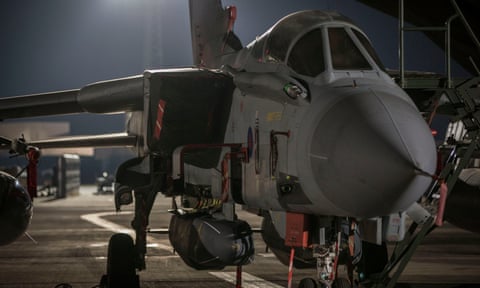
    An RAF Tornado with two Storm Shadow missiles
    RAF Tornado with two Storm Shadow missiles. Britain is expected to supply Storm Shadow missiles for use by Ukraine on targets inside Russia, now that the US has agreed to do the same for the similar American long-range Atacms weapon. Photograph: Cpl L Matthews/PA
     
    Russia, according to the head of British foreign intelligence service. is conducting a "staggeringly reckless" sabotage campaign against the western allies supporting Ukraine against Moscow in its invasion and conflict imposed upon its neighbour. Richard Moore, chief of M16 has taken a preventive initiative in dispatching his spies to apprehend the Russian campaign before it spirals out of control and dire consequences ensue.

    The M16 chief stated empathically that a Russian victory in Ukraine would not only threaten Europe but American security as well, a message clearly meant to reach the ears of incoming U.S. president-elect Donald Trump. Working alongside his French intelligence counterpart to prevent a dangerous escalation by "calibrating the risk and informing the decisions of our respective governments" the warning responds to President Vladimir Putin's "mix of bluster and aggression".
     
    Addressing diplomats and intelligence officers in France, Moore spoke alongside Nicolas Lerner, head of France's external intelligence agency, the DGSE, during an event commemorating 120 years of the Entente Cordiale, a mutually-reliant pact binding Britain and France together as military and diplomatic allies, ending ancient rivalries between the two countries.

    Russian intelligence is suspected by Western security officials of attempting to destabilize Ukraine's Western allies through a campaign of disinformation, sabotage and arson. A campaign whereby Moscow has been linked to a number of planned attacks in Europe. Among them a plot to set fire to  Ukrainian-owned businesses in London. As well as a scheme where incendiary devices contained in packages were found to be placed on cargo planes.

    One such package burst into fire at a courier hub in Germany in July, while another in England ignited in a warehouse. "The collective security of the whole of Europe is at stake", repeated France's Lerner, stating that Britain's experience went back to the era a decade or so earlier when Russian agents used deadly chemicals as tools of assassination in Britain to destroy the lives of expatriate Russians critical of the Kremlin.

    Among Ukrainian allies most involved in arming and supporting Ukraine in its counteroffensive against Russian territorial ambitions both Britain and France have given allowance to Kyiv to make use of weapons they have supplied to hit targets inside Russia's borders. In so doing, linking their determination to make whatever moves are felt to be required to ensure that Russia's plans of dominating a sovereign Ukraine and extracting greater tracts of its land mass to incorporate into Greater Russia is stopped, alongside U.S. initiatives to do likewise.

    https://www.politico.eu/cdn-cgi/image/width=1280,quality=80,onerror=redirect,format=auto/wp-content/uploads/2024/11/18/GettyImages-1000585554-scaled.jpg
    Although the European cruise missiles are manufactured by missile-maker MBDA, the U.S. controls some of their tech, giving it a voice in their use. | Ben Stansall/AFP via Getty Images

    Labels: , , ,

    Wednesday, September 25, 2024

    Ukraine Proffered 'Victory Plan'

    "I see Zelenskyy is here. I think Zelenskyy is the greatest salesman in history -- every time he comes into the country, he walks away with $60 billion."
    "If I win this election, the first thing I'm going to do is call up Zelenskyy and call up President Putin and I say 'You got to make a deal, this is crazy'."
    Former US President Donald Trump  
    https://www.ctvnews.ca/content/dam/ctvnews/en/images/2024/9/25/zelensky-u-s--ammunition-plant-1-7051120-1727265154506.jpg
    In this image provided by the Office of the Ukrainian Presidency, Ukrainian President Volodymyr Zelenskyy, left, listens to Rich Hansen, the commander's representative for the Scranton Army Ammunition Plant, in Scranton, Pa., Sunday, Sept. 22, 2024. (Office of the Ukrainian Presidency via AP)
     
    It's as simple as that. The man aspiring to return to the presidency of the United States has such a Solomonic mind; like Occam's razor he knows the simplest solution is the best, the only solution to any problem. Just pass the problem off to the principals involved. All else is unnecessary fireworks accomplishing nothing. So Volodymyr Zelenskyy, the Ukrainian President, is presented with the solution of entirely submitting his country to the violent wiles of a vicious aggressor, and the aggressor is given the latitude of finishing what it has begun; territorial expansion completed.

    Mr. Trump interprets the problem as one belonging solely to Ukraine and Russia; theirs to solve, relieving Ukraine's backers of their self-imposed duty to aid a sovereign nation that has been marked for destruction by a neighbour, to its fate. Unrecognized by this genius is the domino effect that will capture eastern Europe in a time warp, moving it back to the era of the Soviet Union when its neighbours willing or not, once again become appendages of a powerful and ruthless state.

    Kyiv's strategic responses and the Ukrainian military's actions in this Russian 'special military operation' have both been outstanding in their firm grasp of options and the spirit of defiance against a larger military, a powerfully grasping nation and a military armed with superior and greater numbers of technologically advanced weaponry. The courage of the Ukrainians under constant threat and fire from an enemy that respects no international standards of modern warfare has been exemplary.

    In a deadly conflict that has imposed straitened living conditions on the Ukrainian public, forced them to relocate throughout the country and made millions refugees, while killing thousands, the world looks on as a struggle not only to regain sovereignty and repossession of territory proceeds, but one where a proud people have little option but to appeal to their Western and European backers to continue funding its war and supplying it with critical hardware enabling its continued counteroffensive.
     
    https://assets.kyivindependent.com/content/images/2024/09/--------------2024-09-25-141806.webp
    A screenshot from footage released Sept. 24 showing the recaptured aggregate plant in the town of Vovchansk in Kharkiv Oblast. (Ukraine's intelligence military/Telegram)
     
    Driving Russian forces out of the town of Vovchansk in the northeast of Ukraine necessitated hand-to-hand combat. The town had been occupied for months, with Russian troops using a huge processing plant as an operation base and weapons storage facility.The plant was valuable to Russia, considered a stronghold in the Kharkiv border region. The plant was recaptured by the Ukrainian units following fierce fighting "in densely built-up conditions". 

    This was Ukraine's military demonstrating in real time that it has no intention of withdrawing from the conflict. Coincidentally. Ukraine President Volodymyr Zelenskyy set off on a trip for the purpose of ensuring ongoing foreign practical support. He was prepared to present his "victory plan" to end the conflict, and plans to ask the U.S. to support another attempt by Ukraine to join the NATO alliance. The U.S. is also urged by Mr. Zelenskyy to commit to a sustained advanced weapons supply.

    There is no variation expected to be revealed in the much-rumoured victory plan beyond what has already taken place, and it is expected that with the concept of the 'victory plan' will arrive yet another rationale aimed at Western supporters of Ukraine's battle, that more generous commitments of aid and military hardware be forthcoming, to achieve that 'victory'. 

    A pervasive sense of fatigue and pessimism has set in among allied nations, while the conflict continues to drag through past its third year. A dilution of support for Ukraine will certainly see the ebullient atmosphere in Ukraine over the 'victory plan' as wearisome and simply put, more of the same. Russian threats in light of the fact that Moscow is set to increase its defence spending to historic highs, are sobering.
     
    And then, of course, there is the imponderable of the potential of Donald Trump returning to the presidency after the November U.S. general election, and Russia's plans for its three-year budget proposals in committing 13.2 trillion rubles (US$142 billion) for 2025. And the clincher in the dooms department; Donald Trump's stated disinterest in continuing aid to Ukraine, presumably in favour of 'America first' policies and a neutral stance on problems in Europe. 

    https://img1-azrcdn.newser.com/image/1561738-17-20240925014906-ukrainian-troops-retake-vovchansk-plant-intense-battle.jpeg
    Ukrainian Troops take Vovchansk in intense battle    Newser

    Labels: , ,

     
    ()() Follow @rheytah Tweet