Wait For It
"[With wars around the globe in the past few years, people haven't paid much attention to climate change] because the world was on fire in different ways.""The world is now on fire again with climate change, in a way that's increasingly difficult to ignore.""It's going to keep getting worse."Zeke Hausfather, climate change, Berkeley Earth"The driver of the record warmth is climate change in the background.""And it's a much larger -- much, much larger -- contribution than El Nino, which is just a tenth to two-tenths of a degree on top of that long-term trend."Zachary Labe, climate scientist, Climate Central"European heat waves are not in isolation. There's also been shocking heat waves in North America.""There's been shockingly hot conditions in South America as well. There's been devastating heat waves in India.""There's always heat waves somewhere in the world, sometime, but what is very unusual for Europe for this particular year is the frequency and extent of the heat waves."Samantha Burgess, global strategic lead, Copernicus Climate Service
 |
UK and France prepare for another heat wave as western Europe has its 3rd hottest year on record so far. PBS |
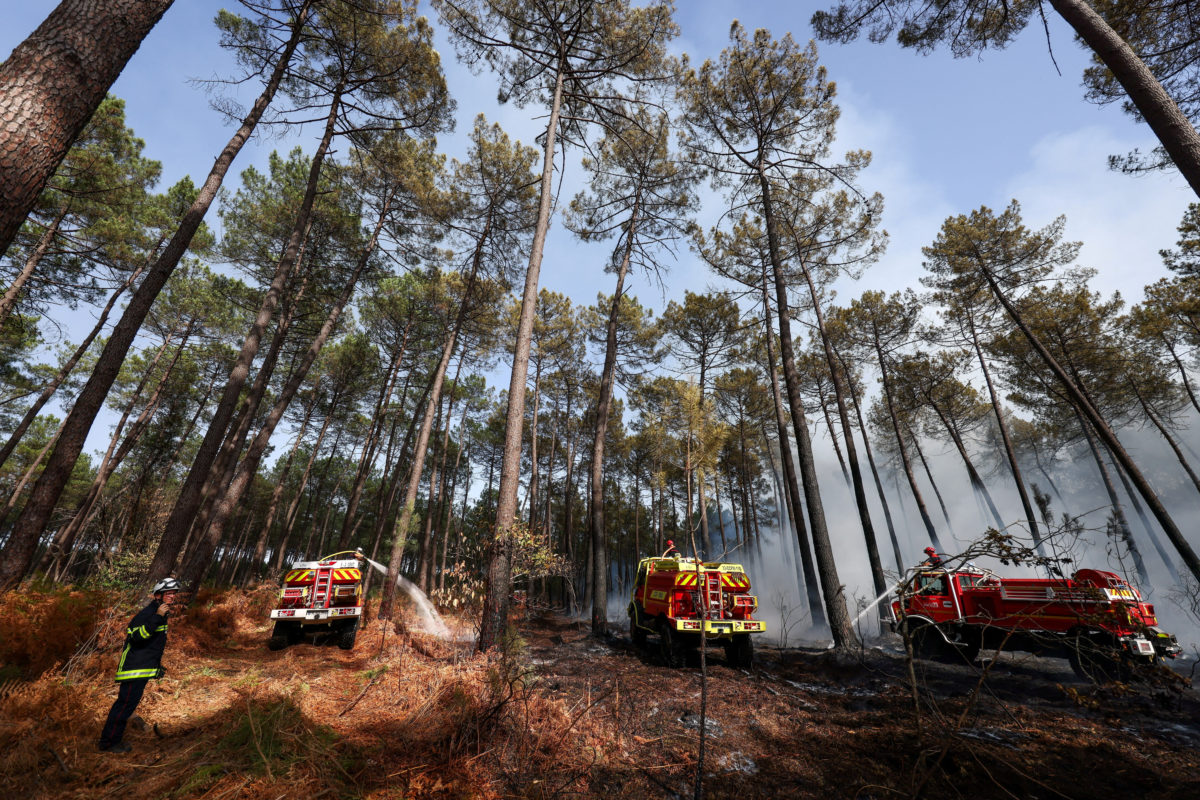
North America and Europe are experiencing wildfires while deadly heat waves hover over cities as the world's oceans have become hotter than ever recorded for this time of year. Spiked global temperatures and warped weather everywhere are attributed to a strengthening El Nino. In far too many areas of the globe, weather is hurtling the world toward a record-breaking summer of mind-bending heat.
To the present, climate records demonstrate that 2026 up to now is the third-hottest year behind 2024 and 2025. In time, scientists believe chance is that by year's end, 2026 could become the hottest year on record. Should that come to pass, 2026 won't, climate scientists seem to believe, wear its hottest-year crown for long. With 2027 on the horizon bets are that the new year-to-come will take that hottest-year award as a reflection of a climate on steroids.
According to Dr. Hausfather, a 35 percent chance exists that 2026 will eclipse 2024's hottest record year. Still, according to his calculations, odds increase almost monthly, steadily rising from 7 percent in March. The daily sea surface temperature of the world was a tie from May forward with 2024 and since June has been recording increasing heat daily. Since oceans cover over 70 percent of the Earth's surface a month-and-a-half lag exists between heat in oceans eventually reflecting in the global heat temperature.
 |
| The ocean is getting hotter, and that’s not a good thing. Photo: Unsplash |
At present, some 82 percent of the world's ocean surface is overheated this year, with marine heat waves, according to Europe's Copernicus climate service. The U.S. National Oceanic and Atmospheric Administration forecasted a month earlier of a 66 percent chance that 2025 would realize the fourth-hottest year and a 0.l percent chance to be No.1 for warmth by the end of the year. Those odds are expected to rise as the agency completes its July analysis.
El Nino causes a natural temporary warming of equatorial Pacific, heating up the average temperature of the globe, warping weather extremes across the planet, and this year El Nino is forecasted to become the strongest in recorded history. Releasing pent-up heat in the ocean, trapping heat as a result of greenhouse gases, with 90 percent going into the world's seas, even more heat is set to be released. This is a situation that keeps setting new record highs.
Wildfires, heat and extremes that dominate the summer of 2026 represent what scientists have warned of, resulting from the burning of coal, oil and gas. Traditional industrial pollution creates soot and smog which cool the planet and mask greenhouse gas-triggered warming, and it is on the decrease according to Dr. Hansen, with the climate reacting to greenhouse gases in a much more accelerated manner than scientists anticipated.
 |
| The Bald Range wildfire burns near Summerland, British Columbia. Craig Milton |
"[This is what scientists have long been warning about.] These are vivid pictures of not just the future, which is what we used to say, but on the whole of what climate change is doing.""There's no question that climate change has increased the risk of wildfires.""There's no question that the climate change increased the probability of really hot, nasty, even unprecedented summers around the world."Michael Oppenheimer, climate scientist, Princeton University
Labels: 2027, Climate Change, Colossal Downpours, El Nino, Extreme Weather and Heat, Wildfires
posted by Pieface @ 8:22 PM


0 Comments:
Post a Comment
<< Home