Ruminations

Blog dedicated primarily to randomly selected news items; comments reflecting personal perceptions

Saturday, March 29, 2025

Canada/U.S. Relations Out of Kilter

Then: "Reliance on a US defence umbrella, a critical factor since the end of WW2 for so many countries is no longer guaranteed."
"No affected country can afford to close its eyes and hope that 2026 or 2028 elections in the US will bring everything back to 'normal' ... and not happen again."
"The toothpaste cannot go back in the tube." March 25 LinkedIn post 
Now: "The reality is that, without U.S. consent, no country can hope to operate the F-35 for long. [Building Canada's future fighter force solely on the F-35 would be] irresponsible."
"We may find for example that 36 F-35 and 150 other fighter aircraft such as Rafale or Gripen could be a better strategic, economic, and military posture while investing heavily in 6th gen developments." 
Retired Lt.-Gen. Yvan Blondin
https://smartcdn.gprod.postmedia.digital/ottawacitizen/wp-content/uploads/2025/03/20190906em244_73643050.jpg?quality=90&strip=all&w=564&h=423&type=webp&sig=VgWlQqmCCGUHD3gNHnQHpQ
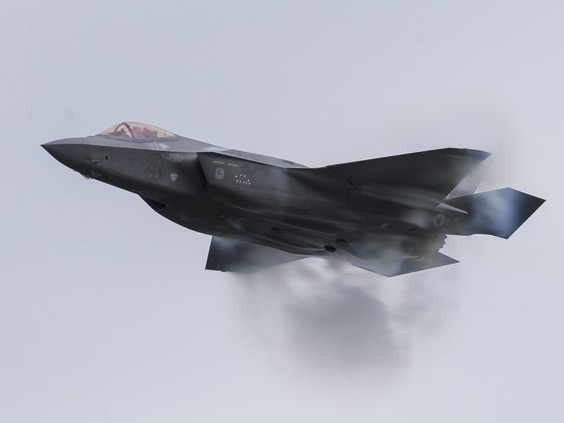
The F-35 program has had a controversial history in Canada. Photo by Errol McGihon /Postmedia

Once the man who was chief of the Royal Canadian Air Force from 2012 to 2015, retired Lt.-Gen. Blondin had insisted the U.S.-built F-35 represented the best fighter jet for Canadian operations given that its allies in democracy gravitated around American leadership, technology and military operations. That is, until the election and ascension of Donald Trump to the American presidency. Much has since then changed.
 
Canada's economy is now under threat by the Trump administration amidst aggressive statements on annexing the country under American hegemony as the 51st U.S. state. And nor is Canada the only nation that finds itself under threat, since seizing Greenland and the Panama Canal have also come under discussion in the U.S. ostensibly to secure American concerns over security issues. 
 
Yet, confoundingly, one of the countries that stands to pose the greatest risk to American security has somehow secured President Trump's confidence.
 
A former fighter pilot, the retired general had years back recommended that Canada take on the F-35 from Lockheed Martin, persuading then-Prime Minister Stephen Harper it would be in Canada's best military operational interests. Which resulted in then-PM Harper's Conservative government locking into the acquisition in 2010, despite delays when increasing costs and technical problems associated with the F-35 began to surface. 

In 2023 the Liberal government under Justin Trudeau, after having for years denied that the F-35 would answer to Canada's needs and skirting the issue of acquisition, changed tack to announce it was prepared to buy 88 F-35s at a cost of $19 billion, although Canada was financially committed only to the purchase of the first 15 jets hearking back to the Conservative government decision.
 
Lt.-Gen. Blondin elaborated, explaining that the problem with the F-35 is the issue of complete control that the United States maintains over all aspects of the plane, not merely the aircraft itself. Time remains before a decision must be made for the purchase of the remaining 72 F-35s, said Lt.-Gen. Blondin after Liberal Leader Mark Carney ordered a F-35 purchase review, taking into account an increasingly hostile America under President Trump. 

 
https://smartcdn.gprod.postmedia.digital/ottawacitizen/wp-content/uploads/2025/03/0530-na-gripen_71633366.jpg?quality=90&strip=all&w=564&h=423&type=webp&sig=A6iVhKabTVK3WiO8ovmPRQ
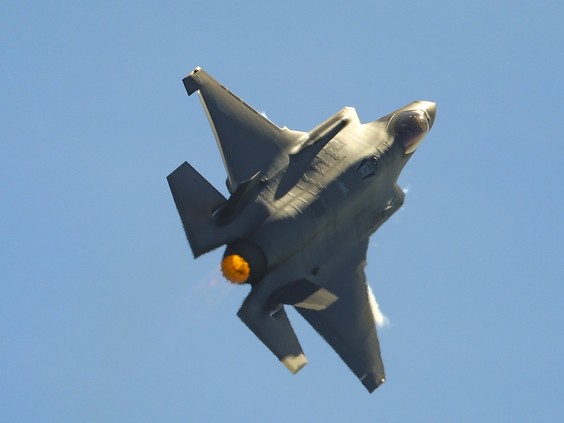
Saab's Gripen E fighter jet is an alternative being considered to the American-made F-35. Photo by Saab /PST
 
There are options in suggestions the Swedish built Gripen -- second in the Canadian fighter jet competition -- would be considered a solution. There had been a promise by its Swedish manufacturer that the Gripens could be built in Canada. Former defence procurement chief at the Canadian Armed Forces Alan Williams, and other defence analysts have given warning the F-35 represents a strategic vulnerability for Canada, with American total control over software upgrades and aircraft spare parts.
 
Canada, pointed out Lt.-Gen. Blondin, must now look to developing a defence strategy taking into account the new realities of changes in its relationship with the United States. Those who are in support of Canada's F-35 purchase point out the hundreds of millions worth of contracts that companies in Canada have been involved in, supplying parts for the U.S. aircraft, creating Canadian aerospace employment.
 
That too changed,  however, when in late February, President Trump informed Lockheed Martin, manufacturer of the F-35. that a change was in order; specifically that he wanted those jobs returned to the U.S. when Canadian contracts come up for renewal.
 
https://smartcdn.gprod.postmedia.digital/ottawacitizen/wp-content/uploads/2025/03/ts2022902jb030.jpg?quality=90&strip=all&w=564&type=webp&sig=dgToMmw6PCAc6xvQgs_muQ
Yvan Blondin said building Canada’s future fighter force solely on the F-35 would be “irresponsible.” Photo by Jack Boland /Jack Boland/Toronto Sun
 

Labels: , , ,

Thursday, March 06, 2025

MR. PRESIDENT: This Does Not Compute : Violation of CUSMA

"Today's reckless decision by the U.S. administration is forcing Canada and the U.S. toward recessions, job losses and economic disaster."
"The U.S. government's self-defeating tariff policy disregards decades of success and trillions in trade to try and revive a failed economic model from the 1800s."
"Tariffs are a tax on the American people."
Candace Laing, president, CEO, Canadian Chamber of Commerce 

Ms.Laing is not alone in her dismissal of the functionality of tariffs and her prognostication for the future. Her American counterpart, the U.S. Chamber of Commerce, has urged a swift end to the tariffs,  under the argument that "tariffs will only raise prices and increase the  economic pain being felt by everyday Americans across the country". Brian Cornell, CEO of retail giant Target voiced his opinion as well: "the consumer will likely see price increases over the next couple of days". These are not happy days.
"All goods exporting sectors, save agriculture and metals and minerals, rely on U.S. goods markets for between74 percent and 100 percent of overall exports.
"Energy [crude oil, natural gas and coal] is responsible for 29 percent of Canada's goods exports to the U.S. in 2024 [Jan-Nov.]."
"Machinery and equipment manufacturing, which includes automotive/parts, was responsible for 21 percent of goods exports in the same year."
Scotiabank 2025 report
https://media.cnn.com/api/v1/images/stellar/prod/ap25064134904302.jpg?q=w_1110,c_fill/f_webp
 
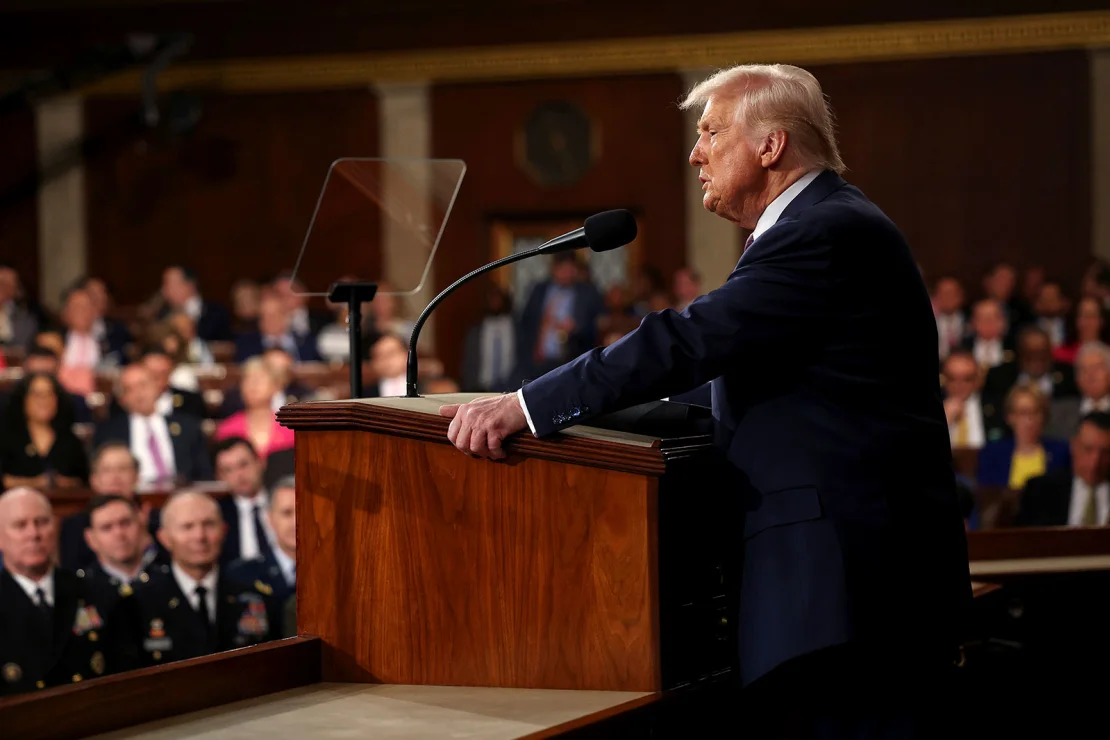
"This is not a trade war, this is a drug war. Hopefully they [Canada] understand that", stated U.S. Commerce Secretary Howard Lutnick. U.S. Customs and Border Protection data record merely a small volume of fentanyl crosses into the United States from Canada illegally. Just 13.6 grams of fentanyl was seized by northern Border Patrol staff in January.
 
According to Mr. Lutnick, President Trump launched a study on tariffs to conclude on April 2nd. The president, said Mr. Lutnick, wants to see "material reduction" in opioid deaths. Actually, so does Canada, since it has been second to the United States in the unprecedented number of overdose deaths caused by fentanyl. Canada has also suffered quite an uptick in gang violence and murders where the guns seized have been traced to the United States. Canada would appreciate U.S. border agents policing the black market of illegal shipments of weapons to Canada. Just a thought.
 
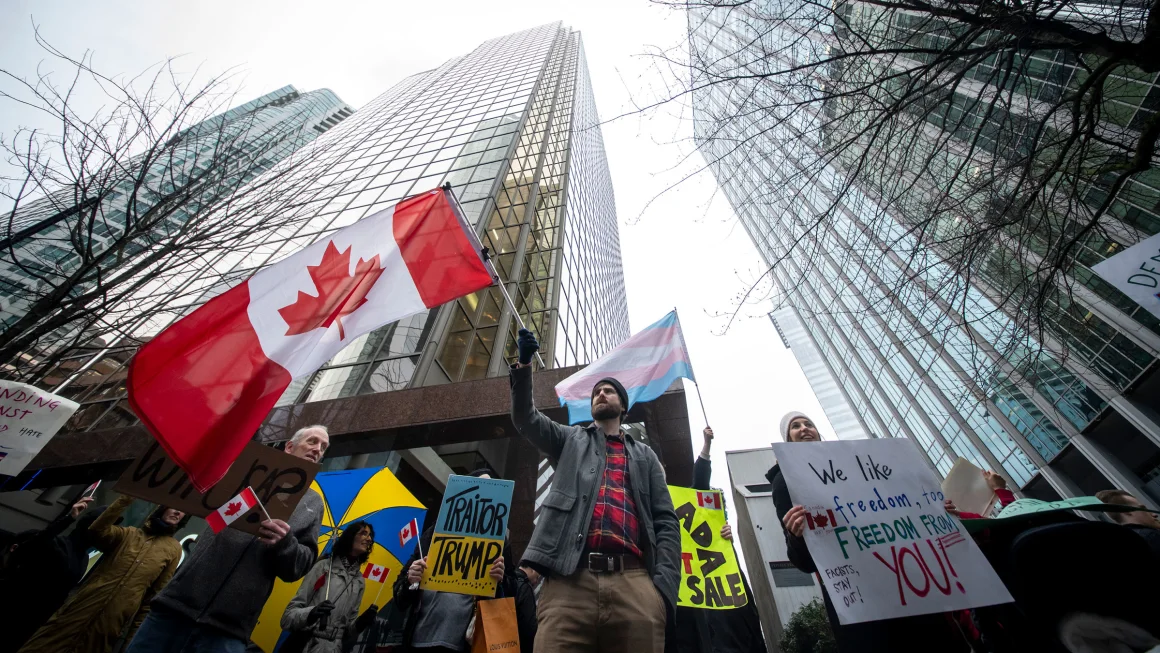
 Canada has, of course, implemented its own across-the-board tariffs on American goods imported into Canada, to more or less match the 25% tariffs that President Trump has ordered for Canada. "Please explain to Governor Trudeau, of Canada, that when he puts on a Retaliatory Tariff on the U.S., our Reciprocal Tariff will immediately increase by a like amount!", came the warning. Implying that there will be no end to the punishing tariff war between two erstwhile friendly, cooperative and mutually appreciative neighbours.
 
https://i.cbc.ca/ais/b1e2c4ac-be75-429e-9627-141c28e108e4,1741137941030/full/max/0/default.jpg?im=Crop%2Crect%3D%280%2C0%2C1920%2C1080%29%3BResize%3D620
Ontario is pulling 3,600 U.S. products off LCBO shelves in response to Trump's tariffs, with Premier Doug Ford encouraging people to buy Canadian brands instead.   CBC

"Maine and Canada's economy are integrated", pointed out Senator Susan Collins, Republican from Maine who admits to being "very concerned" about the tariffs for their affect on her state, with its proximity to Canada. Evidently all this could be avoided if Canada was more obliging about President Trump's invitation to set aside its sovereignty and accept the benefits that would accrue if the country called Canada simply agreed to meld itself within the loving embrace of the United States, as its 51st state.
 
Trade between the United States and Canada has become tightly integrated, particularly in the auto sector. Parts go back and forth between Canada, the U.S. and Mexico. Mr. Trump is exerting pressure on General Motors, Ford and Stellantis to wrap up their branch manufacturing in Canada and  Mexico, to shift production in its entirety back to the United States. A massive undertaking that cannot be done overnight. It would take years to disentangle the three countries from their current shared production enterprise.
 
According to Statistics Canada, the U.S. receives 75.9 percent of Canada's total exports, where about $800 billion worth of goods crossed the border in the first three quarters of 2024. Canada is seriously reliant on U.S. markets for its goods; the tariff burden will have grossly deleterious impacts on Canadian production and employment. The United States will have a share of those impacts within its borders, but at a much lower magnitude.
 
https://i.cbc.ca/ais/68a41ef9-3531-44be-bdf7-366af276ceba,1741306958759/full/max/0/default.jpg?im=Crop%2Crect%3D%280%2C0%2C1920%2C1080%29%3BResize%3D620
U.S. President Donald Trump was asked by reporters at the White House on Thursday about the stock market's reaction to his tariff plans. Trump responded he is 'not even looking at the market.'  CBC
 
In US. dollars, according to Trading Economics based on the UN COMTRADE database on international trade, these are the top ten exports from Canada into the United States:  
  • Mineral fuels, oils, distillation products: $131 billion;
  • Vehicles other than railway, tramway: $50.76 billion;
  • Machinery, nuclear reactors, boilers: $30.31 billion;
  • Commodities not specified according to kind: $19.30 billion;
  • Plastics: $14.18 billion;
  • Wood and articles of wood, wood charcoal: $11.59 billion
  • Electrical, electronic equipment: $11.24 billion;
  • Aircraft, spacecraft: $9.25 billion;
  • Pearls, precious stones, metals, coins: $9.11 billion
In 2023, bread, pastries and other baked goods, along with beef, pork and other meat, and gold had been included in the top 10 list, according to information from the Census Bureau. 

President Trump appears adamant that the flow of fentanyl and illegal migrants over the U.S. borders with Mexico and Canada have inspired him to enact these burdensome tariffs, urging that both countries increase security at border crossings. On Canada's part, officials argue that less than one percent of fentanyl that enters the United States flows over the border from Canada. Both Mexico and Canada hastened to commit to toughening up their borders, assuring the president that they will do all that is in their power to halt those entries. 

In the matter of illegal migrants attempting to enter the United States through Canada, perhaps it might be useful to recall that the entry of thousands of illegal migrants into Canada have arrived via the United States. Now, thanks to the tariffs a 25% increase can be anticipated by Canadian consumers for chicken, ducks, geese, turkeys and guinea fowls. Milk, cream, yogurt, cheese and other dairy products will also be hit. As will fruits and vegetables; tomatoes, legumes, citrus, melons, peaches and apricots. Then there are spices and seeds, grains like rye, wheat, barley, oats and rice. Also bottled water, including mineral and flavoured.
"What we had here is one of the most enviable integrated trade systems that has provided incredible prosperity, wealth and resilience to North America."
"It's a foolish move to undermine that because it takes a minute to destroy and it will take decades to rebuild the trust [that Americans have blown up with their allies]."
Alan Kessel, Canadian diplomat
https://media.cnn.com/api/v1/images/stellar/prod/ap25063776715319.jpg?c=16x9&q=h_653,w_1160,c_fill/f_webp


Labels: , , , ,

 
()() Follow @rheytah Tweet