Mark Carney's Sanctimonious Miscalculation; One Among Many
"We are certainly holding [the Palestinian Authority] to account.""We're supporting efforts to have those elections and to have free and fair elections in Palestine, and we'll continue to do so.""[Canada remains committed to a two-state solution, which is] critical for peace, stability and security in the Middle East and beyond.""We have far more resources dedicated to support [the people in Gaza] than are able to be delivered to Gaza. So there are many things that are not working within Palestine, and there are many who are responsible for that."Canada's Prime Minister Mark Carney"[Mahmoud Abbas's] attempt to drag Israel into this [excuse for cancelling imminent elections by the Palestinian Authority], falsely claiming that Israel imposed obstacles to holding elections, is yet another ridiculous lie designed to evade responsibility and accountability.""Just like the other lies about 'reforms' that were never implemented -- ending payments to terrorists and their families, and stopping incitement in the Palestinian education system."Israeli Foreign Affairs Minister Gideon Sa'ar
 |
| Nearly two decades have passed since the last Palestinian Legislative Council elections were held, and five years since the planned 2021 elections were postponed. [Getty] |
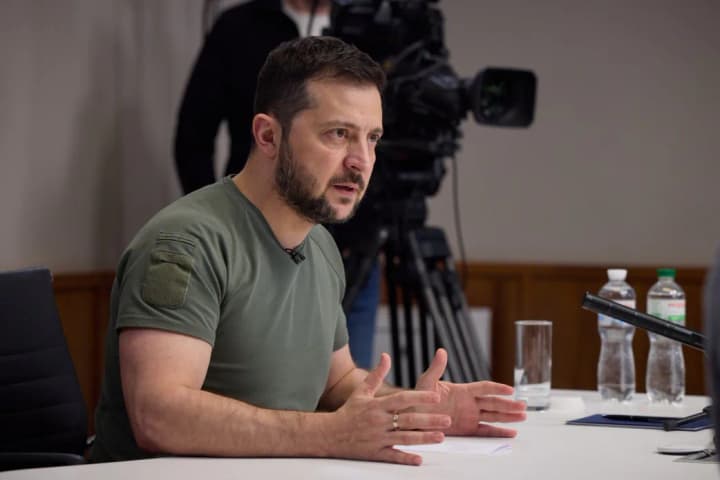
Either PM Mark Carney is acutely, deliberately obtuse, or, perhaps more likely, so devoted to his possibly subconscious hostility to the reality that Israel does not control what happens in the Palestinian Territories, that he has no problem digesting the accusations of Israeli interference that makes everything go sideways for Palestinians. He cannot possibly be ignorant of the fact that Israel intervenes only when she has no other choice, when the constant incitements of the PA to its citizens to dedicate themselves to hastening the destruction of Israel creates a backlash of defense. Defensive actions that Palestinian leaders inform the credulous West represents Israeli violence against Palestinians.
Insistence on a two-state 'solution' as an answer to the ongoing conflict between Jews and Arabs in the Middle East, is a fly-in-the-sky sop to an imagined, simple problem that can be corrected when two parties to a dispute agree between them to finally shelve hostilities in an agreement to share disputed land. The problem is that Israel has for the past 80 years accepted that concept of reasonable accommodation, while the Palestinians, led by their leaders have rejected a state of their own alongside that of Israel for the more palatable solution of one state and Jews begone!
It never seems to occur to Canada's prime minister and his colleagues in Ireland, Spain, France, the United Kingdom and Australia that they are willingly absorbing a false, two-sided message; one delivered in Arabic to Palestinians that their ongoing 'resistance' to the presence of Jews on Judean ancestral land will eventually succeed, and the assurances given to the West that the Palestinian dream of their own sovereign state cannot be accomplished as a result of Israel's refusal to allow them that dream. They can afford to be duped; Israel bears the horrific brunt of Palestinian violence through their death-cult leadership.
 |
| Internal disarray within Fatah, disagreements over candidate lists and the distribution of power, and emerging alliances among Abbas's opponents have all contributed to delaying elections until 2027. [Getty] |
So, no, the statement that the Palestinian leadership is being held to account for its promotion of murderous assaults on its neighbour, for its generous payouts to the terrorist they breed, for school curricula that identify Jews as mortal enemies that must be killed to stop them from eliminating all Palestinians in their zeal to preserve their position as a Jewish state in Muslim-Arab territory, is far from reality; it is a blatant lie iterated as a demonstration of just how even-minded and neutral Israel's critics are.
As reported by The Associated Press, the decision to postpone the legislative elections until September of 2027 represented another stalling tactic by the PA, in consultation with Hamas and Islamic Jihad. As a 'reason' for that postponement, the Fatah, the party in power with the Palestinian Authority cited the Palestine Liberation Organization's executive committee claiming Israeli military raids, expansion of settlements, withholding of tax revenue were responsible for the decision. Israel's fault, a charge readily accepted by Israel's natural Democratic, putative allies.
"[We] deeply regret [the decision by Abbas not to move forward with elections].""We call on the Palestinian Authority to reconsider the decision to postpone elections and to take the necessary steps to hold legislative and presidential elections, without further delay.""[The] significant challenges that impediments have affected the ability to conduct elections.""[We call upon Israel] to refrain from actions that could impede the conduct of elections, including the practical arrangements necessary for all Palestinians to participate."United Kingdom, Australia, France foreign affairs ministers' joint statement
President for the last 22 years, since 2005, when Hamas challenged Fatah and was itself elected alongside Fatah, leading it to establish its headquarters in Gaza, the very year in which which Israeli Forces had removed all Jewish settlements by order of then-Israeli President Ariel Sharon with the intention of leaving the territory for the Palestinians to administer on their own as a good-faith gesture. That gesture led to Hamas taking authority for itself by co-opting Gaza, and violently neutralizing the Fatah presence. The rest is history as Gaza became the staging ground for continuous, non-stop deadly assaults against Israel, until a separation wall was finally built.
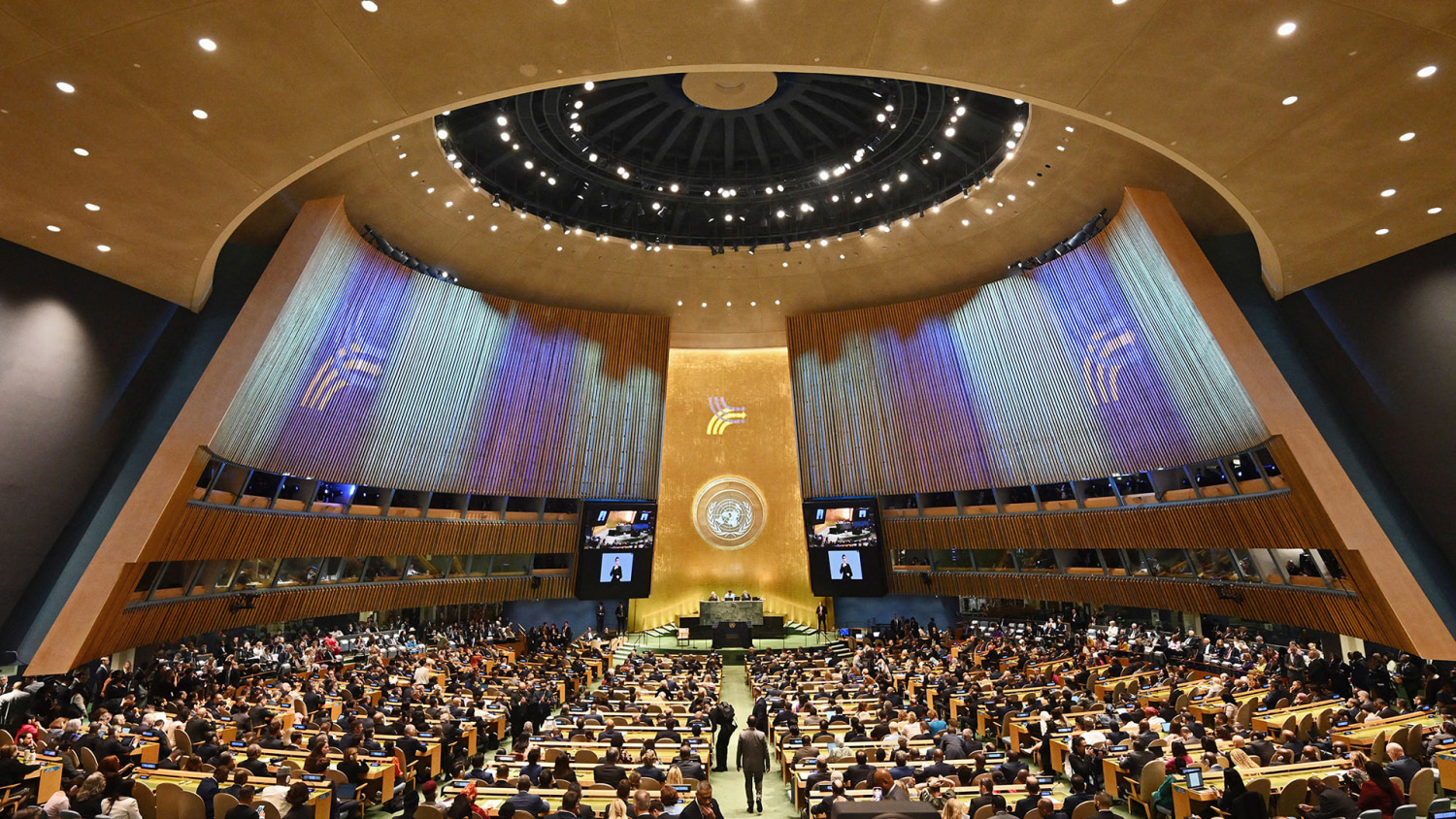
Even that had its limits in protecting Israeli citizens from the vicious savagery of Palestinian terrorism as the dreadful events of October 7, 2023 demonstrated. Canada boasts of its generosity to pledging close to $600 million in charitable assistance for Palestinians in the past three years. And another $100 million for charitable aid was announced by Carney last month at the UN's General Assembly, alongside $80 million more in humanitarian aid. There is no accountability, no tracing how those charitable funds are disposed of, even though it was channelled through UNRWA. As though that would guarantee anything positive, other than ending up with Hamas, hundreds of whose operatives are part of UNRWA.
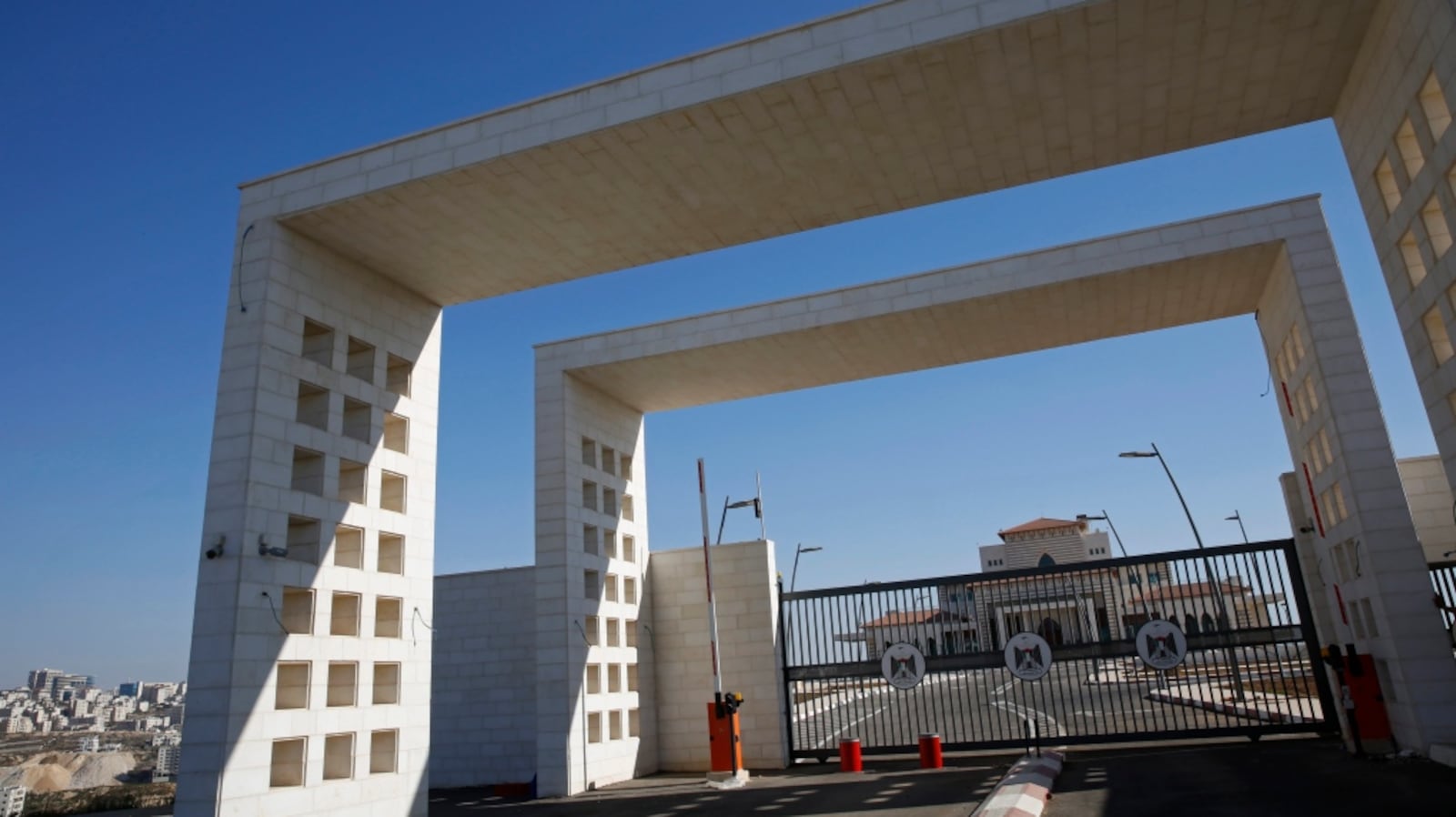 |
| This photo taken Monday, Aug. 28, 2017, shows a newly built mansion for the Palestinian Authority, on the outskirts of the West Bank city of Ramallah. (AP Photo/Nasser Nasser) |
On 10 October, Palestinian Authority President Mahmoud Abbas issued a decree cancelling the legislative elections set for 28 November. Instead, presidential and legislative polls will be held together on 11 September 2027. The decree followed approval by the Executive Committee of the Palestine Liberation Organisation (PLO) and consultations with political factions.The official explanation was Israel's occupation. Fatah officials insist that the movement was ready and that Israeli restrictions made a free, fair, and inclusive vote impossible. While that argument is real, it is also incomplete.Read closely, the accounts of those around the decision point to three pressures converging at once: external obstacles that have not changed, rivalries inside Fatah that its own leaders acknowledge, and a factional dialogue that gave the leadership a consensual route away from a deadline its critics say it was not ready to meet.The postponement is less a verdict on Israeli obstruction than a decision about who gets to shape the next Palestinian political order, and on what terms."Fatah respected the outcomes of the dialogue held in Cairo with the Popular Front for the Liberation of Palestine and Hamas,” Nasrallah said, “and conveyed them to the movement's leadership bodies before the procedures for the postponement were completed”.
Labels: Canada, Elections Cancellation, Hamas, Inner Antipathies, Islamic Jihad, Israel, Palestinian Authority, Palestinian Liberation Organization
posted by Pieface @ 8:37 PM
0 comments