Global Heat-Related Deaths Rising
"That's approximately one heat-related death every minute throughout the year.""So this is a really startling number.""Were potentially reaching these limits in different parts of the world at an alarming rate or approaching them. It's something that needs urgent action.""We constantly emphasize to people that heat stress can affect everybody and it can be deadly – I think a lot of people don’t understand that – and that every heat-related death is preventable."Ollie Jay, heat and health expert, University of Sydney"Climate change action remains one of the greatest health opportunities of the 21st century, also driving development, spurring innovation, creating jobs, and reducing energy poverty.""Realizing the myriad benefits of a health-centered response requires unlocking so-far untapped opportunities to mitigate climate change and build resilience to the impacts already being felt."Tafadzwa Mahbhaudi, director, Lancet Countdown Africa
 |
According to the most recent edition of the Lancet's yearly report on climate and health, rising temperatures are responsible for the deaths of close to 550,000 people globally. A startling number, considered part of a heat death phenomenon that has risen steadily by over 20 percent on a population-adjusted basis since the 1990s, when stark warnings of Climate Change began to alert governments.
The medical journal Lancet has reported total numbers of global heat-related deaths for the first time, calculated to reflect advances in methodology estimating such deaths, along with improved access to detailed death data acquired in various countries. During 2025's record-breaking temperatures world-wide, these new numbers register yet another concern related to a warming climate. This year European residents and summer tourists suffered through heatwaves all summer long.
Extreme heat also gripped parts of Asia and North America. The report commissioned by the Lancet, its ninth such report, reflects data acquired by 128 researchers globally, across 71 organizations; findings that people around the world experienced heat wave conditions that convincingly over the last five years would never had occurred outside of climate change conditions.
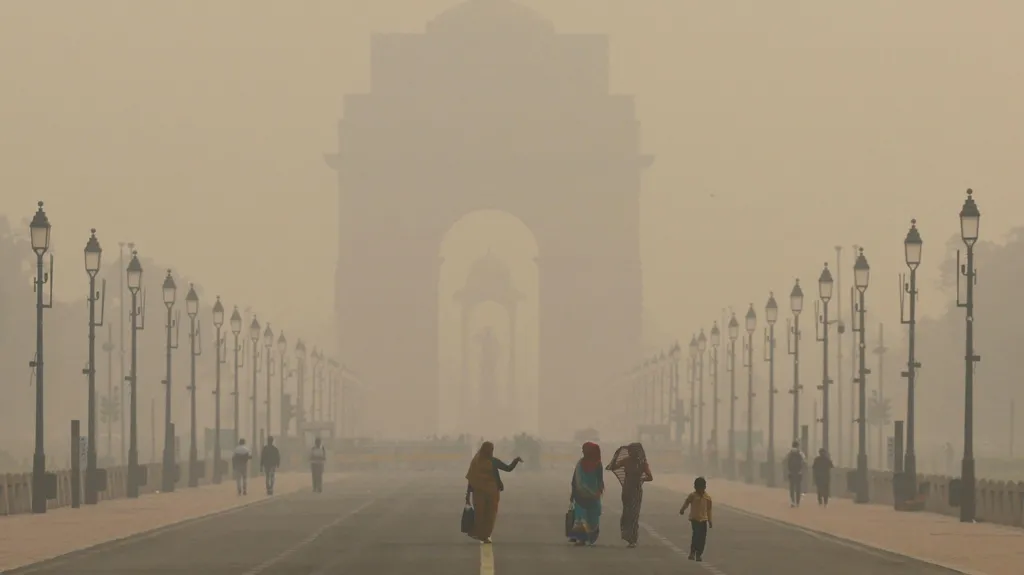 |
| India is among the most polluted countries in the world Reuters |
Not only are human lives being lost on a large scale as a consequence of universal heat waves, but the global economy is also bearing its brunt of the phenomenon in lost labour productivity where heat caused an estimated $1 trillion in income losses in 2024. There is sleep lost due to heat discomfort, leaving workers tired, irritable and incapable of functioning to their full potential. These are statistics that cause scientists to believe parts of the globe are approached physiological tipping points; heat and humidity taking their toll on human survival.
Heat-related deaths in Latin America have more than doubled in the last 25 years; some 13,000 deaths occurring yearly. A variety of indicators were tracked to assess health threats posed by climate change and related extreme weather-caused health risks. The warming climate's influence on infectious disease transmission is yet another grave concern. Indicators of impaired health reaching record levels since monitoring began. Minuscule particles exposure through wildfires polluting the air and peoples' lungs are seen as the cause of over 150,000 deaths globally on an annual basis.
Tropical diseases like dengue have seen the worldwide average transmission surge through mosquito vectors by close to half since the 1950s, given warmer and wetter weather conditions that enable insects to spread and survive where they never could previously in atmospheres traditionally hostile, now having undergone change.
One portion of the complex puzzle of Climate Change has seen more positive news resulting with respect to rising awareness and amelioration efforts. Global exposure to at least one kind of fossil fuel pollution has seen a 20 percent decrease in the last fifteen years, with many developing nations cutting their use of coal-based energy.
 |
| Firefighters tackle a blaze in Chaves, Portugal, in August. Photograph: Pedro Sarmento Costa/EPA |
"This year’s health stocktake paints a bleak and undeniable picture of the devastating health harms reaching all corners of the world—with record-breaking threats to health from heat, extreme weather events, and wildfire smoke killing millions. The destruction to lives and livelihoods will continue to escalate until we end our fossil fuel addiction and dramatically up our game to adapt.""[...Overall, the findings present a picture that is] very bleak.""Were really, really worried from the scientific perspective because we do have the data and there's no denying how grave the situation is."Marina Romanello, executive director, Lancet Countdown, University College London
Labels: Climate Change, Human Health, Report on Weather-Related Global Deaths, The Lancet, Weather Conditions
posted by Pieface @ 6:52 PM


0 Comments:
Post a Comment
<< Home