Ruminations

Blog dedicated primarily to randomly selected news items; comments reflecting personal perceptions

Sunday, November 02, 2025

Global Heat-Related Deaths Rising

"That's approximately one heat-related death every minute throughout the year."
"So this is a really startling number."
"Were potentially reaching these limits in different parts of the world at an alarming rate or approaching them. It's something that needs urgent action."
 "We constantly emphasize to people that heat stress can affect everybody and it can be deadly – I think a lot of people don’t understand that – and that every heat-related death is preventable."
Ollie Jay, heat and health expert, University of Sydney
 
"Climate change action remains one of the greatest health opportunities of the 21st century, also driving development, spurring innovation, creating jobs, and reducing energy poverty."
"Realizing the myriad benefits of a health-centered response requires unlocking so-far untapped opportunities to mitigate climate change and build resilience to the impacts already being felt."
Tafadzwa Mahbhaudi, director, Lancet Countdown Africa 
https://time.com/redesign/_next/image/?url=https%3A%2F%2Fapi.time.com%2Fwp-content%2Fuploads%2F2025%2F10%2Fclimate-health.jpg%3Fquality%3D85%26w%3D1024&w=1920&q=75
Gary Hershorn/Getty Images
 
According to the most recent edition of the Lancet's yearly report on climate and health, rising temperatures are responsible for the deaths of close to 550,000 people globally. A startling number, considered part of a heat death phenomenon that has risen steadily by over 20 percent on a population-adjusted basis since the 1990s, when stark warnings of Climate Change began to alert governments. 
 
The medical journal Lancet has reported total numbers of global heat-related deaths for the first time, calculated to reflect advances in methodology estimating such deaths, along with improved access to detailed death data acquired in various countries. During 2025's record-breaking temperatures world-wide, these new numbers register yet another concern related to a warming climate. This year European residents and summer tourists suffered through heatwaves all summer long.
 
Extreme heat also gripped parts of Asia and North America. The report commissioned by the Lancet, its ninth such report, reflects data acquired by 128 researchers globally, across 71 organizations; findings that people around the world experienced heat wave conditions that convincingly over the last five years would never had occurred outside of climate change conditions.
https://ichef.bbci.co.uk/news/1024/cpsprodpb/eddb/live/670a44e0-b576-11f0-86b2-ed6a609e4a6c.jpg.webp
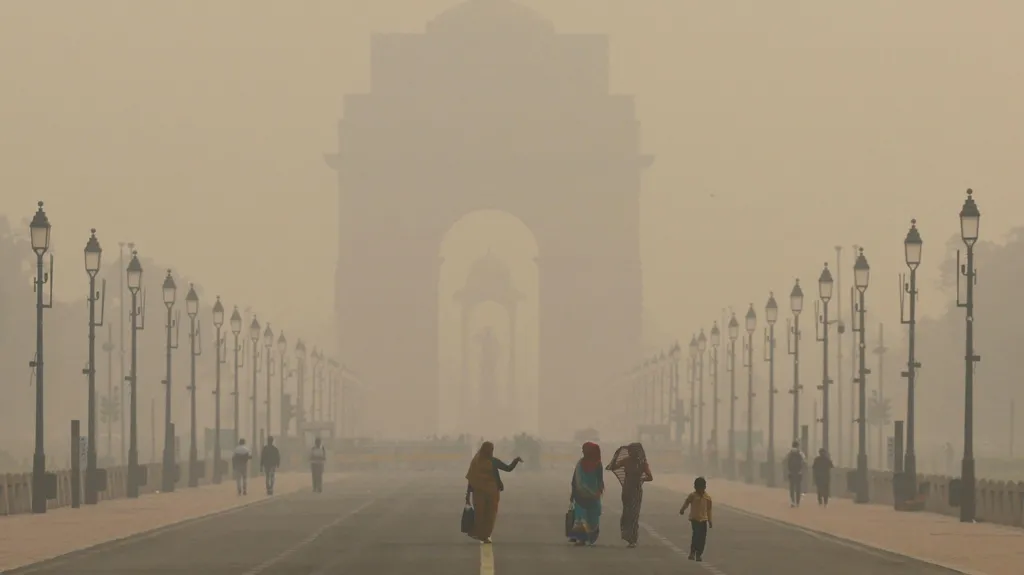
India is among the most polluted countries in the world   Reuters
 
Not only are human lives being lost on a large scale as a consequence of universal heat waves, but the global economy is also bearing its brunt of the phenomenon in lost labour productivity where heat caused an estimated $1 trillion in income losses in 2024. There is sleep lost due to heat discomfort, leaving workers tired, irritable and incapable of functioning to their full potential. These are statistics that cause scientists to believe parts of the globe are approached physiological tipping points; heat and humidity taking their toll on human survival.
 
Heat-related deaths in Latin America have more than doubled in the last 25 years; some 13,000 deaths occurring yearly. A variety of indicators were tracked to assess health threats posed by climate change and related extreme weather-caused health risks. The warming climate's influence on infectious disease transmission is yet another grave concern. Indicators of impaired health reaching record levels since monitoring began. Minuscule particles exposure through wildfires polluting the air and peoples' lungs are seen as the cause of over 150,000 deaths globally on an annual basis.
 
Tropical diseases like dengue have seen the worldwide average transmission surge through mosquito vectors by close to half since the 1950s, given warmer and wetter weather conditions that enable insects to spread and survive where they never could previously in atmospheres traditionally hostile, now having undergone change. 
 
One portion of the complex puzzle of Climate Change has seen more positive news resulting with respect to rising awareness and amelioration efforts. Global exposure to at least one kind of fossil fuel pollution has seen a 20 percent decrease in the last fifteen years, with many developing nations cutting their use of coal-based energy.  

 
Firefighters look on at large flames
Firefighters tackle a blaze in Chaves, Portugal, in August. Photograph: Pedro Sarmento Costa/EPA
 
"This year’s health stocktake paints a bleak and undeniable picture of the devastating health harms reaching all corners of the world—with record-breaking threats to health from heat, extreme weather events, and wildfire smoke killing millions. The destruction to lives and livelihoods will continue to escalate until we end our fossil fuel addiction and dramatically up our game to adapt."
"[...Overall, the findings present a picture that is] very bleak."
"Were really, really worried from the scientific perspective because we do have the data and there's no denying how grave the situation is."
Marina Romanello, executive director, Lancet Countdown, University College London

Labels: , , , ,

Friday, September 09, 2022

The Estimable Benefits of Communing With Nature

 
"[Although having diverse research is critical], it becomes a little bit difficult to bring everything together."
"[The new study, however representing a systematic review of approximately 300 peer-reviewed scientific papers creates] an excellent knowledge base. The whole point of doing this exercise is to understand the connection [between human health and exposure to nature]."
"In reality, you don't just have one pathway. It's not that if I go to the forest, I receive one thing."
Alexandros Gasparatos, associate professor, Institute of Future Initiatives, University of Tokyo
 
"If we understand the underlying process, we can help to design better interventions for ecosystem management.:
"We can help to improve the contributions of nature to human well-being."
Lam Thi Ma Huynh, doctoral candidate, University of Tokyo
 
"It's a long time coming to have a study like this that makes some of these linkages a little clearer."
"This stuff has been scattered all over the place for a long, long time, and this paper takes a huge step forward in sorting out what has been previously pretty muddied."
"What this is going to be seriously useful for is to be able to continue to work to make the case that physicians and clinicians can actually prescribe outdoor time, outdoor recreation, even outdoor space because of these pathways that they've identified in this paper."
"If we continue on a pathway as a species of being in a state of ecological amnesia, we're going to find ourselves out of habitat and out of time and, therefore, out of luck."
 Keith Tidhall, environmental anthropologist, Cornell University, Ithaca, New York

"That sets us up to be able to say that when we facilitate this kind of interaction with nature, you see this kind of benefit."
"Or have policies that say that you're really depriving someone of their mental health if you destroy these natural landscapes."
Elizabeth Hasse, chair, American Psychiatric Association committee on climate change and mental health 

Amongst genteel society in 19th century England, it was a common practise to take a post-prandial walk on the estate grounds to aid digestion, a notable part of human health. In America, Henry David Thoreau gained an impressive following when he wrote about his Walden retreat, to live within nature. There have been countless people through the ages and in all parts of the world that have recognized the benefits inherent in close proximity to green vegetation, to communing, as it were, with nature.

Many great thinkers found inspiration for their writing while walking through a forest, or solutions to problems they mulled over while walking bending their minds to the solace and solitude of exposure to the natural world. It is the kind of exposure that leads to clearer heads, silent appraisal of the world around us, contemplative serenity, and inspiration. Municipal councils are well aware of the importance of the 'urban forest' within cities, not only to cleanse the air we breathe, but to clear our minds of detritus through exposure to green surroundings.

It is interesting that a new study has come out of a mega-study of previously published papers on humanity and exposure to natural environments; and the benefits thereof, coming out of Japan. The Japanese venerate nature, as do many other cultures. They are famed for their 'green thumbs' and the sought-after adventures of trekking mountains and forests. The Zen Buddhist gardens that can be found in Japan are places of rest and beauty. Carp ponds abound in the green environs of urban Temples.

And now a new paper published in the journal Science Advances, outlines the spiritual, mental and physical benefits to be had through exposure to natural surroundings. Researchers identified no fewer than 227 unique pathways reflecting people's interactions with nature resulting in positive effects, but they also outline some areas that negatively affect human health. The latter somewhat less convincing than the former.

The paper's lead author, doctoral candidate Lam Thi Mai Huynh, was led to this research out of curiosity and a wish to improve knowledge surrounding the underlying complex process bespeaking nature's intangible effects; opportunities for recreation and leisure or spiritual fulfillment and their impact on well-being. Existing scientific literature appeared "highly fragmented" in its views of cultural ecosystem affects.

Hundreds of possible links between individual aspects of human well-being (mental and physical health, connectedness and belonging, and spirituality, among others) and cultural ecosystem services such as recreation and tourism, aesthetic value and social relation are broken down, with researchers going on to identify over a dozen distinct underlying mechanisms where people's interactions with nature can affect their total well-being.

The highest positive contributions were seen by researchers in mental and physical health. The 'regenerative' mechanism of experiencing restorative effects from being in nature were attributed to recreation, tourism and aesthetic value. Stress relief, according to the paper, was an absolute positive. On the other hand, they were moved to link negative effects to mental health through a 'destructive' mechanism; direct damages associated with the degradation or loss of cultural ecosystem services.

As an example, they wrote, a well-designed park can be a place for recreation and leisure, along with being a designation to connect with other people. A poorly maintained natural space could lead, they believe, to an ugly or visually threatening landscape that might make some feel uncomfortable or fearful of its environment. Which seems counter-intuitive to anyone who regularly makes it a practise to hike through the trails of a natural forest. Where, needless to say, the maintenance is nature's own and it does not resemble a well-manicured park in any way.

Visitors leisurely enjoy an iris garden in Japan
Visitors leisurely enjoy an iris garden in Japan. Of all the pathways linking a single cultural ecosystem service to a single constituent of well-being captured from the academic literature, 86.3% represented positive contributions compared to just 11.7% negative contributions. 2022 Nicola Burghall CC-BY-NC


Labels: , , ,

Monday, April 26, 2021

Death On A Dare?

"He didn't respond to any of the stimuli that we gave him."
"He had some clonus, which is just elevated reflexes. It's a sign that basically the nervous system wasn't working very well."
"We were more aggressive than had been reported before in terms of bringing his sodium back down to a safer range."
Dr.David J. Carlberg, emergency room doctor, MedStar Georgetown University Hospital, Washington, D.C.
Soy sauce overdose sends John Paul Boldrick into a coma.
 
The Journal of Emergency Medicine reported in 2013 one of the really unthinkingly stupid actions that can be taken when young men whose brains evidently have not yet fully developed do things that may threaten they will never develop, such as courting death and almost succeeding. There's no word in the report whether the 19-year-old from Virginia feels his experience was worth it, to have it reported as one of the zaniest potentially self-harming incidents ever recorded in the journal. It might make for a great conversational gambit but for the fact that with a mature mind, it resembles juvenile delinquency at its best.

19-year-old John Paul Boldrick, in the company of a group of his peers that he might have considered to be friends, accepted a dare and downed a quart of soy sauce, known for its salt content and usually used sparely as a condiment alongside Asian food. He is now acknowledged to be the first known individual to have overdosed on soy sauce, yet suffered no permanent neurological damage. Needless to say, given his free choice of response to a dare, he might not have had too developed a brain to begin with, and any loss, however minimal due to excessive salt intake might have rendered him intellectually sub-par with a vengeance.

Soon after drinking the stuff, twitching and seizures erupted, prompting his friends to rush the fellow with impaired judgement to hospital. Once in the emergency room he had slipped into a coma, and was foaming at the mouth. The result of having ingested around 56,000 milligrams of sodium contained in the amount of soy sauce he poured into his throat, down his gullet into his stomach. Hypernatremia resulted from the surge of salt that assaulted his bloodstream. 

Hypernatremia is observed generally in mentally ill people who happen to relish an absolute excess of salt intake. The condition erupts when too much water is lost, or the body takes in too much sodium for regulation by normal body action to balance such a situation. Surrounding tissues are then called upon by the body to surrender their water, in an effort to dilute the deluge of salt. The major symptoms of hypernatremia are extreme thirst to balance excessive salt; acute fatigue, muscle spasms and confusion. 

a bottle of soy sauce with a dipping dish
Soy sauce can be deadly at high levels.  Shutterstock
 
In the most severe of such cases the brain can be leached of its water, which causes it to shrink, to bleed or for seizures to erupt. Left untreated, coma and death are in the offing. In the case of this young patient admitted to MedStar Georgetown University Hospital, attending medical staff swiftly administered a cocktail of water and dextrose through a nasal tube, pumping six litres into his system in the space of 30 minutes, enabling his sodium levels to return to normal in the next five hours.

The fortunate young man with the faulty sense of survival in the interests of 'proving himself', emerged from his coma without further intervention, once three more days had passed. Authors of the study -- the emergency medical staff at the hospital -- wrote of this rare encounter, outstanding for the amount of salt in his system. Some residual effects were identified as a result of the seizures suffered, but with the passage of a month, all overdose signs disappeared.

Labels: , ,

 
()() Follow @rheytah Tweet