Beggared and Battered The Islamic Republic Believes It is In Charge
"[The United States must agree to a list of demands for reopening the strait, including an end to the] war and aggression against Iran and its allies in Lebanon, Palestine, Yemen, and Iraq]."Iranian Security Chief Mohammad Bagher Zolghadr"[Hormuz’s reopening had] nothing to do with the negotiations between Iran and Oman.""[The] enemy is forced to accept Iran’s conditions for the opening of the strait."Islamic Revolutionary Guard Corps"[We condemn the] hostile Iranian attack that targeted a tanker belonging to ADNOC (Abu Dhabi National Oil Company) with a missile while it was transiting the Strait of Hormuz, [despite that the attack occurred] without causing casualties."United Arab Emirates’ foreign ministry"[We condemn] repeated attacks on vessels transiting the Strait of Hormuz.""Ongoing negotiations regarding navigation arrangements in the Strait of Hormuz are proceeding in a positive and constructive atmosphere. [We urge against any actions that might jeopardize the progress]."Omani Foreign Ministry"We are low-keying it.""We are only semi-negotiating with them. We are just watching Iran with its huge inflation and the fact they have no money.""It will work out. It's like a chess game."U.S. President Donald J. Trump
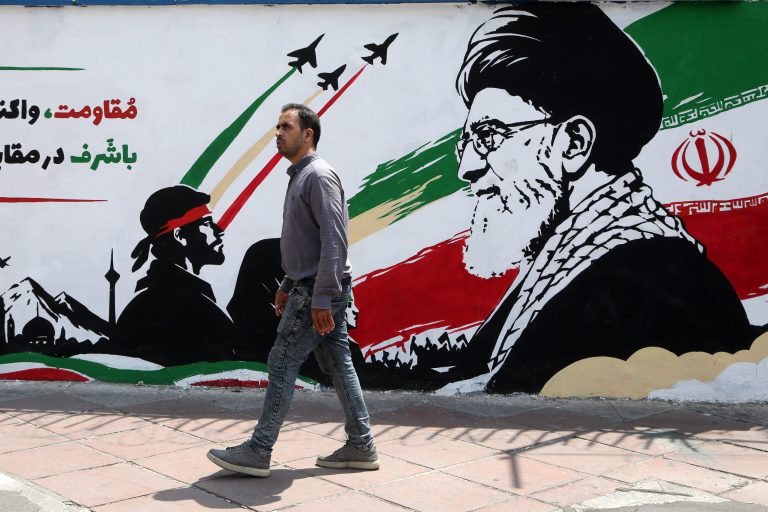 " " |
| A man walks in front of a wall mural in Tehran, Iran, on August 6, 2026. Fatemeh Bahrami/Anadolu via Getty Images |
"We currently have no negotiations with the United States. Intermediaries are still making efforts to find ways to resume negotiations. From our perspective, there can be no resumption of talks until the United States ends its violations of the Memorandum of Understanding (MoU) and makes amends for the breaches it has committed.""Until the violations of the memorandum of understanding by the United States are ended and the United States does not make amends for what it has violated, in our opinion, there is no possibility of resuming negotiations.""Of course, this [agreement with Oman] does not mean the opening of the Strait of Hormuz. This agreement may be reached, but the opening of the Strait of Hormuz is subject to a series of conditions.""The opening of the Strait is subject to other conditions, including the compensation for the US's violations of the Islamabad Agreement."Iranian Foreign Minister Seyyed Abbas Araghchi
"I try to remind people that we're really in the middle of the game here.""[The question is whether Iran will be able] to give the things that are necessary for us to be happy, for us to feel like we've gotten what we need out of this particular engagement.""What we're really working through now is how you can actually set up a traffic scheme so that the ships that pass can pass through safely."U.S. Vice-President, J.D. Vance
Battered and bruised, many of its key government figures, including the Grand Ayatollah, high-placed members of the Iranian military, nuclear scientists, IRGC officials were targeted and eliminated in the February aerial attacks coordinated between the U.S. and Israel. Iranian shipping and military fleets were bombed, its aircraft destroyed, nuclear facilities bombed as well as government offices, communications were hit and the country's munitions stockpiles destroyed. What wasn't destroyed is the arrogant assumptions by the Islamic Revolutionary Guard Corps that despite these massive losses, they remain 'in charge'.
They engineered a response, though considered by analysts prior to its implementation as a possibility, that was a stroke of Byzantine economic/military genius; blocking the Strait of Hormuz to international shipping as a critical gateway from the Middle East to the rest of the world dependent for their energy supplies and agricultural fertilizers. Holding the Strait hostage to the world's dependency on this energy lifeline represented a clever move to squeeze the political fortunes of a foreign government that 'won' a war and lost the rewards of its aftermath through sheer economic gangsterism.
That 'conquered' nation whose economy is in tatters, whose military infrastructure is in huge upheaval, whose population prays for its downfall still managed to terrorize its neighbours in destructive bombardments of their territories housing U.S. military assets, in targeting their oil depots, in threatening that for every U.S. military move on Iranian assets in reaction to Iran's intransigence for refusing to be defeated, has demonstrated its cunning manoeuvres counteracting the 'victory' of a much more powerful military.
 |
| A small boat sails past cargo ships and other commercial vessels anchored in the Strait of Hormuz off Bandar Abbas, Iran, Wednesday, Aug. 5, 2026. (Amirhosein Khorgooi/ISNA via AP)AP |
Iran, the defeated, yet actively defiant assailant of its own people, of its neighbours, has delivered an ultimatum to the world's most powerful nation: do as we demand or your victory will turn to the dust of history's recounting of a debacle of unforeseen consequences. Just as the Islamic Republic demands reparations from the very neighbours it has pounded time and again with missiles and drones in retaliation for their having acceded to hosting U.S. military emplacements, to prod its nemesis, the United States, to rethink its flawed efforts to bring down the regime, it now demands the same from the U.S.
Iran's Supreme National Security Council secretary Mohammad Bagher Zolghadr, a commander in the Revolutionary Guard Corps, has issued a list of new demands, emphasizing that the Strait of Hormuz will not be reopened to international marine traffic until such time as the United States "corrects its behaviour" by adhering to the following:
- The United States must never again threaten Iran;
- The United States must permanently end its war with Iran and its regional armed proxies;
- The U.S. must lift the naval blockade of Iranian ports;
- The U.S. must withdraw its military from the area;
- The U.S. must completely compensate Iran for war damages;
- The U.S. must life sanctions and unconditionally release Iran's frozen assets.
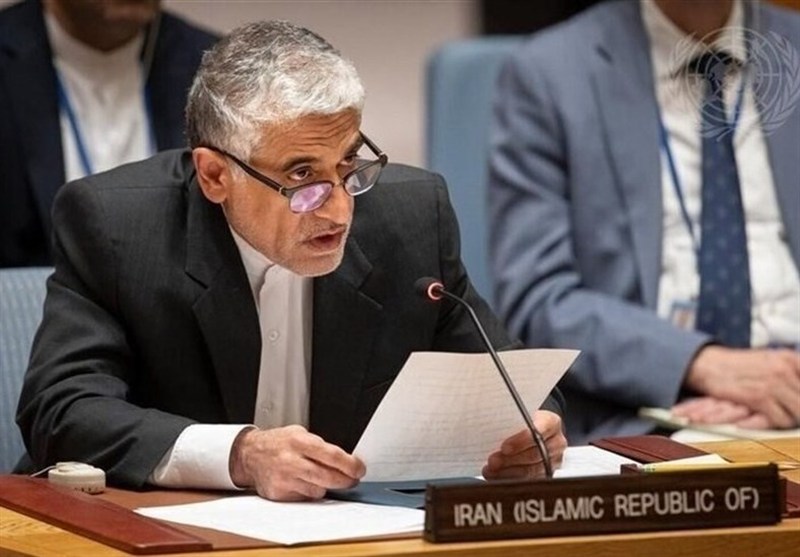 |
Iran's UN envoy demanded full reparations from Bahrain, Saudi Arabia, Qatar, the UAE, and Jordan, accusing them of facilitating unlawful armed attacks and breaching international obligations that led to significant material and moral damage to the Islamic Republic of Iran. Tasnim News Agency |
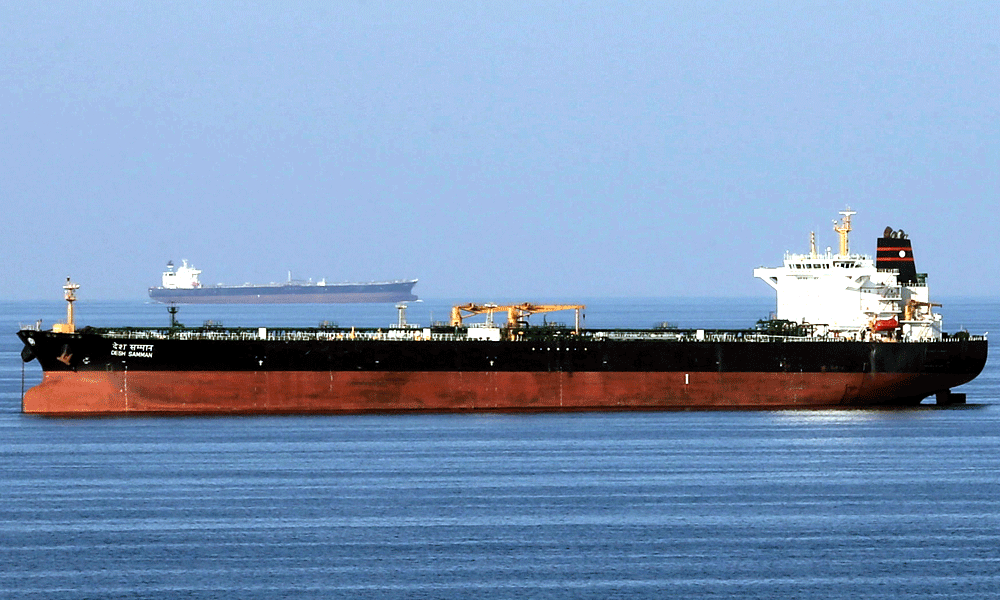
More recently, an Abu Dhabi state-owned ADNOC oil and gas company vessel while transiting the Strait was attacked, according to Emirati authorities. A reflection of Iran's tendency to fire missiles on commercial shipping as it seeks to 'privatize' the formerly international waterway by imposing stiff tariffs for passage through the Strait, paid directly to the Islamic Republic. The tentative agreement with Oman would see that country too exacting tariffs for safe passage through its side of the waterway.
According to ADNOC, over a dozen of its vessels have been hit by missiles and drones while transiting the Strait, since the war on Iran was launched in February. In that time, one crew member was killed and twenty others wounded. The United Kingdom Maritime Trade Operations Center confirmed that a vessel east of Khasah, Oman, was struck by a projectile causing a fire which the crew put out.
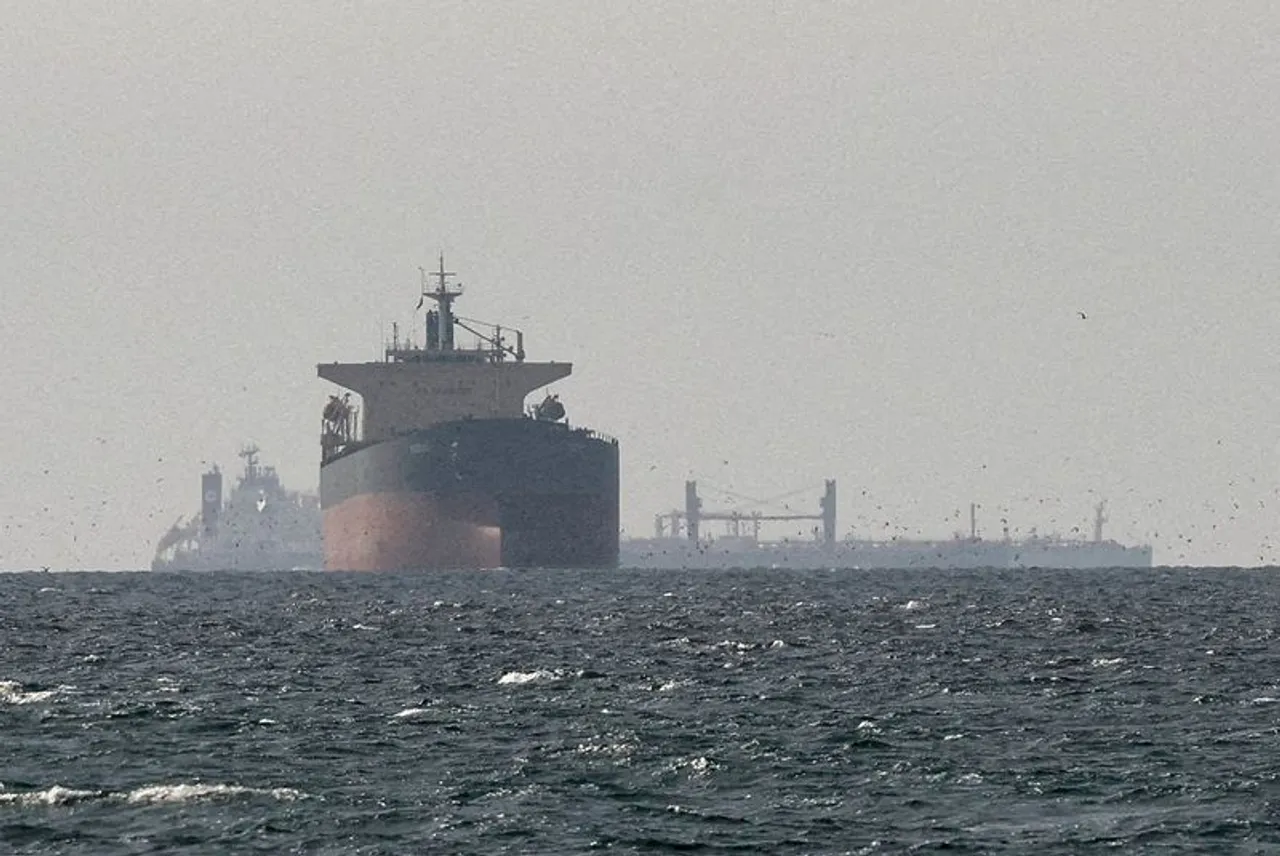 |
| Iran demands US reparations and Hormuz control in latest peace proposal. (Photo: FILE) / Reuters |
Labels: Global Fuel Shortages, International Shipping, IRGC Maritime Threats, Islamic Republic, Presenting Conditions for Reopening, Strait of Hormuz, United States
posted by Pieface @ 9:22 PM
0 comments