Ruminations

Blog dedicated primarily to randomly selected news items; comments reflecting personal perceptions

Sunday, August 09, 2026

Beggared and Battered The Islamic Republic Believes It is In Charge

"[The United States must agree to a list of demands for reopening the strait, including an end to the] war and aggression against Iran and its allies in Lebanon, Palestine, Yemen, and Iraq]."
Iranian Security Chief Mohammad Bagher Zolghadr 
 
"[Hormuz’s reopening had] nothing to do with the negotiations between Iran and Oman."
"[The] enemy is forced to accept Iran’s conditions for the opening of the strait."
Islamic Revolutionary Guard Corps 
 
"[We condemn the] hostile Iranian attack that targeted a tanker belonging to ADNOC (Abu Dhabi National Oil Company) with a missile while it was transiting the Strait of Hormuz, [despite that the attack occurred] without causing casualties."
United Arab Emirates’ foreign ministry
 
"[We condemn] repeated attacks on vessels transiting the Strait of Hormuz."
"Ongoing negotiations regarding navigation arrangements in the Strait of Hormuz are proceeding in a positive and constructive atmosphere. [We urge against any actions that might jeopardize the progress]."
Omani Foreign Ministry
 
"We are low-keying it."
"We are only semi-negotiating with them. We are just watching Iran with its huge inflation and the fact they have no money."
"It will work out. It's like a chess game."
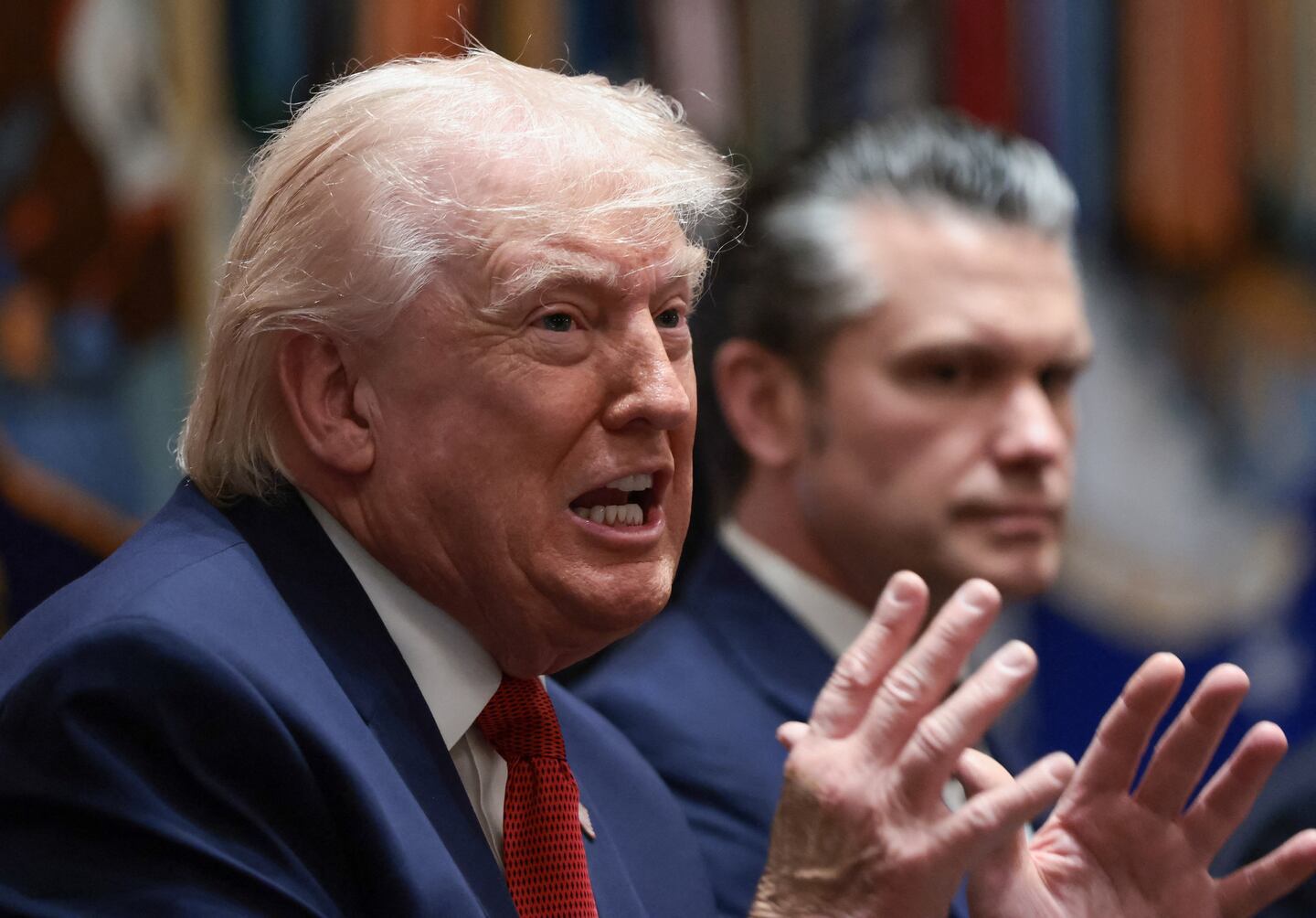
U.S. President Donald J. Trump  
https://fortune.com/img-assets/wp-content/uploads/2026/08/GettyImages-2288486958-e1786222225153.jpg?format=webp&w=768&q=100"
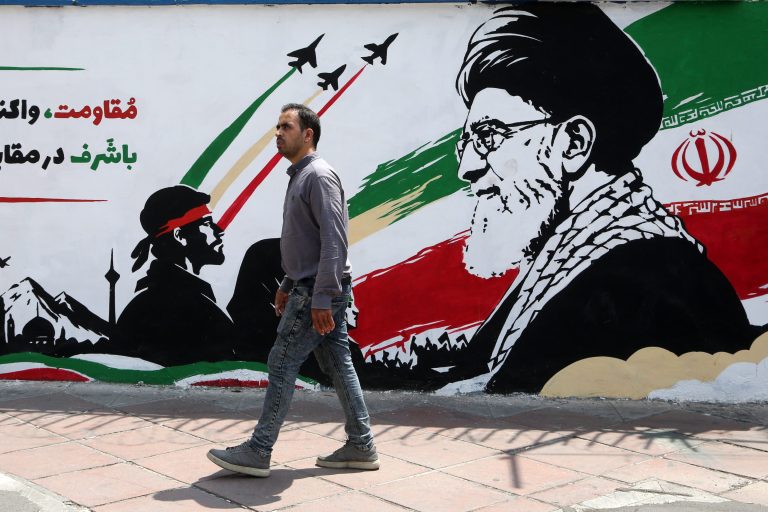
A man walks in front of a wall mural in Tehran, Iran, on August 6, 2026. Fatemeh Bahrami/Anadolu via Getty Images
 
"We currently have no negotiations with the United States. Intermediaries are still making efforts to find ways to resume negotiations. From our perspective, there can be no resumption of talks until the United States ends its violations of the Memorandum of Understanding (MoU) and makes amends for the breaches it has committed."
"Until the violations of the memorandum of understanding by the United States are ended and the United States does not make amends for what it has violated, in our opinion, there is no possibility of resuming negotiations." 
"Of course, this [agreement with Oman] does not mean the opening of the Strait of Hormuz. This agreement may be reached, but the opening of the Strait of Hormuz is subject to a series of conditions." 
"The opening of the Strait is subject to other conditions, including the compensation for the US's violations of the Islamabad Agreement." 
Iranian Foreign Minister Seyyed Abbas Araghchi  
"I try to remind people that we're really in the middle of the game here."
"[The question is whether Iran will be able] to give the things that are necessary for us to be happy, for us to feel like we've gotten what we need out of this particular engagement."
"What we're really working through now is how you can actually set up a traffic scheme so that the ships that pass can pass through safely."
U.S. Vice-President, J.D. Vance  
Battered and bruised, many of its key government figures, including the Grand Ayatollah, high-placed members of the Iranian military, nuclear scientists, IRGC officials were targeted and eliminated in the February aerial attacks coordinated between the U.S. and Israel. Iranian shipping and military fleets were bombed, its aircraft destroyed, nuclear facilities bombed as well as government offices, communications were hit and the country's munitions stockpiles destroyed. What wasn't destroyed is the arrogant assumptions by the Islamic Revolutionary Guard Corps that despite these massive losses, they remain 'in charge'. 
 
They engineered a response, though considered by analysts prior to its implementation as a possibility, that was a stroke of Byzantine economic/military genius; blocking the Strait of Hormuz to international shipping as a critical gateway from the Middle East to the rest of the world dependent for their energy supplies and agricultural fertilizers. Holding the Strait hostage to the world's dependency on this energy lifeline represented a clever move to squeeze the political fortunes of a foreign government that 'won' a war and lost the rewards of its aftermath through sheer economic gangsterism.
 
That 'conquered' nation whose economy is in tatters, whose military infrastructure is in huge upheaval, whose population prays for its downfall still managed to terrorize its neighbours in destructive bombardments of their territories housing U.S. military assets, in targeting their oil depots, in threatening that for every U.S. military move on Iranian assets in reaction to Iran's intransigence for refusing to be defeated, has demonstrated its cunning manoeuvres counteracting the 'victory' of a much more powerful military. 
 
https://www.politico.com/dims4/default/resize/630/quality/90/format/webp?url=https%3A%2F%2Fstatic.politico.com%2Fb3%2F1e%2F53e733d3408889755226ffd2a1cf%2Firan-war-strait-of-hormuz-69637.jpg
A small boat sails past cargo ships and other commercial vessels anchored in the Strait of Hormuz off Bandar Abbas, Iran, Wednesday, Aug. 5, 2026. (Amirhosein Khorgooi/ISNA via AP)AP
 
Iran, the defeated, yet actively defiant assailant of its own people, of its neighbours, has delivered an ultimatum to the world's most powerful nation: do as we demand or your victory will turn to the dust of history's recounting of a debacle of unforeseen consequences. Just as the Islamic Republic demands reparations from the very neighbours it has pounded time and again with missiles and drones in retaliation for their having acceded to hosting U.S. military emplacements, to prod its nemesis, the United States, to rethink its flawed efforts to bring down the regime, it now demands the same from the U.S.
 
Iran's Supreme National Security Council secretary Mohammad Bagher Zolghadr, a commander in the Revolutionary Guard Corps, has issued a list of new demands, emphasizing that the Strait of Hormuz will not be reopened to international marine traffic until such time as the United States "corrects its behaviour" by adhering to the following:
  • The United States must never again threaten Iran;
  • The United States must permanently end its war with Iran and its regional armed proxies;
  • The U.S. must lift the naval blockade of Iranian ports;
  • The U.S. must withdraw its military from the area;
  • The U.S. must completely compensate Iran for war damages;
  • The U.S. must life sanctions and unconditionally release Iran's frozen assets.
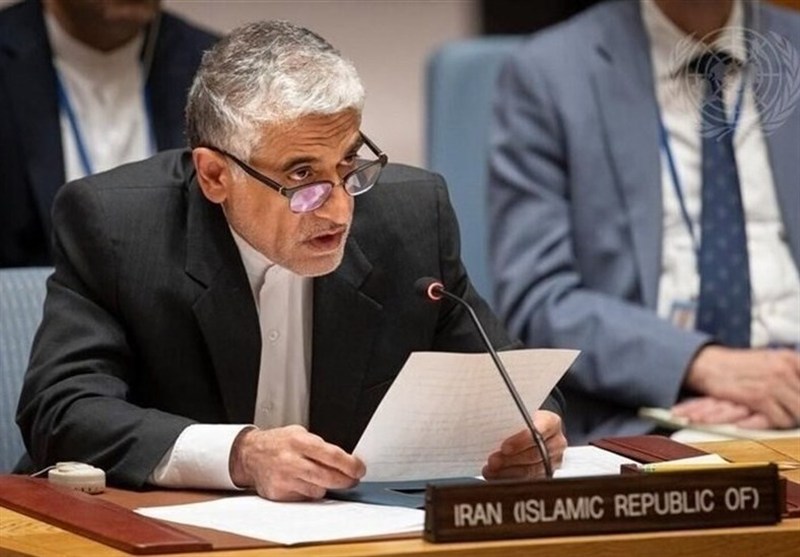
Separately, Iran has been negotiating a stand-alone agreement with Oman to manage the Strait running between the two countries' borders. The waterway's reopening rests on other conditions, including the stalemate resulting from the U.S. violation of the interim deal signed in June to end sanctions and plan on compensation as part of a final agreement, according to Iranian Foreign Minister Abbas Araghchi.  
 
https://newsmedia.tasnimnews.ir/Tasnim/Uploaded/Image/1404/09/06/1404090612211728734852494.jpg

Iran's UN envoy demanded full reparations from Bahrain, Saudi Arabia, Qatar, the UAE, and Jordan, accusing them of facilitating unlawful armed attacks and breaching international obligations that led to significant material and moral damage to the Islamic Republic of Iran.  Tasnim News Agency

More recently, an Abu Dhabi state-owned ADNOC oil and gas company vessel while transiting the Strait was attacked, according to Emirati authorities. A reflection of Iran's tendency to fire missiles on commercial shipping as it seeks to 'privatize' the formerly international waterway by imposing stiff tariffs for passage through the Strait, paid directly to the Islamic Republic. The tentative agreement with Oman would see that country too exacting tariffs for safe passage through its side of the waterway. 
 
According to ADNOC, over a dozen of its vessels have been hit by missiles and drones while  transiting the Strait, since the war on Iran was launched in February. In that time, one crew member was killed and twenty others wounded. The United Kingdom Maritime Trade Operations Center confirmed that a vessel east of Khasah, Oman, was struck by a projectile causing a fire which the  crew put out. 
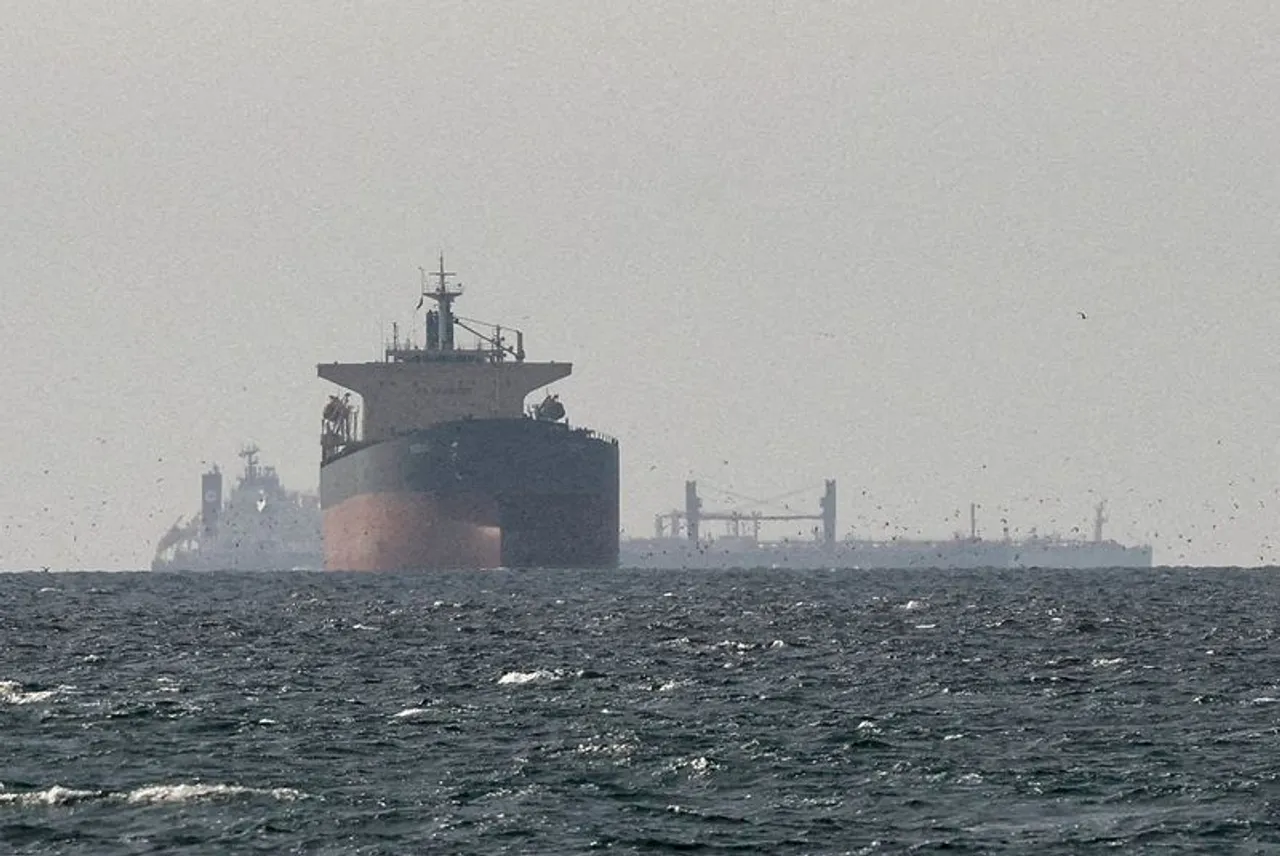
 
https://d2udx5iz3h7s4h.cloudfront.net/2026/5/10/Reuters/image/2026_05_10T124737Z_1_LYNXMPEM49065_RTROPTP_3_IRAN_CRISIS_SHIPPING_QATAR.JPG?width=1440&format=webp&quality=80
Iran demands US reparations and Hormuz control in latest peace proposal. (Photo: FILE) / Reuters


Labels: , , , , , ,

Monday, July 06, 2026

The Gulf Nations in Iran-War Fallout Disarray

"[The U.S.-Iran agreement] rehabilitates Tehran's regime as a regional power."
"[The financial benefits that it could confer] will make Iran a greater monster than it was before."
Abdulrahman al-Rashed, Saudi journalist 
 
"It's left a big wound. It's going to take a long, long time to recover."
"We are terrified that this is going to be an ongoing war."
"[It feels like the Trump administration is looking at the Gulf] as an A.T.M. [and that] bothers a lot of people." 
Khalid Al-Jaber, head, Middle East Council on Global Affairs, Qatar research institute
https://www.arabnews.com/sites/default/files/pictures/June/2647836/2026/2_3.jpg
A smoke plume rises from an ongoing fire near Dubai International Airport in Dubai on March 16, 2026. (AFP)
 
Interesting that this commentator writing out of Qatar fields a singular perspective without considering that Qatar itself has invested millions upon millions upon millions in the United States, as though its treasury was unlimited, in indebting U.S. colleges and universities, to the Middle East country for its generosity. And to believe that this is done simply for a love of America by an oil-rich Gulf state is to be naive beyond redemption. Qatar, in seeking influence for its 'philanthropy' in America does in fact, resemble an A.T.M. 
"Why has a country of just 330,000 citizens that is half the size of New Jersey and a leading patron of the Muslim Brotherhood plowed $400 billion dollars into the United States? This amounts to approximately $1.2 million per Qatari citizen — an enormous sum."
"Some Americans may welcome the generosity of the Qatari regime. After all, one could argue that a great many of these investments — spanning energy, defense, biotech and other important sectors — serve to benefit the U.S. economy and U.S. citizens. One could also argue that Qatar, like Japan, Canada, or other countries that sink billions in the United States, simply seeks return on investment."
"But Qatar is different. There are more than a few reasons to question the largesse of the Qatari government. At the end of the day, Qatar is ruled by an Islamist, autocratic regime; Freedom House consistently ranks the country as “Not Free” in its annual Freedom in the World survey. And Doha’s failure to guarantee the rights of its citizens is not the biggest problem."
"Rather, it is the country’s tendency to support jihadi causes in the Middle East that raises significantly more concern. The country’s horrific track record in this regard distinguishes Qatar from other Gulf states that spread their wealth in America."
Jonathan Schantzer, Foundation for Defense of Democracies  
That little quibble dispensed with, one can indeed feel a level of sympathy for the newly-occurring plight of wealthy Gulf Arab nations, witnessing and experiencing a regional war too close to home for comfort.
Few countries in the Middle East view the Islamic Republic of Iran through a lens of tender brotherhood. Those that do stand out from say, the United Arab Emirates, Bahrain, Kuwait and Saudi Arabia. Qatar and Oman, on the other hand, have a pronounced soft spot for the truculent totalitarian Islamist government that the entire Middle East views as a threat to peace and stability. 
 
https://www.arabnews.com/sites/default/files/pictures/June/2647836/2026/5_3.jpg
A building damaged in a reported Iranian drone strike, amid the US-Israeli conflict with Iran, in Seef, Manama, Bahrain, March 10, 2026. (Reuters)
 
In the region most exposed to Iran's firepower, suddenly normality has been upended. The violence of Iran's chastising its near neighbours for accepting American bases on their soil, expressed by Iran's disruptive drone and missile attacks has disabused its neighbours of the attitude that this is Israel's and the United States' conflict with Iran, nothing to do with them, even  while they have been hoping that the Iranian regime would fall and relieve the regional tension and threats emanating from Iran with a changeover to a new, non-threatening regime.
 
And to further compound matters, the economic hits courtesy of Iran's closing of the Strait of Hormuz, the main international waterway for exporting oil, fertilizer, LNG and other products globally has been deliberately constrained creating an economic dilemma of no mean proportions. American bases on Kuwaiti soil, UAE and Saudi Arabian soil and elsewhere made them surprised sitting ducks for Iranian blowback. Suddenly the Gulf countries realize that despite their enormous oil wealth their defense capabilities are minimal, necessitating an upsurge on spending for military hardware and defense.
 
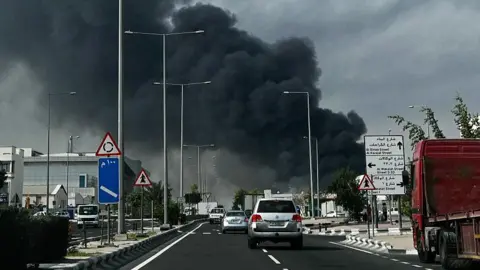
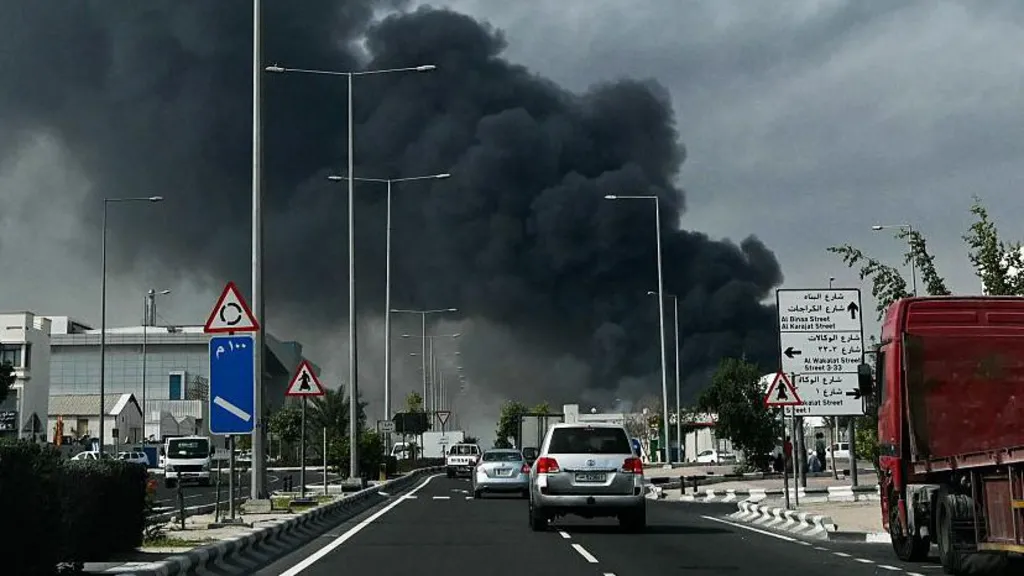
AFP via Getty Images Cars on a road in Qatar, as smoke billows into the sky after an alleged Iranian attack
Iran has attacked Gulf states in retaliation for Israeli and US bombing on its country AFP via Getty Images
 
No other course of action is feasible with Dubai and Doha having suffered immense missile hits leaving their luxury towers smoldering. Incoming missile alerts have introduced a new, unwelcome reality to Iran's neighbours, suddenly vulnerable to unexpected attack. The Emirates were forced to close their schools for weeks, while foreign residents fled. Interception of most of the thousands of missiles and drones out of Iran succeeded in keeping damage and lives lost to a relative minimum, but no country and no population appreciates living with this level of uncertainty.
 
Each of the targeted countries went their own way, there was no unified reaction. Qatar as usual presented itself as a key mediator between the United States and Iran, alongside Pakistan for the same purpose...supporting Iran and convincing the U.S. that a ceasefire is infinitely preferential to ongoing kinetic hostilities, punishing to the Gulf States and placing U.S. servicemen in ongoing danger. 
 
Negotiations amidst the uncertainty and tension have led the Emirates to strengthen alliances with both the United Sates and Israel. A pre-conflict rift between the UAE and Saudi Arabia has seen the Saudis keeping options open; maintaining channels with Iran, while attempting to influence American decision-making. Attesting to the medieval-era relational strains, Saudi Arabia and Iran are at loggerheads over Mecca, and the threat posed by Iran toward Saudi Arabia historically seems to have petered out for the present.
 
Gulf nations are now busy planning how best to proceed with uninterrupted passage of oil, food and other goods shipped out of the Middle East to global destinations. A new strategy of "zero Hormuz dependency" has persuaded the Emiratis to expand its ports outside the critical Strait susceptible to further closures by Iran, and to build oil pipelines and railways. Oman with its ports on the Arabian Sea far from the Strait is now seen as a crucial logistics hub trucking goods overland for its neighbours. 
 
https://ichef.bbci.co.uk/news/1024/cpsprodpb/fa9b/live/b3037100-4865-11f1-804a-9d85b054b34f.jpg.webp
Qatar has become one of the biggest exporters of natural gas  AFP via Getty Images
 

Labels: , , , ,

Monday, June 01, 2026

Qatar's Foundational Gas Shipments ... Poufff!

"The damage sustained by the LNG facilities will take between three to five years to repair."
"The impact is on China, South Korea, Italy and Belgium."
"This means that we will be compelled to declare force majeure for up to five years on some long-term LNG contracts."
Saad Sherida al-Kaabi, Qatar minister of state for energy affairs, president/CEO, QatarEnergy 
 
"The rating watch negative reflects the increased risk that the security environment for Qatar has more permanently deteriorated and the possibility that Qatar’s hydrocarbon infrastructure could again be a target."
"Combined with the closure of the Strait of Hormuz, [this] will have an adverse impact on Qatar’s public finances."
Paul Gamble, head, Middle East and Africa sovereign ratings, Fitch Ratings
 
"Countries that rely on Qatar for 20 or even 30 per cent of their energy imports are now asking what happens if that supply doesn’t come."
"The immediate response has been to approach the US and Australia about securing alternatives."
Gary Ng, senior economist Asia-Pacific, Natixis   
Qatar reels from Iran war impact
In the line of fire: Qatar’s Ras Laffan complex has become a target  Getty Images
 
Virtually no gas has been exported by Qatar for over two months -- this, for a state that derives over 60 percent of its revenue from gas and gas-related exports. Representing the kind of national wealth for a very small country that allowed it free reign to transform a desert peninsula into a glittering metropolis, and a political system that was able to spend billions in investment abroad, most notably in the United States, to the point where many academic institutions viewed Qatar's largess in the most positive of lights as a nation fundamentally linked to the kind of genteel, slow-motion jihad that goes largely unnoticed in the fragrant steam of disarming diplomacy.
 
Since the U.S.-Israel aerial attacks on the Islamic Republic of Irana regime of which Qatar is a staunch ally and supporter, and Iran's reaction in closing the Strait of Hormuz to international shipping, penalizing global trade, Qatar has been cut off from the sea routes it so heavily depends upon to both export its natural resources and import products ranging from vehicles to food. Qatar's massive sovereign wealth fund of $600 billion bought it stakes in Heathrow Airport, London, to the Empire State Building in New York. The impact of the war's regional instability has even told on Qatar's booming tourism, not quite booming at present.
 
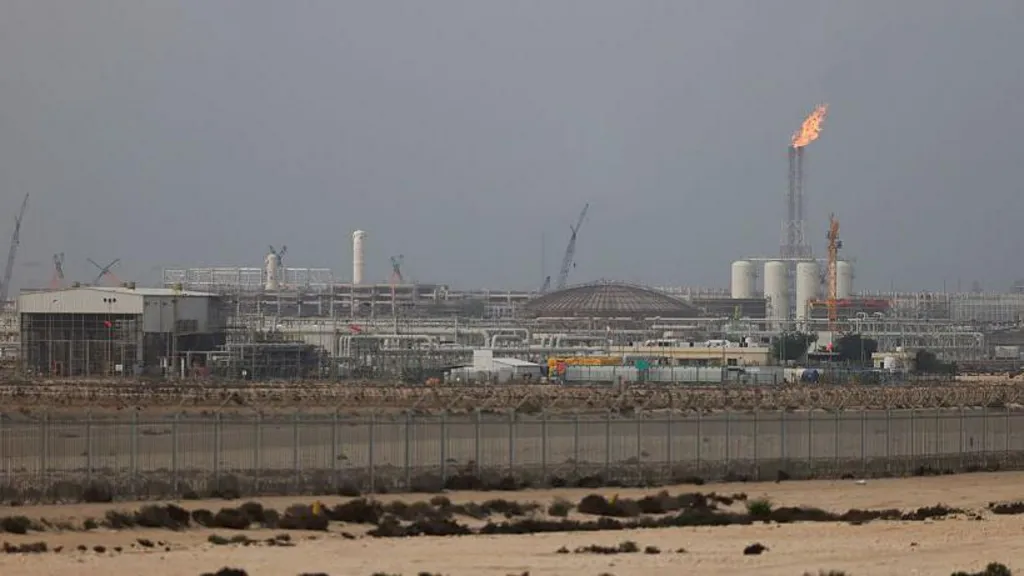
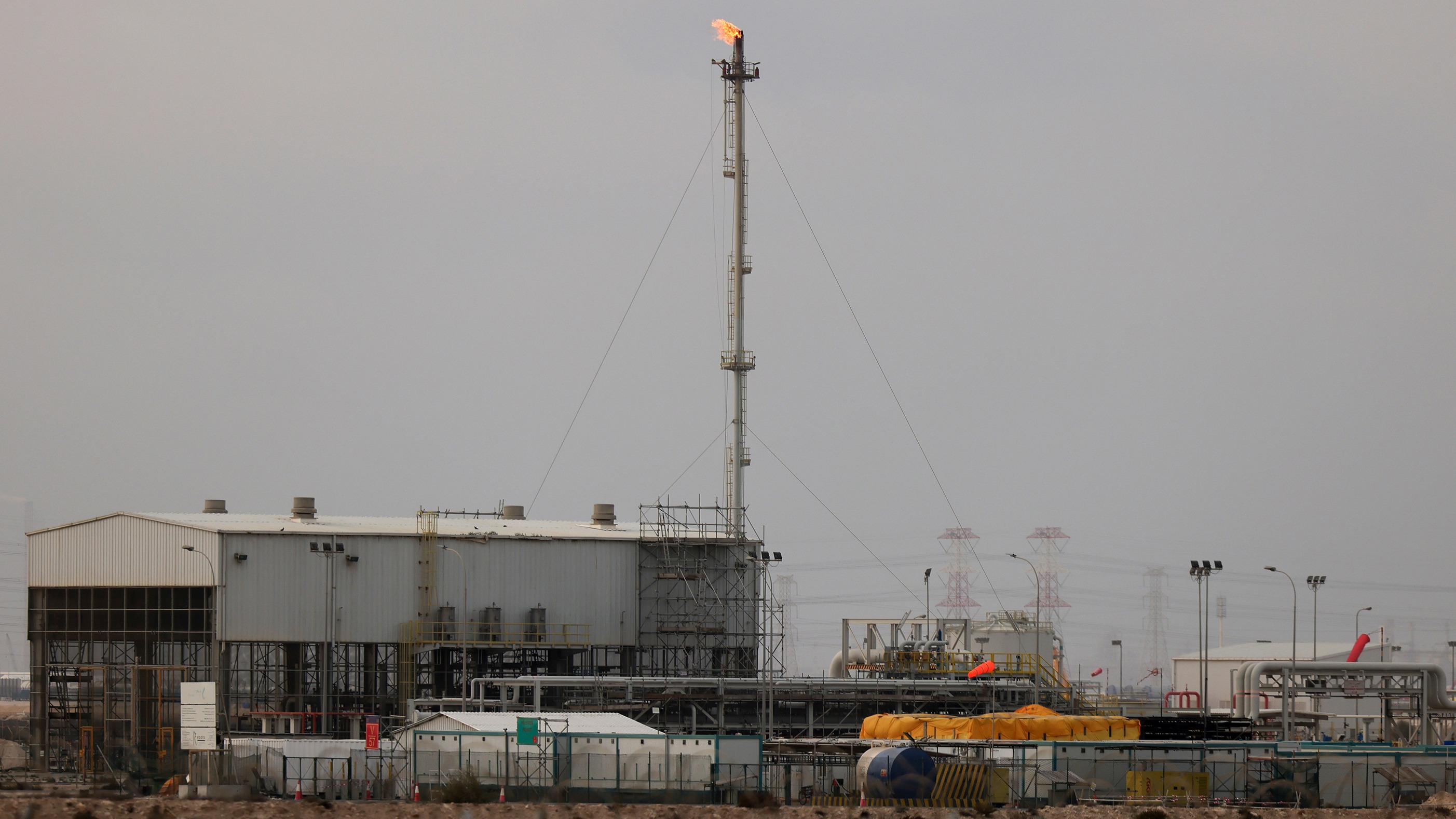
File photo of a gas platform in Qatar. (Handout photo via QatarEnergy)
File photo of a gas platform in Qatar   Photo: QatarEnergy
 
"[For Qatar, gas shipments] are nothing short of foundational."
"That is why Qatar is quickly falling into a very challenging fiscal situation."
"If there's a migration out [a situation where the huge foreign work force leaves] then that starts to get scary."
Ahmed Helal, managing director, Asia Group 
Qatar's industrial center for gas production, Ras Laffan, has been closed down. Loading cranes stand paralyzed at the country's vast Hamad port south of the capital Doha. Qatar has for decades shipped LNG to every corner of the globe. Qatar stood out for most of 2010 as the wealthiest per capita country in the world. Its economy grew at an average annual rate of 13 percent from the 1990s to the 2010s. Qatar is heavily reliant on foreign workers to the extent that roughly 90 percent of its 3.2 million residents are non-citizens.
 
A day following the Iranian blockade of the Strait, QatarEnergy announced it was unable to fulfill its contracts. In another two weeks Qatar's Ras Laffan plant was struck by Iranian missiles and drones, damaging critical equipment, causing an immediate 17 percent production capacity reduction. Analysts estimate that billions of dollars in revenue has been lost by QatarEnergy since February 28, the start-date of the war. The damage sustained by the Ras Laffan plant will take years to correct. 
https://imo.gov.qa/images/default-source/sliders/tourism-02c8f9b0c3-5175-4a6a-848b-585c49dab02d.jpeg?sfvrsn=11c265e3_2
Tourism in Qatar   The State of Qatar
 
Qatar's plans to diversify beyond fossil fuels, to become a popular tourist destination, has also been harmed, with the number of international visitors plummeting. Multinational companies, reacting to regional instability have recalled their staff out of the country. Importing some 90 percent of its food, Qatar has been forced to rework its supply chains where fresh produce from Europe and grain from the Americas, once transported by sea, are now diverted to airfreight routes or trucked through Saudi Arabia. Government subsidies are meant to keep the cost of food down.  
 
https://ichef.bbci.co.uk/news/1024/cpsprodpb/581d/live/57a56570-4865-11f1-9db4-19df36ab272c.jpg.webp
Iran has attacked Gulf states in retaliation for Israeli and US bombing on its country   AFP via Getty Images
 

Labels: , , , , , ,

Monday, April 13, 2026

That Critical Maritime Passage

"Today, we began the process of establishing a new passage and we will share this safe pathway with the maritime industry soon."
"Additional U.S. forces, including underwater drones, will join the clearance effort in the coming days."
U.S. Central Command commander Admiral Brad Cooper 
 
"Effective immediately, the United States Navy, the Finest in the World, will begin the process of BLOCKADING any and all Ships trying to enter, or leave, the Strait of Hormuz. At some point, we will reach an “ALL BEING ALLOWED TO GO IN, ALL BEING ALLOWED TO GO OUT” basis, but Iran has not allowed that to happen by merely saying, “There may be a mine out there somewhere,” that nobody knows about but them. THIS IS WORLD EXTORTION, and Leaders of Countries, especially the United States of America, will never be extorted. I have also instructed our Navy to seek and interdict every vessel in International Waters that has paid a toll to Iran. No one who pays an illegal toll will have safe passage on the high seas. We will also begin destroying the mines the Iranians laid in the Straits. Any Iranian who fires at us, or at peaceful vessels, will be BLOWN TO HELL!"
U.S. President Donald J. Trump 
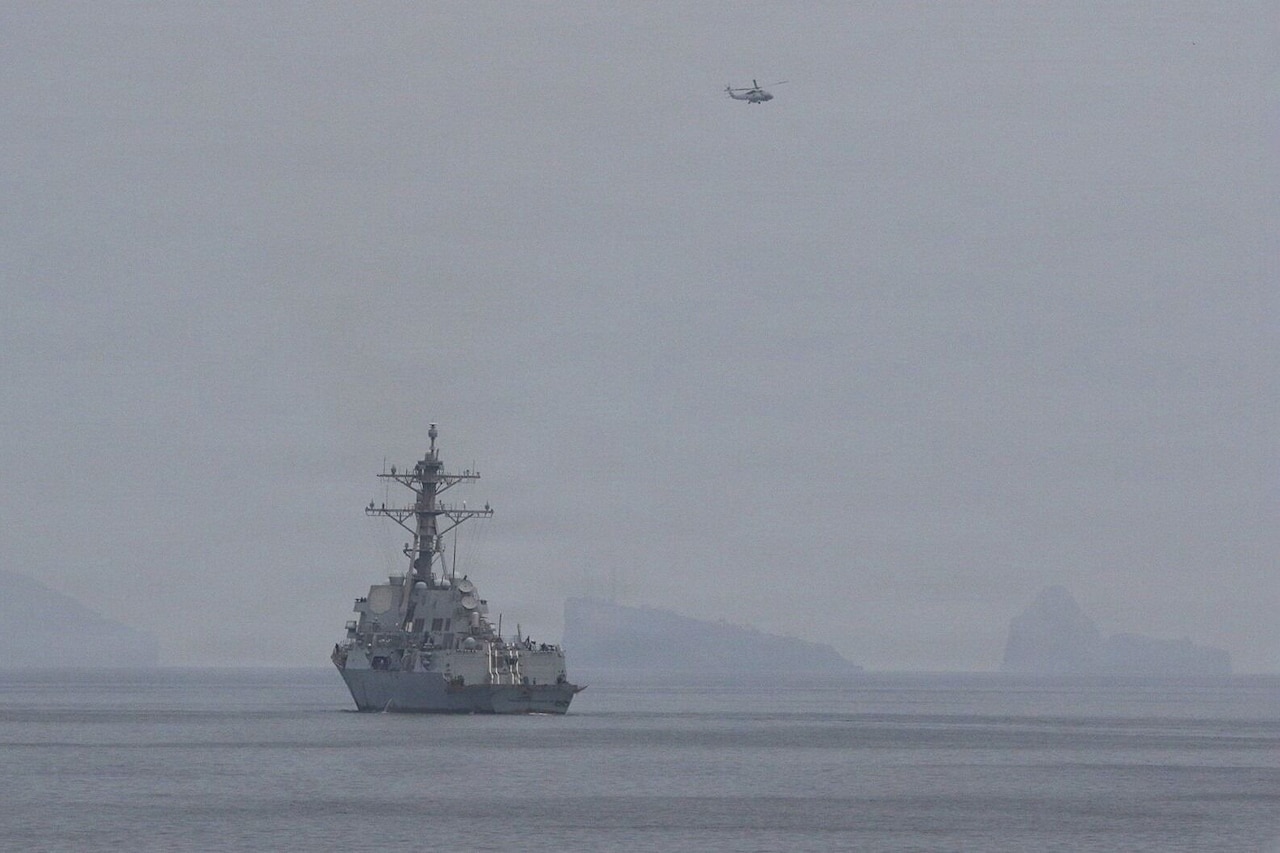
A large military ship sails in the water as a military helicopter flies overhead.

A Navy destroyer in the U.S. Central Command area of operations transits the Strait of Hormuz, April 11, 2026.  Photo: U.S. War Department  

"The blockade will be enforced impartially against vessels of all nations entering or departing Iranian ports and coastal areas, including all Iranian ports on the Arabian Gulf and Gulf of Oman. CENTCOM forces will not impede freedom of navigation for vessels transiting the Strait of Hormuz to and from non-Iranian ports."
"Additional information will be provided to commercial mariners through a formal notice prior to the start of the blockade. All mariners are advised to monitor Notice to Mariners broadcasts and contact U.S. naval forces on bridge-to-bridge channel 16 when operating in the Gulf of Oman and Strait of Hormuz approaches [per the release]."
Centcom press release  
The U.S. Department of War announced on its website that the USS Frank E. Peterson and the USS Michael Murphy are operating in the Persian Gulf, part of a broader mission to fully clear the Hormuz Strait -- an international sea passage and essential trade corridor -- of sea mines, laid courtesy of the Islamic Revolutionary Guard Corps. Underwater drones, along with  additional American forces, are set to join the clearance project in coming days.
 
https://c.ndtvimg.com/2026-04/vsb3hv7o_us-navy-ship_625x300_12_April_26.jpeg?downsize=773:435
US has deployed two Navy guided-missile destroyers to Hormuz (Representational Image)

"We're sweeping the strait. Whether we make a deal or not makes no difference to me", said President Trump, even as negotiations between U.S. and Iranian representatives -- alongside a Pakistani mediator -- on a potential ceasefire broke down. The Iranian preconditions were a non-starter, with Israel intent on continuing its strikes on Hezbollah in southern Lebanon. Iran's continued insistence on its right to continue with its nuclear program, its demand that the U.S. withdraw from bombing Iran and prepare to pay reparations, along with its refusal to put a stop to its support of proxy terrorist groups ensure the talks would go nowhere.

The Islamic Republic's 'red lines' expressed as demand for damage caused by U.S.-Israeli strikes compensation and the release of  Iran's frozen assets, are a reflection of the supreme arrogance of a ruling elite that refuses to acknowledge its position as a bludgeoned theistic hegemon that threatened its neighbours and launched terror attacks by proxy internationally whose beating is its just due for the further threat its nuclear ambition poses to the world at large. 

The country of 93 million people is deserving of relief from the tyranny of a regime that persecutes its own population, using vast oil reserves to fund global terrorism rather than investing in internal infrastructure of benefit to the country's future -- not as a conquering Islamist totalitarian state, but as a responsible government adhering to international norms of human rights standards. That its disregard for and abuse of its female population's right to equal treatment and respect given to their male counterparts is ignored by the United Nations where Iran was recently appointed to a human rights group is cynicism on steroids.

https://unwatch.org/wp-content/uploads/UN7269960.jpg.webp
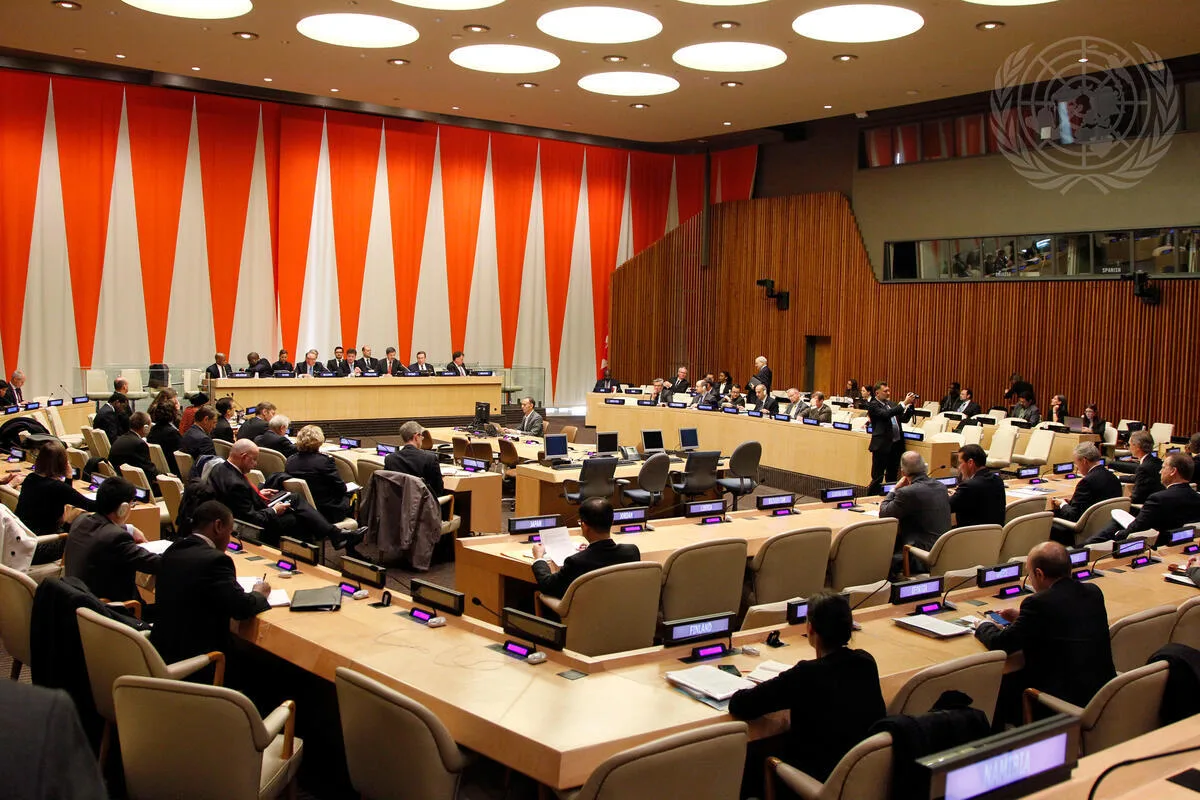
United Nations General Assembly, UN Watch

The 15-point proposal by the United States includes restrictions on Iran's nuclear program and the reopening of the Strait of Hormuz, while Iran's 10-point proposal prior to the talks focused on a guaranteed end to the war and control over the Strait of Hormuz, where it plans to collect a maritime passage fee for each ship passing through, amounting to $1 million. An average of 100 to 130 ships passed through the strait daily, prior to the U.S.-Israel joint aerial assaults. 

That toll, if permitted to proceed, despite the deep objections of the other Gulf States that the IRGC has been bombing persistently since February 28, would enable the Islamic Republic to amass an astronomical fortune, far outstripping its revenues up to the conflict derived from its energy products. And all of it would be directed toward restoring its destroyed ballistic missile and drone stocks, along with other military assets that it has lost during the prosecution of the war, including warplanes and warships. 

"An integrated suite of unmanned maritime systems and sensors, the MCM MP counteracts mines in the littorals while increasing the host vessel’s standoff distance from the threat area."
"Embarked with the MCM MP, [a littoral combat ship] or a vessel of opportunity can conduct the full spectrum of detect-to-engage operations (hunt, neutralize, and sweep) against mine threats using sensors and weapons deployed from the MCM Unmanned Surface Vehicle (USV), an MH-60S multi-mission helicopter, and associated support equipment."
U.S. Navy, new mine countermeasures mission package
Getty Images


Labels: , , , ,

Thursday, April 02, 2026

Trump, Excoriating U.S. 'Allies'

"You'll have to start learning how to fight for yourself, the U.S.A. won't n e there to help you anymore, just like you weren't there for us."
"Iran has been, essentially, decimated. The hard part is done."
"Go get  your own oil!"
"[Paris has been] VERY UNHELPFUL]. The U.S.A. will REMEMBER!!!"
"We’ve been there automatically, including Ukraine. Ukraine wasn’t our problem. It was a test, and we were there for them, and we would always have been there for them. They weren’t there for us."
"All of those countries that can’t get jet fuel because of the Strait of Hormuz, like the United Kingdom, which refused to get involved in the decapitation of Iran, I have a suggestion for you: Number 1, buy from the U.S., we have plenty, and Number 2, build up some delayed courage, go to the Strait, and just TAKE IT”."
"I’ve long said that, you know, I wonder whether or not NATO would ever be there for us. So … this was a great test, because we don’t need them, but they should have been there."
U.S. President Donald J. Trump
https://www.thedailybeast.com/resizer/v2/K5KS2W5L45A4JNL6OR5LUAHCQI.JPG?auth=ffde8817218f541eef32308836e222c7fc2c8ac856e38fe3e2bfe1660fdf402e&width=1440&height=1004
Donald Trump has also called NATO countries that do not help with the war in Iran "cowards." Evelyn Hockstein/REUTERS
 
"I hope that amid the emotions surrounding the President of the United States today, a moment of calm will come."
"And why? Because there is no NATO without the United States, and it is in our interest that this calm comes."
"But there is also no American power without NATO."
Polish Defense Minister Wladyslaw Kosiniak-Kamysz 
https://www.reuters.com/resizer/v2/6VNZZMO6CRJJ3G7AGD7B7N6W3U.jpg?auth=ce471fba128412505d459bc8e38d5acbbc1afa1df3da776fc344ad4e822e9e53&width=960&quality=80
Cargo ships in the Gulf, near the Strait of Hormuz, as seen from northern Ras al-Khaimah, near the border with Oman?s Musandam governance, amid the U.S.-Israeli conflict with Iran, in United Arab Emirates, March 11, 2026. REUTERS/Stringer
 
Frustration with allies  unwilling to commit themselves through the NATO military alliance in support of the U.S. conflict in Iran, has hit boiling point with President Trump who is now telling his erstwhile allies to "go get  your own oil" in respect to the closure of the Strait of Hormuz by Iran, has sent energy prices soaring. 
 
Following U.S. strikes hitting Isfahan, the central Iranian city, leading to Tehran attacking a fully loaded Kuwaiti oil tanker in the Persian Gulf, Mr. Trump's precarious patience appears to have hit its limit. A month after the start of the aerial bombardment by the U.S. and Israel, the intensity of strikes on either side has not levelled off and major disruptions have erupted to the global supply of oil and natural gas, reflected by panicked global markets.
 
Earlier, Mr. Trump  shared footage of the massive attack on Isfahan, home to one of three nuclear enrichment sites that was attacked last June by U.S. strikes, where it is suspected that much of Iran's highly enriched uranium was stored. It seems evident that no agency foretold the extent of Iran's stranglehold on the Strait of Hormuz, with its catastrophic results to world shipping, much less the Iranian leadership's decision to attack its neighbours' energy infrastructure.
 
The roiling of world markets and the strait-closing effect on many basic goods such as fertilizer normally shipped across the world, has had its effect on the American president who directed responsibility at the United Kingdom and France for refusing to enter a war for which no clear endgame could be deduced, a war they were never consulted on, nor an alert given that it would be forthcoming. 
 
https://nationaltoday.com/wp-content/uploads/not-wordpress/2026/03/69cb37cf795ba.jpg
The U.S. attack on an Iranian ammunition depot in Isfahan raises tensions and the risk of further military escalation in the region. Los Angeles Today
 
France  permitted the U.S. Air Force use of the Isteres base in southern France once it received guarantees that planes landing there would not be carrying out strikes in Iran. Europe's loudest critic of the war, Spain stated it chose to close its airspace along with its joint U.S.-Spain airbases for any planes involved in the conflict. As for Italy, an official confirmed that U.S. military assets were refused use of the Sigonella airbase in Sicily for any operation with links to the offensive in Iran. 
 
American bombers were intending to land at the Italian base prior to continuing on toward the Middle East. However, affirmed Italy's Defence Minister Guido Crosetto, Italy would still allow the US. use of its bases; no cooling of relations between the two countries has resulted over the Iran conflict.
 
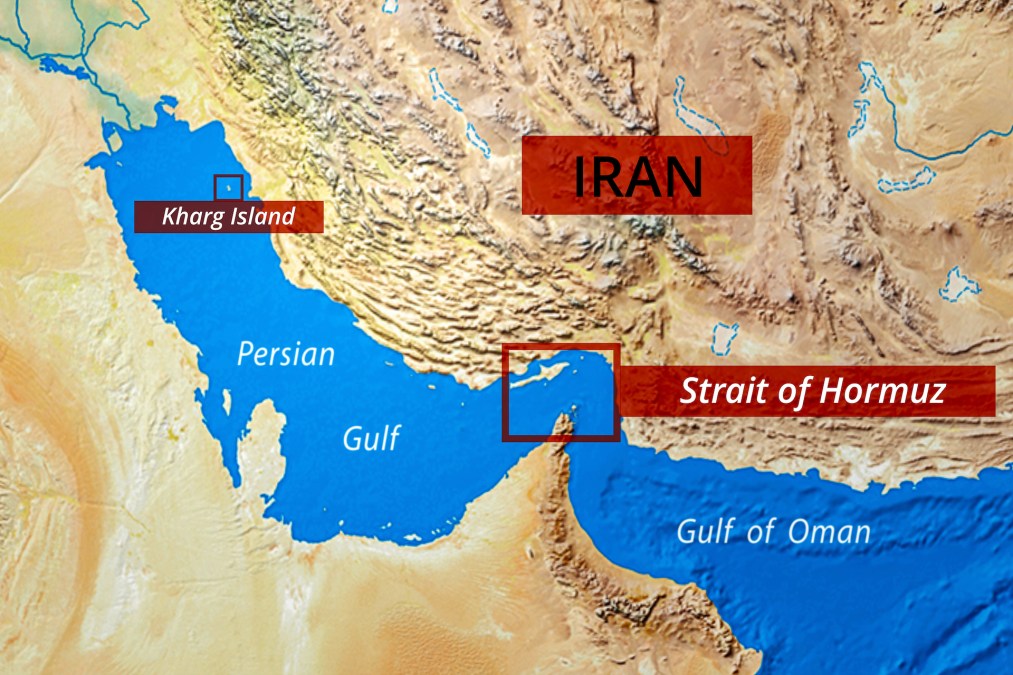
The world is now on notice that should a ceasefire not be "shortly" reached and the strait reopened, the U.S. was prepared to broaden its offensive, and that would include attacking the Iranian oil export hub on Kharg Island. 
 
https://www.reuters.com/resizer/v2/NB5JSYDZQZICZEQI6W3PU2YAOI.jpg?auth=b794af94d9519a0de03e8d8e92d9db35b8396c2e944f2107c80835dd27527ed9&width=960&quality=80
Luojiashan tanker sits anchored in Muscat, amid the U.S.-Israeli conflict with Iran, in Muscat, Oman, March 7, 2026. REUTERS/Benoit Tessier
"We don't want to have to do more militarily than we have to."
"But I didn't mean it flippantly when I said, in the meantime, we'll negotiate with bombs."
U.S. Defense Secretary Pete Hegseth 

Labels: , , , , , , ,

Friday, March 20, 2026

Vital Global Shipping Route --- Strait of Hormuz

"[Iran has managed to profit from oil sales and also] preserve its own export artery [by using control over the choke point]."
"[The latest passages through the Strait of Hormuz show the Strait was not simply] closed. It is better understood as closed selectively against some traffic, while still functioning for Iranian exports and a narrow set of tolerated non-Iranian movements."
Kun Cao, client director, Reddal consulting 
 
"[The risks of transiting Hormuz have raised] insurance costs for cargo and ships while increasing logistics costs for shippers choosing alternate routes."
"[Supply chain disruptions] would begin to affect production in Turkey earlier than in other areas." [Turkey is a major supplier of light commercial vehicles to the European market]." 
"[If the conflict persists], production cost inflation would become more entrenched."
Stephanie Brinley, analyst S&P Global Mobility 
https://www.stuff.co.nz/media/images/9Tzi8ywRz924XE3uHaD6DZ3Ef+IdbOiYlvIROR5vlqUeRrexTocZGobKRJ9od%2Fgnk3B%2FCeKTmTAsIjj6Q0YaYSAO725RwfwI+2THgGYlwMDjSJYgVP2ivG7iBHyoXuo8Hf9TGNw1zHPNK+ebzdTM0ZvzaGXAmCc8sOHTPnGsDCMmAXJDTE3+LrKx3I0LYE0MhtRwEMefk2YyTXOhytUXzGITdel3fti+PvM4zzbyenrk7OclcVv1UoZJRFWFPa6TxtNLKrHPECpvYfnNxgKJC6tOmRpp+1gQaFIggI5PmXqMjrppN0oo+Jb23xocpnFqcpQpNghhm%2F+6Tj6Y7DhhoMKcdeNBHwNzpig+Ts3yMgzJDcZCTo%2FaxhZ1Dy+sF8GknlrICvuR7IQzAdCwKOo7o5xWvXxFDQhHlpAOnXaZJpZaAggti1bT0veT9B4u3rQl59Fx58pb6SO55keEqjUojt8mwbpvlifV250mTmoW%2FYOBTVE4xU3aAWOsmVtLIcCa0%2F3G%2FmHtT7rRi9JDeMDb9A==?resolution=1240x700
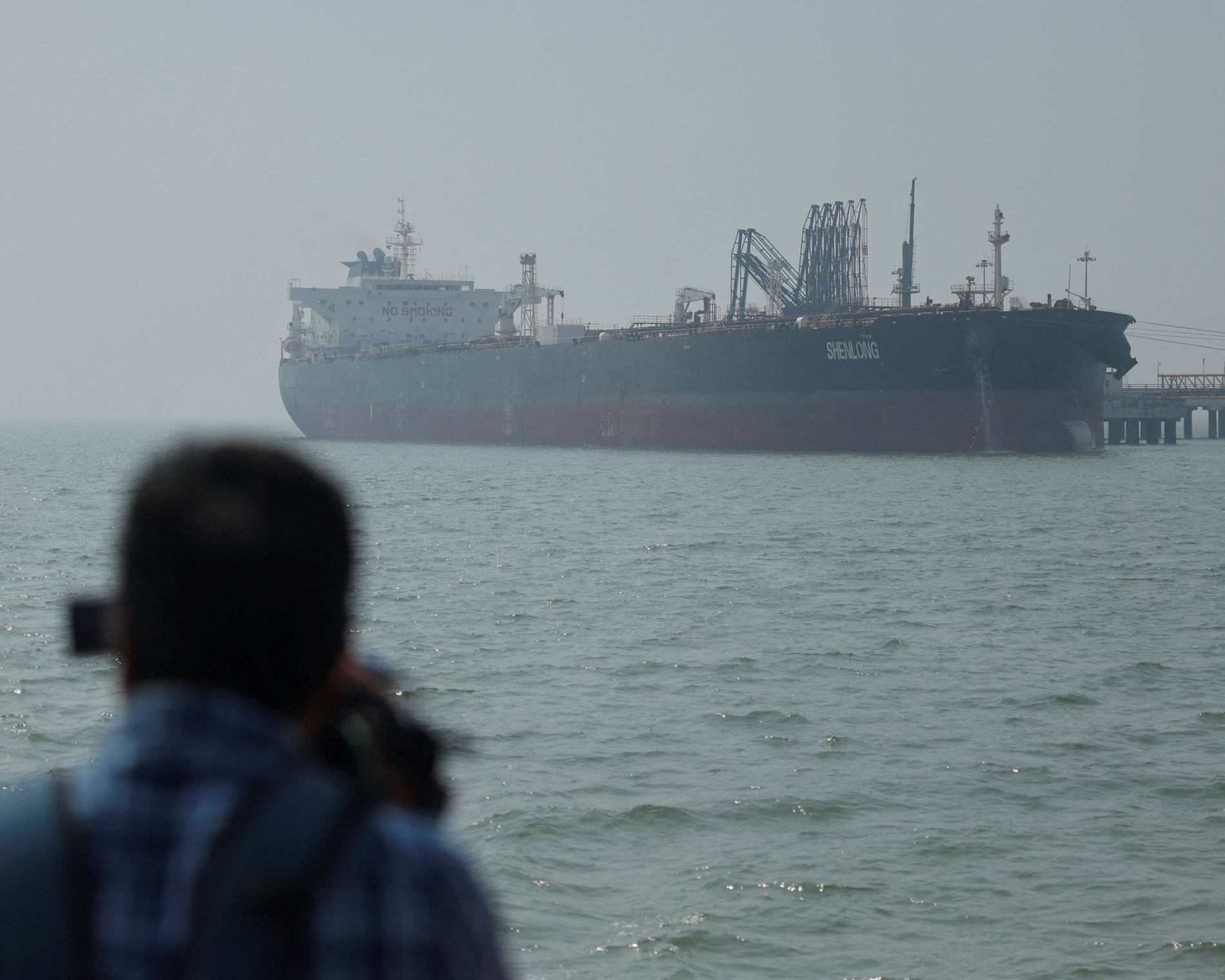
 Liberia-flagged tanker Shenlong Suezmax, carrying crude oil from Saudi Arabia, that cleared the Strait of Hormuz and was seen in port in Mumbai, India on March 12. Photo: AP
"Rerouting shipments around the Strait of Hormuz will add days or weeks to travel time, adding to freight costs and causing a backlog from the slower cargo turnover."
"And that’s before any increase in the cost of ‘war risk' insurance premiums."
"Though Iran itself isn’t a semiconductor producer, the conflict’s disruption to global shipping will cause chip deliveries to be delayed or stranded at ports in Asia, reducing availability for assembly lines. Given that modern vehicles may contain as many as 3,000 chips each, and the industry hasn’t completely recovered from a number of supply chain issues over the last half decade, another disruption magnifies the ongoing vulnerability."
"Automotive manufacturers operate on very thin margins compared to many high tech sectors. There’s just no room to absorb dramatic changes in input costs such as steel, plastics, and freight, and, ultimately, prices to the consumer rise."
AutoForecast Solutions manufacturing expert Sam Fiorani   
https://i.guim.co.uk/img/media/b932da42d1a80939609b7dcc699d9dfcd3bf8c76/220_0_4773_3818/master/4773.jpg?width=1900&dpr=1&s=none&crop=none
The Liberia-flagged tanker Shenlong Suezmax managed to cross the strait last Friday, one of the few vessels that have done so since the war broke out. Photograph: Francis Mascarenhas/Reuters
 
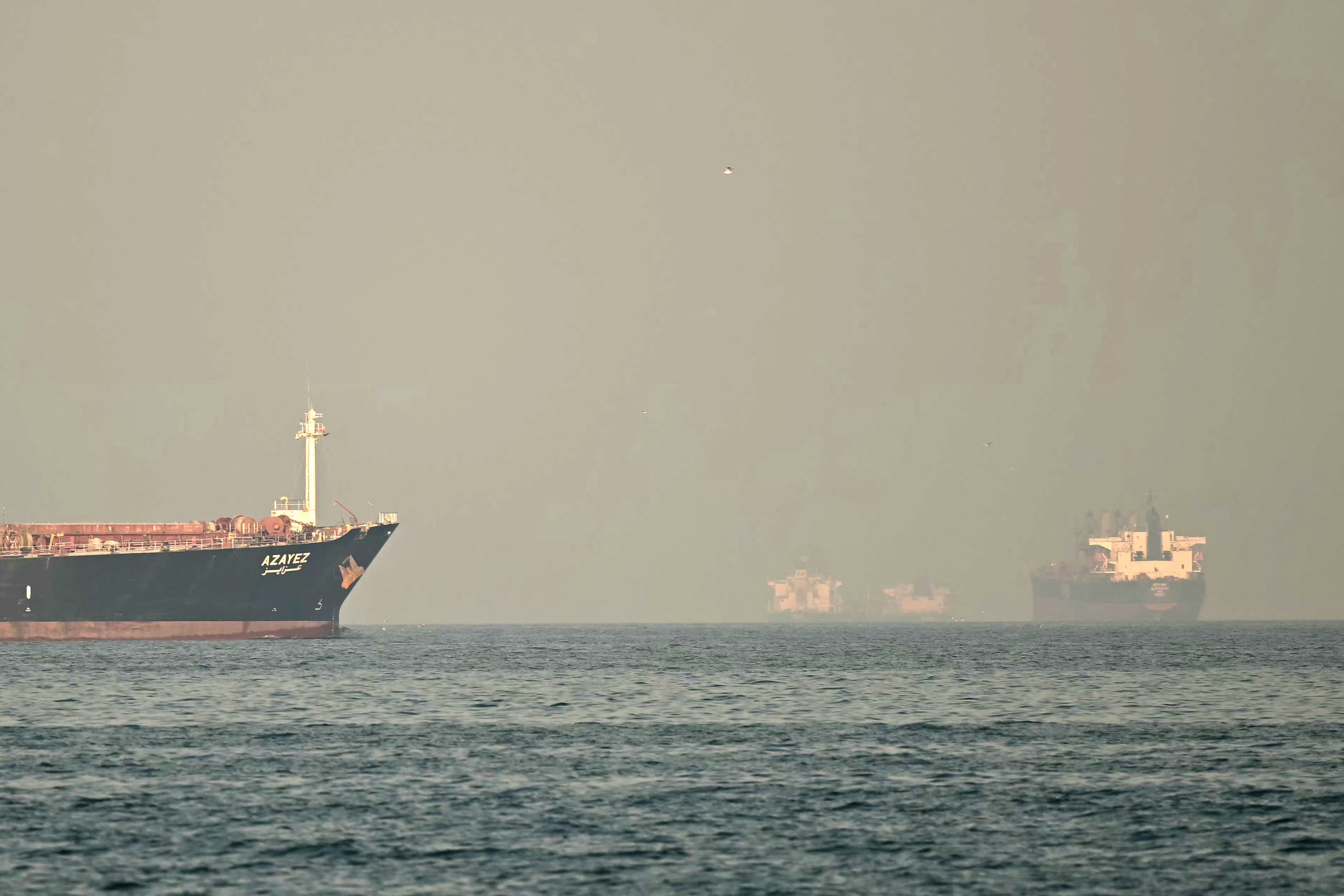
Since the onset of the U.S.-Israel war with Iran, some 90 ships, including oil tankers, have managed to cross the Strait of Hormuz. Iran itself continues to export millions of barrels of oil, despite the waterway having been effectively closed, a revelation owing to tracking by maritime and trade data platforms. The difference is that many of these vessels passing through the strait represent 'dark' transits that evade western government sanctions and oversights, with ties to Iran according to Lloyd's List intelligence.
 
As governments step up negotiations with Iran, vessels linked to India and Pakistan also have successfully crossed the strait recently. While crude oil prices leaped above US$100 a barrel, Western allies and trade partners were being pressured by U.S. President Donald Trump to send warships to the region to help reopen the strait in the hopes of bringing prices back to a semblance of normal. His request was met with a decided lack of enthusiasm in Europe.
 
The Strait of Hormuz, long a waterway for global oil and gas transport famously supplying one-fifth of global crude oil, has been closed to shipping  traffic since early March, following the start of the conflict. Since then, some 20 vessels were attacked in the area, targeted by Iran. Which hasn't stopped Iran itself from exporting above 15 million barrels of oil during that same time period, according to trade data and estimates by analytics platform Kpler.

China, in the face of Western sanctions, is the largest buyer of Iranian oil. Even so, some transit of ships linked to China have also been blocked from using the Strait. However, data show that between March 1 and 15, including 15 oil tankers, at least 89 ships crossed the Strait of Hormuz, according to Lloyd's List Intelligence, greatly diminished in numbers from the normal 100 to 135 daily vessel passages prior to the war's outbreak.      
                                                                                       
Of the 89 vessels that transited the waterway, over a fifth were thought to be affiliated with Iran; Chinese and Greece affiliated ships were among the rest, even as other vessels also have been managing the transit, some turning off their transponders to avoid detection. According to Richard Meade, editor-in-chief of Lloyd's List, vessels may be transiting "with at least some level of diplomatic intervention. In other words, the Iranian regime may have effectively created a safe corridor" allowing some ships to pass close to the coast of Iran. 
 
Marine Traffic ship tracking platform revealed that some vessels near or within the strait declared themselves to be linked with China, or they had all Chinese crew to reduce risks of being attacked. Military sites on Kharg Island off the coast of Iran were bombed by the United States. The island is vital for Iran's oil network and exports, but the bombing was confined to military sites, leaving Iran's oil infrastructure intact, for the present. 
"The thinkers within the Islamic establishment, they recommended that if there is a next time [following last summer's 12-day war] — and a good half of them actually believed that the next round would be coming at some point in the near future — pressure should be put on the world or oil markets."
"And, if the United States is involved, on the US companies involved in the Middle East oil and gas market and also on the Gulf countries because they house those air bases. "
"This particular body of water is one of the most important, strategic choke points in the world."
"[Iran] no longer allows any ship to use the international shipping corridors in the Strait of Hormuz using Omani waters. They actually reroute them north of the Larek Island, completely inside Iranian waters, and then they’re turned all the way back in toward the Gulf of Oman."
"I think [the rerouting is] part of the psychology of this whole thing, they want to show that they have full control, and they want to prevent or dissuade or deter the Americans from interfering with this kind of controlling operation."
"They are making the transit too dangerous and, without actually mining the Strait, they [have] effectively stopped all shipping traffic in the Strait of Hormuz." 
Farzin Nadimi, Iran military analyst, senior fellow, Washington Institute for Near East Policy
 
"Each country, according to international law and the law of the sea, has got about 12 nautical miles [approximately 22km] of territorial sea, which is part of the land of the coastal state."
"That means that the narrowest part of the Strait of Hormuz is shared between Oman and Iran as their territorial waters."
"This means every vessel which passes through this strait, whether military vessels, ships, oil tankers ... they pass through either the Iranian territorial waters or Oman territorial waters."
"[Under the law of the sea, while either nation might put regulations or checks in place], they cannot hamper innocent passage of vessels, including military vessels."
International law expert, Hossein Esmaili, Flinders University  
https://s.yimg.com/ny/api/res/1.2/swu7Tdh4y_eJRsnY5_Vw_w--/YXBwaWQ9aGlnaGxhbmRlcjt3PTk2MDtoPTY0MA--/https://media-mbst-pub-ue1.s3.amazonaws.com/creatr-uploaded-images/2026-03/b7dbea50-1d53-11f1-b6fe-c746db7a38ed
Ships line up in the Strait of Hormuz as seen from Mina Al Fajer, United Arab Emirates, on March 11. (AP Photo/Altaf Qadri) · ASSOCIATED PRESS


Labels: , , , , ,

Tuesday, March 17, 2026

A Non-Coalition of the Unwilling

"We are not at war with anyone."
"[France's warship deployment's intent is to allow France] to respond to emergency situations [and evacuate French nationals if necessary."
"We stand by the side of our allies and our friends. There have been some interceptions that have continued in recent days."
French President Emmanuel Macron
Cargo ships and tankers are seen in the Strait of Hormuz on Feb. 25, 2026. (Giuseppe Cacace / AFP via Getty Images)
"We must be careful -- it's always a risky operation -- to make sure our warships are not targeted." 
"Because if they are attacked, we have to fire back."
Former French President Francois Hollande 
 
"It is not NATO's war. NATO is an alliance to defend the alliance area."
"[Berlin has taken note but] The United States did not consult us before this war, and so we believe this is not a matter for NATO or the German government."
Stefan Kornelious, spokesman for German Chancellor Friedrich Merz
 
"It's only appropriate that people who are the beneficiaries of the strait [of Hormuz] will help to make sure that nothing bad happens there."
"If there's no response or if it's a negative response, I think it will be very bad for the future of NATO."
U.S. President Donald Trump
Donald Trump, seated at his desk, gestures with his hands out to the side
U.S. President Donald Trump speaks before signing an executive order in the Oval Office of the White House on Monday. (Julia Demaree Nikhinson/The Associated Press)
 
The American President, during the U.S.-Israeli aerial strikes against the Islamic Republic of Iran and the consequential blockading by Iran of the Strait of Hormuz to the world's 1/5th most important shipping route, has asked his allies in the North Atlantic Treaty Organization and others, that includes France, China, Japan, South Korea and the United Kingdom for their assistance in securing global shipping through the strait. Thus far there have been far more demurrals than offers of assistance. Appealing to China, in any event, would be a non-starter since it has allied itself with Iran and signed a Comprehensive Strategic Partnership, in its thirst for Iranian oil. 
"From our perspective, it [the Strait of Hormuz] is open -- just not for the U.S., Israel and its allies."
"[There have been] delusional [claims that Iran is searching for a negotiated end to the war]."
"[Wrong, Iran seeks nether] truce nor talks." 
Iranian Foreign Minister Abbas Araghchi
Several aircraft can be seen parked behind a fence as dark smoke rises in the distance.
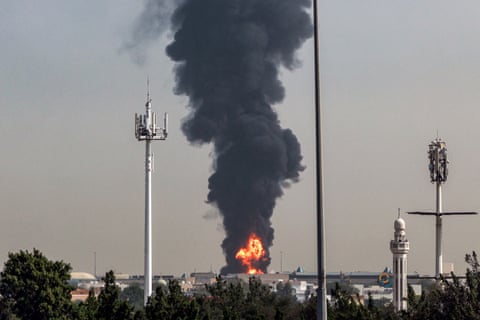
Smoke can be seen in the distance from Dubai International Airport after a drone struck a fuel tank, forcing the temporary suspension of flights on Monday. (The Associated Press)
 
At the present time, cargo ships are stuck waiting in the Gulf, or have the alternative of a much longer detour around the southern tip of Africa. As the war in Iran continues, there will appear shortages and price increases on a widening range of goods, beyond soaring energy prices. The wider global supply chain beyond energy includes pharmaceuticals from India, semiconductors from Asia and Middle East-derived products such as fertilizers from oil byproducts. 
 
Foreign citizens from around the world work in the Middle East; more than any other country in Europe, France alone has over 400,000 of its citizens working there; with over 60,000 in the United Arab Emirates. Spain, Italy, the Netherlands and Greece have deployed their frigates in the region. France has signed key defence agreements with several countries; Qatar, Kuwait and the United Arab Emirates -- a permanent base in Abu Dhabi where French air and naval forces saw a doubling of Rafale fighter jets.
 
Typhoon and F-35 fighter jets, helicopters and air defence systems have been sent by the U.K. to assist in intercepting Iranian missiles and drones and to protect British troops stationed across the region, particularly in Cyprus and Qatar, along with Britain's other partners in the Middle East. France's Rafale jets have intercepted drones from Iran targeting the U.A.E. since the war's beginning. 
 
France's President Macon urged Iran to halt strikes against regional countries as the first Western leader to speak directly with Iranian President Masoud Pezeshkian since the war broke out. It will be remembered that President Macron was always the first, the second and the third to speak with Vladimir Putin about his invasion of Ukraine. According to Mr. Macron "a diplomatic solution" is required to put a stop to the escalation. As  a major peacemaker, Mr. Macron spoke as well with Israeli Prime Minister Benjamin Netanyahu and U.S. President Donald Trump.
 
The war continues. 
 
Fire and thick black smoke rise Dubai’s international airport
Fire and smoke rise from Dubai’s international airport on Monday after a ‘drone-related incident’. Flights were disrupted. Photograph: AFP/Getty Images
"The feeling is, this is not Europe’s war."
"Of course we are allies with America, but we don’t really understand their moves recently."
"We haven’t been consulted, and we don’t really understand, what are the objectives of this war."
"It is in our interest to keep the Strait of Hormuz open." 
Kaja Kallas, EU foreign policy chief 

Labels: , , , , ,

Thursday, March 05, 2026

Locked Out Shipping in the Strait of Hormuz

"Our candidates are worried. And they are not worried about the Middle East. They're worried about [the] United States and Israel ... There seems to be a lot of rules being broken, and that is a scary place to be. The candidates, they're sending pictures and posting stuff about fires. Some people are overly concerned. The rest of the people know that it's a fairly safe country in general. But again, the fear is not coming from the Middle East. The fear is coming from the U.S. and Israel and how far they're going to take it."
"It's small wonder why many of the employees feel like sitting ducks. We work in oil and gas only, and all of our clients are the national oil companies. So they're government-owned companies for oil and gas, LNG production, and all of the employees have just been told to wait for it [the situation] to stabilize."
"There's a lot of fear and desire to leave the area. And they're not able to. There's no way in or out. So if you're a Canadian citizen, the Government of Canada and the U.S. government aren't able to really do anything for the citizens who are living and working there, but the national countries' governments over there are doing quite a bit. The UAE is covering all the costs for hotels and whatnot, for stranded people and the people who are living there just being told to stay home."
Anisa Rosvold, regional vice-president Arabian Gulf region, Petro Staff International 
https://smartcdn.gprod.postmedia.digital/edmontonjournal/wp-content/uploads/2026/03/0409-biz-wire-aramco_66156940.jpg?quality=90&strip=all&w=564&h=423&type=webp&sig=JrsJn1FaylODKZjP7-kOYw
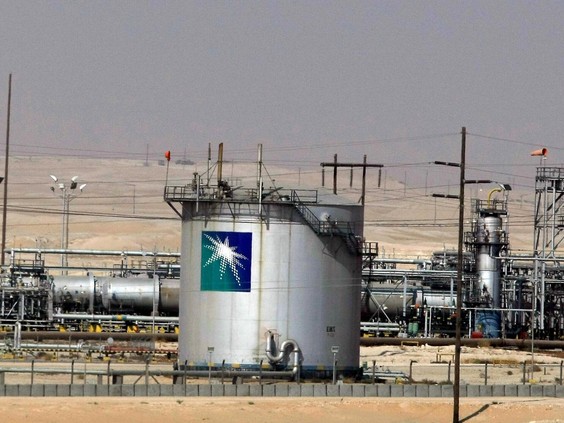
A general view shows the Saudi Aramco oil facility in Dammam City, 450 kilometres east of the Saudi capital, Riyadh. Photo by Hassan Ammar /AFP/Getty Images
 
"Insurance companies are cancelling war risk coverage ​for vessels in the Middle East Gulf as the widening Iran conflict disrupts shipping, leaving tankers damaged or stranded and at least two people dead."
"Shipping through the Strait of ‌Hormuz between Iran and Oman, which carries around one-fifth of oil consumed globally as well as large quantities of gas, has ground to a near halt after vessels in the area were hit as Iran retaliated against US and Israeli strikes."
"One tanker in the region was ablaze on Monday, at least four others were damaged and about 150 ships were stranded."
Business Recorder 
Iran announced navigation has been  closed through the Strait of Hormuz and waters surrounding it, from Sunday, the day following the first aerial attacks on the country by Israel and the United States. While defending its territory from the combined attacks that have targeted its military and nuclear installations, flattened government buildings, killed Iran's Supreme Leader and much of the government and Islamic Republican Guard Corps elite, Iran has also focused on causing total disruption and chaos within the Middle East in a surprising move that has alienated its neighbours, including those in support of Iran, like Qatar and Oman.
https://www.usnews.com/object/image/0000019c-aeff-d0a0-a9bc-effffdf00000/tag%3Areuters.com%2C2026%3Anewsml_LYNXMPEM210Z3%3A12026-03-02T144059Z_1_LYNXMPEM210Z3_RTROPTP_3_IRAN-CRISIS-OMAN-HORMUZ.JPG?update-time=1772500378000&size=responsive970
Birds fly near the boat in the Strait of Hormuz amid the U.S.-Israeli conflict with Iran, as seen from Musandam, Oman, March 2, 2026.  REUTERS/Amr Alfiky
 
While Iran's plans to foment a wider war, using its military resources to send out thousands of drones and missiles over Saudi Arabia, the UAE, Kuwait, Qatar and Oman, numbers greater in total than they launch to strike Israeli targets, what is left of the Iranian military command has not yet called on the services of its Houthi proxies in Yemen which has up to the present been striking international shipping in the Strait, upending normal international shipping. 
 
In the last few days 150 ships including tankers for oil and liquefied natural gas where 10% of the world's container ships pass through, have dropped anchor, unable to venture any further. 

The ships have been ensnared in backups, cargo soon to begin  accumulating at ports and transshipment hubs in Europe and Asia. Asian governments and refiners have been forced to assess their oil stockpiles in this aura of uncertainty where no one knows how extensive it will become or how long it will be before normal shipping passage can resume with safety.

With the threat issued by the IRGC commander that any ship attempting transit of the 21-mile-wide (34-km-wide) maritime chokepoint, tankers remain clustered in open waters off the coasts of Gulf oil producers, including Iraq and Saudi Arabia, and LNG giant Qatar. While berthed in the Middle East Gulf, one U.S.-flagged tanker was damaged by 'aerial impacts' while a Honduras-flagged tanker was burning in the Strait of Hormuz after being hit by IRGC drones.
 
Photo: Reuters
Photo Reuters
 
Contracted oil workers, thousands from Canada the United States and other western countries, have been stranded at work sites throughout Oman, the United Arab Emirates, Qatar and Kuwait. Several hundred Canadian workers out of Calgary dispatched by Petro Staff International are now stranded across the Gulf States and are fearful of the effects of the conflict exploding in the region. Their vulnerability to vengeance attacks by Iranian forces convince many that once they escape their nightmare they plan never to return to the Middle East.
 
Many of the Petro agency's workers are asking to be repatriated, to be stationed elsewhere -- anywhere that is safe in comparison to the conflict surrounding and threatening them. All these employees have been  assured they will be safe as long as they follow local authorities' orders. And that to leave the region is currently just not possible until such time as it has become stabilized once again. No flights are able to get through, so all these employees must wait out the conflict where they are, for the time being.
 
https://www.reuters.com/resizer/v2/2GNB26FY7JMINFENROSFLMYORE.jpg?auth=51eb53c2f30872e419da9d8402032b91dba4cf88893fd407ecd92a16cf21d080&width=640&quality=80
Rumaila oil field, Basra, Iraq   Reuters
 
Operations have, in any event, been shut down temporarily with measures being taken by the Petro group to "minimize becoming targets", according to Anisa Rosvold of Petro Staff International.  


Labels: , , , ,

 
()() Follow @rheytah Tweet