Staggering Death Toll in Sudanese Conflict
"This grim and chastening anniversary marks another year when the world has failed to meet the test of Sudan.""Sudan is an atrocities laboratory: sieges, denial of food, weaponized sexual violence."Tom Fletcher, emergency relief coordinator, United Nations"He [young man who came to the morgue] was looking for his father and his uncle for over a year. When he came to us, he found out they had both been shot dead in the street in the early weeks of the war. It broke him, he collapsed and cried for a long time.""We photograph every body. We check if there's anything in their pockets to help us identify them, and we mark the spot where we buried them."Ali Gebbai, mortician, makeshift morgue, Khartoum"[Khartoum has turned into an open-air morgue]. That leaves a mark on society, it destroys human dignity and it normalizes death.""The safest place to keep the DNA samples is buried separately in the ground, and marked clearly. Or we'll exhume the bodies again later."Hisham Zein al-Abdeen, head of forensic medicine, Sudan's health ministry
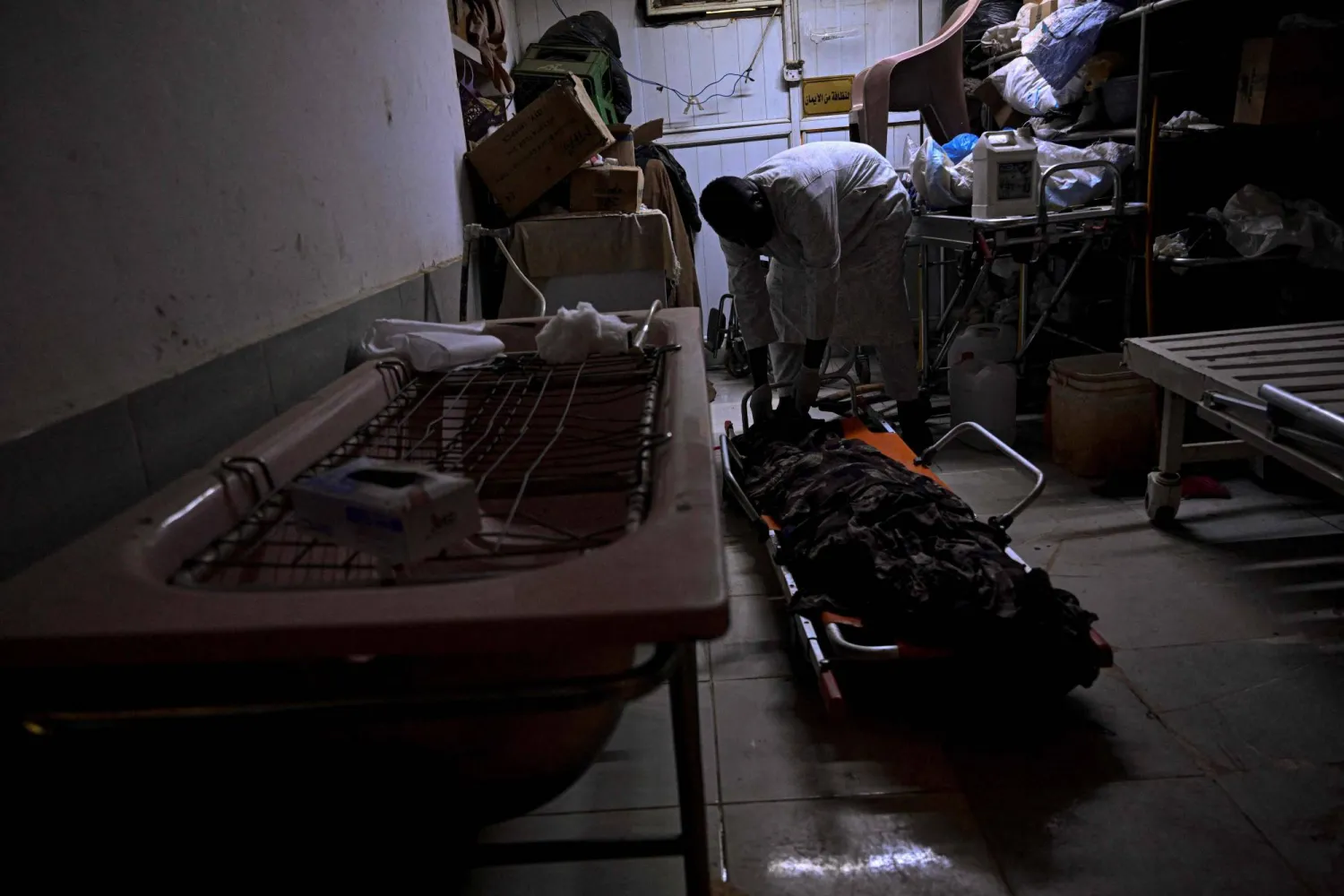 |
| This photo taken on April 18, 2026 shows Sudanese Ali Gebbai, a volunteer responsible for handling burial procedures for unidentified bodies in the capital, Khartoum, examines one of the unidentified corpses at the mortuary of Omdurman's Al-Nao Educational Hospital. (AFP) |
The war in Sudan has now officially passed its three-year anniversary, since the Sudanese military and he paramilitary Rapid Support Forces opposed one another, bringing the nation to a war that shows no sign of abating, with an estimated 200,000 Sudanese having been killed thus far. This conflict represents a poster of the world's largest humanitarian crisis. A conference in Berlin on April 15 to raise aid funds and call attention to the conflict, doesn't appear to have made much of a global impact on news reportage.
Entering its fourth year, widespread displacement, violence and hunger has burdened the population with no end in sight, while the world's attention remains fixed on Russia's invasion of Ukraine, the Israeli response in Gaza to Palestinian terrorism, and more latterly the joint U.S.-Israel aerial bombardment of the Islamic Republic of Iran, with the closure of the Strait of Hormuz taking world headlines.
Even so, the Iran conflict which has impacted rising fuel and fertilizer prices throughout the globe, has also compounded the severe food crisis experienced in Sudan. The Norwegian Refugee Council's latest report stated that the violence had "systematically eroded Sudan's food system -- field by field, road by road, market by market -- producing mass hunger."
 |
| Photo: Southern Sudan city of Rabak after a drone strike hit several vehicles belonging to the Joint Forces, including some carrying weapons and ammunition, which caught fire. AP |
The fierce fighting between the two antagonists -- both of which have been accused of vicious human rights violations, preying on helpless civilian populations -- have forced 14 million people from their homes. Arable fields have been left untended as farmers abandon their growing crops in the face of danger from land mines and cross-fire from faceoffs by the two opponents. While harsh conditions for farming lead to a steep rise in food prices, incomes have declined and malnutrition stalks the land.
Sudan's 50 million population is starved of food with over 10 million people suffering severe and extreme levels of food insecurity, while some 20 million more are confronted by shortages of basic foodstuffs in a wartime economy. Millions of people sustain themselves with one meal daily in the two areas hardest hit by the conflict -- North Darfur and South Kordofan. According to the Norwegian Refugee Council report, desperately hungry people are left with little option but to eat foliage and animal feed for survival.
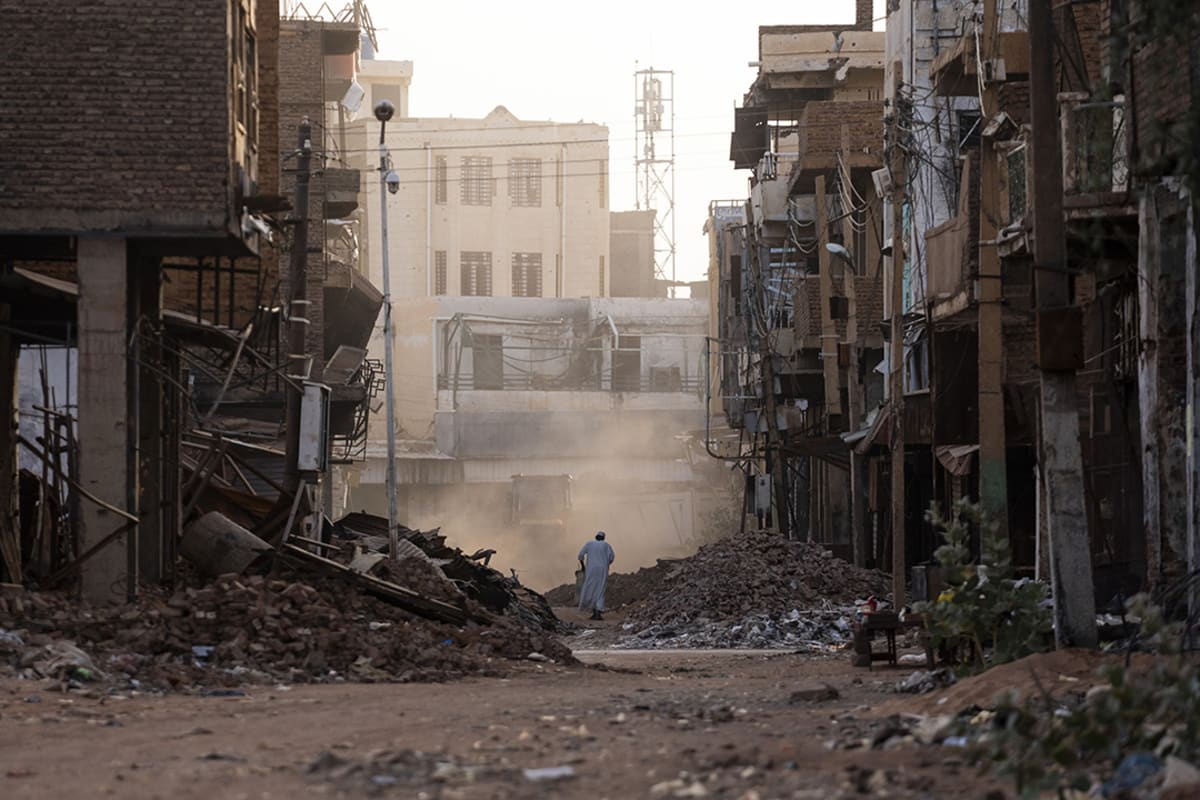 |
| Destroyed section of Omduran, Sudan, AP |
The ongoing crisis in Sudan is considered by aid agencies to represent the world's most critical, based on hunger and displacement. "Hunger and violence are reinforcing each other in a vicious cycle of desperation", stated deputy executive director Carl Skau, of the World Food Program.
Gold production and trade enables the warring competitors to finance their war with the abundant natural resources in gold that lie in deposits across the country. The conflict is also being supported by foreign powers supplying weapons to both sides. Sudan's economy has been destroyed, its health system collapsed
Widespread violence against women is rife, most Sudanese children are without educational opportunities, and tens of thousands of children have died in this war. The civilian death toll is put at over 22,000 by the Sudanese health ministry, but some estimates see that number swell as high as 400,000.
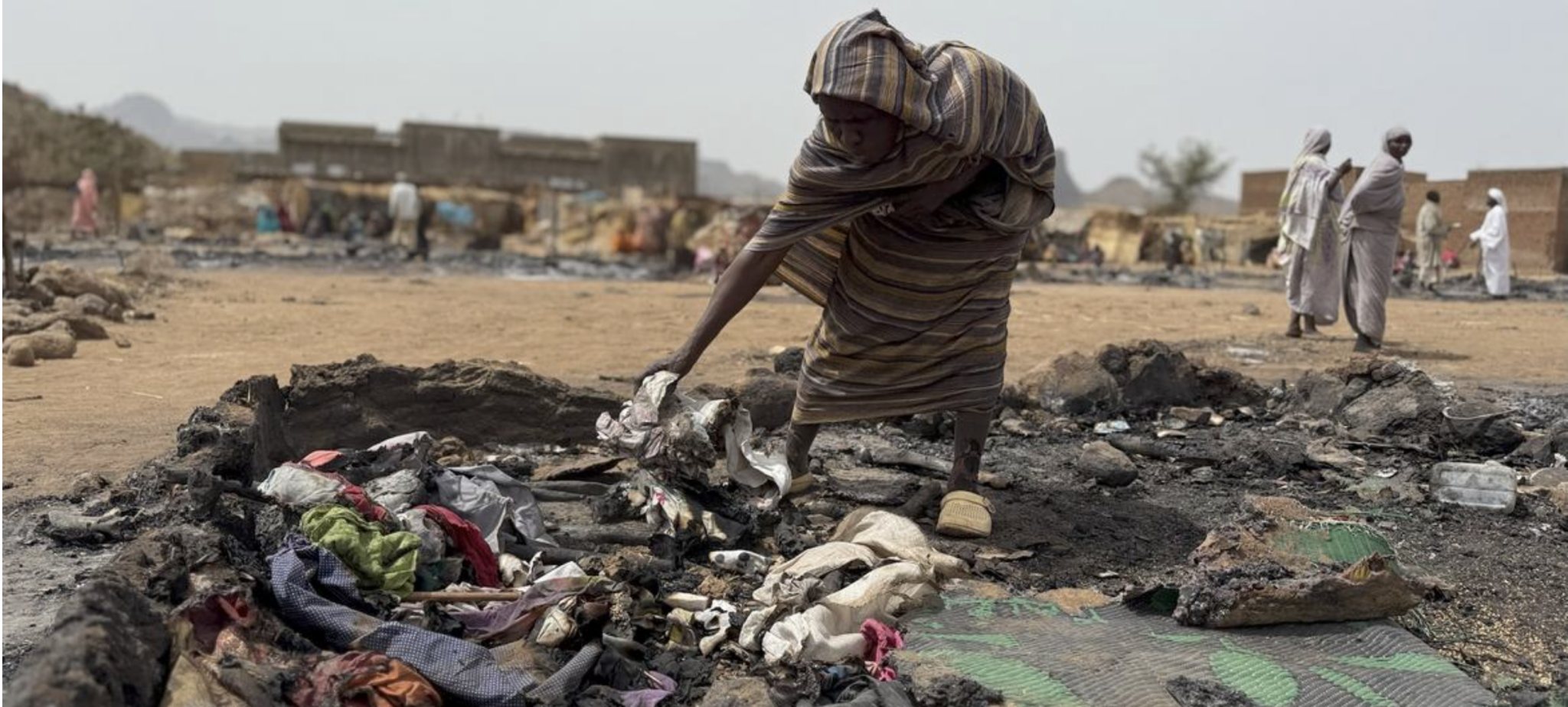 |
| As donors gather in Berlin, tens of millions in Sudan face famine, genocide and displacement Health Policy Watch |
Labels: Civilian Population, Internally Displaced, Malnutrition, Rapid Support Forces, Sudan, Sudanese Military
posted by Pieface @ 8:13 PM


0 Comments:
Post a Comment
<< Home