Unconscionable Human Skeleton Museum Displays
| Ilvy Njiokiktjien, New York Times |
"What the museums have in common is that they all see it as a problem -- and that's already progress.""They all deal with it in different ways, although there are many similarities.""Some are more proactive than others."Jos van Beurden, repatriation expert, researcher, Free University of Amsterdam"It makes me sad. The Dutch destroyed everything of ours, our language, our culture.""First they forbid it, and we all had to become Christians and learn the Dutch language, and then they displayed and traded our ancestors' skulls."Menucha Latumaerissa, 45 Dutch customs official, ethnic Moluccan"What it should emphasize is the idea that, in an ideal situation, collections like these -- racialized collections -- should reach their final resting place, with their communities.""The empty stands show this important absence so we don't forget these things happened.""We do feel a sense of shame, but also responsibility. What does it mean to have these remains housed here?""We need to find a way to somehow address these collections."Laurens de Rooy, director, Museum Vrolik, Amsterdam University Medical Center
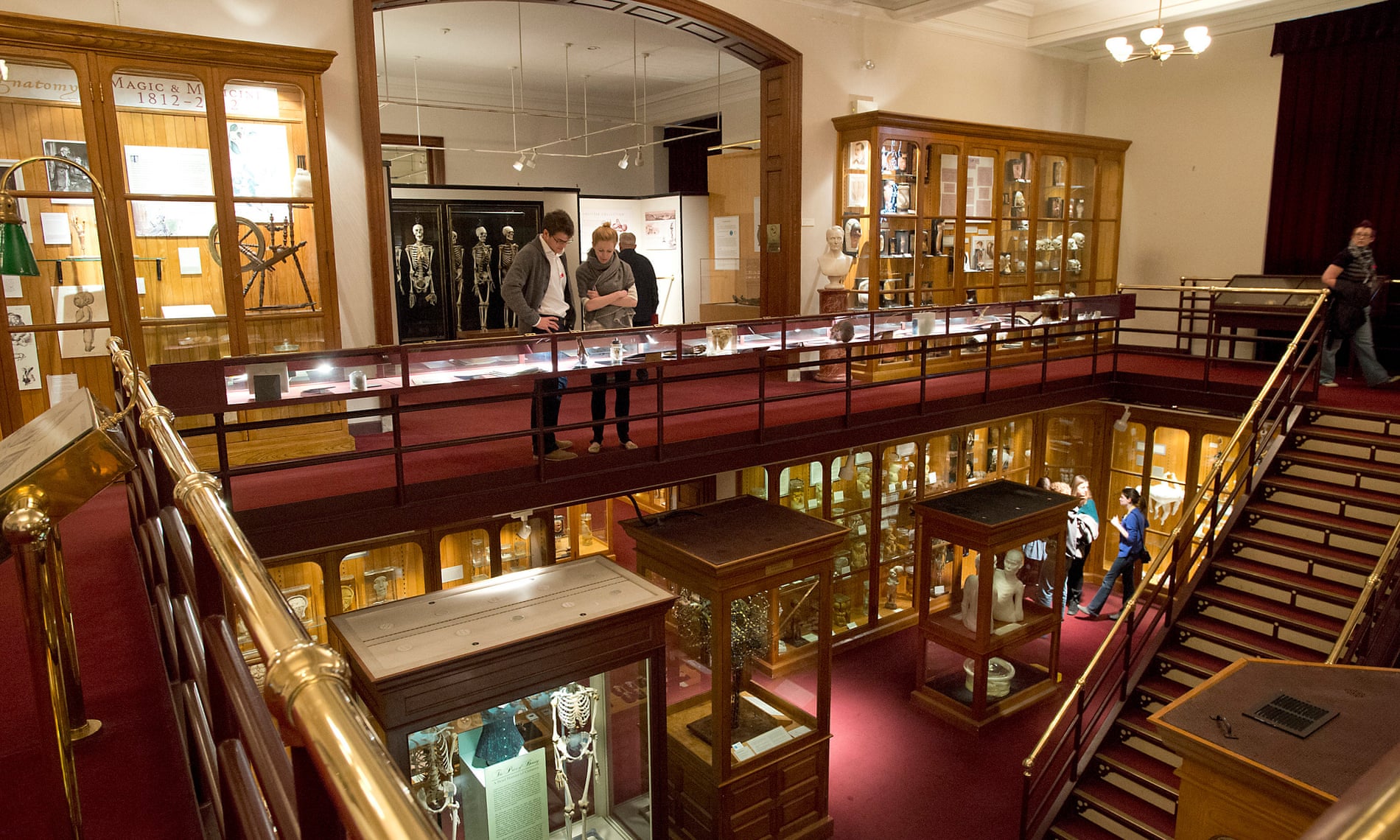 |
| The Mütter Museum in Philadelphia, Pennsylvania. Among its collection are unusual or deformed organs, an iron lung and Einstein’s brain. Photograph: Allentown Morning Call/Tribune News Service/Getty Images |
A book, published in 1917, discovered in a thrift shop, motivated Menucha Latumaerissa to begin looking into history reflecting the Moluccan people. The book that so fascinated him to begin his career of searching out museums' artefacts dating from Europe's colonialist days when indigenous peoples' skeletons were taken from their places of origin to become curiosities placed in cabinets and displayed for public view, essentially treating the remains of people considered inferior to Europeans as commodities of curiosity, available for gawking at local museums. Descriptions of studies of human skulls from the Indonesian archipelago taken to the Netherlands during the colonial period, demonstrated the fascination of 'race science' by researchers.
As a Dutch customs officer, Mr. Latumaerissa developed a hobby of tracking Moluccan islands specimens taken to Europe, feeding off his own ethnic origins as one of Moluccan birth. A small diaspora from the Mollucan islands arrived in the Netherlands in 1951 following the Indonesian war of independence. On arrival in the Netherlands they were forced into internment camps and minority districts leaving him to contemplate: might those skulls still be on display somewhere in the Netherlands?
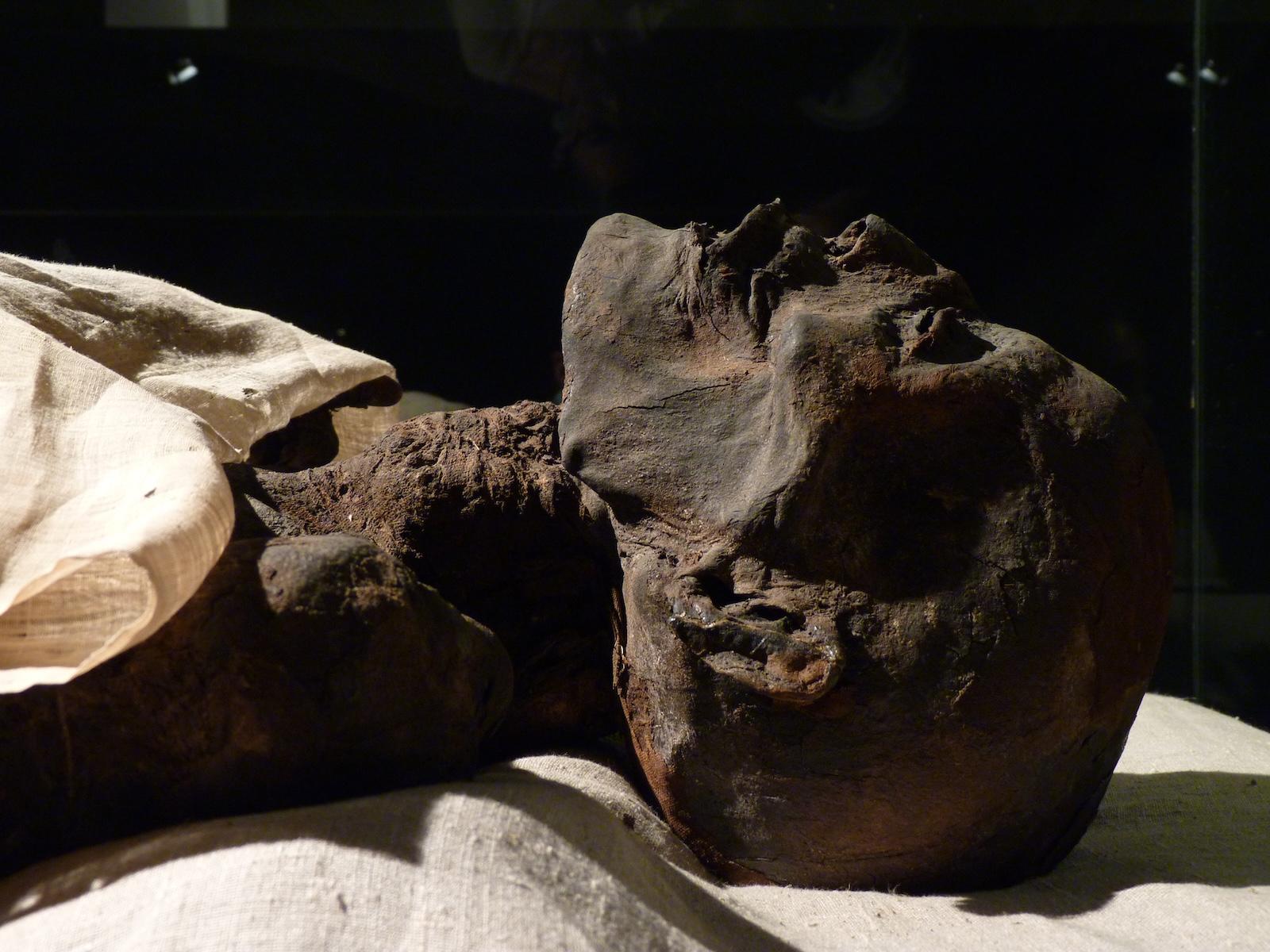 |
| Ramses I Mummy. The mummy of Ramses I was looted from Egypt around 1860 and held in various private collections in Canada and the US up until 2003. The mummy is currently on display in the Luxor Museum. Wikicommons |
He eventually found them in a tiny anatomical museum, part of the Amsterdam University Medical Center called the Museum Vrolik, dating to the 19th century where jars of body parts were on display. Aside from the feet and ears and irregular fetuses, there were cabinets full of skulls and bones. The Moluccan skulls lined up in the museum have now been returned to the archipelago which gave birth to them, while the empty shelves in the display cabinets and their empty stands are testimony to the uncaring attitudes of scientists and colonists who viewed the Indigenous peoples they dominated as less than human.
Today, the Museum Vrolik is featuring a new exhibition which it has titled "Imagine: The Future of Human Remains from Colonial Contexts", scheduled to be on display until June of 2027. The point of the display, according to the museum's director, is to provide food for thought in calling attention to the human treasure troves, taken in a spirit of conquest and contempt, now finding their place back at their beginnings, granting dignity to that which was once a living human being. Needless to say, it is not only the Netherlands alone that indulged in these colonialist-era curiosity cabinets, but a Europe-wide practise.
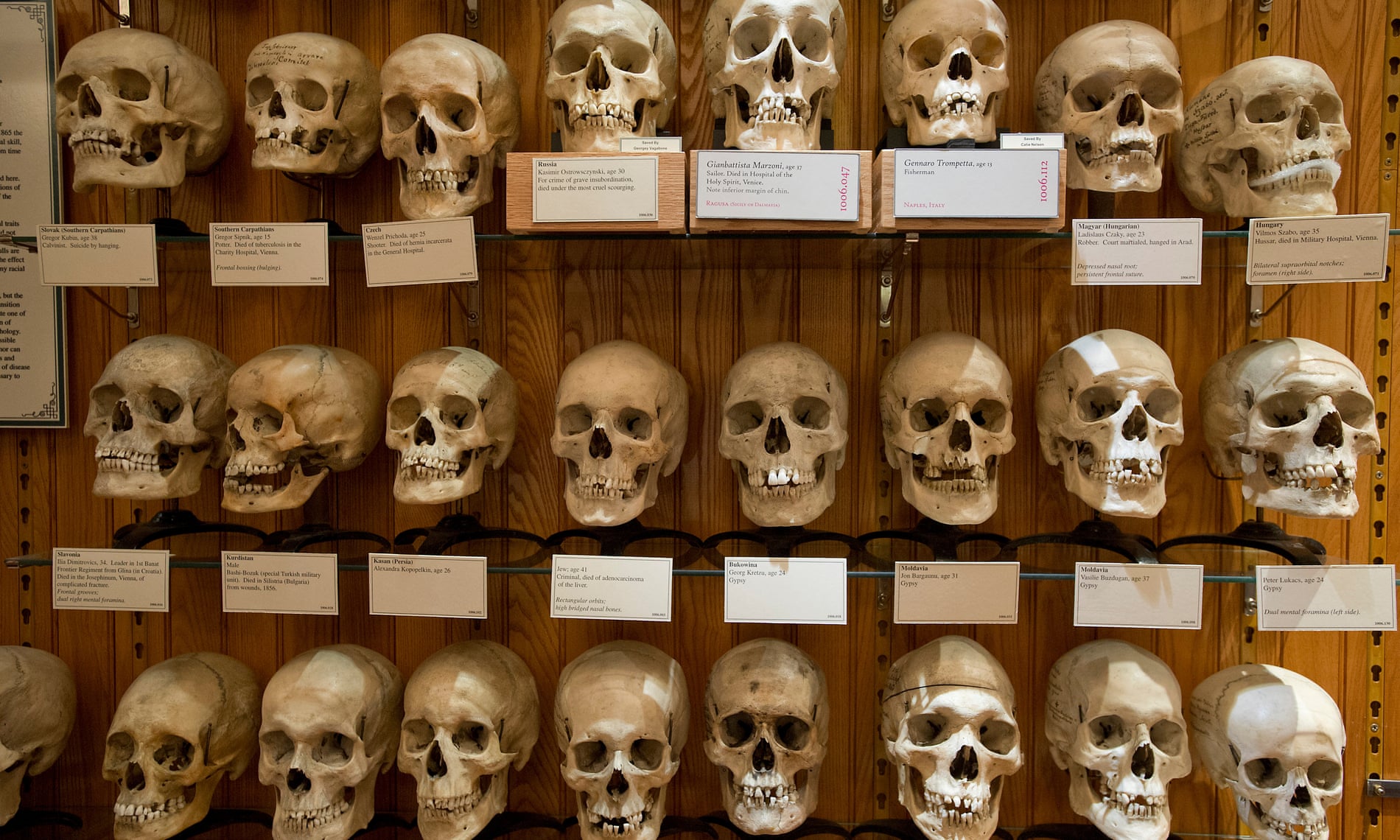 |
| The Hyrtl Skull Collection on display at the museum. Photograph: Allentown Morning Call/Tribune News Service/Getty Images |
Thousands of colonial-era human remains; skulls, skeletons, mummies, hair and teeth, were preserved and labelled in European collections; many representing anatomical troves used for scientific research at medical institutions; others on display in natural history museums. Most of these human artefacts were procured from hospitals, hauled out of pauper's graves, or procured through commercial trade in skeletons, while a smaller number were gathered through archaelogical looting or as trophies from colonized geographies in Africa, Asia and Oceania.
The European penchant for these public displays dates from the 17th century when anatomists developed preservation methods, placing specimens in jars as educational tools as well as for the purpose of giving the public an opportunity to view spectacular specimens of the human skeletal architecture. "Race science" motivated scientists and anthropologists to collect human bones with a focus on specimens from Indigenous and local populations from colonies, taken to Europe where hierarchies were invented to justify colonial subjugation, discrimination and slavery.
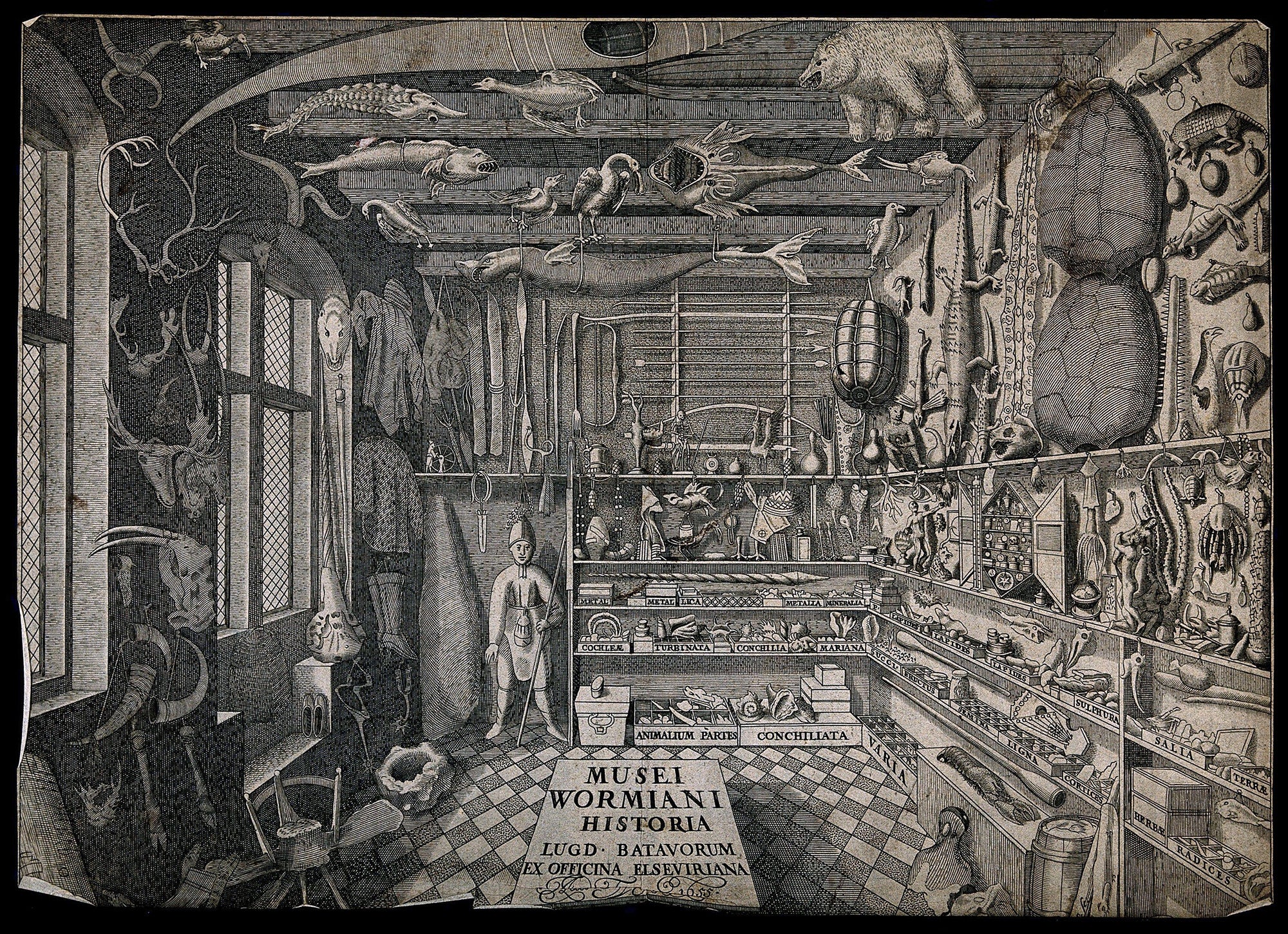 |
| The museum of Ole Worm, Copenhagen: interior. Engraving, 1655. JStor |
Labels: Africa, Archaeological Looting, Asia, Colonization, Eugenics, European Museums, Oceania, Scientific Observation, Skeletal Remains, Slavery, Trophies
posted by Pieface @ 8:17 PM


0 Comments:
Post a Comment
<< Home