Ruminations

Blog dedicated primarily to randomly selected news items; comments reflecting personal perceptions

Monday, August 31, 2026

Smoke Gets In Your Eyes -- Your Lungs and Your Brain

"It's not just a few days in these extreme events that you need to protect  yourself."
"It is also the days when the sky looks OK [while air quality indexes or weather reports warn of the presence of smoke]."
Dr. Kai Chen, associate professor, Yale School of Public Health 
 
The health effects of short-term PM2.5 exposure, and subsequently smoke, can range from relatively minor (e.g., eye and respiratory tract irritation) to more serious health effects (e.g., exacerbation of asthma and heart failure and premature death). In addition, there is initial evidence that short-term smoke exposure may lead to preterm birth (Picciotto et al. 2024) and impact brain function (i.e., cognitive performance as measured through a brain-training game) (Cleland et al. 2022). Fine particles are respiratory irritants, and exposures to high concentrations can lead to persistent coughing, phlegm, wheezing and difficulty breathing. Exposure to PM2.5 may affect the body’s ability to remove inhaled foreign materials, such as viruses and bacteria, from the lungs. For example, some studies have reported an increase in the risk of COVID-19 cases and deaths in response to wildfire smoke exposure (Zhou et al. 2021; Meo et al. 2021; Schwarz et al. 2022). Although most healthy people will recover quickly from smoke exposure, some may experience health effects such as pulmonary inflammation and transient reductions in lung function (U.S. EPA 2019).
United States Environment Protection Agency  
https://www.bccdc.ca/PublishingImages/Wildfire%20smoke%20in%20Vancouver.jpg?RenditionID=2
Vancouver skyline   Wildfires and smoke have always occurred in British Columbia, but they are becoming more frequent and severe as the climate changes. Wildfire smoke is a form of air pollution that can affect your health.  BC Centre for Disease Control 
 
https://www.canada.ca/content/dam/hc-sc/images/services/publications/healthy-living/human-health-effects-wildfire-smoke/human-health-effects-wildfire-smoke.jpg

Evaluation of air pollution from wildfires presents unique challenges, compared to air pollution from other sources, such as traffic or industrial point sources, as smoke exposure is seasonal and episodic in nature (Gould et al., 2023). Also, as the number and size of wildfires impacting an area are variable and as smoke production from wildfires is not constant or steady, the concentration of smoke experienced by populations can vary considerably, and can include high levels of exposure for short time periods or moderate exposure levels lasting for several days or longer. Additionally, to evaluate the health effects of wildfire smoke, it is necessary to distinguish the contribution of wildfire smoke from that of other sources of air pollution within the mixture that people are exposed to. To address this, researchers have employed a variety of methods to assess exposure to wildfire smoke for use in health studies including use of land-based PM monitors, satellite imagery, air quality modelling, comparison of fire versus non-fire periods, proximity to wildfire burn area, and self-reports. In these studies, the most commonly used surrogates for wildfire smoke exposure are PM2.5 (particles with a diameter of 2.5 micrometres or less) and PM10 (particles with a diameter of 10 micrometres or less). For the primary investigations included in the systematic reviews considered here, the health outcome data were based on administrative sources (for example, mortality registries, health care utilization data), surveys, or self-reports. In addition, most of the primary studies focused on short-term or episodic exposure to wildfire smoke (that is, daily exposure), while some of the studies assessing mental health impacts considered health effects in years following the wildfires, and studies of reproductive or developmental impacts considered wildfire smoke exposure during the gestational period. It is noted that the health effects of PM2.5, a key pollutant in wildfire smoke, have been extensively studied and Health Canada has evaluated the health risks of ambient PM2.5 (that is, PM2.5 from all sources combined) (Health Canada 2022). 
Government of Canada 
People who are exposed to smoke from wildfires, according to more recent scientific investigations, are increasingly assailed by lung-damaging toxins, but new discoveries identify that hearts, brains and other body organs are also being damaged by wildfire smoke. Smoke exposure could sound the death knell of up to 1.9 million people in the United States alone, over three decades, according to one 2025 study. Lungs can be penetrated deeply by the concentration of airborne particles known as PM2.5, from wildfires.
 
PM2.5 is a primary pollutant that air quality indexes measure, but fails to reflect other substances that can be contained in wildfire smoke that include lead, mercury and formaldehyde, cautions Karl Nadeau, dean of the University of California, Los Angeles Fielding School of Public Health. Preliminary research suggests that wildfire smoke may be of greater harm than air pollution from more common sources such as car exhaust. Fire in proximity to urban areas, moreover, may be of particular toxicity, through consuming buildings vehicles and electronics.
 
https://news.stanford.edu/__data/assets/image/0023/163904/gettyimages-2192923816_0.jpeg
Smoke and flames from the Palisades Fire fill the sky as seen from the Pacific Palisades neighborhood of Los Angeles. | Getty Images
 
Associations between wildfire smoke and cardiovascular hospitalization, diabetes complications, preterm birth, cancer, impaired cognition and other problems, as well as respiratory effects including  attacks of asthma have been associated through scientific analytical studies. Wildfire smoke was linked in a 2024 study to deaths from cardiovascular, digestive, endocrine and kidney diseases. Asthma attacks and heart attacks can increase within an hour, in the presence of the severity of ambient smoke, pointed out professor Michael Brauer with the University of British Columbia.
 
Cognitive effect research has seen a significant expansion, explains Stephanie Cleland, associate professor at Simon Fraser University in British Columbia. Dr. Cleland was lead author of a 2022 study finding smoke exposure to be associated with lower scores on a 'brain training' game. A link between cumulative exposure throughout a school year and lower standardized test scores was also found through research, while other studies indicate a possible association with dementia. 
 
Less dramatic, lower-level exposures over time have an add-on impact, according to Professor Chen, who suggests the wearing of masks to be avoidance-helpful to exposure to ambient smoke during such events, not necessarily only when the surrounding air is redolent of burning, charred wood, and the atmosphere turns grey in reduced visibility with wildfire smoke. One study published in 2025 linked the risk of death from all causes with three-year exposure to wildfire smoke. Yet another 2025 study concluded that as average wildfire exposure increased, North Americans over age 65 suffered a higher risk of dying from chronic obstructive pulmonary disease.  
 
https://ucalgary.ca/news/sites/default/files/styles/ucws_news_hero_image_desktop/public/2026-08/GettyImages-1198428440_2.webp?h=748417e7&itok=QkT98ngt
A woman wears an N95 mask to protect herself from high levels of smoke pollution. Daniiielc, Getty Images
 
"The data pretty clearly say that there is no safe level of exposure to wildfire smoke: the more exposure we get, the worse a range of health outcomes. The data also pretty clearly show that our notion of sensitive groups should probably be greatly expanded. In addition to kids, elderly populations, or anyone else with preexisting conditions, like asthma, we need to think about populations like pregnant people whose birth outcomes can be substantially affected by exposure. Portable indoor filtration is often the best option for many households, and well-fitting N95 masks can help when outside. "
"Climate change, and in particular increasing fuel aridity brought about by hotter temperatures and variable rainfall, is playing a central role in the recent rapid increase in wildfire activity and smoke exposure throughout the US. It is certainly not the only factor, but is substantially amplifying the risk brought about by other factors, which include a century of fire suppression that has left abundant fuels in our wildlands, as well as increased human construction and activity in the wildland-urban interface. We can say with strong confidence that climate change has made these events much more likely and much more severe."
Marshall Burke,  associate professor, Stanford Doerr School of Sustainability 

Labels: , , , , , , , , , ,

Tuesday, August 11, 2026

Wait For It

"[With wars around the globe in the past few years, people haven't paid much attention to climate change] because the world was on fire in different ways."
"The world is now on fire again with climate change, in a way that's increasingly difficult to ignore."
"It's going to keep getting worse."
Zeke Hausfather, climate change, Berkeley Earth
 
"The driver of the record warmth is climate change in the background."
"And it's a much larger -- much, much larger -- contribution than El Nino, which is just a tenth to two-tenths of a degree on top of that long-term trend."
Zachary Labe, climate scientist, Climate Central
 
"European heat waves are not in isolation. There's also been shocking heat waves in North America."
"There's been shockingly hot conditions in South America as well. There's been devastating heat waves in India."
"There's always heat waves somewhere in the world, sometime, but what is very unusual for Europe for this particular year is the frequency and extent of the heat waves."
Samantha Burgess, global strategic lead, Copernicus Climate Service 
https://d3i6fh83elv35t.cloudfront.net/static/2026/08/2026-08-09T182328Z_1372875178_RC23VMA4VVLO_RTRMADP_3_EUROPE-WEATHER-FRANCE-WILDFIRE-1200x800.jpg
UK and France prepare for another heat wave as western Europe has its 3rd hottest year on record so far. PBS
 
North America and Europe are experiencing wildfires while deadly heat waves hover over cities as the world's oceans have become hotter than ever recorded for this time of year. Spiked global temperatures and warped weather everywhere are attributed to a strengthening El Nino. In far too many areas of the globe, weather is hurtling the world toward a record-breaking summer of mind-bending heat. 
 
To the present, climate records demonstrate that 2026 up to now is the third-hottest year behind 2024 and 2025. In time, scientists believe chance is that by year's end, 2026 could become the hottest year on record. Should that come to pass, 2026 won't, climate scientists seem to believe, wear its hottest-year crown for long. With 2027 on the horizon bets are that the new year-to-come will take that hottest-year award as a reflection of a climate on steroids.
 
According to Dr. Hausfather, a 35 percent chance exists that 2026 will eclipse 2024's hottest record year. Still, according to his calculations, odds increase almost monthly, steadily rising from 7 percent in March. The daily sea surface temperature of the world was a tie from May forward with 2024 and since June has been recording increasing heat daily. Since oceans cover over 70 percent of the Earth's surface a month-and-a-half lag exists between heat in oceans eventually reflecting in the global heat temperature.
 
https://www.theinertia.com/wp-content/uploads/2026/08/wave-670x388.jpg
The ocean is getting hotter, and that’s not a good thing. Photo: Unsplash
 
At present, some 82 percent of the world's ocean surface is overheated this year, with marine heat waves, according to Europe's Copernicus climate service. The U.S. National Oceanic and Atmospheric Administration forecasted a month earlier of a 66 percent chance that 2025 would realize the fourth-hottest year and a 0.l percent chance to be No.1 for warmth by the end of the year. Those odds are expected to rise as the agency completes its July analysis.
 
El Nino causes a natural temporary warming of equatorial Pacific, heating up the average temperature of the globe, warping weather extremes across the planet, and this year El Nino is forecasted to become the strongest in recorded history. Releasing pent-up heat in the ocean, trapping heat as a result of greenhouse gases, with 90 percent going into the world's seas, even more heat is set to be released. This is a situation that keeps setting new record highs.
 
Wildfires, heat and extremes that dominate the summer of 2026 represent what scientists have warned of, resulting from the burning of coal, oil and gas. Traditional industrial pollution creates soot and smog which cool the planet and mask greenhouse gas-triggered warming, and it is on the decrease according to Dr. Hansen, with the climate reacting to greenhouse gases in a much more accelerated manner than scientists anticipated. 
 
The Bald Range wildfire burns near Summerland.
The Bald Range wildfire burns near Summerland, British Columbia. Craig Milton
 
"[This is what scientists have long been warning about.] These are vivid pictures of not just the future, which is what we used to say, but on the whole of what climate change is doing."
"There's no question that climate change has increased the risk of wildfires."
"There's no question that the climate change increased the probability of really hot, nasty, even  unprecedented summers around the world."
Michael Oppenheimer, climate scientist, Princeton University 

Labels: , , , , ,

Tuesday, August 06, 2024

Survival of the Fittest

"She looks like a very healthy grizzly bear right now."
"Grizzly Bear 222 and her two cubs tucked themselves into a wet spot by the Athabasca River."
"She has been eating a mix of berries and clover on the edge of the Jasper Park Lodge golf course."
Parks Canada
 
"Most of the critters get out of the way."
"The number of animals [killed during wildfires] is usually pretty small. In general, it's not a major source of mortality."
"That regrowth [of a regenerated forest] is very attractive. Bears, elk, moose, deer all really thrive."
"These fires are highly beneficial in the medium term."
"It will be a couple of years before it's green and lush again. But not very long."
"The ecosystem has not suffered. The park [Jasper National Park, Alberta] is doing just fine."
Mark Boyce, wildlife biologist, University of Alberta
 
"Typically, the most affected are the slower-moving species, like turtles, badgers and elderly and very young animals who are unable to escape."
"Moreover, as wildfires often occur in late spring or summer, stress also delays the recovery and reproduction of the population."
Yellowstone National Park, report on 1998 wildfire 
https://i.cbc.ca/1.7279652.1722346893!/fileImage/httpImage/image.jpg_gen/derivatives/16x9_780/parks-canada-bear-cub.jpg
Bear 222 and her two cubs were spotted shortly after the flames subsided. Officials say the bears survived by tucking away into a wet spot of land near the Athabasca River. (Parks Canada)
 
Despite the wildfire that is torching Jasper National Park, Parks Canada has issued a comforting notice to those concerned over the burning fate of the animals who share that forest as their natural habitat. Bear 222 and her cubs appear to be fine, and so too, evidently are other large animals in the area largely. Bear 222 is fitted with a radio tracking collar allowing her to be monitored since the wildfire began its blazing scorch of the geography at week ago.

The town of Jasper has suffered a catastrophic loss of a full third of its homes and buildings. Animals other than humans, we are assured are schooled by their very natures and experience, to protect themselves in a wildfire. "Fire is a natural process and we expect animals to find new places to live", assured James McCormick, human-wildlife coexistence specialist in Jasper.

That assurance is seconded by the University of Alberta's Mark Boyce, wildlife biologist who also stated that animals inhabiting Jasper National Park know how to react when their home is burning about them. Boyce co-researched and wrote results of a study that examined the effects of the Yellowstone National Park wildfire in 1998 when a third of the park had been burned. The study found that of the 17,000 elk in the park, about 350 only died in the blaze. "That's a pretty small fraction", he added.
 
https://i.cbc.ca/ais/38868597-ef03-4f08-8020-403cd826667f,1722210800318/full/max/0/default.jpg?im=Crop%2Crect%3D%280%2C0%2C1919%2C1079%29%3BResize%3D%28620%29
Parts of Jasper survive, parts of Jasper are gone, and wildlife has moved into the town. CBC Edmonton joins a media tour of Jasper.
 
A paper published in the journal Conservation in 2023 listed the manner in which animals react to fire. Large animals tend to rouse themselves to escape the fire, heading elsewhere to conserve their lives. As for small animals their tendency is to seek salvage underground or in sheltered areas within the burn itself, like tunnels, stumps, root holes, pathways under most forest litter, and spaces under rocks. Birds on the other hand are able to take flight and leave the area.  Unfortunately, all animals suffer stress.

Once the flames die back, the burnt landscape begins to regenerate and as it does it provides haven anew for many species who speedily take advantage of the new tender green shoots of the regenerating forest, once the first grim months of ash and dead trees littering the once vibrant forest relents. It is a vacuum that nature abhors, nudging the natural survival responses of her creatures; animal and vegetative.

https://i.cbc.ca/1.7279657.1722347027!/fileImage/httpImage/image.jpg_gen/derivatives/original_1180/parks-canada-bear-222.jpg
Grizzly Bear 222 and her two cubs survived the Jasper wildfire. Experts say wildlife know to dodge wildfires and adapt the the changed landscape. (Parks Canada)

Labels: , , , ,

Friday, July 26, 2024

Alberta Wildfires, Rocky Mountain National Parks

"The feelings of loss and fear and loneliness must be overwhelming."
"We share the sense of loss with all of those who live in the town, who care for it, and who have helped build it."
Alberta Premier Danielle Smith
 
"Due to the ongoing fire conditions and our focus on the response effort, it is impossible to share information about specific locations and the extent of damage at this time."
"The accuracy of this information is critical because it has a direct impact on members of the community."
"We will share more information as soon as we are able to ensure its accuracy."
Jasper Park authorities
 
"Lightning strikes happened late in the day on Monday and they were accompanied by very, very strong winds and we already had significant drought conditions that have been building up through the summer."
"We're dealing with a fire that has flames that are about 100 metres above the tree tops. It is just a monster at that point."
"There are no tools we have in our tool box to deal with that. At that point, you get out of the way, you retreat and  you do what you can to protect communities and infrastructure."
Pierre Martel, Director, Fire Management, Parks Canada 
https://ichef.bbci.co.uk/news/1024/cpsprodpb/c036/live/3f47a5f0-4ade-11ef-aebc-6de4d31bf5cd.jpg.webp
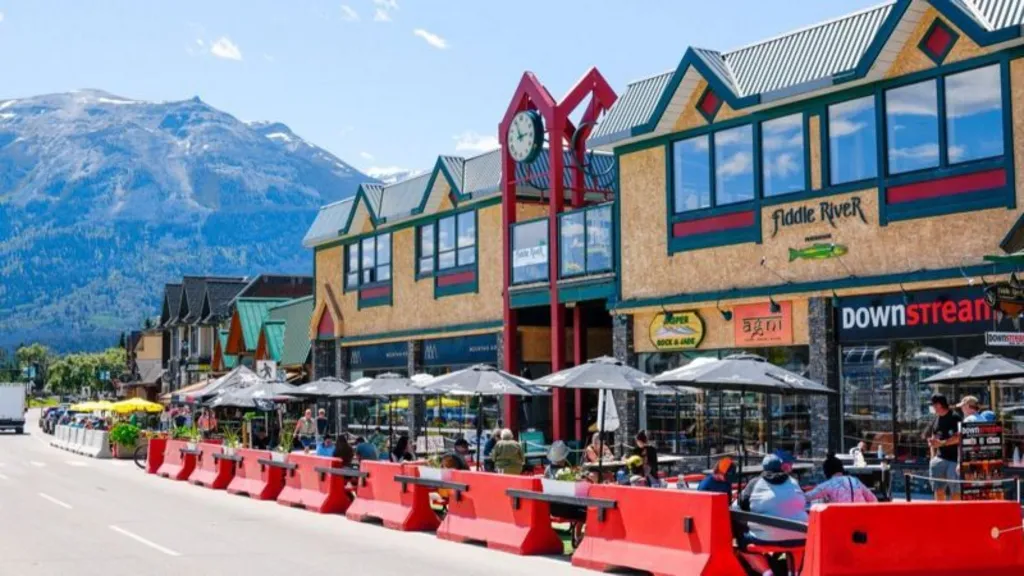
Jasper has been a popular tourist resort for decades (Tourism Jasper)
 
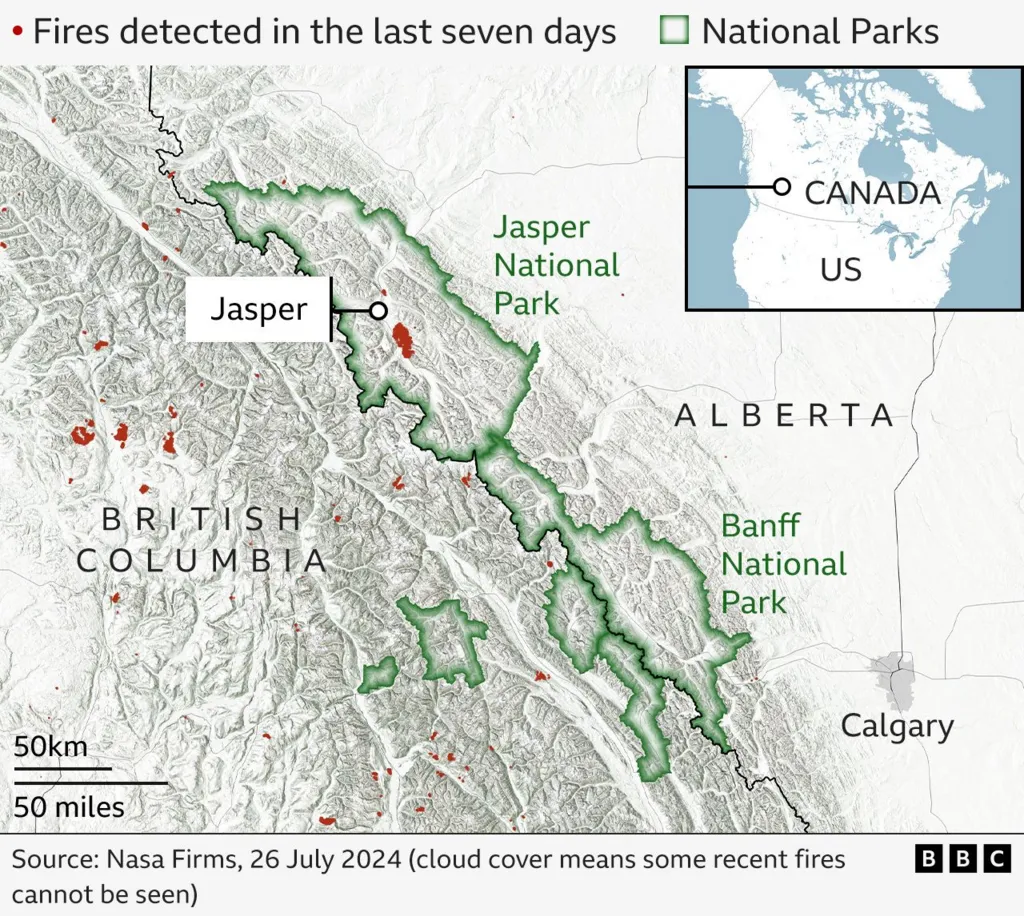
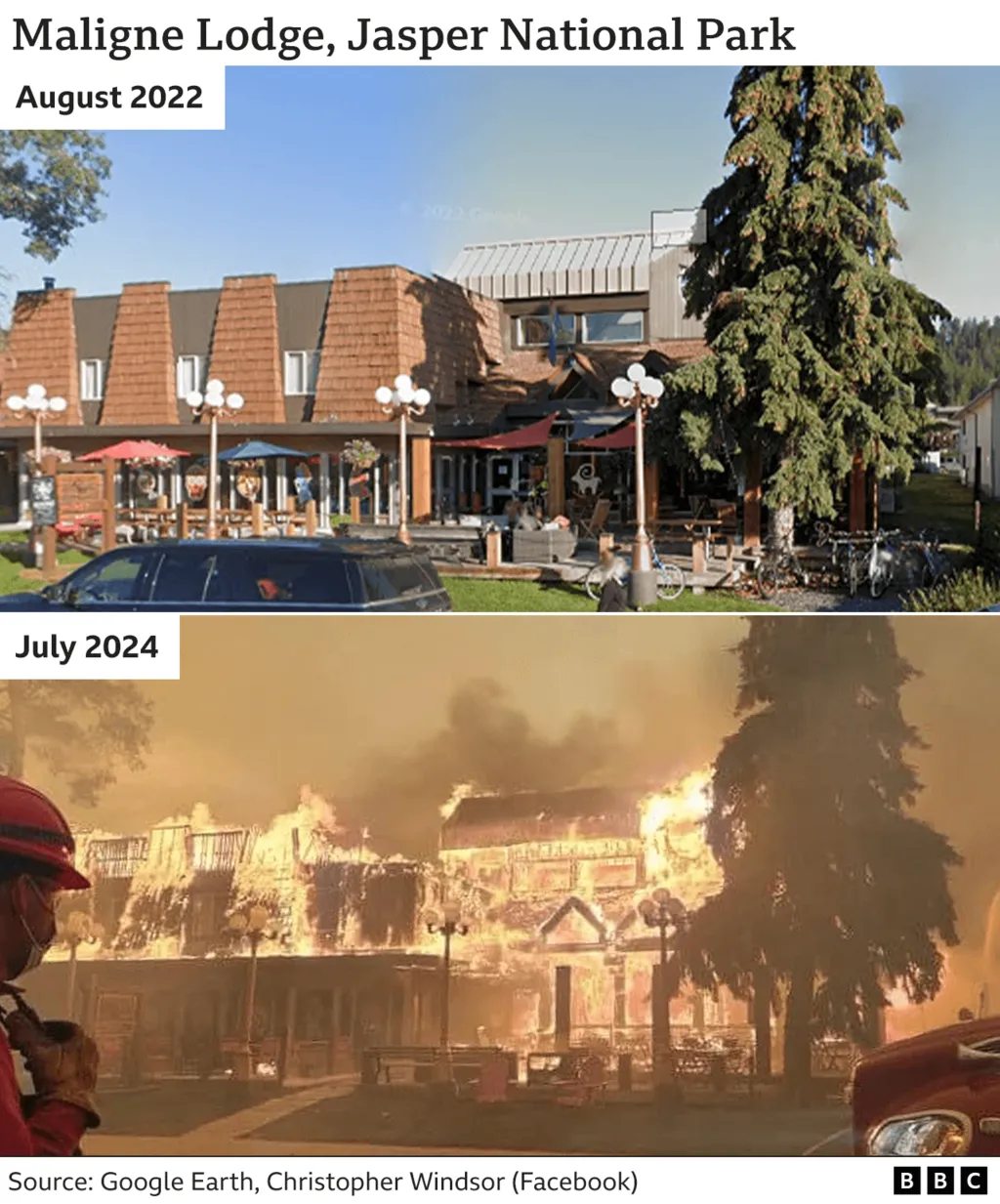
There are, as yet, no details of direct specific information of what has been destroyed in the Rocky Mountain resort town of Jasper, with its 5,000 residents' homes. On Wednesday, two fires near the town converged; for the time being it is known that structures have been damaged and destroyed, but how many and which they are is not yet confirmed. The fire has reduced air quality to the health-averse extent that even emergency crews were forced to leave.

Parks Canada has acknowledged that "significant loss" has struck the town, but was unable to confirm the extent of the damage -- while Jasper Park officials advise that the situation remains dynamic. Social media-posted photographs of the town reflected structures surrounded by sheets of living flame. By Thursday, there was a video of town streets slicked with rain, heavily overcast skies and burnt homes charred by unstoppable flames.

The mountain town with its magnificent geological and historical profile, recreationally famous for hiking, skiing, kayaking and biking, is in an area of animal species including elk, mountain goats, cougars, lynx, black bears and grizzlies. Its geological splendour is unrivalled as a gift of nature. That same nature now has issued a challenge to the very creatures nature herself designed to live in the mountains. 
 
The parks that comprise the Canadian Rockies' fame, Jasper included, were designated a World Heritage Site in 1984. 
https://ichef.bbci.co.uk/news/1024/cpsprodpb/0f91/live/500aa2d0-4b3c-11ef-b2d2-cdb23d5d7c5b.jpg.webp
 
The five thousand residents of the town, along with an estimated 20,000 tourists were directed to leave the area at a moment's notice late on Monday night when twin wildfires approaching from the south and north roared into view, cutting off escape routes leading in eastern and southern directions. 
 
While the long lines of vehicles snaking through smoke-and-fire-filled routes of escape from the inferno were approaching destinations in British Columbia, they were instructed to turn back, to find refuge elsewhere in Alberta -- evacuation centres in Calgary and Grande Prairie, in recognition that untamed wildfires in British Columbia left that province to deal with its own residents, with no capacity to aid those from a sister province.

Buckets and fire guards, reflecting desperate efforts to contain the fires, along with a plan to burn a path from the southern fire to the river and highway failed, as a result of raging, gusting winds' interference. By early evening on Wednesday the fire roared its entrance to Jasper, to begin its raging destruction of the town's structures.
 
Other provinces, which have experienced their own wildfire emergencies in the near past, are sending in their own resources for fire-fighting and rescue assistance. Two water bombers were sent in from Quebec, along with personnel. Ontario, New Brunswick and Nova Scotia have responded to the emergency unfolding in Alberta with personnel and fire-fighting materiel. 

https://ichef.bbci.co.uk/news/1024/cpsprodpb/6552/live/13a21070-4b5b-11ef-aebc-6de4d31bf5cd.png.webp

"I write to  you [residents] today with profound sorrow as we begin to come to terms with the devastating impact of last night's wildfire that has ravaged our beloved community."
"The destruction and loss that many of you are facing and feeling is beyond description and comprehension."
"Your resilience and strength have always been the backbone of our community. In the coming days and weeks, we will rally together, support one another, and begin the daunting process of recovery."
Jasper Mayor Richard Ireland

Labels: , ,

Saturday, September 02, 2023

Wildfire Particulates in Smoke Dangerous to Brain Function

"Some particles from wildfire smoke have been shown to be able to cross the blood-brain barrier and cause inflammation of the brain."
Kent Pinkerton, pediatrics professor, University of California, Davis
 
"Hitchhiking on these tiny particulate matter are pieces that are toxic metals -- lead from leaded gasoline, iron from brake pads and platinum from catalytic converters."
"It may be that this particulate matter entering into our nose and the gateway to our brain, which is normally protected by a blood-brain barrier, is getting exploited by the front door." 
"Whether you are a newborn baby or an older adult with Alzheimer's disease, air pollution is likely harmful to your brain."
Ray Dorsey, neurology professor, University of Rochester, New York 

"Studying cognitive abilities is important because they are core to all daily life functioning and can be key to understanding individual needs as they rebuild and rehabilitate in disaster-affected communities."
January study, journal PLOS Climate
https://www.ctvnews.ca/content/dam/ctvnews/en/images/2023/8/23/pollution-from-wildfire-smok-1-6530773-1692794262792.jpg
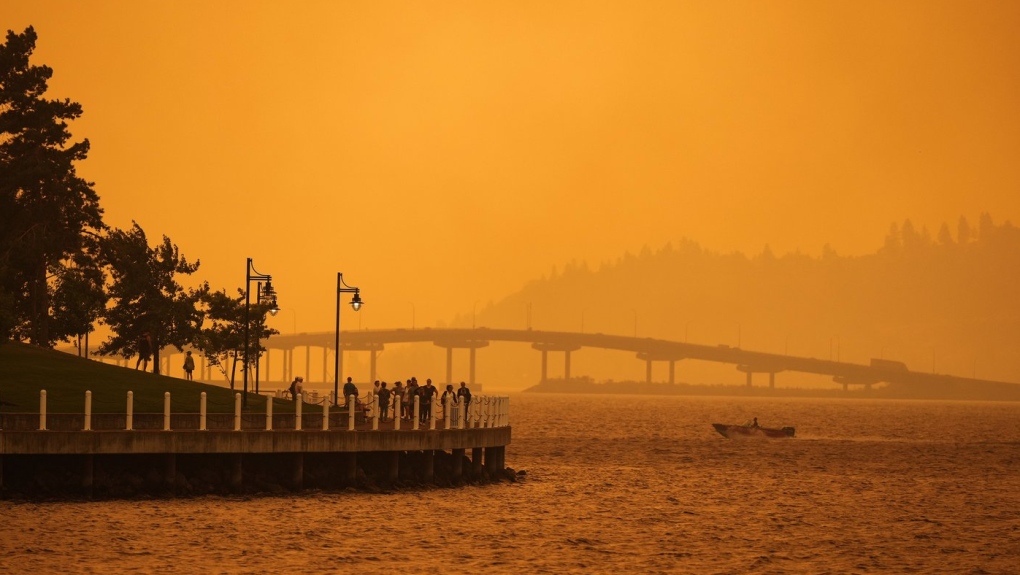
A person travels in a boat past people walking on the boardwalk as smoke from the McDougall Creek wildfire blankets the area on Okanagan Lake, in Kelowna, B.C., Friday, Aug. 18, 2023. (THE CANADIAN PRESS/Darryl Dyck)

Pollution from wildfire smoke -- according to a growing body of international research -- can produce cognitive deficits, post-traumatic stress and may increase the risk of dementia, Alzheimer's and Parkinson's disease. The effects of wildfires have conventionally and to the present, been studied on lungs, hearts and blood of affected patients. Researchers, however have begun studying how fine particulate matter from wildfire smoke can enter the body and travel to the brain.

According to Professor Pinkerton the nose acts as a filter to ensure some inhaled particles don't reach the lungs. During wildfires, though, concern has arisen that tiny soot particles and other chemicals in smoke have the capacity to enter body cells and nose nerves. Scientists know that these entries can have a direct brain connection. Cells and nerves can get inflamed and damaged by wildfire smoke, as they pass from nose to brain.

Wildfires in Canada's Northwest Territories and British Columbia saw thousands of people forced to vacate their homes, in one of the worst years for wildfires in the country, where close to 137,000 square kilometres of land have been scorched. The composition of wildfire smoke is not restricted to vegetation from trees and other plants, but includes as well products caught in the flames which would include metals from vehicles and homes, plastic and fabric fibers.

Some such particulate matter from wildfire smoke is sufficiently minuscule that it can travel into the smell centres of the brain, emphasized neurology professor Ray Dorsey. Higher concentrations of heavy metal are seen in the brains of people with Parkinson's and Alzheimer's. Smell centres of the brain damage is found almost universally in patients with these two diseases, Dr. Dorsey explains.

A July 2018 study published in the journal Environmental Research saw a group of international researchers find that people in Mexico City exposed to air pollution showed the signatures of Alzheimer's and Parkinson's in their brains. "Exposure to air pollutants plays a major role in the development and-or acceleration of Alzheimer's disease" the study, called Hallmarks of Alzheimer's Disease Are Evolving Relentlessly in Metropolitan Mexico City Infants, Children and Young Adults concluded.

Recent reports suggest that air pollution from wildfires presents a denser or higher concentration of particulate matter than does air pollution from vehicular traffic. A January study published in the journal PLOS Climate found people exposed to smoke from the 2018 Camp fire, the most destructive wildfire in the history of California, had "significantly" greater chronic symptoms of post-traumatic stress disorder, anxiety and depression than those not exposed to the fire.
 
A decrease in cognitive performance -- the ability to suppress distractions and focus on a task at hand -- results from exposure to wildfires, concluded lead author of the California Fire study, Jyoti Mishra. Six months following the wildfire the study was initiated, when the smoke had subsided. Thsre's a "lot of complex interactions" when a person suffers from loss of property, family and injury, explains Dr. Mishra. 
 
Emotional responses generally associated with post-traumatic stress disorder can be set off by wildfires.
 The body reacts to particulate matter from wildfire smoke, in the same way it would with inflammation. Particulates as well could enter the lungs and chronically affect the brain, at the height of the wildfires. 

https://www.statnews.com/wp-content/uploads/2023/08/GettyImages-1243029447-1600x900.jpg
Smoke from wildfire rises into pyrocumulus cloud. PATRICK T. FALLON/AFP via Getty Images
"We don't know that exact link as to how the particulates can affect the brain systems over the long term, but what we found in a series of studies was that there was definitely prevalence of climate trauma."
"We see the final outcome, we see that there's cognitive deficits, there are brain changes, there are psychiatric symptoms, but how do you get from wildfire smoke to that kind of an end point?"
"Those intermediate complexities ... are not well understood."
Jyoti Mishra, lead author, California fire study, associate professor of psychiatry, University of California, San Diego


Labels: , , , , ,

Friday, August 18, 2023

Wildfire Evacuations, North West Territories

https://ichef.bbci.co.uk/news/976/cpsprodpb/12EDE/production/_130843577_gettyimages-1607843205.jpg.webp
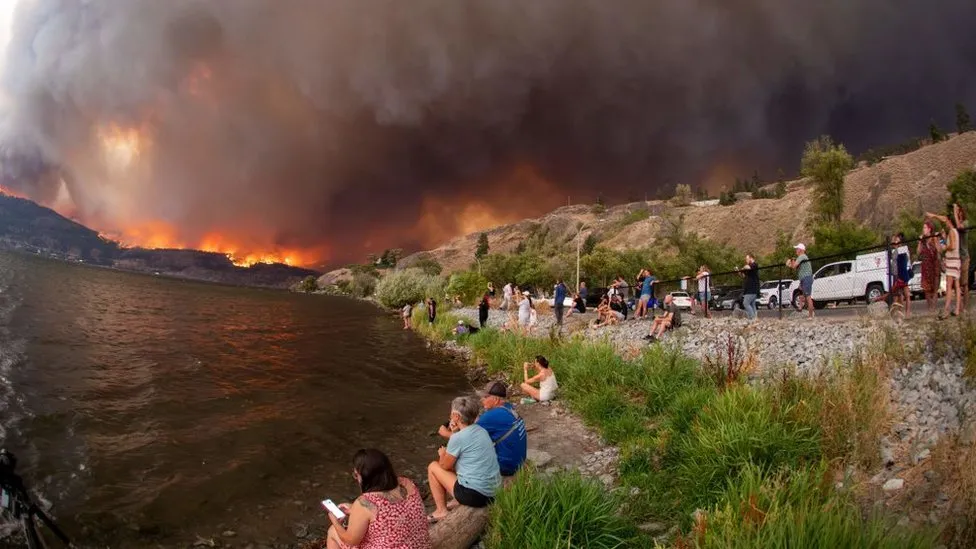
One Kelowna resident told the BBC the fires came over the mountainside like an 'ominous cloud of destruction'   Getty Images

"It is safe for residents who have a vehicle and are able to drive to start evacuating now."
"If there are smoky conditions, residents evacuating by highway will be escorted from Yellowknife through the active fire zone."
North West Territories government
 
"It's going to be tough to get this done, there's no doubt, but folks are co-operating, folks are staying calm."
"People are doing the right thing."
N.W.T. fire information officer Mike Westwick
 
"I'm really anxious, and I'm scared. I'm emotional."
"God, just so many emotions, I don't even know where to begin. I'm in shock."
"I don't know what I'm coming home to or if I'm coming home. There's just so much unknowns here."
Angela Canning, Yellowknife N.W.T. resident 

"We're all in this together, but individually we choose how to react."
"We will get through this. Now, more than ever, is the time to ask for help if you need it, and to work together."
"We're all tired of the word unprecedented, yet there is no other way to describe this situation in the Northwest Territories. The country is watching, and our neighbours are keeping us in their thoughts and prayers."
N.W.T. Premier Caroline Cochrane
https://i.cbc.ca/1.6940304.1692362769!/fileImage/httpImage/image.jpg_gen/derivatives/4x3_1180/canada-wildfires.jpg
Yellowknife residents have been ordered to leave the Northwest Territories capital by noon Friday due to wildfires. Twenty-two flights are scheduled to evacuate about 1,800 Yellowknifers today, with others leaving by vehicle on Highway 3. Sgt. Avery Parle updates a crowd waiting to register for an evacuation flight on Thursday. (Jennifer Gauthier/Reuters)
 
Yellowknife, the capital of North West Territories with its population of 20,000, along with nearby communities of Ndilo and Dettah has been given an evacuation order from the territorial government which views residents along Ingraham Trail, in Dettah, Kam Lake, Grace Lake and the Engle Business District to be at highest risk of approaching wildfires, and should make emergency arrangements to leave as soon as possible; Wednesday was recommended.

Residents of Yellowknife and neighbouring communities were given a little more time, ordered to leave Friday noon, and advised that reception centres for Yellowknife evacuees were set at noon Thursday to open in three communities in Alberta. Travel by road was deemed safe. Air evacuations were to be utilized for those people at higher risk; those who are immunocomprised, those who have no other options by which to leave.

Evacuees from Yellowknife unable to find their own accommodation would be provided with support in three communities in the neighbouring province of Alberta, while the N.W.T. government searches out additional potential emergency hosts for the evacuees. The closest of the reception centres is more than a thousand kilometres distant by road from the N.W.T. capital.
https://i.cbc.ca/1.6940300.1692362457!/fileImage/httpImage/image.jpg_gen/derivatives/4x3_1180/canada-wildfires.jpg
A helicopter carrying a water bucket passes a sign that reads Forest Fire Smoke as wildfires approach Yellowknife. To protect the city, municipal and contractors have been using heavy equipment to build fire breaks 100-metres wide. They have also deployed 20 kilometres of pipe and pumps that can provide between 500 and 1,000 gallons of water a minute from local water sources. (Jennifer Gauthier/Reuters)
 
A main gas station along the highway south of Yellowknife arranged for additional fuel, sufficient to supply thousands of wildfire evacuees. Since the evacuation order was issued, lines at the pumps have grown increasingly. The city of Calgary stated it can provide accommodation for 5,000 evacuees; one reception centre has been prepared at the Calgary airport, prepared to receive five evacuation flights.

In Yellowknife transit, trucked water and sewer services along with residential garbage collection were suspended, while the intensive care unit at Yellowknife's hospital was set to close, reflecting the health authority's reduction in its services. Some services at the Stanton Territorial Hospital, including long-term care, are expected to be closed in the next 24 hours.

While thousands of Yellowknife residents are in road convoys, other stood with packed bags at the airport in snaking lines waiting for the opportunity to leave as wildfires approached. Wildfire fighting crews are fully engaged in battling some of the over 200 blazes that forced thousands to  retreat to evacuation centres throughout Alberta. 

Up to yesterday, the evacuation  has been orderly and safe, the fire about 16 kilometres from the northern outskirts of Yellowknife. The evacuation order was made at that point, to ensure an orderly exit while the fire was still at a distance.

https://i.cbc.ca/1.6940434.1692373006!/fileImage/httpImage/image.JPG_gen/derivatives/16x9_780/canada-wildfires.JPG
Residents of Yellowknife wait to register for evacuation on Thursday as wildfires threaten the Northwest Territories capital. (Jennifer Gauthier/Reuters)

Labels: , , ,

Monday, August 14, 2023

Deadly Tornadoes, Hurricanes, Wildfires

"They were moving fast. The winds were vicious and kept changing. He [Charles] said they were inside a dark smoke [that] felt like a tornado and they could not see nothing,"
"They kept calling each other’s name."
"He was screaming ‘run, run, run, Carole run.’ He eventually could not hear her anymore."
Gardner Hartley, Facebook post
 
"Indo-Pacom is on a hair trigger to be able to support as necessary. Everyone fully understands the pain that people are experiencing right now."
"We want to do everything we can help. But we also don’t want to contribute to the problem by sending unnecessary capabilities that then will hinder any type of emergency response."
Pentagon spokesman Brig. Gen. Pat Ryder
 
"The remains we're finding is through a fire that melted metal... When we pick up the remains ... they fall apart."  
"[Cadaver dogs still had a vast area to search for what could still be hundreds of people who are unaccounted for]."
"We're going as fast as we can. But just so you know, 3% — that's what's been searched with the dogs."
Maui Police Chief John Pelletier
 
"The mountain behind us caught on fire and nobody told us jack."
"You know when we found that there was a fire? When it was across the street from us."
Vilma Reed, 63, Maui resident
 
"I will tell you this, as a physician, it is a harrowing sight in Maui."
"When those providers, the police and this division, do come across scenes in houses or businesses it is very difficult for them because they know, ultimately, they will be sharing with our people that there have been more fatalities."
"I do expect the numbers to rise." 
Governor Josh Green
A group of volunteers who sailed from Maalaea Bay, Maui, form an assembly line on Kaanapali Beach on Saturday, Aug. 12, 2023, to unload donations from a boat. Maui residents have come together to donate water, food and other essential supplies to people on the western side of the island after a deadly fire destroyed hundreds of homes and left scores of people homeless. (AP Photo/Rick Bowmer)

One of the most popular tourism resorts in the United States, Hawaii is undergoing a horrific wildfire emergency. Wildfires on Maui have killed 96 people so far and more lethal casualties are expected before this dreadful natural disaster is over. To the present, 2,700 structures have been destroyed by the wildfires that moved at astonishing speed to demolish everything in their path. Countless people have been left homeless, leaving social assistance authorities with a huge task of providing immediate relief to grief-stricken people.

The historic town of Maui is no more, completely destroyed. Disaster relief springs into action. And the hope is that the relief will be more effective than the largest integrated outdoor all-hazard public safety warning system in the world, that Hawaii has been so proud of. There are about 400 sirens positioned across the island chain; their purpose, to alert people to natural disasters and any other threats that could conceivably arise. What could go wrong?

Survivors reveal there was no sound of sirens, nor did they receive any kind of warning, giving them time to prepare. Hawaii's emergency management records indicate no warning sirens had sounded before people were forced to run for their lives. People realized the extreme danger they suddenly faced only when they actually saw flames or heard the explosions that erupted nearby in the state's deadliest natural disaster since 61 people died in a 1960 tsunami.

That territory-wide emergency system was developed as a result of a 1946 tsunami that marked the death of over 150 people on the Big Island. The system sirens are regularly sounded to test their readiness. And when they should have been sounded it seems that no one in authority actually thought to use them from a real emergency.
 
Officials had sent out alerts to mobile phones, through television and radio stations -- the fly in that ointment was predictably, wide-spread power and cellular outages would have had the expected result of limiting that outreach.

The death toll, warns Governor Josh Green, is expected to rise, with search and rescue operations continuing and cadaver-sniffing dogs brought in to help in the search for people's remains resulting from the inferno that overtook them. 70-year-old retired mail carrier Thomas Leonard from Lahaina wasn't aware of the fire and then he smelled smoke. The town was given no real-time information of the danger they were facing.

When he attmpted to leave in his Jeep he was forced to abandon it and run for the shore as cars nearby began exploding. There, he hid for hours behind a seawall while wind blew hot ash and cinders around him. Eventually firefighters arrived, escorting Leonard and other survivors to safety through the flames. 
 
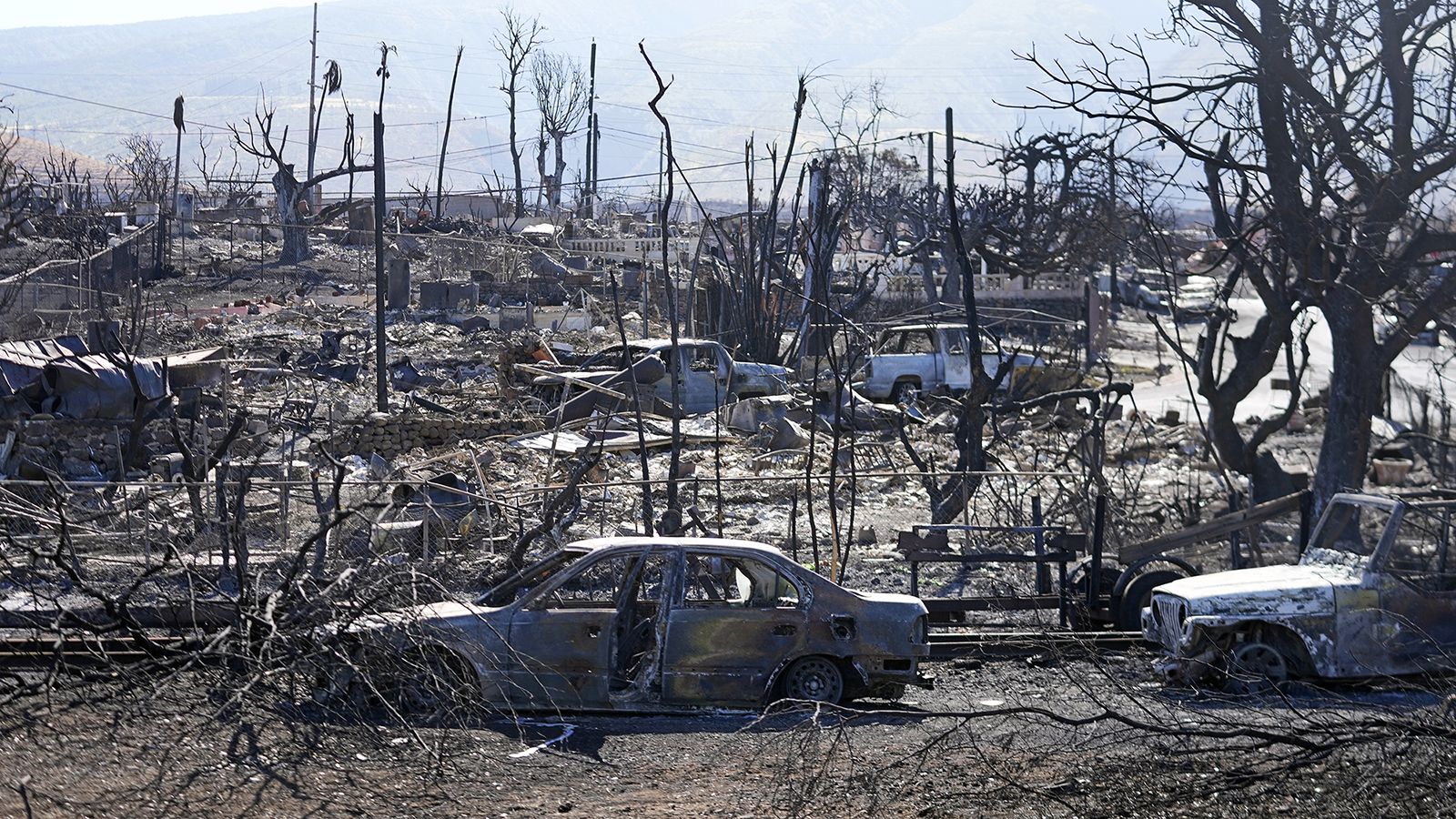
A dry summer and ferocious winds from a passing hurricane fuelled at least three wildfires that erupted this week on Maui. As the most serious of the wildfires raced through parched brush, Lahaina was left a grid of grey, ashen rubble with skeletal remains of buildings under blaze-pancaked roofs. Harbour boats scorched, the stench of burning lingers on the air from torched palm trees.

https://dynaimage.cdn.cnn.com/cnn/digital-images/org/9cc413f2-7737-4fab-9dba-a551931f7358.jpg
Destroyed homes and cars Sunday, August 13, 2023, in Lahaina, Hawaii. Rick Bowmer/AP
"The price tag is astronomical in the context of Maui's size, as annual output is about $10 billion."
"With the median single-family house price in Maui just above $1 million, the effect on the housing stock alone pulls the estimate into the billions. Combine this with the loss of a couple of hotels and numerous retail shops, most of which are more highly valued than the typical home on the island, and the number climbs considerably."
"Many visitors to Hawaii are known to travel to more than one island, which means that the cancellation of entire itineraries will have ripple effects beyond Maui. Some would-be travelers could also paint all of the Hawaiian Islands with the same broad brush and shy away from visiting, especially after volcanic eruptions on the Big Island in recent years."
Adam Kamins and Katie Nied, Moody's Analytics economists
US-FIRE-HAWAII
A firefighting helicopter makes a water drop as a Maui County firefighter extinguishes a fire near homes during the upcountry Maui wildfires in Kula, Hawaii on August 13, 2023.  PATRICK T. FALLON / AFP via Getty Images


Labels: , , , , , ,

Friday, July 02, 2021

Lytton, B.C.: Hell on Earth: Fire and Brimstone


"I am crying really ... sometimes I just pinch my skin to make sure it's not a dream, it's really happening ... 30 years working in this job, never seen anything like this madness ..."
Maximiliano Herrera, world weather records expert

"Sydney [Australia] sits at 33 latitude, Lytton [British Columbia, Canada] at 50."
"Temperatures this high should not be occurring here!"
Sarah Perkins-Kirkpatrick, climate scientist, University of New South Wales
Located about 250 km northeast of Vancouver, Lytton broke previous all-time temperature records on three consecutive days, soaring to 46.6C on Sunday, 47.7C Monday and 49.6C on Tuesday. In 1937 it had hit a high temperature of 45C. And then the following day as the heat dome began to move and Lytton experienced brief relief from the searing heat its one thousand residents were forced to evacuate as a wildfire swept into the town and completely obliterated it.

The heat record that Lytton reached is hotter even than the all-time high of 47.2C experienced by Las Vegas, California and 48.3C in Phoenix Arizona, states considerably south of Canada, across the southern border into the United States. According to Mr. Herrera, only 26 countries have been as hot or hotter, ever. Nowhere in Europe or South America has the temperature ever registered that extremely hot, the most extreme high temperature north of 45 degrees latitude.
"I am incredibly overwhelmed by the news of the fire. It happened so fast and is completely devastating almost everyone I've ever known."
"The town itself and surrounding reserves have been severely hit. Fire continues up towards other surrounding reserves between Lytton and Lillooet and Lytton and Shackan."
"Many people in the community expressed concerns that the railways were still up to their usual traffic when the temperatures in Lytton were reaching the high forties [Celsius] this week."
Shianna McAllister, a Nlaka'pamux from the Lytton First Nation
A building in Lytton, B.C., is engulfed in flames on Wednesday. (2 Rivers Remix Society)
 
The province's Coroners Service received reports of 486 sudden deaths -- according to chief coroner Lisa Lapointe -- between June 25 and the afternoon of June 28, over double their usual number of such reports. When the fire struck, its spread was so rapid that people were forced to sprint off within 15 minutes of having been ordered to leave, taking nothing with them but what they were wearing. In minutes buildings were erupting in flames.

Residents aimed for the nearest towns, in their anxiety to find shelter; Lillooet or Merritt, finding emergency shelters awaiting them. Not quite everyone left, some decided to try to save their homes. Some residents are unaccounted for, the RCMP investigating. A small convoy of vehicles was videoed leaving the area, two separate fires behind them, one a wildfire on the mountain slope above the town, burning the last two weeks, the second in the valley, swiftly consuming the town.

The convoy had to drive a curving road, past burnt-out and still-burning buildings, cars, trucks, recreation vehicles and huge old trees enveloped in flame. Blowing smoke and ash buffeted the vehicles and visibility became so dark with billowing smoke at times it was reduced completely. Apart from the extreme heat and the dry condition of the surrounding forest where electrical storms easily ignite wildfires. there are two railways intersecting either side of Lytton.
 
The fire is seen burning in the Lytton, B.C., area on Wednesday. Conditions in the area were dangerously dry and windy after the record-breaking heatwave. (Facebook/Edith Loring Kuhanga)
 
That proximity of crossing railway lines is a danger of itself -- occasionally in hot atmospheres setting fires by sparks set off from the metal wheels of passing trains grinding on the metal rail lines and then lighting dry areas of brush. Meteorologists explained as well, that the unusual weather contributed to thousands of lightning strikes in the interior elevating the risk of wildfires. And dozens spontaneously erupted.

"This is so devastating -- we are all in shock", said Edith Lorin-Kuhanga, administrator at the Stein Valley Nlakapamux School. "Our community members have lost everything. I understand our band office is also gone", she lamented of the carnage brought to the Lytton First Nation reservation. An area spanning about 80 square kilometres in the interior beyond Lytton is raging out of control, according to the B.C. wildfire Service.

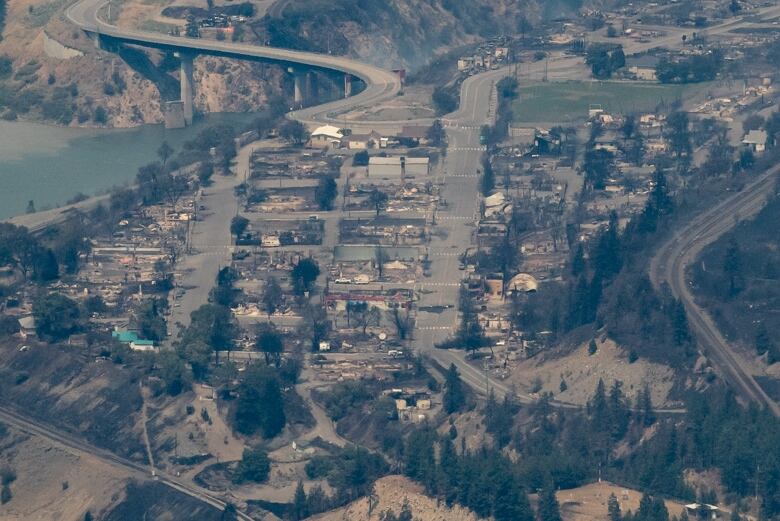
Around what is left of Lytton, ("The town has sustained structural damage and 90 percent of the village is burned, including the centre of town", Brad Vis, MP for Mission-Matsqui-Fraser Canyon), electrical, cellphone, rail and  highway infrastructure are all badly damaged, hampering both travel and communication. The town's main intersection is littered with burnt building debris; gutted vehicles stand where a village was once located.

Structures destroyed by fire in the heart of Lytton, B.C., are seen from a helicopter on Thursday. (Darryl Dyck/The Canadian Press)

Labels: , , , , , ,

Wednesday, January 08, 2020

Australian Bushfire Toll on Koalas

"They're in shock, they're stressed, they've never seen humans or been in a car before."
"We anaesthetize them, then cut away the dead skin, bathe them, treat them with cream, gauze and bandages."
"We had to euthanize him [one koala]. He was brought in from a drought area last week, his organs were so badly damaged. It was very sad ... you try so hard to save them."
"We can't always relocate them ... a change in diet may kill them."
"We don't find bodies [in a search through scorched bush]. The fire was so intense that all that was left was ash."
If they have burned off their claws and they don't grow back properly, they can't climb and they can't live in the wild."
Sue Ashton, spokesperson, Port Macquarie Koala Hospital, Australia

"All the animals that have survived not only have no place to go back to, they don't have food sources left."
"In a fire, the insects get wiped out too, the smaller animals who eat ants and other insects won't have food. Possums and gliders, if there are any left -- most of them have been killed -- they eat leaves and fruit, which have all been destroyed."
Dr.Valentina Mella, Port Macquarie Koala Hospital
Australia’s wildfire crisis is taking a heavy toll on the animals and their habitat
Australia’s wildfire crisis is taking a heavy toll on the animals and their habitat Credit: EPA

Several days ago ecologists from the University of Sydney released an estimated total for the number of animals that have died as a result of the wildfires ravishing Australia; an unbelievable 480-million altogether. According to veterinarian Dr. Melia, the extent of the wildfires in Australia will lave long-term consequences not only for koalas, whose very specific diet has been disastrously impacted, but many other animals, as well.

As for the koalas, the animal hospital specializing in koala rescue and rehabilitation, believe fully two thirds of the local koala population around Port Macquarie perished in the fires that swept the area six weeks earlier. Desperate for food and water, the koalas facing an uncertain reality totally new to them in its virulent, wide-sweeping impact, venture out of the burned bush that was their home, to cross roads and go into back gardens, placing themselves in danger, risking death by traffic or being attacked by peoples' dogs.

There are now 75 koalas in care at the Port Macquarie hospital. The blazes that destroyed 8.4-million hectares of bushland in Australia left an estimated 40 percent of the country's 80,000 endangered koalas dead. Around 390 kilometres' distant, north of Sydney, the hospital has taken in an unaccustomed number of koala patients, resulting from the heavy toll the wildfire crisis has taken on the habitat of the marsupials.

Australia has suffered severe drought for several years of late. That, leading to extremely tinder-dry conditions, along with record high temperatures have seen wildfires ravaging the country since summer's start. Koalas have been brought into the hospital by exhausted firefighters, by homeowners fleeing the fires, and by passing evacuees spotting the little animals collapsed at the side of the road.

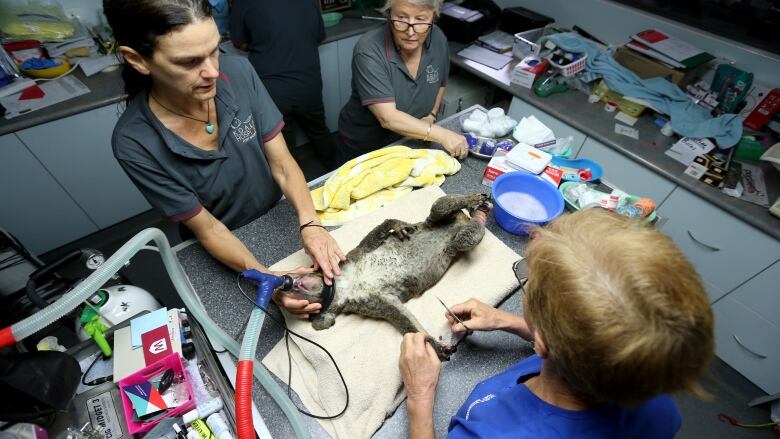
Four veterinarians are assigned to treat each of the rescued koalas, at the hospital. One person for each paw, and a fifth to monitor heartbeat and breathing as the teams work around the clock in an effort to treat each new arrival as expeditiously as possible. Following surgery, staff change bandages, re-dress wounds regularly, and treat burns to sensitive noses and ears. There are fourteen intensive care units, and they're always full.

One koala discovered at the side of a major highway had burnt arms, nose and ears. A man stopped his car, held up traffic, then rescued the koala, now on its way back to health. The animal's paws were "like charcoal" when it was brought to the hospital. Routinely, hospital staff keep a record of the GPS co-ordinates to identify where the koalas are found. When the six to nine months of recovery is over, under normal circumstances they are released back to the wild, in the area from which they came.

All that is changed now; there is nothing 'normal' about the situation faced in Australia with the deaths of almost a half-billion animals as a result of an unstoppable wildfire situation. Responders now are advised to kill orphaned joeys immediately, reflecting the lack of availability of long-term care. In the hospital, one koala sits with its joey, in her arms, evacuated from Hawkesbury before the fires struck.

They're fed a diet of pureed pumpkin and corn during their five weeks of intensive one-on-one care, leading to recovery. Koalas eat only particular types of eucalyptus leaves, meaning that koalas from different areas require a diet of leaves typical of the area from which they come, and many of those areas have been burned beyond redemption.

Australia, one of the driest places on the globe, is no stranger to bushfires. This summer's wildfires, however, are seen as unprecedented in their ferocity and their spread. They began earlier in the season and have spread far more widely than ever before. There are 25 Australians dead as a result of the wildfires, and thousands of homes have been destroyed. Fires in New South Wales are predicted over the next few days to join those burning in Victoria, forming a 'mega blaze'.

Hospital personnel at the Port Macquarrie hospital are contemplating something fairly new to their experience; that with habitat so critically destroyed, there is an uncertain future before the injured koalas, who may have to become permanent wards remaining residents of the hospital.

Rebecca Turner, left, Sheila Bailey and Cheyne Flanagan treat a koala named Sharni from Crowdy Bay National Park for burns at the Port Macquarie Koala Hospital in Australia on Nov. 29, 2019. Flanagan says koala bears are coming to the hospital traumatized and dehydrated as a result of the worst wildfire season in Australia's history. (Nathan Edwards/Getty Images)

Labels: , , , , , ,

Friday, August 09, 2019

Studying Nuclear Winter

"The observed rapid plume rise, latitudinal spread, and photo-chemical reactions provide new insights into potential global climate impacts from nuclear war."
"The 2017 fires [British Columbia wildfires] studied here represent the first observational evidence that such a rise [self-lofting] actually occurs."
"Most nuclear winter studies have assumed that the organics in smoke can be ignored because of their rapid loss from photo-chemical reactions."
"This study calls that assumption into question given the observed persistence of the smoke in the 2017 fire plume."
Report: Rutgers University

"This process of injecting soot into the stratosphere and seeing it extend its lifetime by self-lofting, was previously modelled as a consequence of nuclear winter in the case of an all-out war between the United States and Russia, in which smoke from burning cities would change the global climate."
"Even a relatively small nuclear war between India and Pakistan could cause climate change unprecedented in recorded human history and global food crises."
"The temperatures wouldn’t get below freezing in the summer like they would with a war between the United States and Russia. But it would still have devastating effects on agriculture around the world, far removed from where the bombs were dropped."
Alan Robock, distinguished professor, environmental sciences, Rutgers University/New Brunswick
A wildfire is seen from a Canadian Forces Chinook helicopter as Prime Minister Justin Trudeau views areas affected by wildfire near Williams Lake, B.C., on Monday July 31, 2017. THE CANADIAN PRESS/Darryl Dyck

There were previous events which scientists studied to arrive at a picture of how devastated the globe would be in the wake of a catastrophic event like a nuclear strike. The two U.S. strikes against Japan in 1945, when Hiroshima and Nagasaki were laid waste by atomic bombs, the most dramatic and dreadful example as one such event of unimaginable proportions; natural events like the 1991 eruption of Mount Pinatubo in the Philippines another; and the 1883 Krakatoa Indonesian eruption yet another.

It is Canada, however, with its large tracts of boreal forest and the annual wildfires that consume so much of the geography seasonally -- particularly in the ferocity of the wildfires of the last decade -- that researchers at Rutgers University studied, publishing their findings in the journal Science. The summer of 2017 and its runaway wildfires however, offered the study new insights into the potential eventuating out of nuclear war on the planet's climate.

When smoke and soot are forced upward beyond the rainy troposphere into the dry atmosphere above, the effect lingers, then boosts itself to rise further as sunlight is absorbed. That smoke and the soot accompanying it remains detectable in the upper atmosphere for months. The Pacific Northwest wildfires that began on August 12, 2017 threw up a billowing, cauliflower-shaped behemoth called a pyrocumulonimbus cloud, blotting out the sun, causing havoc with the weather system locally.

The cloud produced by the 2017 wildfires in northern British Columbia produced the largest cloud of this type ever before observed, leading the province to declare a state of emergency where thousands of people were evacuated, hundreds of fires burned out of control, and the largest land area -- about 12,000 square kilometres -- burned in a season. An immense area reduced to a dark, ruined landscape. And then, 2018 saw a repeat of the wildfires with an even larger area burned bleak and desolate.

An enormous cloud of smoke from intense wildfires drifted over northern Canada on August 15, 2017. The image is a mosaic composed from several satellite overpasses because the affected area was so large. NASA Earth Observatory

As the cloud rose from 12 kilometres in August it doubled in height two months later at which point it began to gradually fall at a rate of about one kilometre a month as it spread throughout the Northern Hemisphere stratosphere, remaining detectable even by the following April. According to expectations of nuclear winter models, once smoke reaches the upper troposphere -- the lowest atmospheric level containing water -- it becomes heated by the sun enabling it to 'self-loft' into the stratosphere where no rain is present to wash it out.


 An enormous cloud of smoke from intense wildfires drifted over northern Canada on August 15, 2017. The image is a mosaic composed from several satellite overpasses because the affected area was so large.
An enormous cloud of smoke from intense wildfires drifted over northern Canada on August 15, 2017. The image is a mosaic composed from several satellite overpasses because the affected area was so large.


Labels: , , , ,

 
()() Follow @rheytah Tweet