Ruminations

Blog dedicated primarily to randomly selected news items; comments reflecting personal perceptions

Sunday, March 16, 2025

"Who Knows What They are Going to Demand From Us?"

"The Long-Range Precision Strike [Land] project will significantly enhance Canada's defence capabilities, both domestically and abroad."
"This project is progressing well and we are expecting to share additional details in the coming months."
"[Procurement decisions in Canada are based on national security priorities; the federal government is] closely monitoring the trade situation in the U.S., and assessing potential impacts to existing projects."
Department of National Defence spokesperson Kened Sadiku
https://smartcdn.gprod.postmedia.digital/ottawacitizen/wp-content/uploads/2025/03/6689492_293994514.jpg?quality=90&strip=all&w=564&h=423&type=webp&sig=IaCfTBogZ1L1PUBaOIjnCQ
 
Remarkably, if not damningly, military leadership in Canada seems content to push forward with another sole source agreement for American military equipment in the face of President Donald Trump's relentless drive to destroy any semblance of historical friendliness between Canada and the U.S., vowing to move on with his punishing trade tariffs and continuing his harassment threatening Canadian sovereignty. Unsurprisingly, Canadians are acutely disinterested in becoming their neighbour's 51st state, and nor are they impressed that their erstwhile friendly neighbour has set out to drain Canada's economy through hostile actions. 

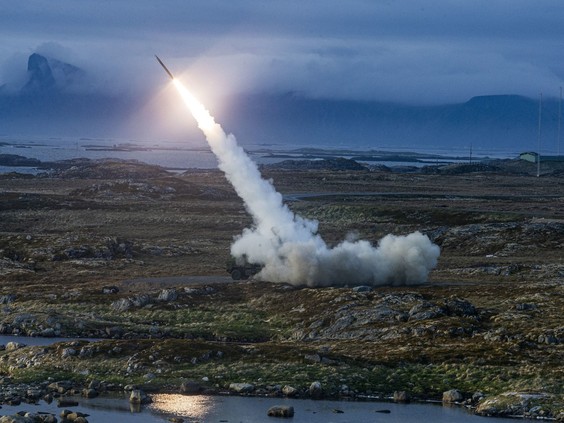
In the face of this disruptive tension, the Canadian Armed Forces is leading a move to have the Liberal government purchase the American-built High Mobility Artillery Rocket System (HIMARS). HIMARS has been in use in combat by the Ukraine military against Russian forces. Once President Trump entered office, he took steps to reduce the weapon system's effectiveness through limiting the flow of data and intelligence required for its critical operations. Effectively leaving the Ukrainian military high and dry with a high-powered system whose software effectiveness and intelligence-sharing has been deliberately tampered with.
 
The Canadian Forces' senior leadership plan is for the purchase of a number of HIMARS built by Lockheed Martin through a sole source deal handled through a foreign Military Sale where Canada would receive the equipment from the U.S. government directly. Department of National Defence spokesperson Kened Sadiku, asked why a HIMARS purchase would even be considered under current hostile circumstances between Canada and the U.S. where the latter has imposed staggering tariffs and sovereignty threats on the former, delivered a verbal shrug in response.
 
https://smartcdn.gprod.postmedia.digital/ottawacitizen/wp-content/uploads/2025/03/276358_293994482.jpg?quality=90&strip=all&w=564&type=webp&sig=28ePe_V1sxeE2-kYc8IcEg
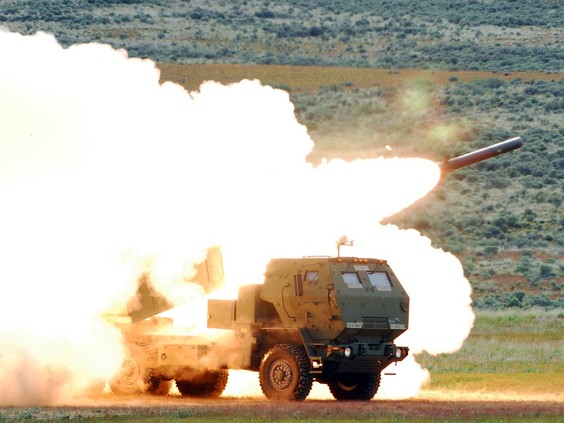
Canada’s military leadership is pushing for a sole source deal for the U.S.-built High Mobility Artillery Rocket System or HIMARS. Photo by Sgt. Adam L. Mathis U.S. Depar /U.S. ARMY

The equipment acquisition could come to about $5 billion with the project involving purchasing launchers, fire control software, munitions and spare parts. The proposed acquisition along with other recent Canadian defence purchases has caused consternation among Canadian industry officials and military analysts. According to one official in the defence industry, the Canadian military leadership is "tone deaf" to the threat the Americans under this new administration poses to the country. 

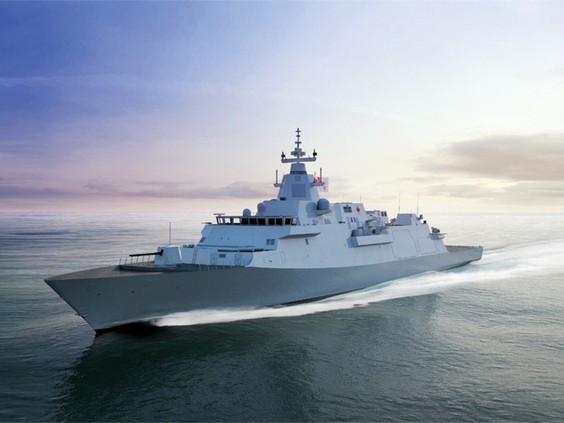
Assuming a scenario where the U.S. controls most of the technology on its equipment, the Canadian Forces faces a dilemma. With full control over software and hardware upgrades on Canada's $19-billon fleet of F-35 fighter jets on order, the aircraft being built by Lockheed Martin in the U.S. has prompted defence industry officials to warn that with the U.S. controlling many of the key systems on board Canada's new warships, as with the aircraft, the U.S. has the potential to hold Canada hostage over future upgrades or spare parts.
 
Those legitimate concerns aside, pressure from the U.S. has led the Liberal government and Canada's military to double down on ordering American-supplied equipment. 2023 saw close to $30 billion spent in new military systems, most of which were from U.S. firms exclusively, including an $8 billion sole-source deal with Boeing for new surveillance aircraft. That, despite that Liberal cabinet ministers had previously claimed Boeing was not an trustful industrial partner.  

In the hope that the deals could serve to placate American politicians who had raised concerns that Canada was failing to spend enough on defence, this was the chosen route, which in the final analysis did nothing to alter the criticism. The push by the Canadian Forces to acquire American has, in addition, provided little benefit for domestic firms. Much of the sentiment behind these self-defeating procurement efforts can be ascribed to the closeness of the Canadian military leadership to their American counterparts plus its reluctance to shift focus from America's protective shield.
"This is what happens when you exclude Canadian companies: You find yourself potentially being held hostage." 
"We don’t control the [combat management] system; the Americans do."
"Who knows what they are going to demand from us?"
Alan Williams, former procurement chief, Department of National Defence
https://smartcdn.gprod.postmedia.digital/ottawacitizen/wp-content/uploads/2025/02/a1-csc-ship.jpg?quality=90&strip=all&w=564&h=423&type=webp&sig=Tq3iv0LHxfrrufONmXZaLQ
 

Labels: , , , , ,

Saturday, March 16, 2019

Shock Waves and Incompetence

"We need the remains of our children."
"And they are saying that it can take six months or more."
Ibrahim Mohammed, Kenya

"We came here for nothing."
"They told us the bodies were small pieces, more than 5,000 pieces."
Nejmedin Gazi, Yemen

"We were expecting that we will have our body well-kept but we are amazed to hear that there is nothing, totally nothing."
Pauline Gathu, Kenya

"Break, break, request back to home."
Captain, Ethiopian Airlines Flight 302
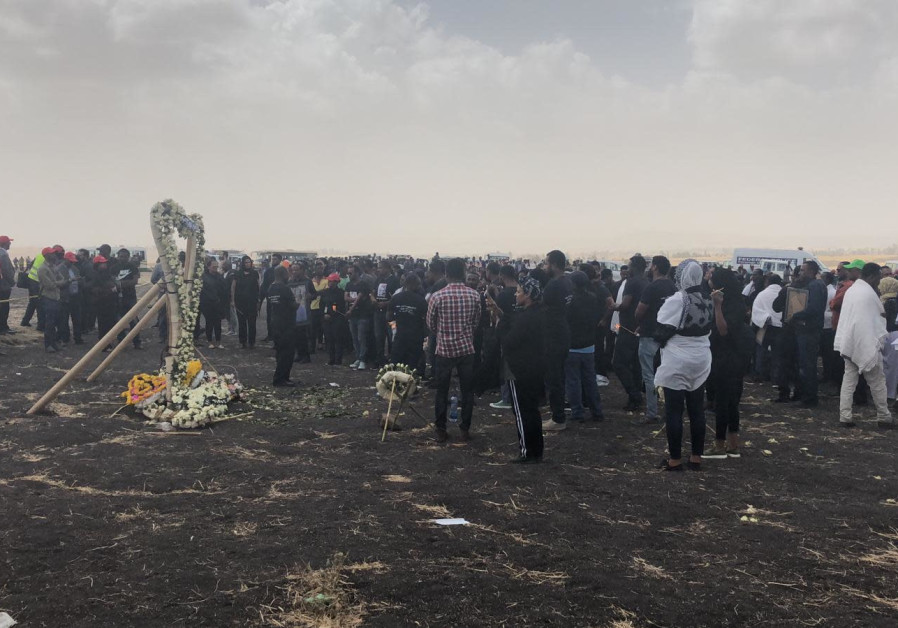
People walk past a part of the wreckage at the scene of the Ethiopian Airlines Flight ET 302 plane
People walk past a part of the wreckage at the scene of the Ethiopian Airlines Flight ET 302 plane crash, near the town of Bishoftu, southeast of Addis Ababa, Ethiopia March 10, 2019. (photo credit: TIKSA NEGERI / REUTERS)
Flight 302 to Nairobi was no sooner airborne than its pilots knew they were in trouble. Their plane lurched by hundreds of feet up, then down. The panicked voice of the captain came in to air traffic controllers, seeking permission to return to the airport it set off from near Addis Ababa in response to the plane accelerating to abnormal speeds, far beyond what was considered standard. And then, while air traffic controllers hurriedly diverted two other flights approaching the airport to make room for Flight 302's return, all contact was lost.

Now investigators in France are faced with decoding the black boxes recovered from that crash. A crash that experts have described as descending at full speed, nose down, directly into the ground, completely disintegrating, buried in the receiving landscape, no one aboard left intact, all 157 people aboard -- passengers and crew -- dead on contact. French authorities won't comment whether they will be able to retrieve much from the flight data and voice recording.

All the countries that have grounded the Boeing 737 Max 8 in their national fleets are aware that Boeing must now face the dire necessity of providing proof their jets are safe to fly while suspicions revolve around faulty software that appears contributed to the Ethiopian Air crash and a previous fall of 2018 crash with similar outlines and deadly force flown by Indonesia's Lion Air Flight 610, whose crash killed 189 people off Indonesia.

Among the victims of the Ethiopian Air crash were representatives of 35 countries, including 21 United Nations staffers. In both instances, each of the planes exhibited erratic altitude changes as they were airborne, leaving the impression with flight investigating experts that the pilots had struggled in an effort to control their aircraft. And in both instances crews attempted to return to the airport from which they had just taken off.

Regulators, according to the U.S. Federal Aviation Administration, are in possession of new data from satellite-based tracking indicating the movements of both planes were similar. Boeing reiterates "full confidence" in their planes' safety; that their engineers are changing the software system designed to prevent an aerodynamic stall should sensors detect the jet's nose is pointed too high and its speed too low.

This, however, appears to be the problem; that both captains and crews were unable to override the software that kept pointing their aircraft's nose too low, and accelerating its speed to an uncomfortable degree. Leading investigators to focus on whether the software automatically pushed the plane's nose repeatedly downward; whether the Lion Air pilots had the learned skills to resolve the problem, where Ethiopian Airlines claim its pilots had special training on the software.

Israel's ZAKA emergency response team is on site, granted access to enable them to perform the work the dedicated volunteers know best; forensic examinations to the most minute details to achieve closure. Following which discussions related to repatriating whatever remains of the victims could commence in the wake of identification.
"We never encountered such a difficult situation. I was at the scene together with ZAKA volunteers."
Azriel Schnitzer, commander, ZAKA delegation, Ethiopia

"The great fear is that, God forbid, there will not be a situation where, when they made the scientific identification .... they will not find the bodies of the two Israelis who perished in the plane."
"At the Sakala Hotel, Ethiopian Airlines began arriving dozens of families of bereaved families from around the world who wanted to receive answers and information about the fate of their loved ones, but there was no one to explain to them what was happening or to answer their questions. You can not describe the cries and shouts of the families who [came from] far away, the ambassadors of the countries are walking around the hotel without the ability to help the families because the Ethiopians are not cooperating with them to ... their astonishment."
ZAKA chairman Yehuda Meshi-Zahav

"It's a hard feeling to get to the ring when we see the many findings rolling around without being able to provide a proper and professional response. Within a day, all the parts of the plane disappeared from the arena to an unknown location without [our] being able to check the possibility of findings within the parts of the plane. The feeling is painful and very difficult."
Eliezer Samet,  ZAKA volunteer, Ethiopia
(photo credit: TIKSA NEGERI / REUTERS)

Labels: , ,

 
()() Follow @rheytah Tweet