Ruminations

Blog dedicated primarily to randomly selected news items; comments reflecting personal perceptions

Sunday, May 22, 2022

North Korea In Extremis

"If senior elites start dying en masse -- there are quite a lot of them, and we don't know if they are vaccinated -- if many of them die of it, there may be questions asked about why North Korea didn't vaccinate earlier,"
"It is going to test his [Kim's] leadership, and it is going to create some urgency for very creative storytelling in the North Korean propaganda apparatus."
"We've seen Kim Jong Un crying about the nation's sacrifices (in the past) -- I think this is the type of thing he may do to try dampen outrage."
"North Korean citizens have definitely been through a lot. The first thing he could do is really apologize and take some blame for it."
"We know that they flew in citizens from across North Korea to attend and celebrate that event [last month's military parade], That's the perfect petri dish for this virus to spread, so I think that parade will go down in history as a very bad idea for North Korea."
Chad O'Carroll, managing director, Seoul-based NK News outlet
In photo provided by the North Korean government, North Korean leader Kim Jong Un is shown attends a meeting of ruling party members on May 17, 2022   AP
"The fact that Kim Jong Un has decided to come out and publicly announce this health crisis is quite telling," 
"[It] may have a political element, obviously."
Lina Yoon, senior Korea researcher, Human Rights Watch
 
"There is no evidence to show that North Korea has access to enough vaccines to protect its population from COVID-19."
"With the first official news of a COVID-19 outbreak in the country, continuing on this path could cost many lives and would be an unconscionable dereliction of upholding the right to health."
Boram Jang, researcher, Amnesty International East Asia 
 
"There's no good option."
"But there are things that can be done that can begin to ameliorate some of the worse consequences if they're done quickly."
J. Stephen Morrison, director, Center on Global Health Policy, Center for Strategic and International Studies
It took North-Korea-watchers by surprise to see and hear the leader of the hermit kingdom publicly admit his country is in for a really rough ride, lamenting the fact that COVID-19 finally infiltrated the country despite Kin Jong Un's approach to total closure of his country to outside penetration, taking his cue from Chin's 'Zero COVID' approach in defense against SARS-CoV-2. Reliance in North Korea appears to have been based solely on its closed border, to keep COVID at bay.
 
Although North Korea should have been and was designated as a prime country to claim participation in the UN-sponsored global vaccine sharing program, COVAX, North Korean leadership expressed no interest, much less desire to take advantage of the opportunity to bring in vaccines for a country-wide vaccination campaign. And nor has the country invested in lab testing for COVID.
 
Its population, in a country where medical facilities are at best functioning at a low level, has been left vulnerable to a raging wave of the infectious Omicron variety of COVID. Out of the total population of 25 million people, a week ago the recorded coronavirus case load reached 2 million. This, in a society with zero-level vaccines, poor medical infrastructure and strained/limited ties to the global health community. In the past that has been North Korea's choice, to maintain a distance.
 
The country now, however faces a crisis situation with its population vulnerable to a galloping virus taking full advantage of a population unprepared to face a pandemic. Health experts weigh its chances from afar; where it could be prevailed upon to accept donations of antiviral treatments and protective medical gear for its health workers to slow down the outbreak, protecting those most in need of shelter from the ravages of the virus. Whether North Korea would accept international offers, is another thing. It has failed to the present to respond to a U.S. offer of assistance.
 
North Korea in the past several years steadfastly refused many offers of coronavirus vaccine in preference to shuttering its borders to the world, a choice that is now seen to have failed spectacularly. Leading experts to give warning that the death toll in the country could reach and exceed 100,000. And within that unvaccinated population lies the prospect of fertile ground for the virus to further mutate into other, perhaps more virulent strains.
 
North Korea last month staged a massive military parade in Pyongyang. The fast spreading BA.2 subvariant of Omicron has been identified in the country. At this juncture late in the game, vaccines that might have been useful in preventing a crisis on this scale cannot now be administered swiftly enough and sufficiently broadly to halt the viral spread. 

There appears to be one country only that North Korea pays heed to, and that is China. Flights have resumed between China and North Korea this week for the first time in several years, with observers speculating that they carry badly needed emergency health supplies for a country that locked itself into a hapless situation of wide-open opportunity for a ravenous virus.
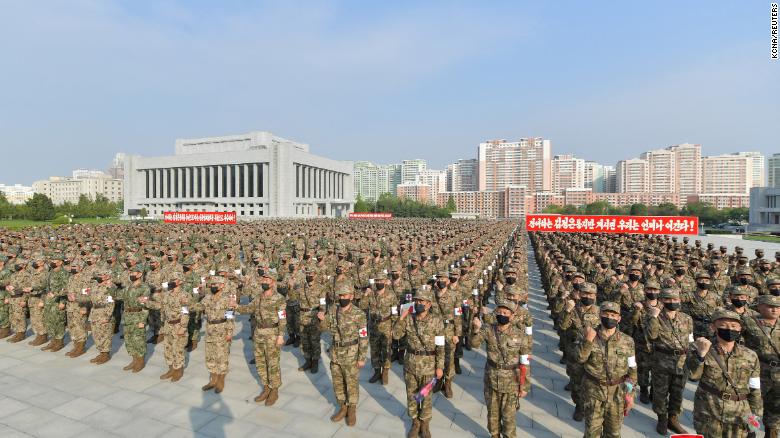
North Korean military personnel have been mobilized to assist in the distribution of medical supplies as Pyongyang grapples with high Covid case numbers.
"It looks really bad, They are facing the rampant spread of Omicron without protection from vaccines, without much – if any – immunity in the population and without access to most of the drugs that have been used to treat COVID elsewhere."
"I’m sure the North Koreans will still be very wary of accepting major international aid and going back to the situation of the 1990s, when there were multiple different aid agencies operating in the country and this was felt by the leadership to be humiliating and potentially destabilising."
Owen Miller, lecturer in Korean studies, School of Oriental and African Studies, London University


Labels: , , , ,

Sunday, November 28, 2021

Panic-Coping With Omicron

"In the presence of Delta, for those who are not fully vaccinated yet, there is no escape." 
"You either get immune through vaccination -- that's the easy way -- or through infection -- that's the risky way."
"The vaccines provide excellent protection against serious disease, but immunity will decrease a bit over time. Therefore, a third dose will start to be important first in older age groups and the most vulnerable people who are already eligible for the shot. And if we think about continued control of the pandemic, then also younger age groups will need to get a third shot."
"We don't know yet where the sweet spot is, what kind of age cut-off we want to use. But the shots will not only protect everybody better against hospital and ICU admission and death, but also provide neutralizing immunity against infection. That means you have antibody levels that are so high that even if the virus enters the body, it's immediately caught and neutralized by the immune system's IgG antibodies."
"In the presence of this new Omicron variant, anyone who can get a third dose should get one immediately because every additional improvement of the immune response will be even more important for Omicron than for Delta."
Dr.Peter Juni, epidemiologist, scientific director, Ontario COVID-19 Science Advisory Table 

"[Most of the mutations appear to be in similar regions as those in other variants]. That  tells you that despite those mutations existing in other variants the vaccines have continued to prevent serious disease as we've moved through Alpha, Beta, Gamma and Delta."
Professor Andrew Pollard, director, Oxford Vaccine Group
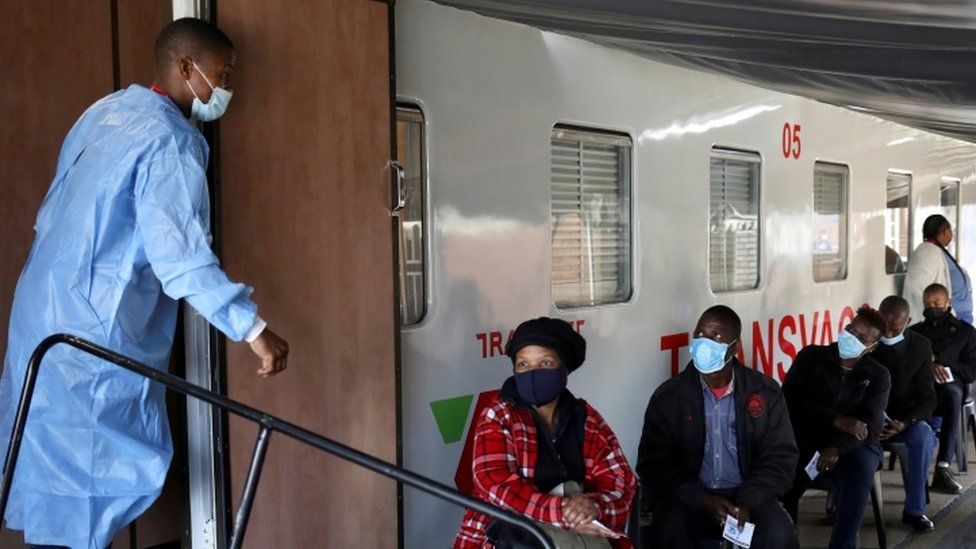
Train used as vaccination centre in East Rand, South Africa
Only about 24% of South Africans have been fully vaccinated so far   Reuters
 
The Delta strain of COVID-19 has devastated the international community by the speed of its spread, causing Europe and India to grapple yet again with another surge in cases, overwhelming hospitals, bringing lockdowns when populations feel themselves fed up with the strict rules meant to make them safer from contracting the pathogen, but infuriating them nonetheless after almost two years of abnormal social distancing, hampering employment and social life, causing people to defy the authorities and march in angry protests.

And just when government and medical authorities were feeling hopeful of being able finally to relax vigilance and allow society to return to some semblance of normalcy, they're faced with the prospect of an even more infectious strain of the disease and all the complications that fact bears with it. A growing host of countries including the UK, US, Australia, Canada, Brazil, Iran, Japan, Thailand and the European Union have announced the imposition of restrictions on countries in southern Africa.

Out of South Africa in mid-week came warning from the the medical community of the appearance of a mutated strains of COVID. There have been hundreds of SARS-CoV-2 mutations, most of them fairly benign, but several identified by the World Health Organization as 'variants of concern' in recognition of their complicating properties; infectiousness and less susceptibility to the protective properties of vaccines have given good cause for concern in the havoc they've caused.

The new strain, however, as a variant of concern has caused more than the usual stir among medical professionals and governments. It has been diagnosed with over 30 mutations, and the advantages in infectiousness seen in Delta have been eclipsed by this new mutated strain. Apprehension is high, and so are reactions. To the extent that South Africa is indignant at the response, effectively closing it off from the rest of the world temporarily; in effect hinting their good deed in warning of the new strain has cost them too dearly.  
"What is going on right now is inevitable, it's a result of the world's failure to vaccinate in an equitable, urgent and speedy manner. It is as a result of hoarding [of vaccines] by high-income countries of the world, and quite frankly it is unacceptable." 
"These travel bans are based in politics, and not in science. It is wrong... Why are we locking away Africa when this virus is already on three continents?"
Ayoade Alakija, co-chair, African Union vaccine delivery alliance
The World Health Organization itself warned against the shutdown of flights from southern Africa despite increasing evidence appearing that give warning the variant has already begun to spread internationally. Belgium, Israel, Hong Kong and Germany -- and most recently Canada -- have all now reported cases of Omicron identified in those countries, brought by travellers having arrived from South Africa, Namibia, Zimbabwe, Botswana, Angola, Malawi, Mozambique, Zambia, Lesotho, Mali, or Eswatini. And doubtless more will follow.

In the Netherlands, 61 passengers on two flights from South Africa, of a total of 500 travellers were diagnosed with COVID, leaving, authorities to begin testing for the new variant. The WHO labelled Omicron a variant of concern in reflection of its high number of mutations along with early evidence it carries a higher degree of infection than do other variants. People who had contracted COVID-19 and recovered might contract it again, potentially in this new form.

Because the variant is so new, it will take weeks before more details are known about it; just how infectious it is, how much of a load it carries, how its symptoms manifest, and whether current vaccines are resistant to a high degree to its incursion. Pfizer announced its confidence that it would be producing an Omicron-specific vaccine in no more than several weeks' time. 
 
It is largely the uncertainty surrounding the new variant that has health authorities on edge. And that so many countries have taken to excluding flights from the source countries speaks to their determination to avoid if at all possible, the presence of another highly infectious, threatening variant at a time when they are struggling with its somewhat less-infectious, less virally-loaded predecessor wreaking havoc anew all over Europe.

Add to that the critical time of year with far more indoor activities thanks to approaching winter. And with the approach of winter the oncoming Christmas season which will bring people together in social gatherings, which they missed last year. Isolation-weary populations yearn to return to their normal lifestyles when spontaneous reactions to social events, attendance at sports events, theatres, social gatherings were a routine part of their lives.

Now those actions are deemed to be reckless, leading to increased spread of the pathogen with all the resultant social chaos leading to hospitalization, serious illness and all too often, death. This is a pandemic that has taken over five million lives on a global scale, and growing steadily. All the vaccine manufacturers, from AstraZeneca, Moderna, Novavax to Pfizer have plans to adapt their vaccines to reflect the emergence of Omicron. 

According to some experts in the field, the emergence of this variant is apt illustration of rich countries having hoarded vaccines, a situation that threatens to prolong the pandemic, with fewer than 6 percent of people in Africa having been fully immunized, leaving them vulnerable to the ravages of the disease, along with millions of health workers and poorer populations yet to receive even a first dose. Giving the virus ample opportunity to converge on this unvaccinated human playground and mutate endlessly. 

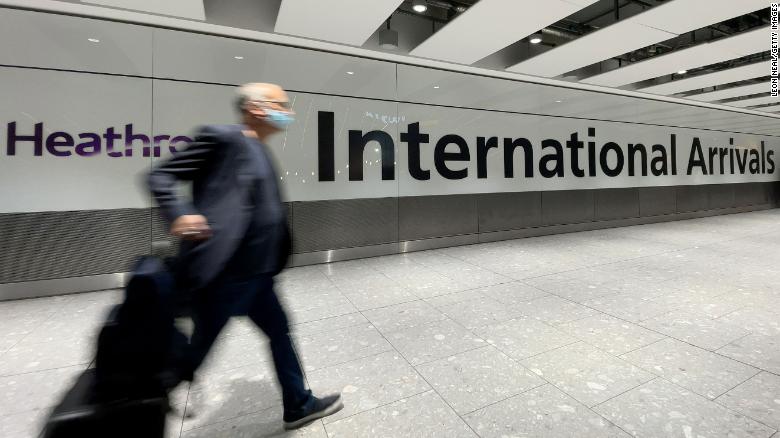
Passengers walk through the arrivals area at London's Heathrow Airport on November 26, after the UK suspended flights from several nations in southern Africa.

Labels: , ,

 
()() Follow @rheytah Tweet