Ruminations

Blog dedicated primarily to randomly selected news items; comments reflecting personal perceptions

Thursday, December 11, 2025

Move Away From Pre-Processed Foods ... Study


"There seems to be growing evidence that there is a cogent reason to think about limiting one's intake of ultra-processed food."
 "It gives us some clues into the potential role of diet in the development of early-onset colorectal cancer precursor lesions. And I think it is probably the best available data we have now."
"[The average colon polyp has a five percent risk of developing into cancer] but we think even the smallest, most benign polyps probably have some malignant potential if they're left in place without any treatment. That risk becomes much greater as the polyp gets bigger."
"We wanted to know if these things [growing cancer statistics among young people and diet] were related. Is it possible that some of the rising incidence of early-onset colorectal cancer could be explained by our increasing consumption of ultra-processed foods?"
Andrew T. Chan, gastroenterologist, Mass General Brigham Cancer Institute
 
"[The study findings add] to the growing body of evidence that following a balanced healthy diet is important for many chronic diseases."
Sarah Berry, professor of nutritional sciences, King's College London
https://static01.nyt.com/images/2025/11/13/well/13WELL-UPF-COLORECTAL-CANCER2/13WELL-UPF-COLORECTAL-CANCER2-superJumbo.jpg?quality=75&auto=webp 
 
There has been no end of research and studies on the effect of processed, pre-prepared food in our diets. The public has been cautioned countless times of the deleterious effects related to a diet scarce on whole foods and heavily dependent on pre-processed foodstuffs. That among the cautions is the fact that these foods are loaded with salt, sugar and fat in excess. Not to mention chemical additives. The battery of whole foods available for general consumption give us greater nutrients in forms the human body processes for health and good digestion, containing minerals and vitamins and roughage.
 
A diet heavy in pre-prepared foods most often leads to overweight and obesity, which in turn leads to the potential of developing Type 2 diabetes, cancer and heart disease. This new study points a finger directly at colorectal cancer as a potential outcome from relying on convenience foods. Moderation is the key to the dilemma. A minimal level of processed food consumption alongside a wide range of whole foods is a much safer, healthier and reliable eating pattern for good health.
 
The observational study in which Drs. Chan and Berry were involved found women who reported nine to t en daily servings of ultra-processed foods, having a 45 percent greater likelihood of developing polyps before reaching age 50, than those women who consumed a minimum of ultra-processed foods (considered to average three servings daily). The study cautions that its conclusion point to an association, without claiming a cause-and-effect relationship.
 
This study published in JAMA Oncology, links eating more ultra-processed foods with developing early colorectal polyps, which could be one answer for the rising rates of colorectal cancer in younger adults. 
The 24-year study of some 30,000 female participants in the Harvard-led Nurses Health Study II saw
participants self-reporting responses on food questionnaires every four years, where the highest consumption group consumed roughly 10 servings per day, compared with three servings in the lowest-consumption group. 

 
A woman putting a plate of food into a microwave.
On average the group that ate the most UPF servings a day had a 45% greater risk of having adenomas compared with the group that ate the least. Photograph: Andriy Popov/Alamy
 
In recent decades medical professionals have recognized a steady rise in the number of people under age 50 being diagnosed with colorectal cancer. Risk factors of obesity, smoking or sedentary lifestyles do not fully account for this trend. In the North American diet, processed foods play an increasingly large part in people's daily food consumption. Scientists globally have delved into the phenomenon of obesity and the part that processed foods play in human health. This study's focus was on grappling why it is that more young people have been vulnerable to colon cancer.
 
A higher intake of  ultra-processed foods was found by the researchers to be associated with an increased risk of colon polyps appearing before women turned age 50. Why the research focused on women has not been discussed. Researchers adjusted for study participants' BMI, instances of Type 2 diabetes and other indexes surrounding diets, including the amount of fibre consumed.
 
To obtain "more simple, whole ingredients", Dalia Perelman, a Stanford University research dietitian commented that consumers would favour themselves by moving away from processed, packaged or pre-prepared meals. "It doesn't have to be complicated", she said. Select a handful of nuts rather than a bag of Cheetos, or plain oatmeal cereal rather than packaged, prepared cereals. Above all, focus more on fresh fruits and vegetables and whole grains.
 
https://i.cbc.ca/ais/84688065-d83e-4998-b891-3bccd508b2ae,1763062416575/full/max/0/default.jpg?im=Crop%2Crect%3D%280%2C0%2C1920%2C1080%29%3BResize%3D620
A new U.S. study published in JAMA Oncology links eating more ultra-processed foods with developing early colorectal polyps, which could be one answer for the rising rates of colorectal cancer in younger adults.
 
"Try to limit ultra-processed foods — they’re often loaded with sugar, salt and unhealthy fats, but short on nutrients. These foods can raise your risk for obesity, diabetes and even cancer, and they’re designed to make you eat more. Whenever possible, choose fresh, whole foods instead."
"The consistency of [ultra-processed food] associations across heart, brain and gut diseases suggests a real concern. Food is something we control daily, so small shifts toward whole foods can make a big difference." 
Registered dietitian Russell de Souza, associate professor and researcher, McMaster University’s Population Health Research Institute 
"We're not trying to alarm people. And we're not telling people that eating any [ultra-processed food] is going to lead to colon cancer."
"We think it's one piece of the puzzle; that there's many things that contribute to colon cancer risk and this is something to be aware of."
Dr. Andrew T. Chan 
 

Labels: , , , , ,

Saturday, January 27, 2024

Early-Onset Cancers in Younger Generations

"Why is this happening, and why are we seeing this?"
"They [patients] say, 'Why? I'm in great shape, I'm exercising'. I have no explanation for them. We really just don't know."
"You hear stories of young women who get radiation but were unaware they would become infertile. Or someone undergoes rectal cancer surgery, and no one has talked to them about the possibility of erectile dysfunction. Or no one has a clue how to talk to their 12-year-old about their new diagnosis of cancer."
"All of these things are really important. We've been trying hard to add that layer of treatment into how we manage colorectal cancer."
"Time is absolutely a factor. [Once people start experiencing symptoms], it usually has advanced, and may have a very different prognosis." 
Shady Ashamalia, surgical oncologist, Sunnybrook Hospital, Toronto
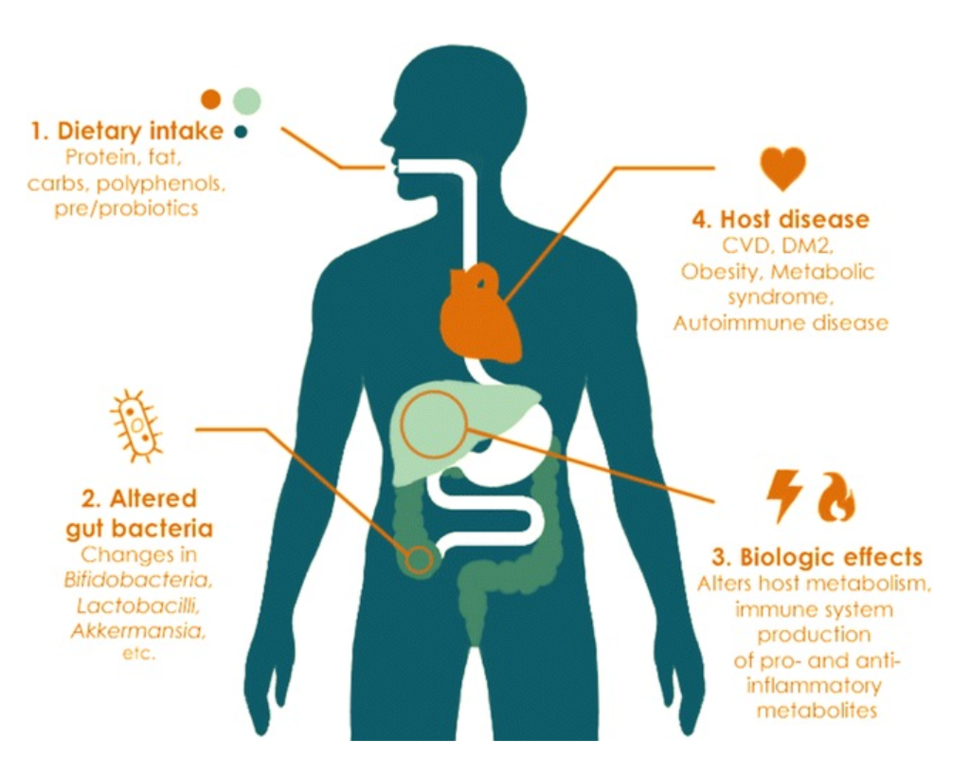
An illustration of how the gut microbiome influences health.

Changes in the gut microbiome may be influencing the increasing rates of colorectal cancer in adults under 50. Credit: Journal of Translational Medicine


A recent editorial in the journal BMJ Oncology warned, "The epidemiological landscape of cancer incidence is changing", following a global study that found "early-onset" cancers -- diagnosed in individuals under fifty years of age had increased by 79 percent and correspondingly the number of deaths ensuing from those cancers increased over three decades by 28 percent. 

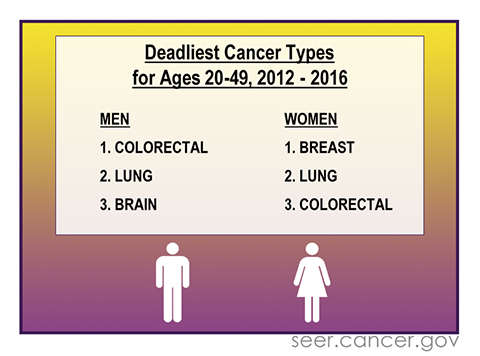
The startling and little understood reality is that colorectal, breast, esophageal, gastric and pancreatic cancers are on the increase in people as young as 20 to 25 years in age. Colorectal cancer has moved from the fourth leading cancer killer in men and women under 50 in decades earlier in the United States to now become the leading cause of cancer death in younger men, and the second leading [after breast cancer] in under-50 women in 2021, relates an American Cancer Society report.

Between 1983 and 2012, rates of cancer among the under-50s increased significantly, at 13 cancer sites according to a Canadian analysis: colon, rectum, bone, breast, connective and soft tissue, uterus, gallbladder, kidney, esophagus, pancreas, testes and thyroid. In the 20-to-39-age group, the most dramatic increase of cancer is seen in colon and rectal cancers. The rates increased annually among 20- to 24-year olds by four to six percent.
 
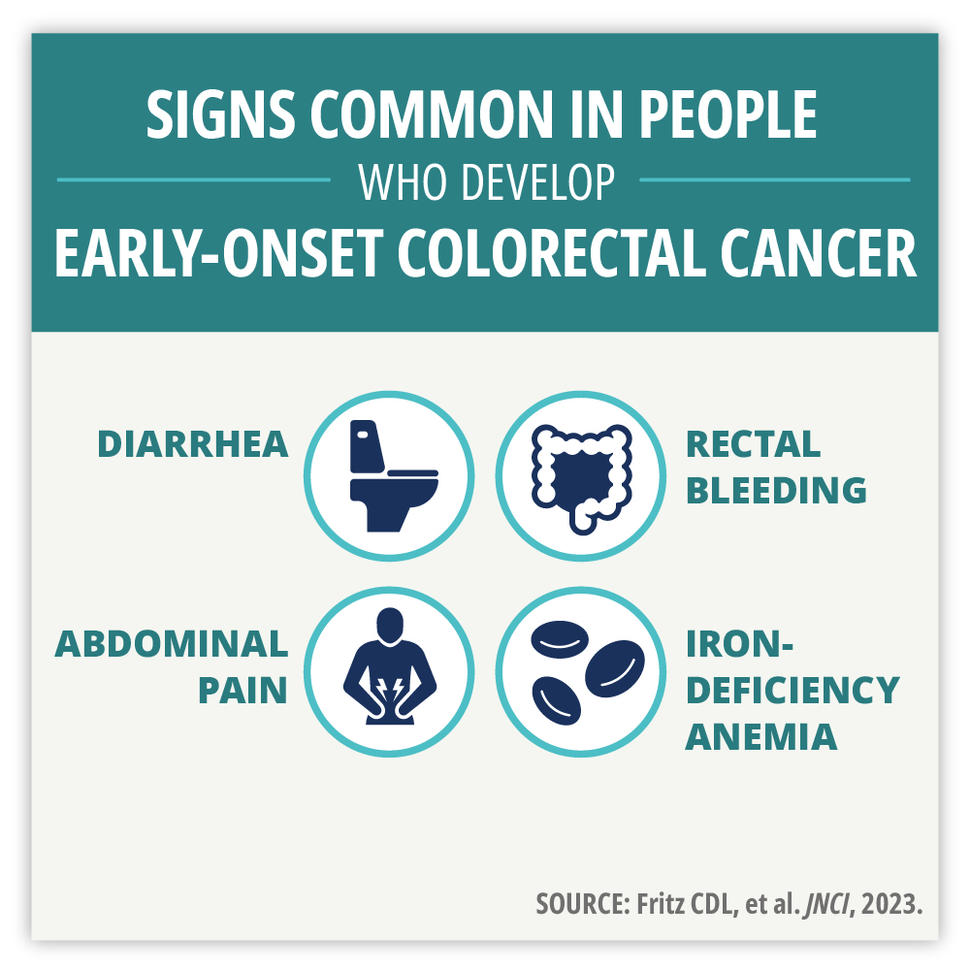
Text graphic states signs common in people who develop early-onset colorectal cancer. The graphic also includes graphics for diarrhea, rectal bleeding, abdominal pain, and iron-deficiency anemia.
Among 30-to-39-year olds significant increases were noted as well for pancreatic cancer, and in those 25 to 29 gallbladder cancer; patterns seen in 'stark contrast' to trends in older age groups where increased incidents were more minimal. Doctors were reporting far more young adults with colorectal cancer and fewer among those over age 50, even before the study results were known. And no one in the medical/research community understands why this is.
 
Theories, however abound and they linger on diets high in processed, fatty and sugary foods which tend to be low in fruit, vegetable, fish and fibre intake. Processed meats are suspect, as well as the use of antibiotics capable of altering the gut microbiome to cause chronic inflammation in the bowel. Other suspected agents are moderate to heavy alcohol consumption, sedentary lifestyles and women avoiding motherhood leading to more cycles of circulating estrogen levels capable of increasing risk of breast cancer; and lastly, excess body weight.
 
In those under age 50, obesity too is linked to at least eight of the cancers. Close family members with cancer increases risk, along with some hereditary disorders. And when all those possibilities have been dealt with, doctors are still seeing younger cancer patients whose profiles don't mesh with any of the risk categories. While cancer remains a disease of ageing -- nearly nine out of ten new diagnoses are in people over 50 -- the trends remain alarming since those under age 50 are in the prime of their lives. 
 
A steady drop in the overall cancer death rate has been realized with the reality of fewer people smoking and earlier detection procedures for some types of cancer, alongside improved treatments leading to a  steady drop. The reality is that those being diagnosed at an early age tend to be seen and diagnosed at late stages in their cancer, at junctures when they become more difficult to treat. Younger adults are typically excluded from cancer screening programs unless they fall into high-risk categories.
 
Colorectal cancer signs include an abrupt change in bowel habits (thinning stools), bloody stools, abdominal pain, or detectable masses. Symptoms in  younger people can be dismissed by examining physicians as hemorrhoids, heartburn or irritable bowel syndrome. As for breast cancer screening, average-risk women at age 50 are eligible; unless felt to be at high risk younger adults are not included in cancer screening programs. Invasive and late-stage breast cancers are being seen in women in their 50s who haven't been screened at age 40.
 
Total time from the first sign of bleeding to treatment was 217 days for younger people, in one US. study, versus 58 days for over-50s. Younger people have a tendency to think "I'm too young for cancer", leading them to procrastinate about seeking medical attention. Doctors' mindsets are set to resist thinking 'colorectal cancer' in a 30-year-old with blood in his stool. Caught early enough the polyps can be successfully treated, leading to a cure.
 
https://dailynews.ascopubs.org/do/10.1200/ADN.22.201206/full/dn22_ee_karippot_fig_thumbnail-1675307053321.png
Abbreviation: CRC, colorectal cancer.
Reprinted from Siegel et al


Labels: , , ,

 
()() Follow @rheytah Tweet