Ruminations

Blog dedicated primarily to randomly selected news items; comments reflecting personal perceptions

Monday, March 02, 2026

Alcohol Over-Consumption Health Risks

Drinking excessively on an occasion can lead to these harmful health effects:

  • Injuries—motor vehicle crashes, falls, drownings, and burns.
  • Violence—homicide, suicide, sexual violence, and intimate partner violence.
  • Alcohol poisoning—high blood alcohol levels that affect body functions like breathing and heart rate.
  • Overdose—from alcohol use with other drugs, like opioids.
  • Sexually transmitted infections or unplanned pregnancy—alcohol use can lead to sex without protection, which can cause these conditions.
  • Miscarriage, stillbirth, or fetal alcohol spectrum disorder (FASD)—from alcohol use during pregnancy. 
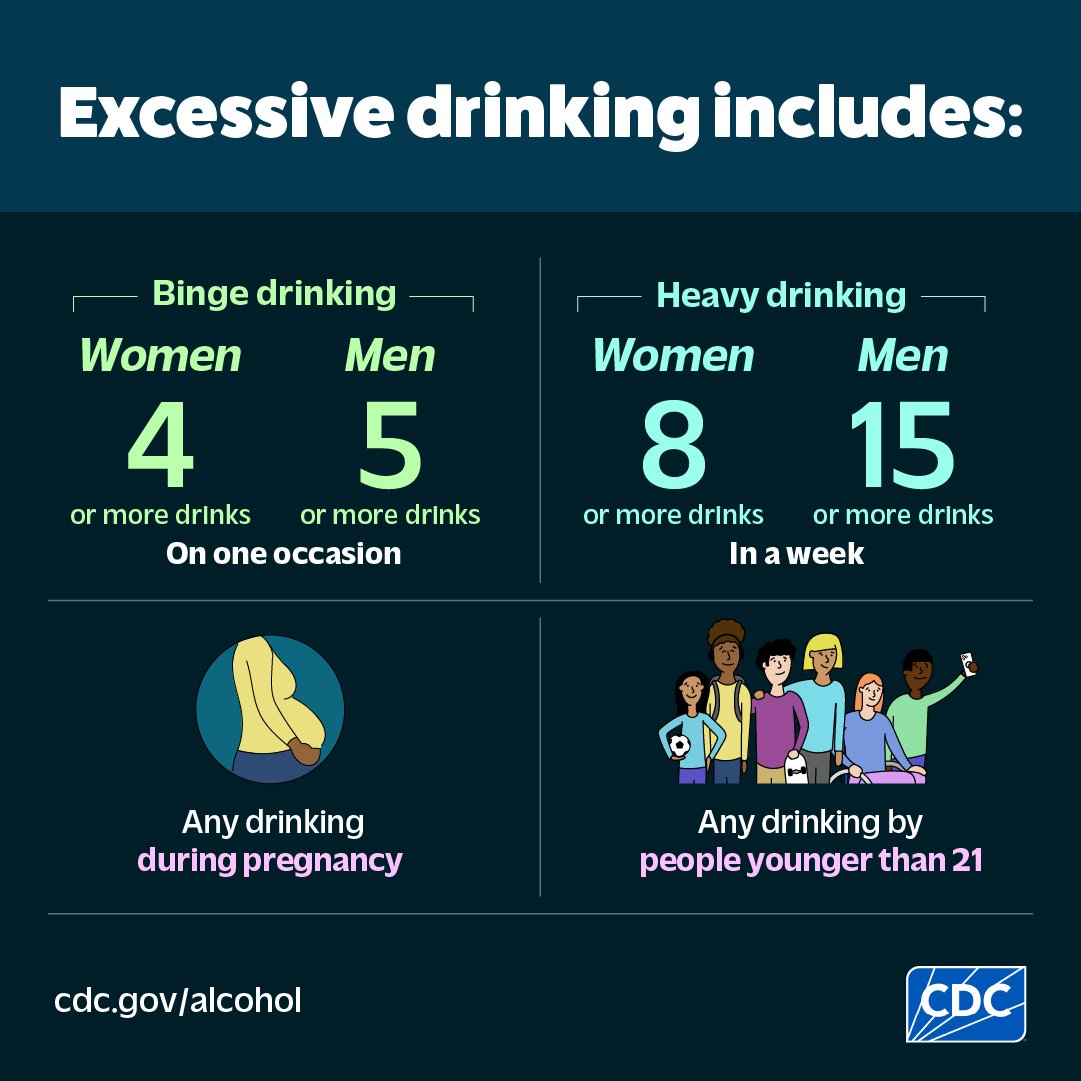
Excessive drinking includes binge drinking, heavy drinking, and any drinking during pregnancy or by people younger than 21.
The checklist above relates to short-term effects of drinking alcohol; by-products of alcohol consumption leading to events that can have life-altering effects in their harmfulness. But there are also the profound effects of alcohol consumption taking a toll on tipplers over time. Those effects are numerous and most people would like to avoid them if at all possible, but most people reaching for a drink at a social occasion or at home, or at a favourite pub don't really give the time of day to long-term health effect introspection at the moment they are anticipating the comforting high alcohol delivers.
 
Here are some of the health effects that alcohol consumption has the potential to deliver to the uninitiated whose awareness levels are absent not only in the moment but in their foreseeable future due to lack of exposure to scientific data and public  awareness announcements that slip by people's notice. For starters, a brief rundown:
 
*Alcohol use, while immediately pleasurable, relaxing and hugely anticipated for those benefits, poses a threat associated with brain structure alterations. Middle-aged and older adults who enjoy on average a single daily drink, according to some studies, tend to have somewhat less brain volume than those who don't consume alcohol at all. The brain shrinks in volume the more alcohol is consumed. Without knowing exactly what is involved one theory held by scientists is that the brain's immune system is altered by alcohol in an increase in inflammation, damaging neurons.
 
**There are also alcohol-linked effects in mouth and neck where microbes convert alcohol into acetaldehyde, a compound that remains in saliva, causing oxidative stress in cells with the potential for inflammation and tissue damage. The compound is a carcinogen able to modify DNA which can then lead to cancer-causing mutation. Risk of mouth and throat cancers increases by 13 percent, and 26 percent or the risk of esophageal cancer -- on merely one drink daily. The risk of all three cancers can rise with five or more drinks daily four times higher.

 
two women use wine glasses to cheers each other
***Regular alcohol use is associated with higher blood pressure, along with increased risk of hypertension due to alcohol's damaging effect on cells lining blood vessels. Regularly enjoying a drink a day increases the chance of breast cancer developing by 10 percent for women while two drinks daily raises the risk by 19 percent; possibly, experts believe, caused by alcohol increasing estrogen levels. 
 
****Heavy drinking relating to 3 or more drinks daily is associated with higher risk of heart attack and stroke -- with a few studies suggesting that one drink a day results in a modest increased risk. Mixed research results emerge with light to moderate drinking comprising two drinks or less daily. Other research however, report that moderate consumption may reduce risk, in comparison with non-drinkers.  
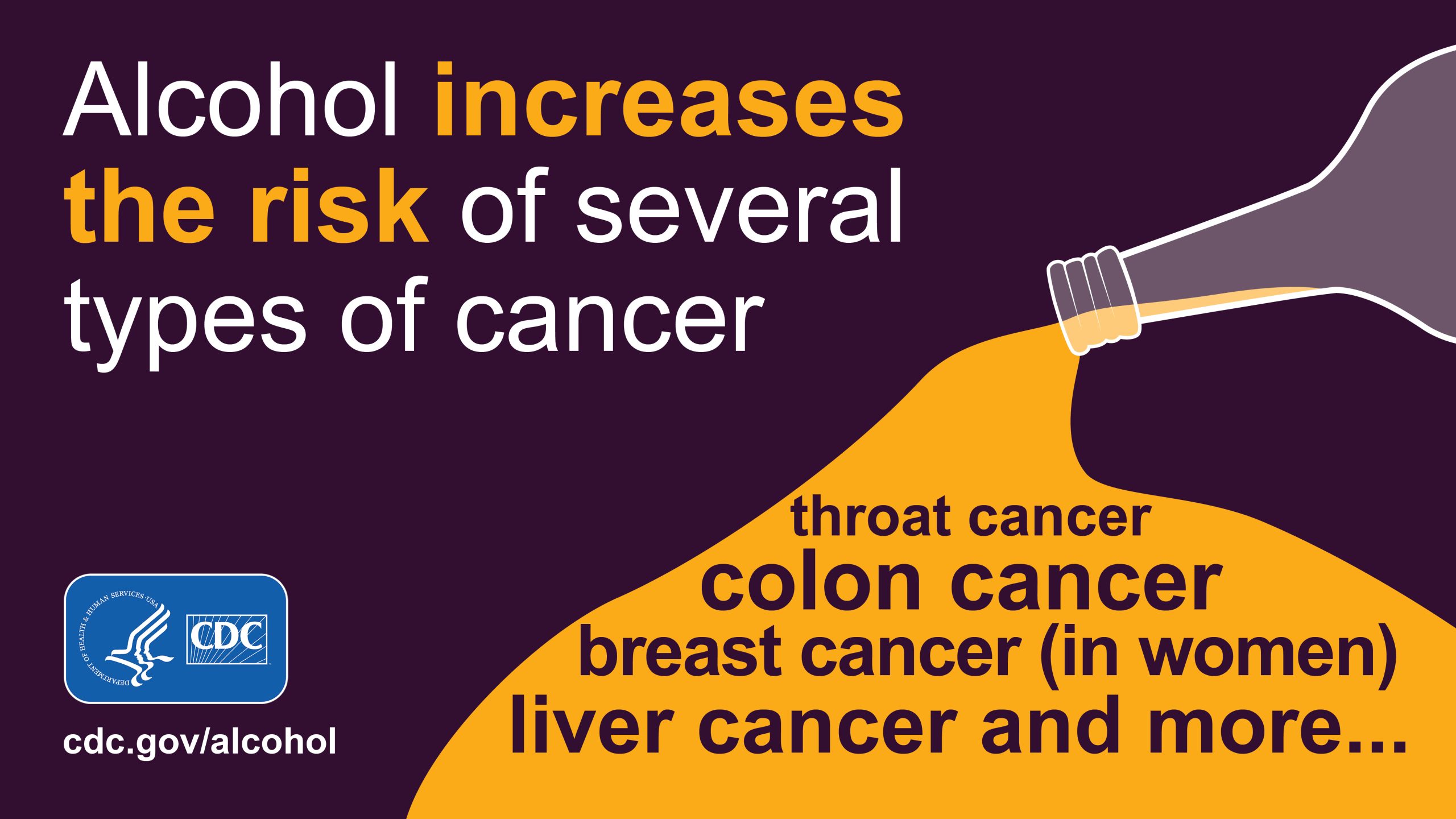
 
Text that says, "Alcohol increases the risk of several types of cancer: throat cancer, colon cancer, breast cancer (in women), liver cancer, and more..."
*****Intestinal lining leading to gastrointestinal bleeding and 'leaky gut syndrome', where food and microbes escape the intestines to enter the bloodstream is associated with long term, heavy drinking. People who consistently average two or more drinks daily, a recent study found, had a 25 percent increased risk of developing colorectal cancer in comparison with those averaging fewer than one drink per week. 
 
******The organ most vulnerable to drinking damage is the liver where alcohol-related liver disease is the leading cause of death related to excessive alcohol consumption. Some 30 percent of those who regularly take 3 or more drinks daily according to one estimate, will develop cirrhosis. Advanced cirrhosis is permanent, although alcohol-related fat deposits, inflammation and early fibrosis in the liver can be reversed. The risk of liver cancer resulting from DNA damage is linked to heavy drinking caused by acetaldehyde. 
 
According to experts, odds of experiencing health harms from drinking remain relatively low, averaging one drink or less each day. Risks rise at eight to 14 weekly drinks. An inherited disposition through genetics, along with pre-existing conditions can determine whether someone develops serious illness from alcohol over-consumption. Research also demonstrates that if heavy drinkers stop or cut their drinking level back severely, adverse health effects can be reversed. 
 
A person's hand pushes away an alcoholic cocktail.
John Hopkins Bloomberg School of Public Health
 

Labels: , , , , , ,

Saturday, January 27, 2024

Early-Onset Cancers in Younger Generations

"Why is this happening, and why are we seeing this?"
"They [patients] say, 'Why? I'm in great shape, I'm exercising'. I have no explanation for them. We really just don't know."
"You hear stories of young women who get radiation but were unaware they would become infertile. Or someone undergoes rectal cancer surgery, and no one has talked to them about the possibility of erectile dysfunction. Or no one has a clue how to talk to their 12-year-old about their new diagnosis of cancer."
"All of these things are really important. We've been trying hard to add that layer of treatment into how we manage colorectal cancer."
"Time is absolutely a factor. [Once people start experiencing symptoms], it usually has advanced, and may have a very different prognosis." 
Shady Ashamalia, surgical oncologist, Sunnybrook Hospital, Toronto
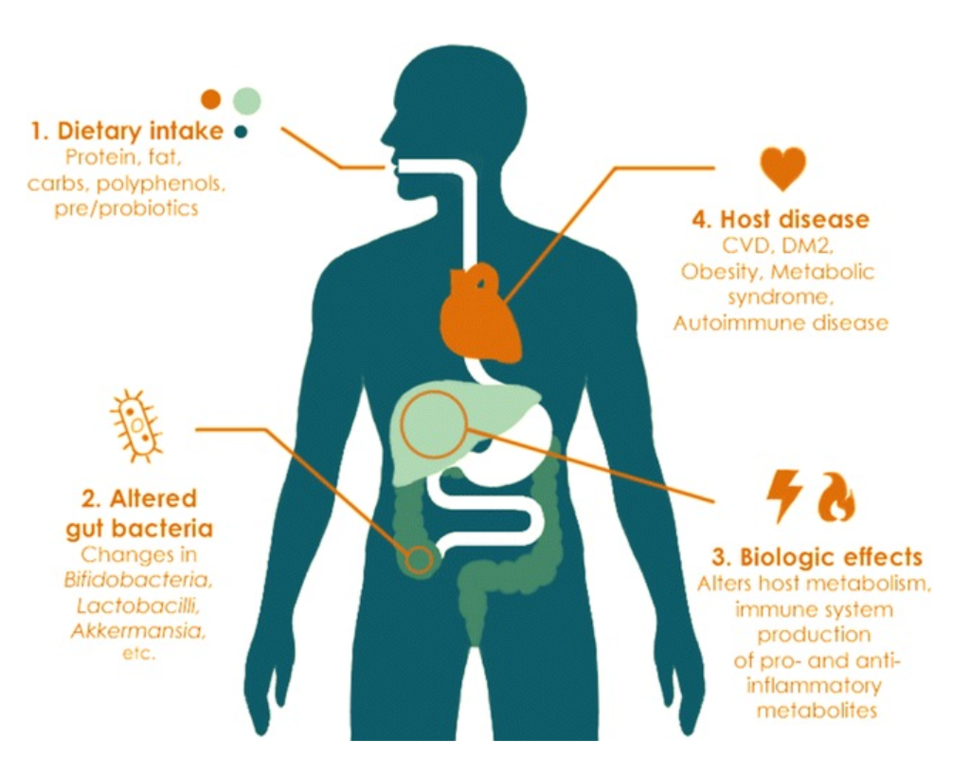
An illustration of how the gut microbiome influences health.

Changes in the gut microbiome may be influencing the increasing rates of colorectal cancer in adults under 50. Credit: Journal of Translational Medicine


A recent editorial in the journal BMJ Oncology warned, "The epidemiological landscape of cancer incidence is changing", following a global study that found "early-onset" cancers -- diagnosed in individuals under fifty years of age had increased by 79 percent and correspondingly the number of deaths ensuing from those cancers increased over three decades by 28 percent. 

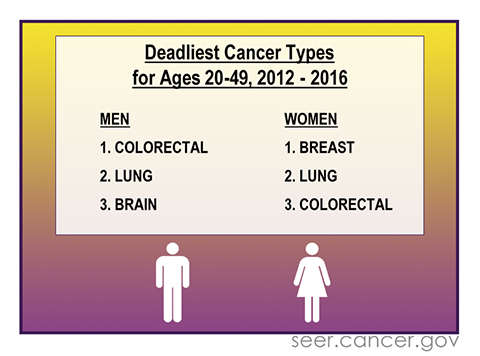
The startling and little understood reality is that colorectal, breast, esophageal, gastric and pancreatic cancers are on the increase in people as young as 20 to 25 years in age. Colorectal cancer has moved from the fourth leading cancer killer in men and women under 50 in decades earlier in the United States to now become the leading cause of cancer death in younger men, and the second leading [after breast cancer] in under-50 women in 2021, relates an American Cancer Society report.

Between 1983 and 2012, rates of cancer among the under-50s increased significantly, at 13 cancer sites according to a Canadian analysis: colon, rectum, bone, breast, connective and soft tissue, uterus, gallbladder, kidney, esophagus, pancreas, testes and thyroid. In the 20-to-39-age group, the most dramatic increase of cancer is seen in colon and rectal cancers. The rates increased annually among 20- to 24-year olds by four to six percent.
 
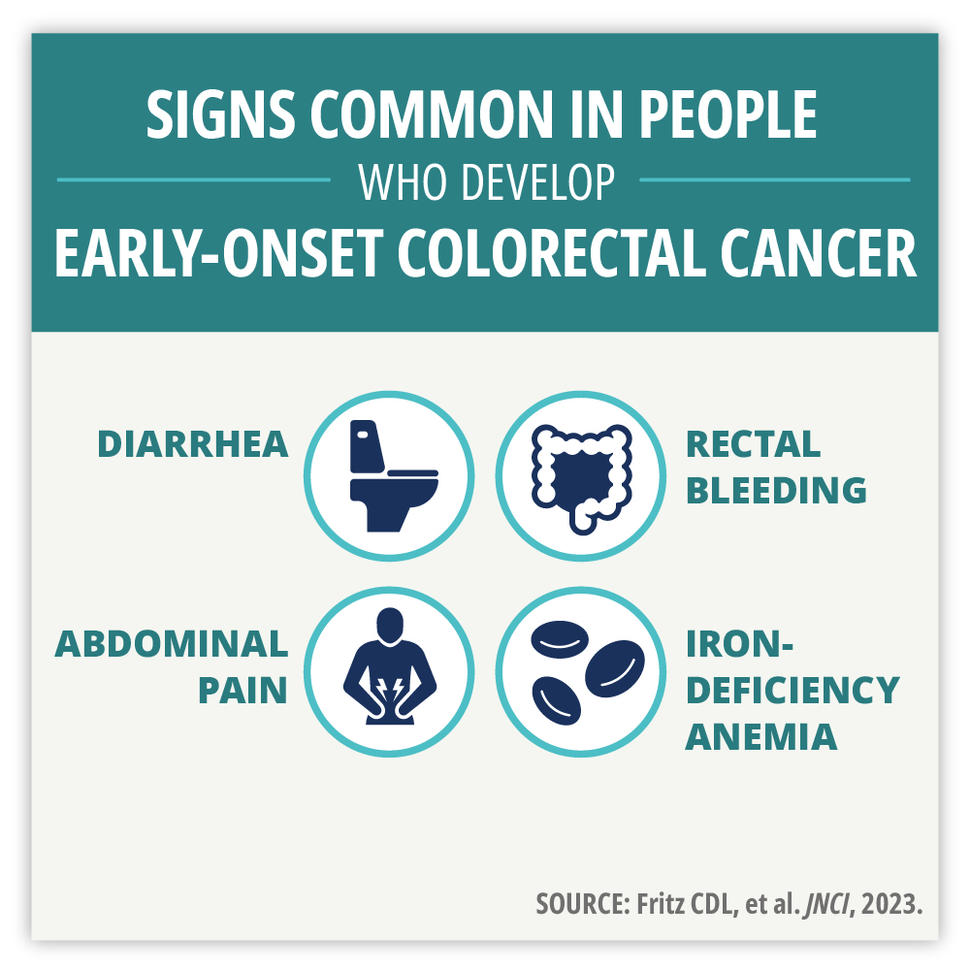
Text graphic states signs common in people who develop early-onset colorectal cancer. The graphic also includes graphics for diarrhea, rectal bleeding, abdominal pain, and iron-deficiency anemia.
Among 30-to-39-year olds significant increases were noted as well for pancreatic cancer, and in those 25 to 29 gallbladder cancer; patterns seen in 'stark contrast' to trends in older age groups where increased incidents were more minimal. Doctors were reporting far more young adults with colorectal cancer and fewer among those over age 50, even before the study results were known. And no one in the medical/research community understands why this is.
 
Theories, however abound and they linger on diets high in processed, fatty and sugary foods which tend to be low in fruit, vegetable, fish and fibre intake. Processed meats are suspect, as well as the use of antibiotics capable of altering the gut microbiome to cause chronic inflammation in the bowel. Other suspected agents are moderate to heavy alcohol consumption, sedentary lifestyles and women avoiding motherhood leading to more cycles of circulating estrogen levels capable of increasing risk of breast cancer; and lastly, excess body weight.
 
In those under age 50, obesity too is linked to at least eight of the cancers. Close family members with cancer increases risk, along with some hereditary disorders. And when all those possibilities have been dealt with, doctors are still seeing younger cancer patients whose profiles don't mesh with any of the risk categories. While cancer remains a disease of ageing -- nearly nine out of ten new diagnoses are in people over 50 -- the trends remain alarming since those under age 50 are in the prime of their lives. 
 
A steady drop in the overall cancer death rate has been realized with the reality of fewer people smoking and earlier detection procedures for some types of cancer, alongside improved treatments leading to a  steady drop. The reality is that those being diagnosed at an early age tend to be seen and diagnosed at late stages in their cancer, at junctures when they become more difficult to treat. Younger adults are typically excluded from cancer screening programs unless they fall into high-risk categories.
 
Colorectal cancer signs include an abrupt change in bowel habits (thinning stools), bloody stools, abdominal pain, or detectable masses. Symptoms in  younger people can be dismissed by examining physicians as hemorrhoids, heartburn or irritable bowel syndrome. As for breast cancer screening, average-risk women at age 50 are eligible; unless felt to be at high risk younger adults are not included in cancer screening programs. Invasive and late-stage breast cancers are being seen in women in their 50s who haven't been screened at age 40.
 
Total time from the first sign of bleeding to treatment was 217 days for younger people, in one US. study, versus 58 days for over-50s. Younger people have a tendency to think "I'm too young for cancer", leading them to procrastinate about seeking medical attention. Doctors' mindsets are set to resist thinking 'colorectal cancer' in a 30-year-old with blood in his stool. Caught early enough the polyps can be successfully treated, leading to a cure.
 
https://dailynews.ascopubs.org/do/10.1200/ADN.22.201206/full/dn22_ee_karippot_fig_thumbnail-1675307053321.png
Abbreviation: CRC, colorectal cancer.
Reprinted from Siegel et al


Labels: , , ,

Thursday, January 04, 2018

First the Mice, then the Women....

"It was absolutely amazing to see that we could cure cancer in most of our mice -- even in models that are normally resistant to immunotherapy."
Dr. Marie-Claude Bourgeois-Daigneault, post-doctoral fellow. research lab. Dr.John Bell, The Ottawa Hospital

"They both bring something to the table. The viruses, they initiate the immune response, and then the immune checkpoint licenses the immune system, engages it, and allows it to be active. We doubled down on immune stimulation, and when we did that, we found it was very effective in preventing [cancer] relapses."
"The real problem is that everyone [researchers in the field] is just throwing stuff against the wall to see what sticks. What we're saying is, 'Let's stop doing that'. Why not, instead, have a rational approach and say, 'This actually makes biological sense so let's combine these things this way."
"That's part of what this study was designed to do: to try to find an indication that makes sense and has potential clinical applicability."
Dr. John Bell, immunotherapy researcher, senior research scientist, The Ottawa Hospital
News and Events
The Ottawa Hospital
Viruses, highly evolved agents for infection, are capable of doing more than simply infect; they colonize and destroy human cells. That's the negative; the positive is that scientists have discovered that viruses appear suited to manipulation, to attack malignant tumours with genetic mutations making them susceptible to viral attack. And oncolytic viruses also have the advantage of triggering a wider immune response against tumours, in the process 'training' the system to identify and attack tumorous cells if they return.

Post-doctoral fellow Dr. Bourgeois-Daigneault, working under University of Ottawa Professor Dr. Bell, engaged in a mouse study specifically designed to follow a typical course of a woman's breast cancer treatment for "triple negative" breast cancer, an especially aggressive form of the disease. The study discovered the most effective treatment course took advantage of three stages of the administrative of an oncolytic virus, followed by surgery, the process completed by administering an immune checkpoint inhibitor.

The results of the study, successfully treated in mice through a combination of immonutherapies specifically meant to 'weaponize' the immune system in different ways, was published in Science Translational Medicine, a medical journal specializing in the publication of research advancing the prevention, diagnosis and treatment of disease. This was a validation that immunotherapies are simply more powerful when used in a combination protocol rather than alone.

Image: Shutterstock
Staged immunotherapies (an oncolytic virus before surgery followed by a checkpoint inhibitor) cured 60 to 90 percent of mice with triple negative breast cancer which has conventionally been treated using surgery, radiation and chemotherapy, with limited success to show for the endeavour. When used in isolation, neither the checkpoint inhibitor nor the virus showed a significant impact on overall survival rates with surgery. The results of the study, however, was to offer more supportive evidence of the full benefit of immunotherapy resulting when cancer treatments are linked in combination therapy.

Oncolytic viruses are capable of invading a tumour to attack it, while at the same time triggering a broad immune response against certain types of cancer cells. Checkpoint inhibitors are used to shut off a communication path used by tumours to 'mislead' the immune system, shutting down T-cells whose purpose is to fight cancer. One fly in this ointment is that checkpoint inhibitors operate positively only for a minority of cancer patients, leading to a scientific race in an effort to isolate an immunotherapy cocktail capable of a broader success rate.

Abstract

Triple-negative breast cancer (TNBC) is an aggressive disease for which treatment options are limited and associated with severe toxicities. Immunotherapeutic approaches like immune checkpoint inhibitors (ICIs) are a potential strategy, but clinical trials have demonstrated limited success in this patient cohort. Clinical studies using ICIs have revealed that patients with preexisting anticancer immunity are the most responsive. Given that oncolytic viruses (OVs) induce antitumor immunity, we investigated their use as an ICI-sensitizing approach. Using a therapeutic model that mimics the course of treatment for women with newly diagnosed TNBC, we demonstrate that early OV treatment coupled with surgical resection provides long-term benefits. OV therapy sensitizes otherwise refractory TNBC to immune checkpoint blockade, preventing relapse in most of the treated animals. We suggest that OV therapy in combination with immune checkpoint blockade warrants testing as a neoadjuvant treatment option in the window of opportunity between TNBC diagnosis and surgical resection.
Science Translational Medicine Journal


Image of the Maraba virus, which was combined with an immune checkpoint inhibitor to cure aggressive breast cancer in mice.

Labels: , , ,

 
()() Follow @rheytah Tweet