Ruminations

Blog dedicated primarily to randomly selected news items; comments reflecting personal perceptions

Saturday, January 21, 2023

The Boooring Affliction of Sameness

"The problem we observed was that social media can alleviate superficial boredom but that distraction sucks up time and energy and may prevent people progressing to a state of profound boredom, where they might discover new passions."
"This research has given us a window to understand how the 'always-on', 24/7 culture and devices that promise an abundance of information and entertainment may be fixing our superficial boredom but are actually preventing us from finding more meaningful things."
"Profound boredom may sound like an overwhelmingly negative concept but, in fact, it can be intensely positive if people are given the chance for undistracted thinking and development."
Dr. Timothy Hill, associate professor, management marketing, business and society, Bath, U.K.
 
"I felt empty, an emptiness that was difficult to escape from. The longer I was bored, the worse I felt about myself.":
"But one positive thing is that it made me take on new things to escape that empty feeling."
Richard, study participant
bored woman looking at her cell phone
(Mindful Media/Getty Images)

Social media researchers are turning to a shared theory of boredom being a psychological spur to turning people toward exploring means by which they can enrich their experiences to stave off boredom. And, they contend, it takes extreme levels of boredom to propel people in the direction of taking steps to relieve that deep sense of monotony. If they seek instead minor or surface distractions, they may still harbour a level of boredom, but of insufficient depth to convince them they should be looking for ways to alleviate the discomfort.
 
Mindless scrolling on social media, viewing videos to briefly instill a sense of interest, following threads, all have a way of preventing "profound boredom" from being mounted, leaving the time-spendthrift feeling only minimally to marginally bored, a condition that while irritating, appears manageable by searching out other, similarly mindless pursuits, unsatisfying in their outcome but preventing the buildup of acute boredom with its potential to trigger a search for meaningful pursuits.
 
Creative thought is not conducive through 'superficial boredom', warn experts. Fifteen people were interviewed by researchers at the University of Bath during the pandemic, a time they would be likelier to be bored -- when normal life became straitened as a result of restrictions imposed to protect people from runaway infection from the SARS-CoV-2 virus. 

The interview subjects described feeling trapped in a monotony of daily walks, watching television broken only by supermarket shopping. To pass the time people turned increasingly to the distractions inherent in social media. Despite social media providing temporary escape from superficial boredom, participants reported it also seemed to exacerbate boredom. They were left feeling their time had been wasted.
 
People look at their smartphones and tablets at the Apple Store on Fifth Avenue in New York City in September 2013.
People peruse smartphones and tablets at the Apple Store on Fifth Avenue in New York City
Jose Antonio Maciel/Moment Editorial/Getty Images
 
German ph8ilosopher Martin Heidegger identified the two levels of boredom; superficial and profound; the former as being the most common form of boredom; the feeling people are infused with when awaiting something expected has been delayed. During such times people automatically seek out temporary distractions, most frequently turning to cellphones and social media. A trait that prevents the state of profound boredom being reached.

Profound boredom is considered a level of malaise, its importance as an impetus in the creation of an "existential discomfort", challenging the sense of self, to ultimately convince people to exert themselves to improve the situation they find themselves in. Study interviewees reported that they were led to question their purpose and life choices when they fell into profound boredom. Leading them to explore new interests as an escape from that void.

Professor Hill spoke of a "digital detox", helpful to people when they switch off devices, enabling them to reach the state of required tedium to push themselves on to new interests or achievements. The study was published in the journal Marketing Theory, by researchers from the University of Bath and Trinity College Dublin. Dr. Hill was the lead investigator.

bored student
Credit: Pixabay/CC0 Public Domain


Labels: , , , ,

Wednesday, February 24, 2021

Physician Burnout Versus Incoming Student Idealists

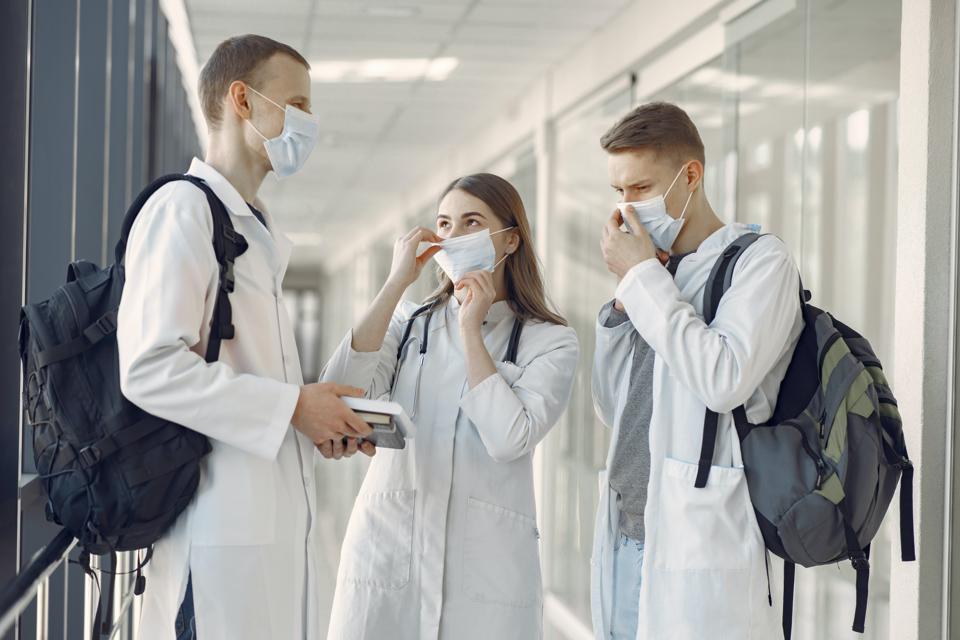
Group of students in a hallway.
"We're consistent with across the country and across North America, with what has been observed this cycle, which is a 20 percent increase in the number of applications."
"They see these individuals as people that have, you know, skill sets and things to not only save lives, but also are people that are willing to sacrifice for the greater good."
"These are individuals who are normally applying to ten, twelve medical schools across the country and potentially in North America. In this situation, we're able to do it [remote interviews via Zoom] where they are in their homes."
Sita Gourishankar, assistant dean of admissions for undergraduate medical education, University of Alberta
"This large of an increase is unprecedented when considering that the number of applications has been rising by an average of 2.5 percent over the past twenty years."
"Some students may have been motivated by seeing heroic doctors on the front lines of the COVID-19 pandemic. Some aspects of the application process also became easier as some medical schools extended their deadlines."
"We survey incoming medical school students every year and will learn more next fall about why this year's applicants decided to apply."
Dr.Geoffrey York, senior director, student affairs and programs, Association of American Medical Colleges

"There were some challenges related to the online interview and I definitely interact much better, I would say, in person."
"For example, in reading body language, that sort of thing, so those were sort of unique challenges, but everyone was in the same boat."
"It interests me, I guess, being able to be in that field and help people out. During COVID when people are sitting in isolation, sometimes I feel kind of helpless or useless in the sense that I can't be out doing something."
Sarah Veber, prospective medical student, Newfoundland
Covid-19 pandemic will worsen physician burnout
The current situation that is stretching the patience, perseverance and knowledge of health-care professionals across the globe, leaving doctors and nurses exhausted in the never-ending call upon their professional expertise during the SARS-CoV-2 virus pandemic appears to have appealed to the idealist in young aspirants to the medical field, expressed in the fact that medical school admission applicants have been steadily rising of late. A hopeful sign, that the young and medical-service-inclined are prepared to replace the profession's older physicians on the verge of exhausted collapse.

A close up of a stack of MCAT study guide books
Medical schools across North America are now experiencing a surge in applications for the 2021-22 academic year that is viewed as unprecedented in its overall response to the global pandemic. Both in Canada and in the United States, applications to medical schools have risen by about 18 percent  overall. Medical schools in Ontario are working around a 10.9 percent greater number of applications in comparison to last year, while nursing programs in the province have seen a large boost of 17.5 percent. No one really quite understands what the increased interest can be attributed to.

At Washington State University, the senior associate dean for admissions and student affairs, Dr.Leila Harrison states that despite no conclusive research behind the increase, indicators point toward the pandemic contributing to the rise by inspiring young people to want to do something worthwhile for their communities, giving them a sense of mission to aspire toward. "It's just the idea that potentially seeing Dr. [Anthony] Fauci [the U.S. government's top medical adviser], all the impact he's made in his expertise in this pandemic, that maybe has inspired hopeful doctors to say, 'You know what, I'm gonna go for it this cycle'."

Entry processes have undergone a change as well, linked to COVID-protective measures that have become universal in an effort to contain the spread of the coronavirus, with medical schools adapting to the new situation. Select students receive invitations to attend interviews -- remotely -- which result in some prospective students receiving letters of acceptance. Virtual interviews have their place in the process; a plus for distancing; a minus for communicating person-to-person other than virtually.
 
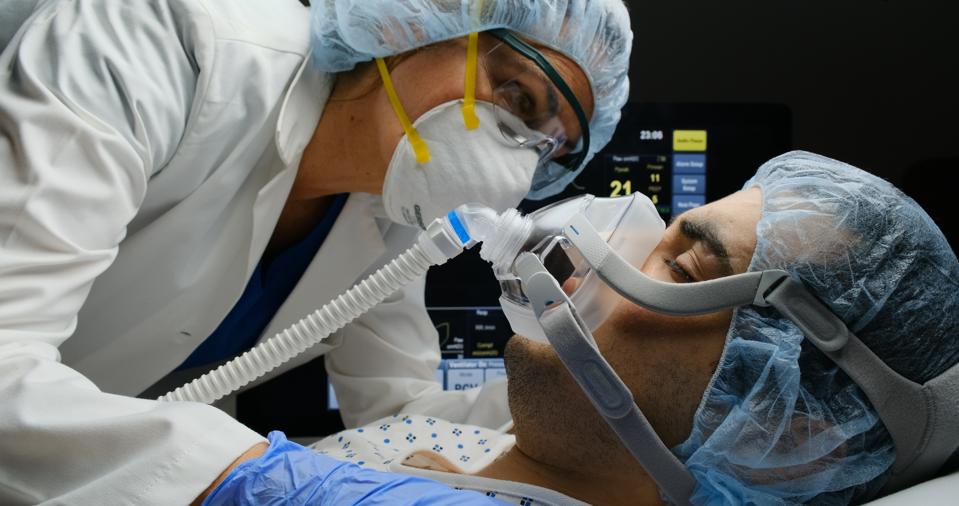
Female doctor checking on Covid-19 infected patient while connected to a ventilator
Like every other facet of society, communications, and work, it seems likely to Ms.Gourishankar in her professional capacity, that virtual interviews will become normalized and acknowledged as a positive tool in the process of welcoming new medical students. It is an option offering greater flexibility in the interview process since it can be conducted from anywhere to anywhere. And that convenient option may act as a spur for more potential medical students to explore all avenues since travel is no longer involved.
 
And then there is the issue of physician burn-out. "I think there's a lot of doctors right now who are looking at different careers. To see your patients die and you know what's going to happen is a really hard thing for any health care workers to have to continue to put up with", explained family physician Dr.Kate Bisby, who worries that ultimately communities across Canada may be affected, with fewer primary care doctors, as more opt to retire early, exhausted from overwork. 
 
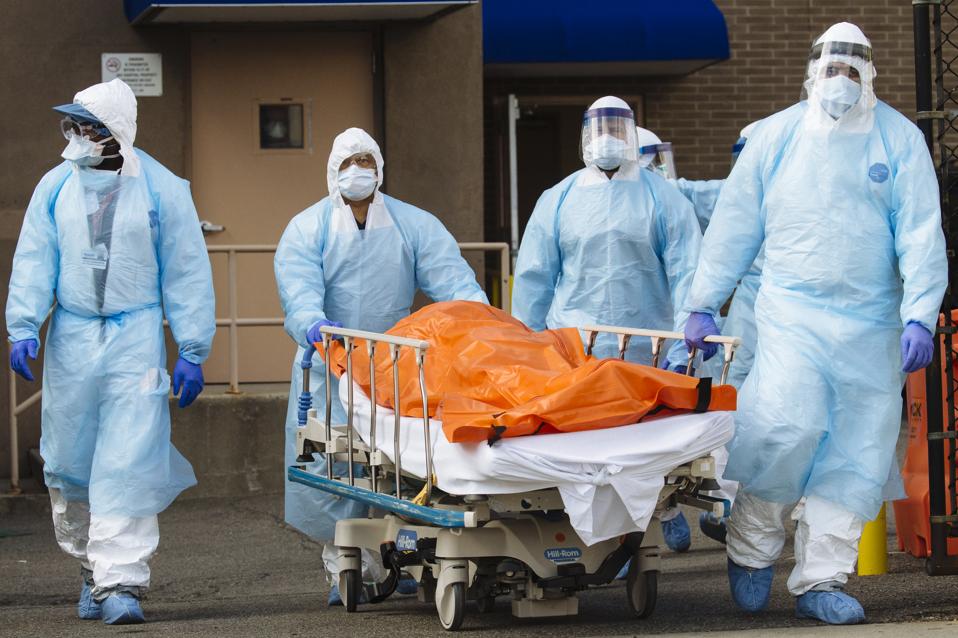
Surge of COVID-19 infected patients is worsening physician burnout
Doctor Burnout   Getty
In September, a study was released in the United States by the Primary Care Collaborative which showed that 19 percent of physicians they surveyed believed a doctor in their clinic had, or was planning to retire early as a direct result of how the COVID-19 pandemic impacted on them. Another study released in February indicated that though burnout was increasing among family doctors, none those the study surveyed planned to retire early, as a result of exhaustion.
 
A study published by the Cambridge University Press Public Health Emergency Collection discovered that a large number of emergency medicine physicians in Canada had one symptom at least of burnout before the advent of COVID, while a separate study looking at past health emergencies found burnout among doctors is bound to increase during a pandemic. While 81 percent of physicians reported high emotional well-being through findings by a 2018 Canadian Medical Association report, 26 percent reported "high emotional exhaustion" and thirty-four percent of respondents screened positive for depression.
"We are very concerned about the impact this pandemic is having on our health workforce -- an impact  that will be felt for years to come."
"It is therefore important that we have serious conversations about our health-care system, so that we improve access to care while ensuring the well being of those who deliver care to Canadians."
Dr.Ann Collins, president, Canadian Medical Association
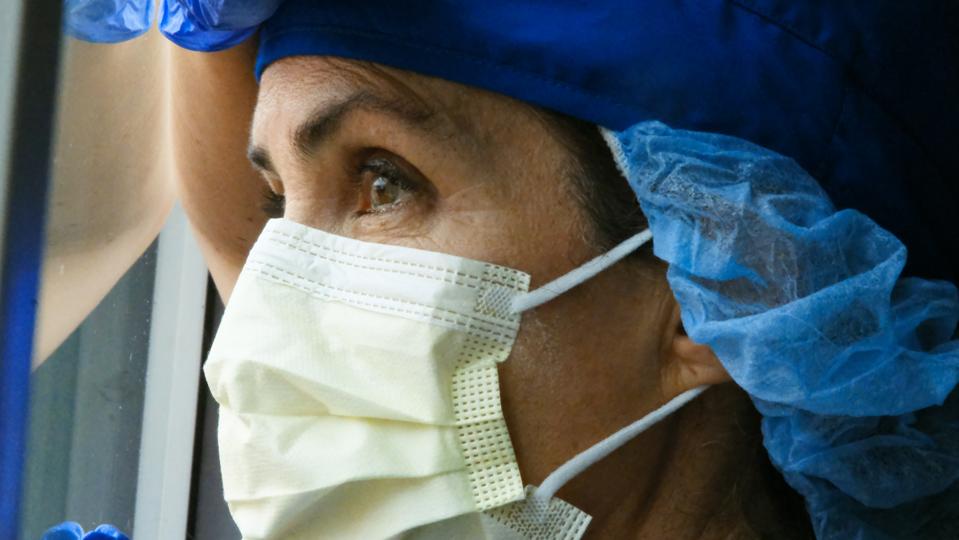
Physician burnout
"It's been pretty crazy in the sense that it's both really difficult, but it's also kind of a very rare and interesting unique fortunate learning opportunity for us. It's tough, because obviously, it's a pandemic, and it's difficult for everybody, especially health-care providers."
"We all presumably went into medicine in the first place [to] make a difference and make a positive impact in our communities, and, you know, advocate for vulnerable people who weren't always able to advocate for themselves."
"And so I'm still super excited to be able to do that. And the pandemic really doesn't change anything about that."
Nick Taylor, second-year medical student, University of Alberta

Labels: , , , , ,

 
()() Follow @rheytah Tweet