Ruminations

Blog dedicated primarily to randomly selected news items; comments reflecting personal perceptions

Monday, December 21, 2020

High Priority Workforce

"I don't expect to see the same issues [that interfered with production and product shipping in the first wave of the pandemic]."
"We know a lot more than we ever did and I think our food supply chain is resilient to the point we will be OK."
"Could we have issues where we may have to slow down in some spots as an industry? Potentially. For us, if we get to a point where we can't run a part of our facility or a facility safely or with the same food safety controls in place, we will shut it down."
Jon Nash, head of protein, Cargill, North America
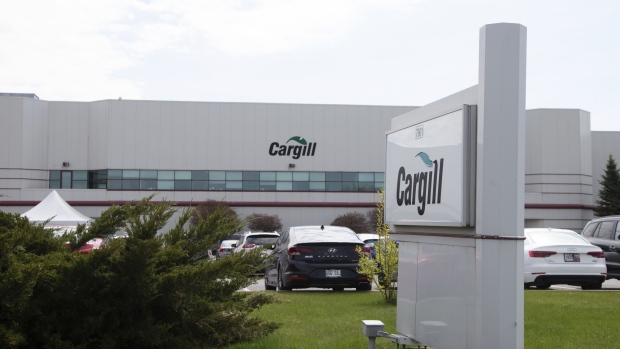
Signage is displayed outside the Cargill Inc. meat plant in Chambly, Quebec, Canada, on Monday, May 11, 2020. The case-ready facility for beef, pork, chicken and sausage has shut down as the company is “concerned about the number of cases in the community and among our employees,” according to a May 9 statement. Photographer: Christinne Muschi/Bloomberg
Signage is displayed outside the Cargill Inc. meat plant in Chambly, Quebec, Canada, on Monday, May 11, 2020. The case-ready facility for beef, pork, chicken and sausage has shut down as the company is “concerned about the number of cases in the community and among our employees,” according to a company statement in May. Photographer: Christinne Muschi/Bloomberg , Bloomberg
"We're still running and we're still running at our capacity, but there have been more instances of absentees now than we had all summer or back in the spring."
"It's becoming more of a challenge for us right now than it has been since this pandemic started."
"We're providing flu shots for everybody and we are preparing hopefully to give COVID vaccinations when that becomes available, we think in March or April."
Joe Sanderson, chief executive, JBS chicken production 
With the latest resurgence of the coronavirus, North American meat packers are once again bracing for the onslaught, hoping to be able to avoid the shutdowns that occurred in spring and summer that left empty shelves at supermarkets and panicking consumers. One of Cargill Inc.'s beef plants in Canada has temporarily been idled again, following some positive tests in employees.

Thousands of vulnerable American workers were sent home on paid leave by the world's top meat producer, JBS. And Sanderson Farms Inc. is facing an issue of higher absenteeism at its plants than had occurred in the earlier months of the pandemic. The kind of disruption that shut several plants in the spring, curbing meat supplies just as consumers were planning to stock up against shortages; every meat producer's nightmare scenario.

It is now a top goal to prevent a disruption of that kind by producers of beef and chicken and everything in between. According to the executives of such companies, they are in a better place this time around in preparing to face another surge of cases since they spent millions on reconfiguring factories, on implementing social distancing and making available and distributing to workers needed protective equipment for infection safety protocols.
Cargill added several safety measures to prevent the spread of COVID-19, including these barriers between work stations at its High River plant. (Cargill
 
Keeping plants running now comes at a high cost, given extra hours being worked to maintain schedules taking a physical toll on workers. Due to "an abundance of caution as our local workforce deals with the community-wide impacts of COVID-19", announced Cargill, the world's largest agricultural commodities trader, its beef processing plant in Ontario temporarily shut down. "This is not just a Cargill spread, but community-wide spread in Guelph" (90 km west of Toronto), explained April Nelson, company spokeswoman.

Over 5,000 workers were sent home by JBS in the U.S. since the acceleration of coronavirus cases in October, as infections rise among workers with an increase in cases in Texas, Mississippi, Georgia, the Carolinas and Louisiana. The challenges faced by meat packers in preventing the virus from entering their facilities and spreading among their workforces relate to the increase in cases across rural North America. Over 50,000 meatpacking workers in the U.S. have tested positive for the virus with over 200 having died.

Millions have been spent by meat packers installing Plexiglas dividers, expanding locker and cafeteria areas, providing masks and face shields. Innovations are being brought out; Foster Farms in California testing workers twice a week, and removing at-risk employees from its factories. In adapting its U.S. facilities in the 2020 fiscal year, Tyson spent $540 million with the addition of temperature scanners, workstation dividers and social distance monitors. Thousands of employees are being tested weekly including those not presenting with symptoms, according to a Tyson spokesman.
Workers leave the Tyson Foods pork processing plant in Logansport, Indiana, on May 7, 2020 (Michael Conroy_AP Photo
Workers leave the Tyson Foods pork-processing plant in Logansport, Indiana.
Michael Conroy/AP Photo

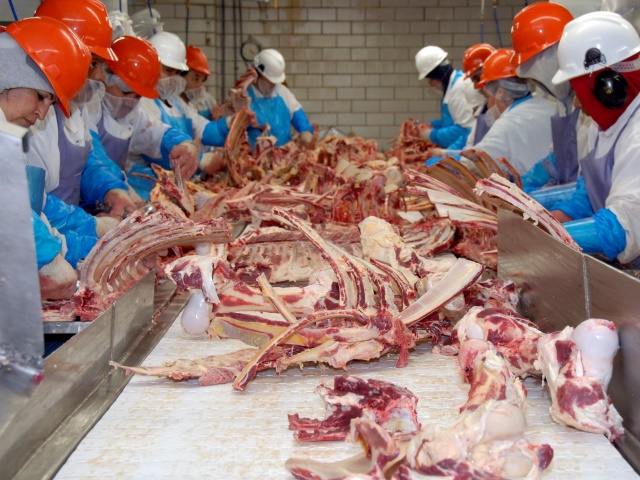
Workers in meat plants are putting in more extra hours and Saturdays. JBS staggered start times and breaks to create more social distancing; they installed UV germicidal air sanitation and plasma bipolar ionization technologies to neutralize possible airborne viruses as well as instituting temperature checks. But there are fewer people available on the lines and processes that took 16 hours now take 20, says Mark Lauritsen, director of food processing, packing and manufacturing at the United Food and Commercial Workers union, representing 1.3 million U.S. and Canadian workers.

There will be changes at the supermarket, with consumers noticing larger packages of ground beef, as an example. More in-bone products are being sent out by Cargill, and JBS too is simplifying its product line; more labour-intensive processing work like removing bones has been delayed, with workers focusing on essential tasks. The industry is lobbying for its workers to be deemed top priority for vaccines following health-care workers and people in long-term care facilities.
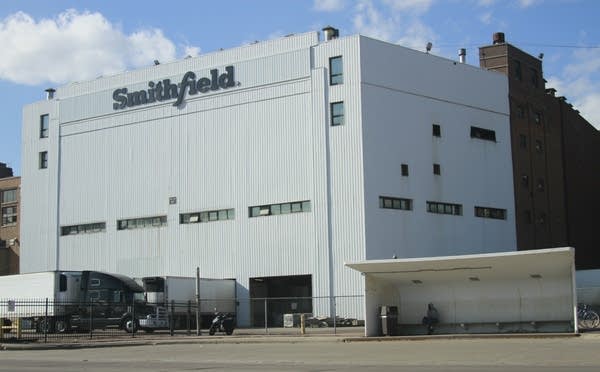
The Smithfield pork processing plant in Sioux Falls, S.D.
Stephen Groves | AP Photo

Labels: , , ,

Wednesday, April 22, 2020

COVID-Linked Food Security Concerns

"We don't anticipate having to deal with any sort of significant shortages at the meat counter in grocery stores across North America."
"We have a well-integrated system in which product moves both ways across the border. So if individual plants close, we will often see both inventories that we have help buffer some of those closures, and the reallocation of supply from some of the other plants."
"We might start seeing some more significant disruptions in the system where supplies may be compromised. Although we do expect a lot and have reasonably good inventories on hand, we might see prices go up."
"But we would see much more significant issues at the producer [farm gate] level."
Mike von Massow, food economist,  University of Guelph
BT_USDA_Beef_Meat_Packer_6
( U.S. Department of Agriculture )
Physical distancing between workers at meat processing plants is a difficult attainment; the plants were designed and work to their maximum when employees work in close communion. And that is a problem when social isolation is required to ensure that the highly contagious novel coronavirus is brought under control. Also, the fact that most workers at meat-processing facilities have been brought into the country as temporary workers, signed up for two-year stints, from Mexico, Asia and Africa. They are less likely to take recommendations from the health community and government agencies seriously about the need to distance themselves from others.
"Meat-packing’s low wages, combined with a dangerous and unpleasant work environment, make the job unattractive to most Canadians. In old-style plants, work varied between hog and cattle slaughter, and workers split their time between the kill floor and processing. But modern plants slaughter a single species. Most line workers stand shoulder to shoulder and make the same cuts over and over. Repetitive motion injuries are commonplace. Meat processing workers have the highest rate of disabling injury and disease among all manufacturing employees in the province. Injuries and low pay contribute to high employee turnover—6 to 8 per cent a month among line workers. This means about 1,800 workers leave Lakeside (Alberta) each year and must be replaced."
"About 3,500 mostly sub-Saharan refugees have moved to Brooks since 2000. They now account for about a quarter of the town’s population, the largest single source country being Sudan, followed by Ethiopia and Somalia. The African community is thriving; African grocery stores, hairdressers, a music shop and a nightclub enrich the community with their presence."
Michael Broadway, Alberta Views
Cargill meats has shut down due to COVID-19 near High River on Tuesday, April 21, 2020. Darren Makowichuk/Postmedia
Now, across North America, the meat-packing industry has become one of those vulnerable-to-infection hot-spots, while remaining one of the industries held to be indispensable to societal functioning. Over a dozen meat processing plants across the continent have been temporarily shut down as a result of workers being infected with COVID-19. Consumers aware of this have begun to take notice, just as they were concerned over other food availability leading to hoarding and shortage of eggs, flour and unaccountably, toilet paper. 

If, suddenly or gradually, consumers were met with the sight of empty refrigerated shelves as has already occurred temporarily, until the public plucked commonsense off the high, dark cupboard shelf they had tucked it into in a panic over disappearing food -- by the sight of brightly lit shelves absent ground beef, steaks roasts, pork and chicken, a nightmare scenario would impact the public and keep governments awake at night, leaving livestock farmers in a dilemma of how to manage their overstock of animals, with plant closures.
Meat shortages
COVID-19 has affected meat packing plants across North America. Sean Gallup / Getty Images
The High River meat-packing plant, Cargill, whose output represents "roughly 40 percent of the beef processing capacity in Canada", temporarily closed operations when an employee died and over 360 workers tested positive for COVID-19. And following a two-week shutdown due to an outbreak in its meat processing facility in Yamachiche, Quebec, Olymel reopened. Smithfield Foods in Sioux Falls, South Dakota shuttered its pork factory after a coronavirus outbreak infected over 800 of its workers.

Meat company JBS USA shuttered its Minnesota pork processing facility following two dozen employees testing positive for COVID. "Nobody can quite figure out how meat processing workers can safely work alongside one another without running the risk of transmitting the virus", Rachel Maddow of MSNBC reported. So the very real fears of consumers do have a groundwork of reality they are based upon. 

But, as von Massow points out, that concern is centered on the scale and duration of plant closures. Should facilities close more frequently and remain closed for longer periods, there could very well be a change in the situation where shortages become acute and consumers have real-time reason to panic. Disruptions of any kind have their repercussions. New ways to hold or divert animals to alternate processors in the hope of avoiding bottlenecks consume the attention of meat processors and livestock farmers. 

For as senior director of the agri-food analytics lab at Dalhousie University, Sylvain Charlebois noted in a newsletter, farmers face increased costs related to the pandemic, having to house animals for longer periods, and having to ship them further distances. High inventory also means they must sell livestock at reduced prices. "We should be cognizant of [those pressures] and probably look at ways that we could support farmers through those difficult times."

Cargill set up tents to provide screening for its workers, similar to what Alberta Health Services has done for health-care workers. (Dan McGarvey/CBC)

Labels: , , ,

 
()() Follow @rheytah Tweet