Blog dedicated primarily to randomly selected news items; comments reflecting personal perceptions
Sunday, August 30, 2026
Our Warming El Nino Oceans
"[This new record being set for hottest temperatures in the world's oceans is] very troubling."
"An ocean this warm destabilizes weather patterns and threatens food security, economic prosperity and marine life."
"A warmer ocean is not our friend."
Jane Lubchenco, oceanographer, former chief of U.S. National Oceanic and Atmospheric Administration
"This is yet another sign of our climate system under strain and the ocean under immense pressure."
"When we have a warmer ocean such as we've had in Europe this summer, it amplifies the impact of heat waves because you don't get the cooler nighttime temperatures with the sea breeze coming off the ocean when the ocean is very warm."
"Samantha Burgess, strategic climate lead, Copernicus climate service, Europe
"The thing that makes my heart sink is that this starts so early and it's so out-of-normal that you know when it hits its peak it's going to be unprecedented."
"The ocean is not supposed to do this. It's just that there is no normal anymore."
"[With hotter water], not everybody is hit equally, obviously, but the whole system collapses."
"It's like when you pull out the rug from underneath an economy. The whole thing collapses. Some sectors may do a little bit better but, overall, everybody suffers."
Boris Worm, biology professor, Dalhousie University, Canada
A very strong El Niño developing in the southern Pacific Ocean will disrupt
global weather patterns in the months ahead, but climate scientists say
it's not something we can attribute to the heat waves and wildfires
that raged across the northern hemisphere this summer, like the ones in
British Columbia's interior earlier this month. (Darryl Dyck/The Canadian Press)
This year's El Nino has already reached the peak of other recent such appearances, and it's continuing to grow and expected to reach unprecedented levels when it does eventually peak. With the current El Nino, the oceans will keep heating up, and it is expected to peak at some time between November and January. That's abnormal since most of the Southern Hemisphere is ocean, and the world's sea surface temperature generally peaks around March and April as the southern summer draws to its close. But not this year.
El Nino is nature's temporary warming of portions of the Pacific Ocean which warps weather, raising global temperatures. This is a weather phenomenon recognized as being responsible for most of the heat that develops in the world's oceans -- along with long-term warming resulting from burning coal, oil and gas. This year, ocean waters have warmed by 0.8C, seeing the world's oceans at their hottest temperatures on record last weekend. That's bad news, but even worse is that they're entirely likely to keep warming.
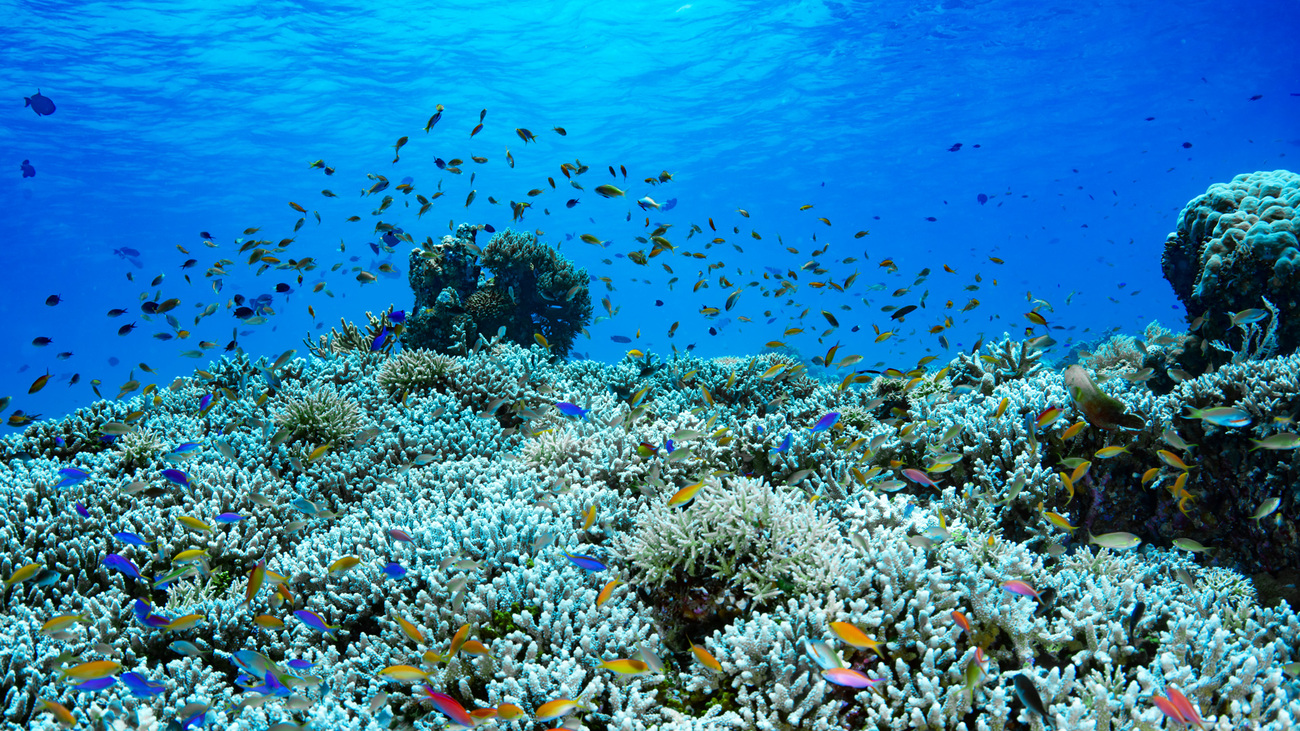
Coral in Tubbatah Reef in the Philippines. Adobe
Aquatic lifeforms are placed under stress with warming water. The supersized El Nino of this year is proving to be of greater concern than the record previously set in March of 2024. A warming ocean becomes more acidic with less oxygen, inimical to the health of its sealife. Ocean currents become altered along with changed weather patterns. Storm systems are enhanced by the warming oceans, becoming wetter and producing larger storm surges.
According to Dr. Bruno, heat-sensitive corals now are roughly one-fifth of the levels of 1990. Some species of coral -- not the longer-lived staghorn corals -- are adapting to the hotter water, although they're 'weedy'. The current situation of warmer oceans and even warmer yet as time moves on and the heating persists, is predictive of collapsed fisheries resulting in universal food shortages.The Peruvian anchovy fishery, considered the largest world fishery, generally collapses during El Nino.
Corals
from the Galápagos Islands contain chemical signatures that scientists
were able to use to trace a 1,000-year history of El Niño events. Greg Asner/DivePhoto.org
The food web becomes altered, since larger fish are able to swim off to cooler water to escape the heat, as far as halfway across an ocean. "Anchovies can't leave so they just don't reproduce, or [they] starve", explained Dr. Worm, affecting both the humans and the seabirds who depend on them. The presence of more jellyfish is being observed off Europe, stated Dr. Bruno, believing something similar will be seen on the East Coast of the United States.
"Jellyfish are often opportunistic and they like warm waters. So yes, I would expect them to do a little bit better", added Dr. Worm. And when's the last time you saw jellyfish on the dinner menu? "As long as we depend on a healthy ocean for our safety, prosperity and well-being, these record-breaking sea surface temperatures portend even greater challenges for us all", added Rick Spinrad, another former NOAA chief.
"It's frightening. We're not even in October yet."
"You know, usually the Caribbean peaks at like late September, early October."
"And I think next year in the Southern Ocean, the Great Barrier Reef, yeah I'm really worried about what's going to happen in the southern hemisphere in February, March."
John Bruno, marine ecologist, University of North Carolina
A satellite map from the U.S. National Oceanic and Atmospheric
Administration shows sea surface temperature anomalies recorded on Aug.
20, with hotter than average temperatures stretching across the El Niño
region toward the west coast of South America. (NOAA)
The Long Reach of Islamist Terror Funding in North America
"We reject the distinction between 'civilian' and 'militant'. We reject the distinction between 'settler' and 'soldier'."
"Every Palestinian is a civilian even if they hold arms."
"A settler is an aggressor, a soldier, and an occupier even if they are lounging on our occupied beaches."
Students for Justice in Palestine (SJP)
"Certainly, any steps that you can make toward disrupting a terrorist organization, those are accomplishments."
"But, in reality, what I knew, was that this infrastructure [the Holy Land Foundation] had been operating since 1988. That's a long time."
"The roots that this infrastructure had planted throughout the U.S. were deep and vast."
Lara Burns, former FBI special agent
"[The court filing should trigger greater interest among America's intelligence agencies about the possible] ties between Hamas and some of the so-called student groups now leading antisemitic violence and intimidation on our campuses."
Paul Moore, former chief investigative counsel, U.S. Department of Education
On the very day of the Hamas incursion into southern Israel to carry out a bloodbath -- replete with mass rape, torture, the burning of farming villages and kidnapping of Israeli civilians young and old -- across the United States, National Students for Justice in Palestine sprang into action to co-ordinate a swift 'public relations' campaign feeding off the terrorist action. They issued guidelines on campus walkouts across both the United States and Canada, along with graphic templates as critical propaganda tools.
A Towfan Al Aqsa statement (code for the name Hamas labelled its attack) was issued by the SJP chapter at University of California, Berkeley to honour the "Palestinians who are working on the ground on several axes of the so-called 'Gaza envelope' alongside our comrades in blood and arms, and what is coming is greater. Victory or martyrdom". George Washington University's SJP chapter caught up two days later with its own declaration.
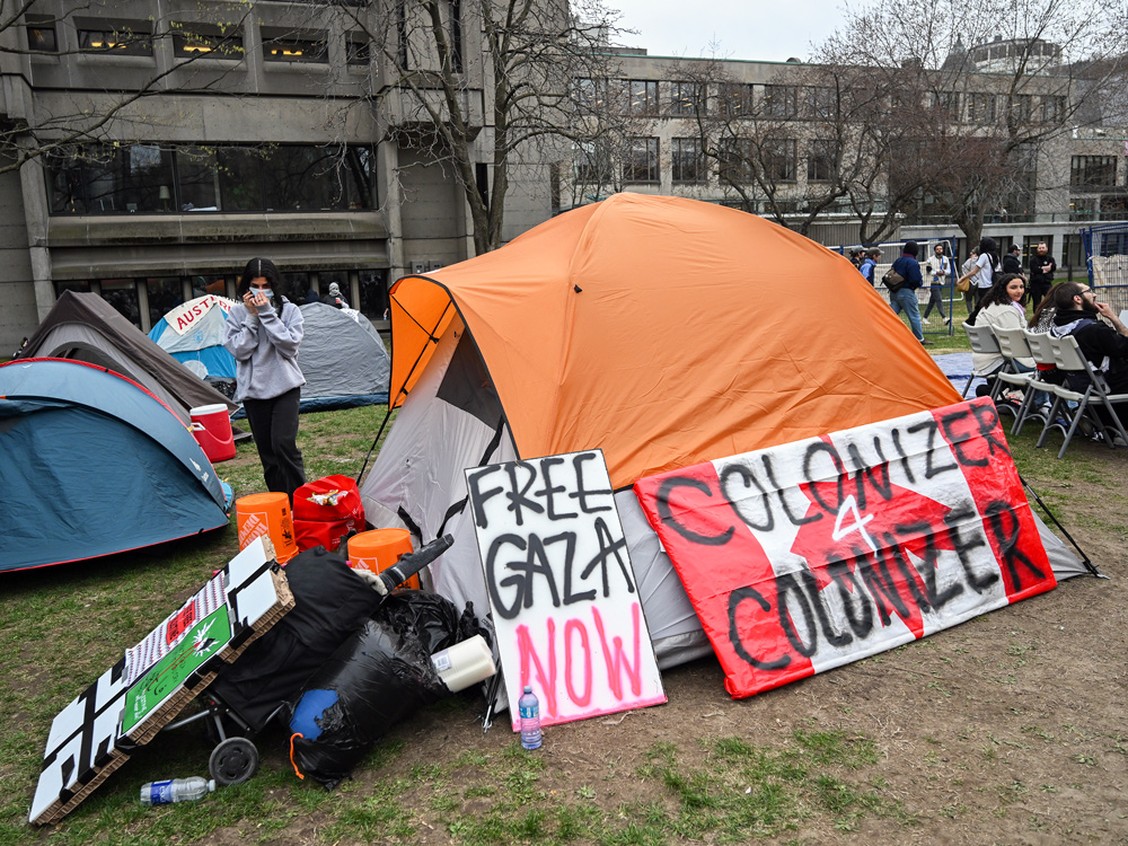
Students for Justice in Palestine is now recognized as the most prominent anti-Israel group operating throughout North America, where it has gained international attention in its mobilization of college campus encampments. It has taken fully four decades since the seed for such a widespread network of unified placeholders to act in support of Islamist terrorism in the Palestinian Territories, culminating in the primacy of Hamas in Gaza.
In 2001, U.S. government efforts based on intelligence of foreign terrorist networks' infiltration into the United States led to the closing down of the Holy Land Foundation, and the Islamic Association of Palestine following several years later. By then it was too late; the two fundraising arms of Islamist 'charities' benefiting terrorism were cut off, but more than ample arms remained, deeply integrated and quietly doing their work in support of Hamas and what it represents.
Senior leaders of both outlawed groups simply reorganized and became American Muslims for Palestine (AMP) which is the largest sponsor of Students for Justice in Palestine, totally invested in demanding that American universities divest from Israel. Initially, overt antisemitism was averted in favour of a civil exterior which the left found much in common with and suddenly young college left-leaning activists and the conservative Muslim community leadership began acting in support of one another.
National
Students for Justice in Palestine (SJP) has gained global attention for
mobilizing encampments on university campuses including Montreal’s
McGill University, above.Photo by Graham Hughes/The Canadian Press
AMP established the umbrella group National SJP with a view to co-ordinating messaging and strategy among its 200-plus chapters in the U.S. and Canada; a network of growing influence. "Before 2010, SJP operated with individual campus chapters and little cross-campus co-ordination. It was not until 2010 that a national effort to unite SJP campus branches emerged". explained Dan Diker, researcher at think tank JCPA in Jerusalem.
In the 1980s, the U.S. became a fundraising bonanza for Islamic fundamentalists where al-Qaeda leaders sent members on tour, stopping at dozens of mosques to promote funding for the mujahideen then fighting the USSR in Afghanistan. In later years, Hamas leaders emulated the success of the earlier al-Qaeda fundraising ventures to their own advantage. And Hamas's fundraising and advocacy infrastructure was slowly established in the U.S. and Canada.
American Muslims for Palestine strategically engineered a slander program that found acceptability in polite society, among academia and the union landscape, packaging raw antisemitism as recognition of Jews, Israel, Zionism and the Holocaust in linkage to decolonization and anti-oppression, quickly taken up as effective verbal tools that found credibility across the continent, where groups of Israel bashers took to Israel as a colonizing occupier while asserting there was nothing antisemitic in their focus on the Jewish state.
Zionists have been compared to Nazis, to the KKK, and enthusiastic apartheid racists. "If there were Nazis, white nationalists and KKK members on campus, would their identity have been accepted and respected? Then why would we respect the view of Zionists?", the SJP chapter at Stony Brook University in New York posted on social media, demanding the expulsion of Jewish student group Hillel from campus.
"This [law]suit, targeting key nodes in the Hamas/Muslim Brotherhood U.S. network, is frankly long overdue. The close connections between these defendants and Hamas, Palestinian Islamic Jihad, and other designated foreign terrorist organizations are no secret."
"For years, SJP and AMP [American Muslims for Palestine] have bragged about supporting Hamas."
"And in many respects, these groups are the tip of a very dirty iceberg."
Reed Rubenstein, former deputy associate attorney general, U.S. Department of Education
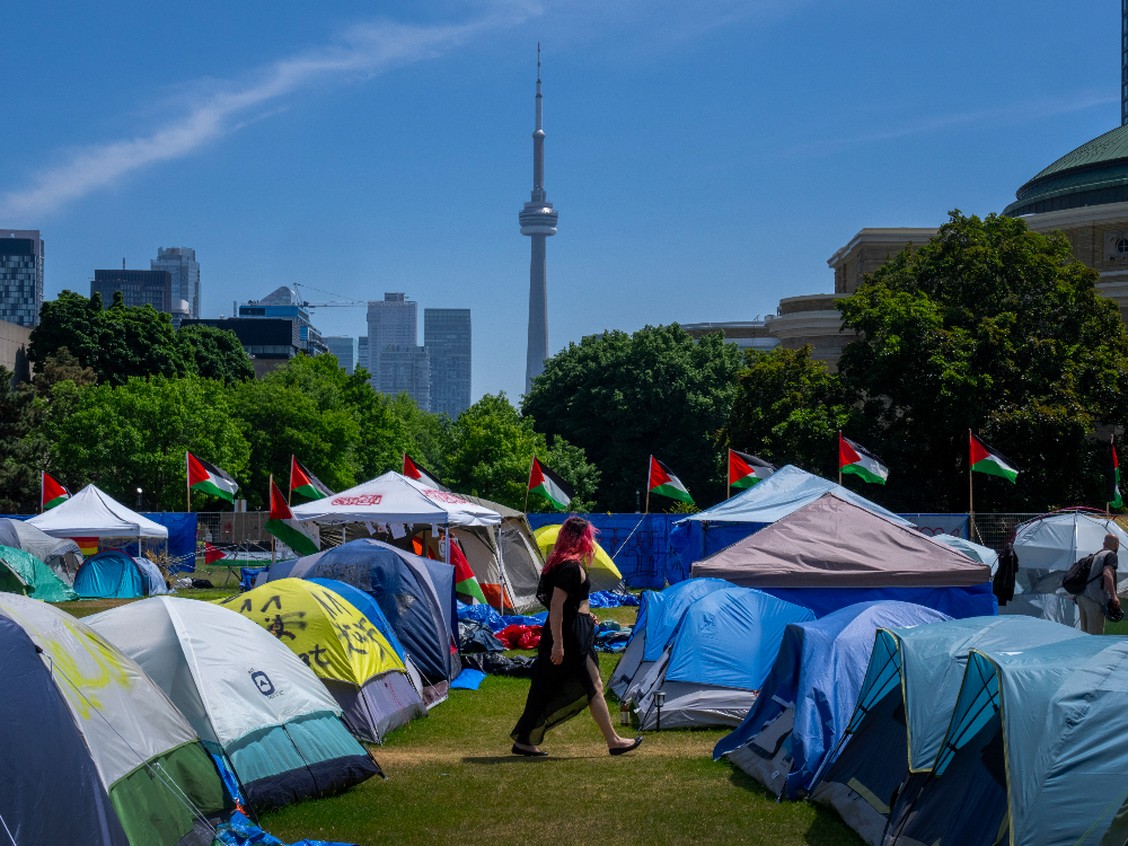
A woman walks between the tents in an anti-Israel encampment at the University of Toronto campus, May 26, 2024.Photo by Frank Gunn/The Canadian Press
"[It was] about the last thing in the world you would expect [to find]. It was completely out of place, like finding a kangaroo in Scotland."
"Africa was completely isolated by water -- so how did they get there?"
"Sherlock Holmes said 'Once you eliminate the impossible, whatever remains, no matter how improbable, must be the truth'. It was impossible to walk to Africa. These dinosaurs evolved long after continental drift split the continents, and we have no evidence of land bridges. The geology tells us Africa was isolated by oceans. If so, the only way to get there is by water."
"Over millions of years, once-in-a-century events are likely to happen many times."
"Ocean crossings are needed to explain how lemurs and hippos got to Madagascar, or how monkeys and rodents crossed from Africa to South America."
Dr.Nicholas Longrich, Milner Centre for Evolution, University of Bath
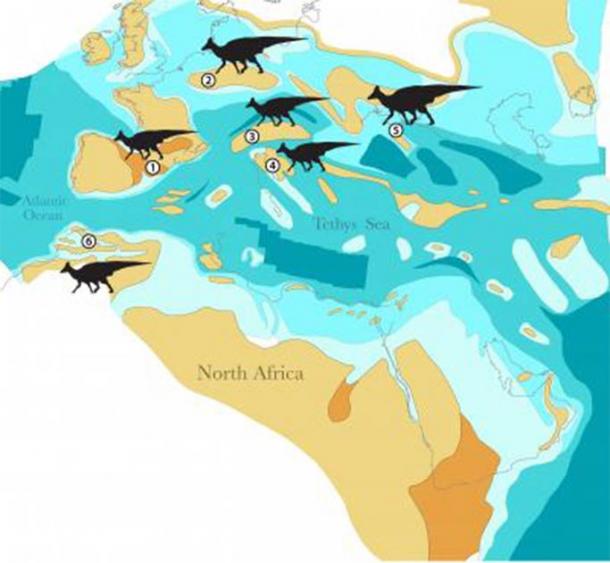
A team of British researchers has reached the unlikely-seeming conclusion that duck-billed dinosaurs migrated out of North America, spread to South America, Asia and Europe, and finally to Africa. Species migration for hundreds of years has been both voluntary and involuntary, and usually by ship. Some animals like rats freeload on ships for far destinations by default. Some explorers deliberately brought species unknown in their native lands back with them, by ship. But this was an oceanic voyage undertaken by ancient dinosaurs on their own initiative, 66 million years ago.
The newly-discovered species has been named, Ajnabia odysseus. Remains of the animal were discovered in a mine near Casablanca in Morocco. The remains date to the end of the Cretaceous period, and that is a difficult-to-imagine 66 million years ago. Contrast that to human evolution when proto-humans began to emerge 7 million years ago. The predecessor of Homo sapiens, Homo habilis, surfaced 2.5 million years ago, known as the first to develop stone tools. And it wasn't until 70-50,000 years ago that humans began migrating out of Africa, the origin of humanity.
So a migration in the opposite direction to that which the first anatomically human creatures took, immensely predated humanity's move to begin populating the globe. Evolutionists believe that duck-billed dinosaurs used the open water of oceans to move hundreds of kilometres to reach Africa, after the discovery of the remains of the dinosaur, the first ever to be found on the continent. It is also considerably smaller than its otherwise-known counterparts.
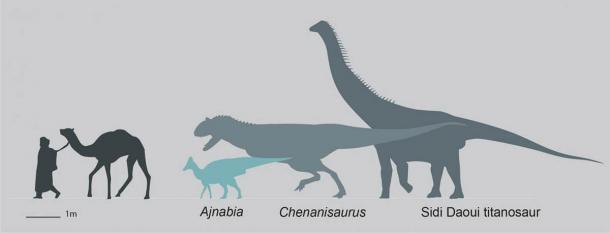
Silhouette showing the size of Ajnabia odysseus
compared with humans and the contemporary Maastrichtian dinosaur fauna
of Morocco. (Dr Nick Longrich / Science Direct )
The familiarly-known size of duckbills was up to 15 metres in length, huge compared to the newly-identified species which measures three metres. Africa, in the late Cretaceous period, was isolated by deep seaways, a fact that seems impossible for duckbills to migrate to, so far a distance without an available land route. Of course what may have motivated these land creatures to depart terra firma for destinations unknown by swimming or floating or hitching rides on drifting organic detritus will never be known.
They are, however, thought to have been strong swimmers, gifted with large tails (rudders?) and powerful legs. The enormous distances they would have had to travel through deep oceans in their journey presents an improbable, but likely adventure in migration. "Ocean barriers are not always an insurmountable obstacle" to migration, noted Dr.Nour-Eddine Jilil of Sorbonne University's Natural History Museum.
Its name is derived from Arabic for 'foreigner' (Ajnabi) and Odysseus (Ulysses) from the Greek fable of a wandering seafarer. The study, led by Dr.Longrich and his British team of scientists, was produced along with international colleagues from Spain, France, Morocco and the United States, and published in the science journal Cretaceous Research.
Map showing the location of duckbill dinosaurs during the Late Cretaceous period. (Dr Nick Longrich / Science Direct )
"We don't anticipate having to deal with any sort of significant shortages at the meat counter in grocery stores across North America."
"We have a well-integrated system in which product moves both ways across the border. So if individual plants close, we will often see both inventories that we have help buffer some of those closures, and the reallocation of supply from some of the other plants."
"We might start seeing some more significant disruptions in the system where supplies may be compromised. Although we do expect a lot and have reasonably good inventories on hand, we might see prices go up."
"But we would see much more significant issues at the producer [farm gate] level."
Mike von Massow, food economist, University of Guelph
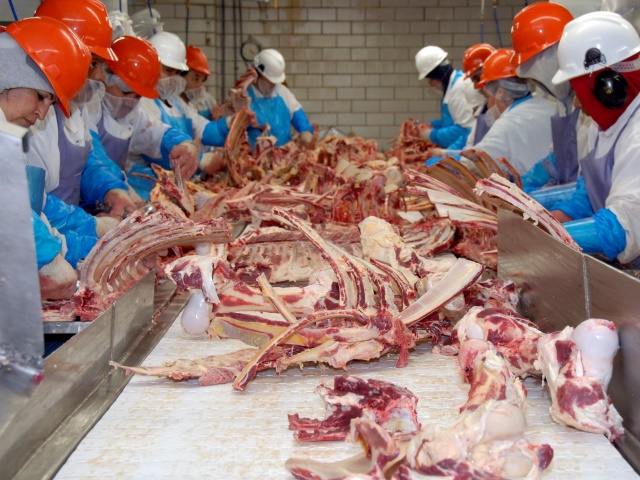
BT_USDA_Beef_Meat_Packer_6
( U.S. Department of Agriculture )
Physical distancing between workers at meat processing plants is a difficult attainment; the plants were designed and work to their maximum when employees work in close communion. And that is a problem when social isolation is required to ensure that the highly contagious novel coronavirus is brought under control. Also, the fact that most workers at meat-processing facilities have been brought into the country as temporary workers, signed up for two-year stints, from Mexico, Asia and Africa. They are less likely to take recommendations from the health community and government agencies seriously about the need to distance themselves from others.
"Meat-packing’s low wages, combined with a dangerous and unpleasant work
environment, make the job unattractive to most Canadians. In old-style
plants, work varied between hog and cattle slaughter, and workers split
their time between the kill floor and processing. But modern plants
slaughter a single species. Most line workers stand shoulder to shoulder
and make the same cuts over and over. Repetitive motion injuries are
commonplace. Meat processing workers have the highest rate of disabling
injury and disease among all manufacturing employees in the province.
Injuries and low pay contribute to high employee turnover—6 to 8 per
cent a month among line workers. This means about 1,800 workers leave
Lakeside (Alberta) each year and must be replaced."
"About 3,500 mostly sub-Saharan refugees have moved to Brooks since 2000.
They now account for about a quarter of the town’s population, the
largest single source country being Sudan, followed by Ethiopia and
Somalia. The African community is thriving; African grocery stores,
hairdressers, a music shop and a nightclub enrich the community with
their presence."
Michael Broadway, Alberta Views
Cargill meats has shut down due to COVID-19 near High River on Tuesday, April 21, 2020. Darren Makowichuk/Postmedia
Now, across North America, the meat-packing industry has become one of those vulnerable-to-infection hot-spots, while remaining one of the industries held to be indispensable to societal functioning. Over a dozen meat processing plants across the continent have been temporarily shut down as a result of workers being infected with COVID-19. Consumers aware of this have begun to take notice, just as they were concerned over other food availability leading to hoarding and shortage of eggs, flour and unaccountably, toilet paper.
If, suddenly or gradually, consumers were met with the sight of empty refrigerated shelves as has already occurred temporarily, until the public plucked commonsense off the high, dark cupboard shelf they had tucked it into in a panic over disappearing food -- by the sight of brightly lit shelves absent ground beef, steaks roasts, pork and chicken, a nightmare scenario would impact the public and keep governments awake at night, leaving livestock farmers in a dilemma of how to manage their overstock of animals, with plant closures.
COVID-19 has affected meat packing plants across North America.Sean Gallup /
Getty Images
The High River meat-packing plant, Cargill, whose output represents "roughly 40 percent of the beef processing capacity in Canada", temporarily closed operations when an employee died and over 360 workers tested positive for COVID-19. And following a two-week shutdown due to an outbreak in its meat processing facility in Yamachiche, Quebec, Olymel reopened. Smithfield Foods in Sioux Falls, South Dakota shuttered its pork factory after a coronavirus outbreak infected over 800 of its workers.
Meat company JBS USA shuttered its Minnesota pork processing facility following two dozen employees testing positive for COVID. "Nobody can quite figure out how meat processing workers can safely work alongside one another without running the risk of transmitting the virus", Rachel Maddow of MSNBC reported. So the very real fears of consumers do have a groundwork of reality they are based upon.
But, as von Massow points out, that concern is centered on the scale and duration of plant closures. Should facilities close more frequently and remain closed for longer periods, there could very well be a change in the situation where shortages become acute and consumers have real-time reason to panic. Disruptions of any kind have their repercussions. New ways to hold or divert animals to alternate processors in the hope of avoiding bottlenecks consume the attention of meat processors and livestock farmers.
For as senior director of the agri-food analytics lab at Dalhousie University, Sylvain Charlebois noted in a newsletter, farmers face increased costs related to the pandemic, having to house animals for longer periods, and having to ship them further distances. High inventory also means they must sell livestock at reduced prices. "We should be cognizant of [those pressures] and probably look at ways that we could support farmers through those difficult times."
Cargill set up tents to provide screening for its workers, similar to
what Alberta Health Services has done for health-care workers. (Dan McGarvey/CBC)
"It is a great concern to us. [The relationship between public awareness through public relations campaigns resulting in research funding for the particular cancers those campaigns target.]" "The rate of death from pancreatic cancer has now surpassed that of breast cancer..." "By 2020, it will be the number-two cancer killer." Michelle Capobianco, executive director, Pancreatic Cancer Canada
A new research study out of Queen's University has revealed troubling gaps in research focusing on individual cancers as opposed to the lethal toll that each disease takes. The finding outlined that cancers behind which marketing events led people's attention to those particular cancers have a decided edge on cancers that might be more prevalent and deadlier in their outcomes but which lack the public appeal to motivate toward research support.
Added to that seemingly insurmountable lead for cancers for which research is popularly supported through marketing and public support in focus and in fund-raising there is the additional problem related to the stigma which is attached to particular cancers where those sufferers are held by popular opinion to be responsible for their own malign health condition. To speak of lung cancer is to conjure up visions of lifetime smokers.
Malignancies of the lung account for four of every ten Canadians suffering and dying from cancer. So when just 15 percent of North American clinical trials have their focus on the disease, something certainly seems awry with respect to priorities. Then there is the issue of breast cancers which are responsible for ten percent of mortality as from 2013 (the study year), but toward which 30 percent of clinical trials are directed.
The research that focuses on each of the various types of cancer directly reflects the funding available through money raised by public fund-raising events launched by self-interested groups adopting those cancers as the disease whose fund-raising they are prepared to support above all others. A personal stake that arises out of skillful public relations events and personal identification with sufferers gives an enormous advantage to that specific disease.
No one could be too critical of scientific findings that advance knowledge of various types of cancer and the treatment that best address newer protocols to treat patients. But the defined focus on breast and prostate cancers means that other, perhaps more common and deadlier cancers are left with inadequate research being carried forward.
The research team from Queen's University examined North American research papers and clinical trial results published throughout 2013 focusing on the ten most lethal cancers, and the research-and-care funding allocated to each.According to Dr. Chris Booth, medical oncologist and Canada research chair in cancer population care, the study's leader, the disparity extent "was quite striking. There were huge differences."
As an example, colorectal cancer accounting for almost 14 percent of cancer deaths in North America yet had less than six percent of clinical trials published in 2013 while prostate cancer was the subject of 17 percent of trials and the disease represents less than eight percent of mortality. Breast cancer received 28 times more funding per patient ($14,000) than bladder cancer ($600).
Because of the outcome of the deadliest cancers there are fewer survivors to dedicate themselves to fashioning public campaigns. Though lung cancer also has the misfortune to be linked to tobacco use, irrespective of the fact that many lung cancer patients are non-smokers, the reality is that the link becomes a negative in the public mind.
"There is this overwhelming public perception: you must have brought it on yourself" University of Toronto's Margaret Fitch explains from the perspective of her psychosocial research around lung cancer.
Lung Cancer : 40.5% of cancer deaths: 16% of clinical trials: 12% of funding;
Colorectal Cancer: 13.5% of deaths: 5.7% of clinical trials: 11.4% of funding;
Breast Cancer: 10% of deaths: 30% of trials: 41% of funding;
Pancreas Cancer: 10% of deaths: 5% of trials: 6% of funding;
Prostate Cancer: 7.6% of deaths: 17% of trials: 20.5% of funding;
Gastroesophageal Cancer: 6.7% of deaths: 3.3% of trials: 2% of funding;
Bladder Cancer: 4% of deaths: 3.8% of trials: 0.7% of funding;
Kidney Cancer: 3.5% of deaths: 6.8% of trials: 2.2% of funding;
Melanoma Cancer: 2.4% of deaths: 8.4% of trials: 3% of funding;
Uterine Cancer: 2% of deaths: 3.3% of trials: 1% of funding.
"We now have year-round fire seasons, and you can say it couldn't get worse than that." "We expect from the changes that it can get worse." Matt Jolly, United States Forest Service
"Recently, the job [of fire-fighting] has become increasingly difficult due to the effects of climate change, chronic droughts and a constrained budget environment in Washington." Tom Violsack, U.S. Agriculture Secretary
"It's a wonderful new world, where I can live anywhere I want. I want to live in the woods, but the woods are now flammable, much more flammable than they used to be." "It adds up to more people dying, more houses burning, and agencies devoting more than half of their fire budget to defending homes." Ray Rasker, Headwaters Economics, fire prevention consultants
The world has been alerted to a new reality. Call it yet another symptom of Climate Change. Wildfires continue to ignite in the American West now during the fall, and even during the winter months where once high summer was the critical time for wildfires. Wildfire season has come sooner than ever in Canada, and wildfires now burn without let-up in Australia, for a period of up to a year, increasingly difficult to extinguish.
It is not only wildfires, of course, but in some parts of the world torrential rain that brings mudslides and floods engulfing homes and towns. There is something to be said about common-sense municipal bylaws that forbid building in environmentally vulnerable places like floodplains and like heavily forested areas where clearly threats will arise from time to time. This is called a proactive approach, instead of being reactive.
Fort McMurray, Alberta, May 2016, CBC News
There is less moisture in some geographies on the land, and drier landscapes are ripe for spontaneous fires when lightning strikes. Spring seasons warmer than usual pull moisture into the air and in turn shrub, brush and grass is turned into kindling; the perfect environment for raging, unstoppable wildfires. Traditionally when fires have erupted all stops are pulled out for fire crews to extinguish them expeditiously.
Only in the last few years have scientists in botanical studies and foresters begun to realize that nature knows what she is doing when a wildfire consumes a tract of forest past its prime(climax) and it burns down to the ground so that natural regeneration can take place. Of course without a fire natural regeneration takes place as well, and often the corpses of old growth trees become nurseries for their successors.
But in these climax forested areas overgrown forests also present the perfect medium for a wildfire to thrive. Four million hectares burned last year in the United States, setting a record. The costs associated with fighting those fires also rose exponentially, from $240 million in 1985 to $2 billion last year alone. Seven firefighters died and 4,500 homes burned in 2015 wildfires. "I'm worried about a runaway fire season", Randy Jandt, a fire ecologist with the Alaska Fire Science Consortium admitted. Dry conditions leading to fires that burn out of control of any human agency no matter how well co-ordinated and skilled represents a nightmare of substantial proportions, costly in the loss of timber, of natural spaces and wildlife havens, and in firefighting services.
Mandatory evacuation, May 3, 2016, Fort McMurray, Alberta, CBC
Thee is no general agreement, however, on best practices to be followed in response to the ongoing and exacerbated problem. There are some fire ecologists who insist fires should take their natural course and in the process clear out the thick, dry brush on the forest floor. And though it sounds sensible, there's a hitch in that plan as greater numbers of people move into wild lands now protected by firefighters because of their presence.
In February, the state of Hawaii used up all its annual funding allocation set aside for wildfire response, and the busy summer fire season hasn't even arrived yet. Concentrated efforts on safeguarding communities and watersheds are increasingly the choice of fire crews. In so doing they also decrease the risks they face in fighting fires.
Instructors at the Arizona Wildfire and Incident Management Academy emphasized the "indirect attack" strategy representing the safest and most common method to confront the large, hot and volatile blazes of today. Crews carve out a fire line which is a buffer zone devoid of anything combustible and distanced from the fire's edge.
The vegetation standing between the fire and the fire line is then burned, the process depriving the flames of the fuel it needs to sustain the fire. According to Dan Steward, a supervisor at the academy, fires were small enough 20 years earlier so that dirt trails (or old cart tracks) like those used by all-terrain vehicles, were sufficient to stop the wildfires.
"Now, you can put a six-lane highway between our crew and the fire and, still, the fire will jump it", he commented.
Wildfire destroys homes, threatens downtown as Fort McMurray evacuated, May 3, 2016, CBC News
"Thousands and tens of thousands of bats dead. I mean, garbage bags full of little carcases [from one Nova Scotia colony alone]." "The situation is extremely dire for northern long-eared bats, and very dire for little brown bats." "If there is no evidence of reproduction happening, if there's no evidence of a survival response, then we need to do more dramatic things if we want to keep these bats from going extinct." "It's important to see if we can do these things [treating bats]. But it's also important to think about whether they are a good idea. If they're effective, they could reduce the pressure on bats. (But) do we want to be doing this stuff forever? And is there a risk of the pathogen developing a resistance?" "It could really help us [a corps of volunteer bat watchers] get some data on locations and particularly the numbers of bats so we can understand how many bats there are in the summer. We can visit some of the most promising colonies so we can get a handle on who's reproducing and the impact of the disease." Craig Willis, biologist, University of Winnipeg
A group of little brown bats hibernate at one of PhD candidate Mary-Anne
Collis' study sites. She's one of several graduate students studying
bats at the University of Winnipeg Willis Bat Lab. (Mary-Anne Collis)
"I'm not sure I can cope with it being without bats [ returning to a vast bat colony near Renfrew]. When I first went there, it was the 10th of May in 1965, and even then, in May, there were lots of bats. In the middle of winter there would be 20,000 bats there. Lately if you went, you'd be lucky to see 500." "There's lots of big browns. There's no shortage of them at all. Unfortunately, with White-nose [Syndrome, a bat-deadly fungus], it's more what we don't know than what we do know." Brock Fenton, professor emeritus, Western University
The little brown bat usually roosts in tree hollows, under eaves or
inside crevices of cabins. The species has now been listed in Manitoba
as "threatened," the second-highest level of risk designation after
"endangered." (Mary-Anne Collis)
First identified in a New York State cave in 2006, the then-emergent threat to the North American bat population has intensified as White-nose Syndrome has continued to spread inexorably through Eastern Canada from Nova Scotia to Thunder Bay and southward, and westward across the United States. As it spreads from one bat colony to another, it wreaks wholesale devastation. The deadly fungus is held to have been brought by inadvertence into North America from Europe.
An estimated seven million North American bats have died since White-nose Syndrome first began its deadly eradication of bats. The deadly white fungus appears to grow on the noses and wings of hibernating bats. Scientists believe that the fungus interferes with the bats' ability to hibernate. Its presence tends to rouse bats from sleep far more frequently than the natural every two or three weeks for an hour or so, causing them to wake three times more frequently. The situation is responsible for depleting their fat stores, leaving them dehydrated and starving.
MARVIN MORIARTY / THE CANADIAN PRESS A bat with white-nose syndrome is shown in Greeley Mine, Vermont, in 2009.
Bats tend to enter their caves communally in great numbers, huddling together in hibernacula and their close proximity to one another ensures that transmission from one infected bat to another is more efficient in spreading White-nose Syndrome. In contrast to the tendency of most bat species to live in close contact with one another through their hibernation periods, there are loner bats like the big brown bat that shelters in buildings and it has been less affected by White-nose Syndrome.
And there is also the syndrome of "survival of the fittest" at play here, where some bats appear to be able to survive the infection. That in itself presents as a hopeful sign, that these bats may reproduce and their genetic ability to withstand the deadly effects of White-nose Syndrome may result in nature cultivating a new type of bat resistant to WNS's fatal effect. On the other hand scientists have discovered some treatments that seem to control the fungus. The long-term effects of the treatments are unknown however, with respect to their potentially harmful effect on the environment.
LISA WARNECKE Craig Willis (left) and Jamie Turner check their climbing gear before entering a cave in central Manitoba.
And the fear as well exists, that treatment of the bats might have an ultimately deleterious effect in halting nature's plan to have her creatures develop their own mode of resistance to the fungus. And as always when science steps in to produce an effective treatment for an infection or a disease the possibility arises that the challenged pathogen will develop a resistance of its own, or transform itself to the point where the treatment becomes ineffective, in which case the problem returns to its original puzzling challenge to surmount.
There has been an established "Neighbourhood Batwatch Program", where batwatch.ca has enlisted the aid of people willing to help scientists keep track of activities emanating from known bat colonies. In operation in Quebec, the Batwatch is expanding into Ontario. It is funded partially by the Species at Risk Stewardship Fund. Volunteers committing their assistance can sign out a "bat detector", an electronic device which transforms bats' echolocation calls into sound that humans can hear to enable them to track the bats in their neighbourhood.
"It's not human nature just to see everything in your path and want to kill it." "To think of scattered populations of Ice Age people with primitive technology driving huge animals to extinction, to me is almost silly." "You can't just hold up a flag and say it was one thing that led to the extinction of all these species. It wasn't like they all collapsed in one instant across the continent." "They migrated northward; 'Let's come up to Alaska and the Yukon on a vacation to see what it's like', but then when conditions got cold again they were immediately wiped out." Grant Zazula, chief paleontologist, Yukon Territory
Both Colombian mammoths and mastodons once roamed North America. - Velizar Simeonovski, The Field Museum, Chicago
We can empathize, we certainly can, as fellow mammals exposed to the dread certainties of the dead of a Canadian winter in this northern hemisphere. And being of the supposed higher order of mammalian existence, we have been gifted extraordinarily by nature in the ability to manipulate our environment, which has led over thousands of years to the kind of technology that enables us to shelter from extreme cold and the exigencies of misery brought down by winter conditions.
Those great, ponderous beasts known as mastodons that once lived on the Earth, died out 65,000 years earlier than did their near relations who existed in warmer atmospheres to the south of the Canadian Yukon and American Alaska. Mastodons, living in the far, frozen North that early man in fact had no knowledge of, since they died out long before early humans came on the scene.
American mastodons were among the largest living land animals during the ice age. They ranged from Alaska and Yukon to central Mexico, and from the Pacific to Atlantic coasts.
Compared to living elephants and mammoths, American mastodons were
squatter—from 2 to 3 m (7 to 10 ft.) in shoulder height—and longer—about
4.5 m (15 ft.).
Their upper tusks extended 2 m (7 ft.) or more beyond the sockets,
and some mastodons had vestigial tusks in their lower jaws. The tusks
were probably used for breaking off branches of conifer trees to eat.
Their cheek teeth consisted of paired, blunt cones covered with thick
enamel—useful for browsing on trees and shrubs. Coarse, reddish hair
has been found on the best-preserved specimens.
Their preferred habitat was open spruce woodlands, spruce forests and
marsh. Their diet included conifer twigs and cones, leaves, coarse
grasses, mosses and swamp plants.
In Canada, most mastodon remains (more than 60 specimens by 2008)
have been found in deposits that postdate the last glaciation in
southern Ontario. Fossils have been found in every province and
territory except Nunavut, Newfoundland and Labrador, and Prince Edward
Island.
A new Canadian-led study claims that the fate of the prehistoric beasts was dictated by nature herself, which is to say her elements of extreme cold, wind and icy conditions for which mastodons were unprepared to adapt themselves. They hadn't been imbued by nature to survive those elements, although human beings were, with their larger brains, their ability to learn how to reason and extrapolate from experience, and to manipulate with their opposable thumbs.
But this is not a story about humankind. It is a study whose claim is that those great beasts gave up the collective ghost in a flurry of chill-ill-will. Published in the Proceedings of the National Academy of Sciences, 36 mastodon bones derived from across Canada and the United States were carbon dated to extract the data that led to that conclusion. Research discovered that the beasts perished before we came long.
Therefore, early man could not conceivably have led, through hunting, which is to say over-hunting, to their catastrophic extinction. That credit goes entirely to an excess of nature. Paleontological wisdom has clung to the theory that many North American Ice Age mammals ranging from mammoths to giant sloths to mastodons met their fate at the end of "Paleo-Indians" spears.
The new research holds, contrary-wise, that mastodons, experiencing shifting environmental conditions were unable to survive in the new colder climate. Their appearance on what now is the Canadian North seems to have been brief, occurring during an interglacial period of temperature and conditions similar to the present day's. As colder temperatures intruded, mastodon herds in the south joined their cousins' extinction, about 10,500 years ago.
According to Ross Phee, a researcher at the American Museum of National History, co-author of the Yukon study, a small population of mastodons might have survived around the Great Lakes where humans indeed may have dealt the final blow to their existence. "That's a very different scenario from saying the human depredations caused universal loss of mastodons across their entire range within the space of few hundred years, which is the conventional view."
Mammoths, unlike mastodons, were able to survive in the frozen North, living there until some ten thousand years ago. Mammoth bones are regularly dug up around Yukon gold mines. Much of the area had been unaffected by the last Ice Age glaciers, leaving the soil frozen with the intact bones, skin and footprints of prehistoric creatures long-extinct. Mastodon bones, however, represent rare finds in the otherwise fossil-rich Yukon.
In May 2013, scientists from the Siberian Northeastern Federal
University heard that mammoth tusks were sticking out of the permafrost
on Maly Lyakhovsky Island in nothern Siberia. Researchers crossed miles
of ice to see for themselves, and soon found the tusks belonged to a
mammoth that had been exceptionally preserved beneath the permafrost.
Mammoth experts performed a thorough autopsy on the animal, revealing
intimate details of its life and grisly death. The carcass, which oozed
fresh blood when it was first dislodged from the permafrost, is perhaps
the best hope of cloning a mammoth yet.
livescience: While the entire team hopes to find enough DNA to clone a mammoth from
scratch, that could be tricky. For one, DNA is delicate and must be
stored at cold, constant humidity in order to be preserved. Harvard
University researcher George Church hopes to overcome those challenges
one way or another. (Photo credit: Renegade Pictures)
"[The trafficking of rhino and elephant parts] is the highest priority investigation for the U.S. Fish and Wildlife Service. If something isn't done to stop this illegal trade, there's a good possibility our children won't be able to see elephants or rhinos in the wild." Edward Grace, deputy assistant director of law enforcement, U.S. Fish and Wildlife Service
Photo by Desmond Kwande/AFP - A Zimbabwe National Parks worker in Harare in a storehouse with elephant tusks and rhino horns
But the poaching (gentle word that -- it is almost devoid of negativism, like children reaching for cooling cupcakes, irresistible to their sense of entitlement) of rhinos and elephants is taking place not within the geographical territory of the United States of America, needless to say, but rather within Africa. Rhino horns can fetch between $20,000 to $30,000 a pound. As for elephants, it is estimated that 20,000 of the great beasts were poached across the African continent last year alone.
This is a figure reached by the Secretariat of the Convention on International Trade in Endangered Species of Wild Fauna and Flora. In 2013, over a thousand rhinos were 'poached', which is to say they were hunted and killed in a well organized manner for the lucrative trade in their horns. That's a threefold increase from 2010, when an estimated 333 rhinos were killed, according to South African National Parks.
It is such a lucrative field that organized crime has moved into the picture, finding the allure of the trade just as irresistible as that four-year-old reaching for the cupcake. An Irish gang known as the Rathkeale Rovers was considered a major player in the global rhino horn trade before the arrest and conviction of some of their members. That's quite a stretch, from Ireland to Africa, but money speaks loudly in its appeal.
Authorities noticed an "astronomical" spike in the price of rhino horns on the black market; up to $30,000 per pound, which alongside the reports of huge numbers of rhinos being killed, spurred them to act. A Canadian antique dealer out of Richmond, British Columbia, was recently indicted by a federal grand jury in New York following an undercover sting in which American wildlife agents were involved.
There are strict export laws in effect forbidding the importation of ivory and horn, including objects made from them. The underground trafficking of such objects made from endangered species represents a multibillion-dollar industry. Xiao Ju Guan, the B.C. antiques dealer, had travelled to New York from Vancouver in May, paying $45,000 for two black rhinoceros horns.
His trouble began when he bought those horns from undercover wildlife agents posing as traffickers. Mr. Guan took his horns to a shipping store for the purpose of sending them forward to a Point Roberts, Washington address, located just south of the Canadian border. On the shipping label, Mr. Guan identified the contents of the box as "handicrafts" with a value of $200.
Arresting authorities hold that in the last two years, Mr. Guan and his partners were responsible for smuggling dozens of wildlife items made of rhino horns, elephant ivory and coral, their value estimated at over half a million dollars. He is only one of nineteen people who have thus far been arrested since the Fish and Wildlife Service and U.S. Department of Justice began their crackdown three years earlier.
Experts point to the growing purchasing power of Asia's middle class being responsible for the expanding underground trade, with its concomitant conscienceless predation on vulnerable African wildlife. Rhino horns are particularly valued in China and Vietnam.
Canada and Australia are now being viewed as the bad boys of the international environmental movement. Neither country has made much of an effort to join those like the European Union which have pledged to cut back on greenhouse gas emissions and to lower their footprint on the international atmosphere. Which is to say that under new management of a new government, Australia has decided to throw in the clean-up towel, joining Canada.
Even China has ingenuously portrayed itself as becoming more environmentally conscious, although there is little sign that anything substantial has been put into play; their constant smog levels are staggeringly dreadful, impacting on peoples' health and raising carbon emissions worldwide. The dependence on particulate-producing coal-fired furnaces with huge smokestackes in evidence everywhere continues unabated.
The United States never did sign on to Kyoto, and it too has a significant impact on global carbon dioxide emissions, given its massive population and its industrial and mining and exploration activities, largely dependent though not to the same scale as China, on coal-fired energy. Though through the enactment of cleaner-burning fuels regulations and better automotive designs there has been some notable reductions.
India is another hugely populous country, emerging at almost a similar rate to China, as a great source of environmental pollution. Not to mention all of the other catch-up economies elsewhere in the world, all wanting a piece of the manufacturing-and-trade pie. No one seems to be listening really seriously to the little countries whose fragile existence within areas threatened by rising sea levels is making them frantically anxious over their future.
And now, here's Britain suddenly discovering just as others have done that the renewable-energy replacements for petroleum products are costly, inefficient and hugely unpopular with consumers and taxpayers alike, though they're obviously one and the same. People generally feel they should support green energy, but when it comes to paying their energy bills their enthusiasm tends to wane proportionately to the constant rise in consumption and pricing.
"The 'green crap', as the Tories call it, are the funds that pay for insulating the homes of elderly people and which support thousands of British manufacturing jobs. "This is depressingly cynical -- only bothering about political spin, not in protecting our children's future", complained the Liberal Democratic president Tim Farron on news that the governing British coalition has begun to turn its back on green energy.
Prime Minister David Cameron is reported to have informed ministers of the Crown to scrap the "green crap" driving up household energy bills. He promised at one time to lead the "greenest government ever", and that promise undoubtedly endeared him to the hearts of voters, who in theory would support that aspiration, but as a practical measure don't appreciate higher energy bills.
Still, his government has promised to "roll back" green levies which amount to roughly $190 annually on the average consumer's energy bill. "He's telling everyone, 'We've got to get rid of all this green crap'. He's absolutely focused on it", admitted a senior Conservative source; denied, of course by Mr. Cameron's office. The pre-election campaign slogan "vote blue, go green" has been deep-ditched.
In Canada, environmentalists are livid about Prime Minister Stephen Harper's casual attitude toward green energy alternatives. Wind power has proven hugely unpopular as a blight on the landscape and a threat to people's health. Solar-generated power has not proven anything but costly, and the Province of Ontario which pushes both expensive alternatives had gifted consumers with the most expensive energy costs in North America.
While the Official Opposition in Parliament blame the Conservative-led government for Canada's blooming bad reputation on the energy file, it was a Liberal government under Jean Chretien, formerly prime minister, that signed onto Kyoto, promising that Canada's future emissions would be sharply reduced. Trouble was, the Chretien government did nothing to forward that goal, and nor did the succeeding Liberal government of Paul Martin.
Environmental protection yes, to a degree. A degree that doesn't hamper resource extraction, manufacturing, and any number of other vital indices of a country's wealth. Besides which, a whole lot of skeptics keep reminding the puzzled public that the jury is still out on the causes of climate change and that it could very well be that human activities have little-to-nothing to do with the changing climate and environment, and nature everything.
And no one, particularly any human agency, can tell nature how to conduct her business.