A Conflict of Energy Attrition, Demoralizing a Population
"[Our generating capacity] is down to zero.""An unprecedented number of missiles and countless drones – several per minute – targeted the same thermal power plants that we had restored after the devastating attack of 2024."Ukrainian state power firm Centerenergo"The enemy inflicted a massive strike with ballistic missiles, which are extremely difficult to shoot down.""It is hard to recall such a number of direct strikes on energy facilities since the beginning of the invasion.""Russia is deliberately endangering nuclear safety in Europe. We call for an urgent meeting of the IAEA Board of Governors to respond to these unacceptable risks."Kyiv's Foreign Minister Andrii Sybiha
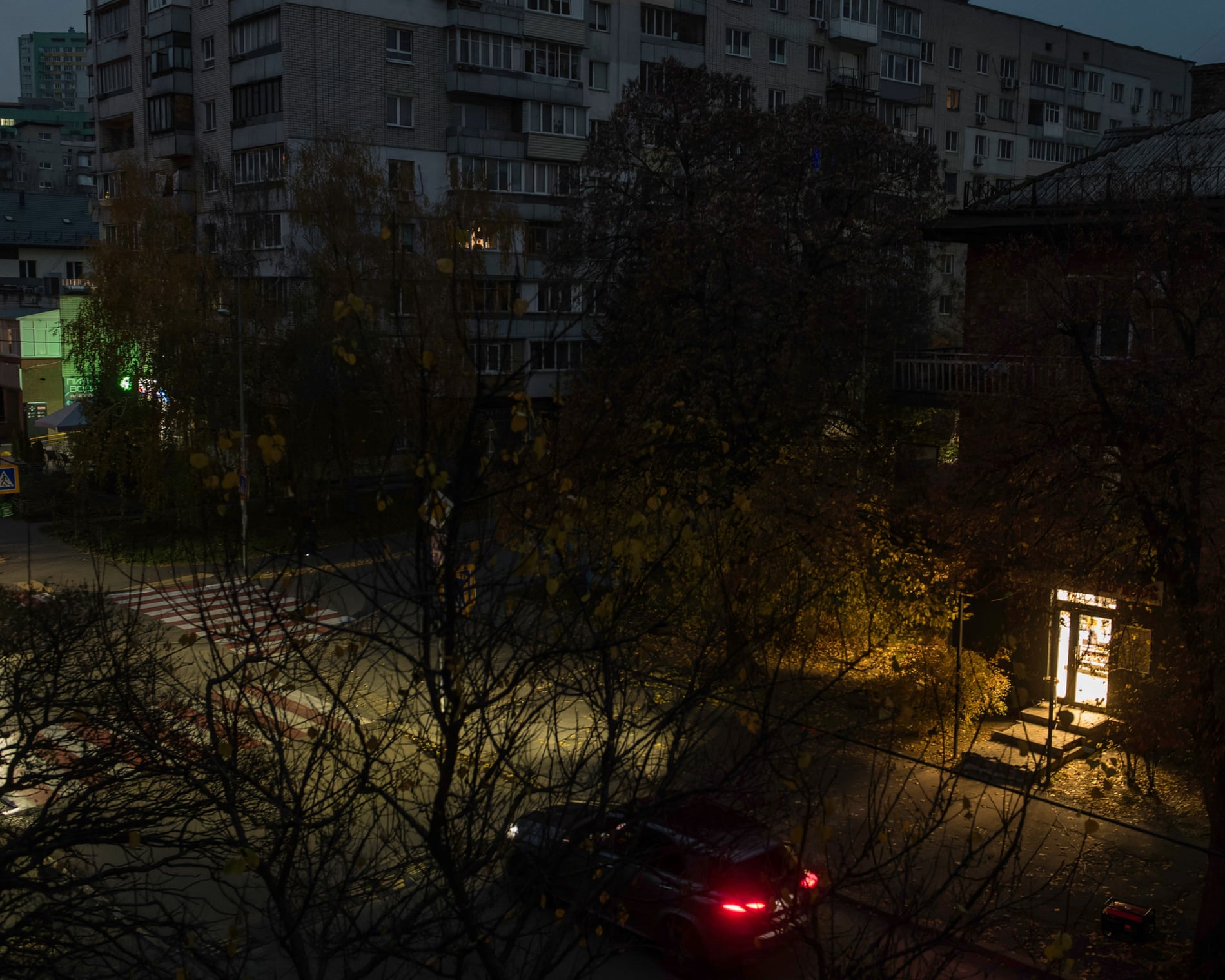 |
| Power outages caused by Russian drone attacks have left much of Ukraine in darkness. Photograph: Maxym Marusenko/NurPhoto/Shutterstock |
Adapting to living in the dark, without reliable heat during the long winter months has been difficult, but Ukrainians were stoic under fire, refusing to become demoralized and thus surrendering to the Russian plan to place their government under pressure to plead for peace under Russian terms of territorial conquest. "Everyone has more or less adapted", stated Oleksandra Kovalenko. "If we can somehow live without electricity, then living without gas -- I'm afraid to even picture it. I don't want to", she said grimly.
When the power grid is impacted her family uses power banks; the children use headlamps to do their homework. The steady flow of gas kept the radiators warm during the wartime winters in the family's Kyiv apartment. Until latterly Russian attacks have expanded, not only striking the nation's power grid, but its gas infrastructure as well. Strikes on wells, storage sites, pipeline and related critical components have become the new reality.
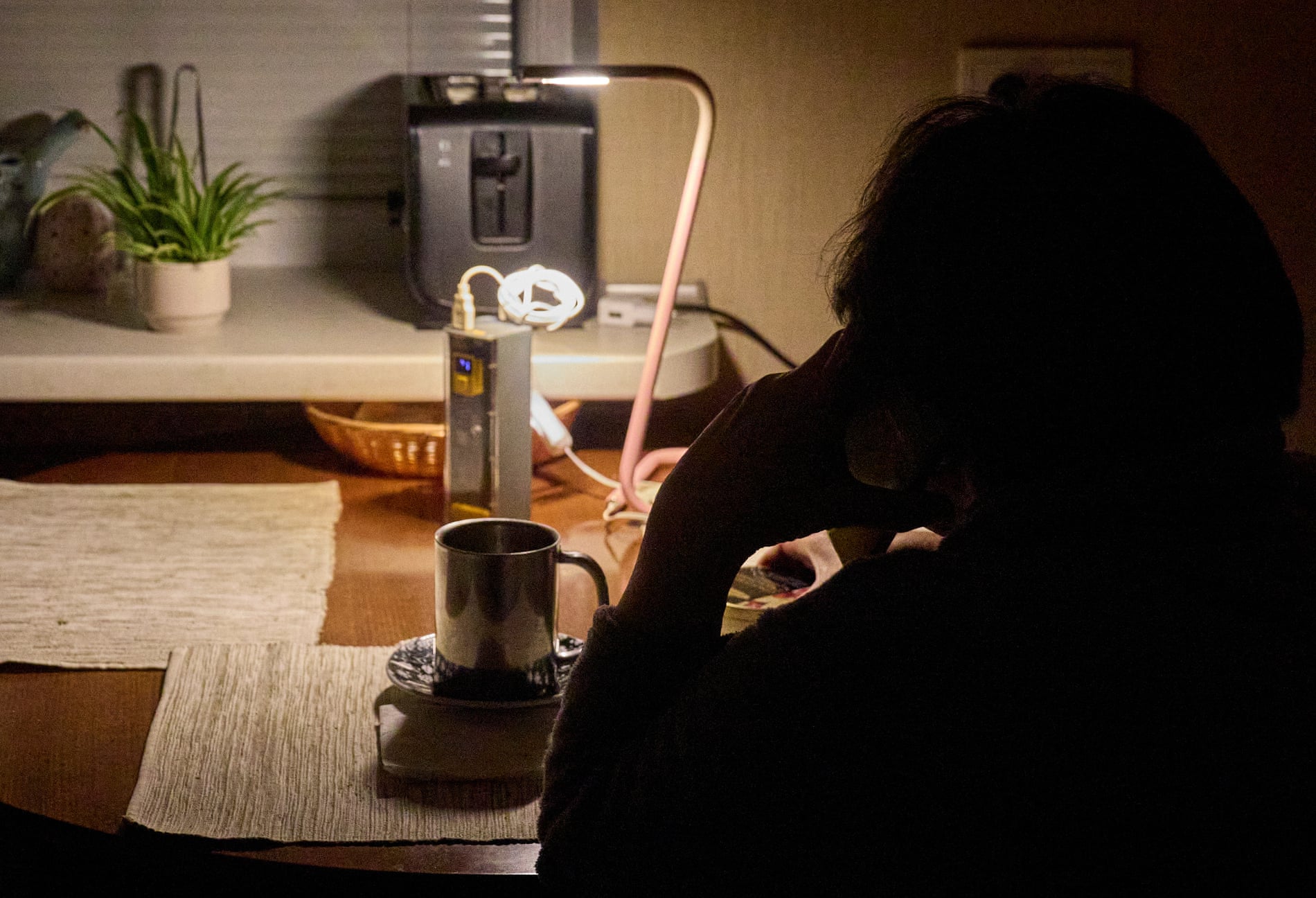 |
| Ukrainians are relying on makeshift power sources, such as this reading lamp connected to a power bank, during blackouts caused by Russian drone attacks. Photograph: Sergey Kozlov/EPA |
For 80 percent of households in Ukraine gas provides heat and cooking fuel, according to chief executive of Naftogaz, Sergii Koretskyi. Centalized heating systems powered by gas provide for most apartment blocks in Ukraine. Because Ukraine's gas network was used to transport Russian gas to Europe, Moscow mostly avoided striking those networks for the first three years of the war. Now, however, Russian gas no longer flows through Ukraine.
And drones and missiles destroyed roughly 40 percent of Ukraine's gas production capacity back in February and March. Leaving Naftogaz the summer to repair infrastructure, work that was completed by September with full restoration of capacity. Until last month, when 60 percent of production capacity was once again knocked out when Naftogaz facilities were struck seven times.
 |
| A person stands by an emergency vehicle as fire and smoke rise around the Shatura Power Station in Shatura, Russia, after Ukrainian drones struck the facility early Sunday, Moscow region governor Andrei Vorobyov said, in this still image taken from a social media video released November November 23, 2025. SOCIAL MEDIA/via REUTERS |
Experts warn that should these assaults continue, millions will struggle to maintain warmth this winter, with fear growing that where Ukraine was not broken by the electrical grid bringing darkness, plunging the population into an unrelievedly cold winter night, the gas strikes might. Naftogaz is involved in the importation of billions of cubic meters of gas, while President Volodymyr Zelensky depends on European leaders to secure gas supplies and funding, while his government contemplates purchasing American liquified natural gas.
Cogeneration plants that produce both electricity and heat, some of them operating on gas, have also been struck. According to Mr. Koretskyi, Ukraine needs to import 4.4 billion cubic meters of gas to enable it to get through winter. The cost is almost $2 billion, and Ukraine has managed to secure close to three-quarters of the funding required. President Zelenskyy vows, for his part to give as good as his country gets, and his military has succeeded in hitting Russian heating and power plants in retaliatory strikes.
"[This winter] could be the harshest [since Russia’s full-scale invasion began in 2022].""Since September, Russia has been hitting every kind of energy asset — mines, power stations, substations, power lines, gas production and gas storage."Maxim Timchenko, chief executive officer of DTEK, Ukraine’s largest private energy company
 |
Labels: Gas Generation, Power Outages, Russian Military, Striking Ukrainian Power Plants
posted by Pieface @ 8:18 PM
0 comments